
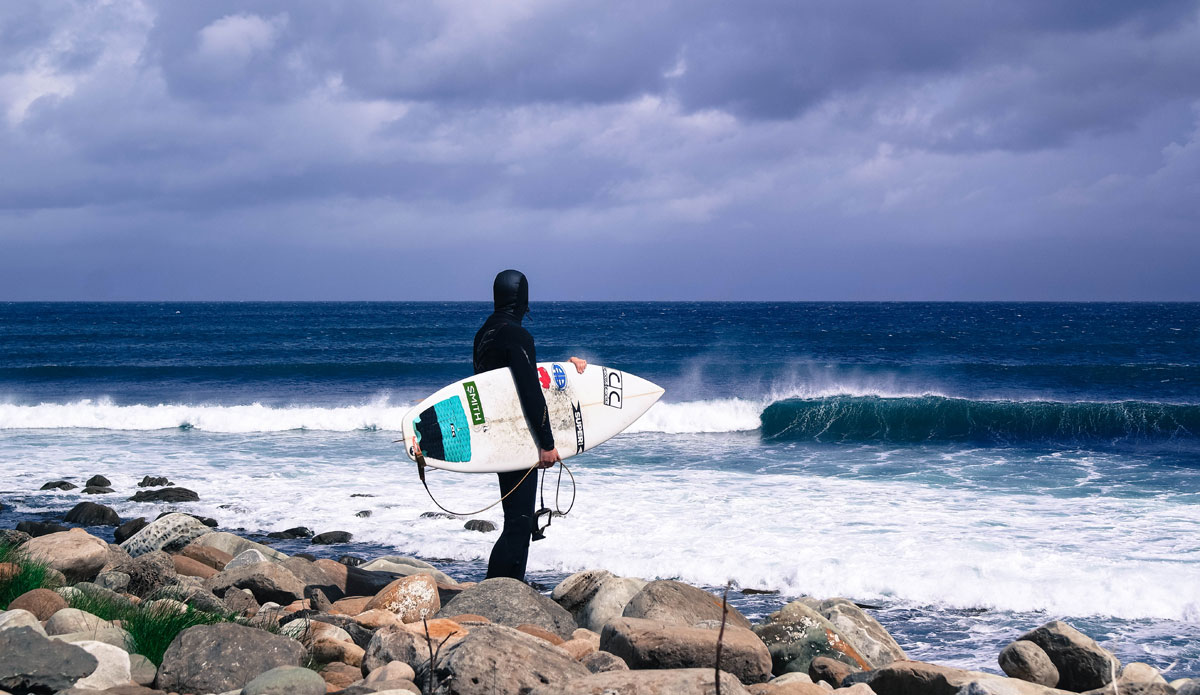
“There was no one around; it was hailing, but there was a perfect little left-hander peeling in front of a few cows. We stayed here until my hands went numb then headed back into town for warmth and food.”

Fifteen years into surfing, a few hurricane swells under your belt, and then it happens: you’re hooked. If you are like most surfers, the first trip you plan is typically somewhere in Central America; for me it was Costa Rica… then Nicaragua, Hawaii, and the Caribbean. Never on my radar was the Wild Atlantic Way, the West Coast of Ireland.
The plan was simple. We would rent a campervan, visit a few pubs and museums in Dublin, and then drive south, traveling clockwise with my wife, an old road map, no GPS, and a surfboard. The estimated times between destinations were so minimal I felt we could make it around Ireland and into Scotland in a week—wrong! The calculator didn’t consider all variables, one in particular—the overwhelming desire to explore every ruin, town, farm, and mountain along the way. Never had I been so excited to get lost. With only the old map and intermittent wireless outside a small town pub, we managed to find our way around the entire island in 17 days.
We left Dublin in search of some Irish culture and pulled into the town of Enniskerry with plans to stop only for a bite to eat. Five hours later and after a two-hour nap under a waterfall in Powerscourt Gardens, we realized we were a little off schedule. We decided to stay the night at a B&B on a free-range farm and golf course—quite the experience eating chicken while live chickens run around your feet. This area of Ireland, the Wicklow Mountains, was a detour, but will remain on our top “must-see” list.
Leaving the Wicklow Mountains, I was getting the itch to surf, so we drove five hours across the country to Dingle Peninsula, where we had arranged a B&B for the night. Our hosts, in true Irish fashion, were the most hospitable people we had ever met—breakfast was all made on the spot with eggs from the chickens in the yard, bread homemade the day before, fresh homemade jam, and milk from the village up the road. After exploring the area for a day, we asked to stay for three more (itinerary slipping a bit more). On day three I finally got to surf a spot at the base of one of the steepest escarpments I have ever seen; my companions in the water were a seal and two locals. I waited on the shoulder for my turn on the peak, the same as I would in Hawaii or anywhere else, and then to my surprise, one of the locals advised me that I wasn’t on the peak and he directed me to just the right spot. Once again, I was astonished by the generosity of the Irish. I surfed for many hours while my wife took pictures from the top of the cliff until sunset. We headed back for dinner, and in good Irish fashion, talked until 2 a.m. with our hosts before finally crashing for the night.
After leaving the peninsula we drove over the Connor Pass, one of the steepest drives I have ever made–one that was supposed to take only 30 minutes–three hours later after parked the van and scaled the peak to find the source of small waterfall, we realized we were going to run out of daylight… yet again. This is why you can’t plan a trip for a week in Ireland. You really should throw your itinerary out the window on the first day.
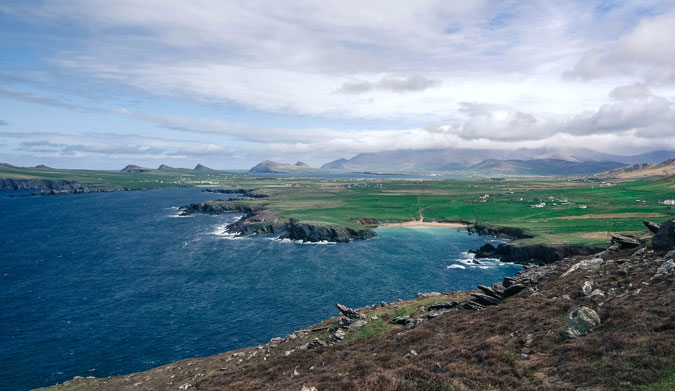
If you are worried about the weather, wait five minutes—it will change; if you’re stuck in a long conversation with a local—don’t rush it, it’s well worth the hour or two; and if the surf is a bust at a famous spot, take out a map (the paper kind) and start driving.
The rest of the trip passed in a similar fashion. We made our way up the coast, stopping in small towns for wireless and food, climbing a few waterfalls, touring a couple of monasteries, and exploring surf spots we spied from the top of the mountains. After a long night in Galway at an open-mic night, a few days in Sligo and Strandhill, we headed north to Donegal to meet up with some friends, Johnny Gallagher and the Boxtie band, for one of the best concerts I have ever been to with legendary Irish musicians playing some of the best blues I have ever heard. Unfortunately the locally famous surf spots weren’t breaking, so we backtracked to find a hidden gem 45 minutes down a dirt road. There was no one around; it was hailing, but there was a perfect little left-hander peeling in front of a few cows. We stayed here until my hands went numb then headed back into town for warmth and food.
For the remaining five days, the surf went flat, but that allowed for some amazing hiking and touring of some less-traveled spots. We drove through the Burren (an area Neil Armstrong supposedly quoted as being the closest thing to the surface of the moon he had ever seen), continued through mist, fog, and rain to Horseshoe Bend, sat on the edge of a cliff in Northern Ireland, looking across the mist trying to spot Scotland, and finished the night in Belfast listening to traditional Irish music and dancing.
Our trip came to an end after 17 days of complete adventure. If you are planning a surf trip to Ireland in the near future, add a few days for getting (blissfully) lost; there is truly no way to fully enjoy your trip without taking in the fullness of the culture. A few more tips: if you are worried about the weather, wait five minutes—it will change; if you’re stuck in a long conversation with a local—don’t rush it, it’s well worth the hour or two; and if the surf is a bust at a famous spot, take out a map (the paper kind) and start driving. Ireland has a wealth of hidden prizes and surprises.

