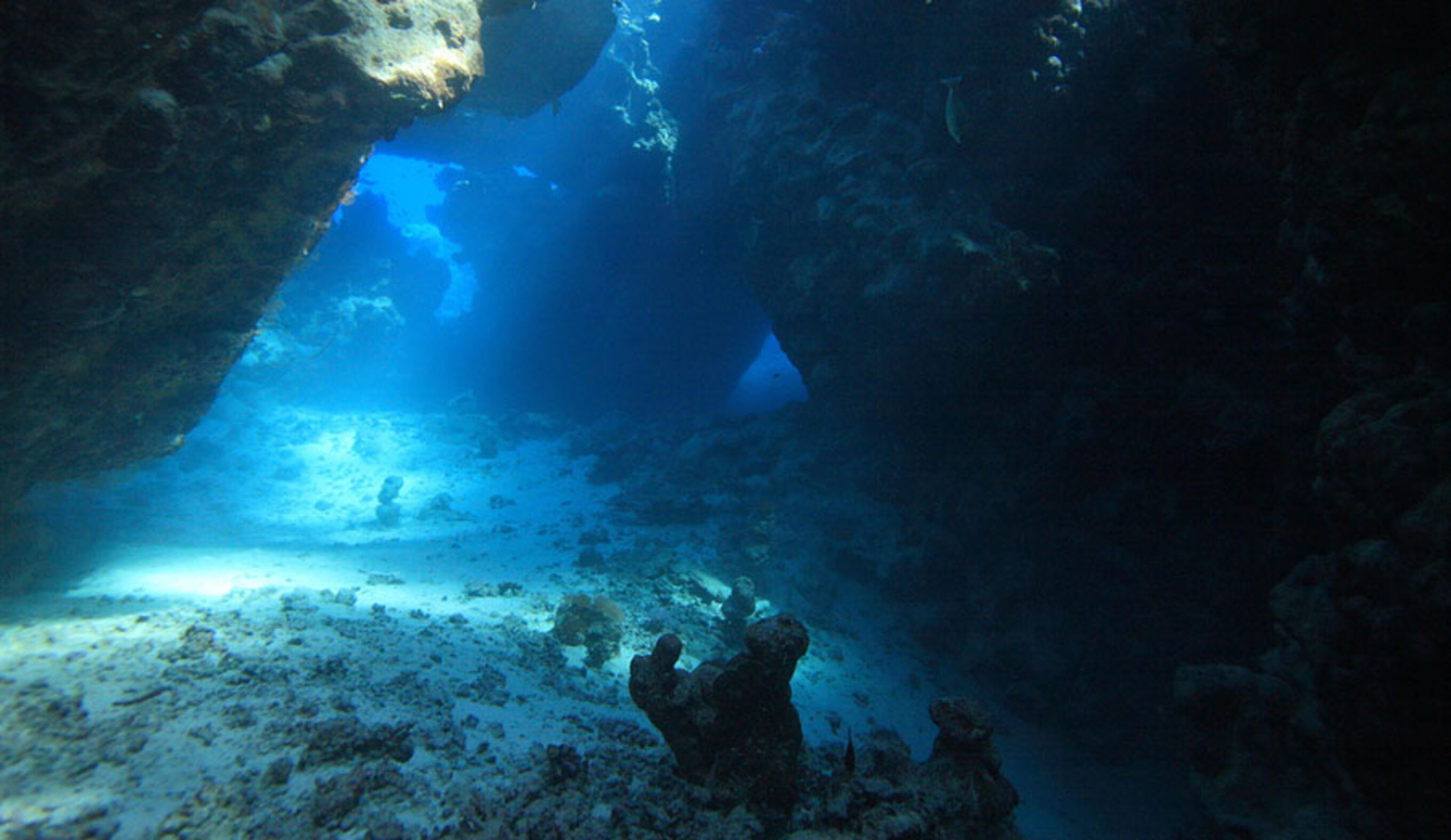
It’s an odd reality: researchers have better maps of Mars than they do our own planet’s sea floor. That fact is the inspiration behind the Shell Ocean Discovery XPRIZE, a competition for mapping the ocean’s floors over the next three years. And to whomever can create an autonomous, fast moving and high-resolution machine to do so will be getting a handsome reward for their efforts.
In 1996 the first XPRIZE was awarded to a team of researchers who built a spacecraft that carried three people more than 62 miles above the Earth’s surface. And since then XPRIZE competitions have been awarding some of the brightest minds on Earth for researching and creating things that can change the world for the better. So as far as this newest competition is concerned, what better place to focus that energy than an environment that covers more than 2/3’s of the globe? Our oceans cover two-thirds of our planet’s surface and are a crucial global source of food, energy, economic security and even the air we breathe, yet 95 percent of the deep sea remains a mystery to us,” says Peter Diamandis, chairman and CEO of X Prize.
According to XPRIZE’s official announcement of the contest the need for this endeavor comes from the fact that existing technologies lack adequate image resolution, with the most advanced autonomous machines costing as much as $60,000 a day to operate. It’s made ocean discovery an inefficient investment for government agencies as far as cost is concerned, and machines that must trade off between power and expedition longevity creates a need for quality data. So the new Shell Ocean Discovery XPRIZE will do everything from simply giving us a clearer picture of what our ocean floors look like to finding new sustainable resources and potentially coming across new species.
A $4 million prize will be given to the grand prize winner, $1 million for the runner up, and another million split among the top ten teams. The National Oceanographic and Atmospheric Administration’s (NOAA) is incentivizing teams to create something that can detect chemical and biological signals underwater, adding another $1 million prize to the total amount. That portion of the prize will help detect “sources of pollution, enable rapid response to leaks and spills, identify hydrothermal vents and methane seeps, as well as track marine life for scientific research and conservation efforts,” according to chief scientist at NOAA, Richard Spinrad.
It’s all going to take three years to complete, with teams going through a nine month registration process and a year for developing all technologies for the contest. Then they’ll have to complete two rounds of testing, mapping images at depths of 2,000 and 4,000 meters before a winner is determined. Of course, it’s all just one step in the XPRIZE Ocean Initiative, compiling five separate competitions through 2020 with a goal of addressing critical ocean challenges between now and the next decade.