
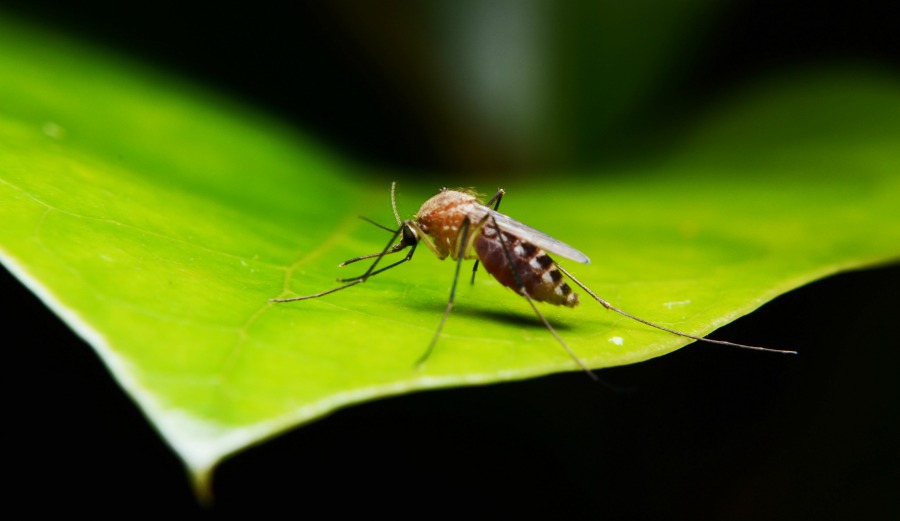
Be extra careful of these little guys if you’re headed to South America. Photo: Shutterstock.

If you or a loved one is expecting or expecting to be expecting, consider skipping that South American surf trip. The worsening Zika virus outbreak is a serious threat to new mothers and their babies. Brazilian authorities, as well as those of other South American nations, are in panic over the Zika virus situation. Recent research has shown that the mosquito-borne virus may be causing brain damage in thousands of newborn infants. The crisis has continued to the point that CDC authorities have advised pregnant women to avoid traveling to 21 different countries to avoid exposing themselves and their babies to the virus. Additionally, several countries including Brazil, Colombia, El Salvador, and Jamaica have all urged their female citizens to postpone becoming pregnant.
While the crisis is serious in all 21 countries, Brazil has proven the hotspot of the outbreak. The northeastern and southeastern states of Brazil have been the most affected, and so far the country likely has around 1 million cases of the virus in total. Unfortunately, the contagion area has already spread, and with favorable conditions due to climate change, many speculate that Zika may travel as far as the US gulf states. In fact, some anticipate that only Canada and Chile will be spared from the Zika virus.
The virus’s effects on adults are typically mild. According to the Brazilian Health Ministry, about 80 percent of those infected with Zika show no symptoms whatsoever. The remaining 20% typically experience fever, muscle pain, and skin rashes for a couple of days. Occasionally some might experience vomiting or light sensitivity, but overall the virus is manageable and the recovery is minor. However, the virus may be linked to the rare paralysis syndrome, Guillain-Barre. This component of the virus is still being explored, but several different outbreaks of Zika have been linked to outbreaks of Guillain-Barre.
There is stronger evidence yet that Zika can be transferred from mother to child during pregnancy. In November, a baby tested positive for Zika as did the amniotic fluid of its mother. Most significantly, the virus seems to have been responsible for the dramatic rise of the cases of microcephaly. Although last year Brazil saw only 147 cases of microcephaly, since October the nation has reported 3,893 suspected Zika-related cases. This rare birth defect causes a child to be born with a shrunken skull. The defect drastically reduces the child’s life expectancy, and it disrupts the likelihood of normal brain function. Children born with microcephaly are anticipated to need special attention throughout their lifetimes. In Brazil, pediatric infectious disease specialist Angela Rocha told CNN in an interview, “We’re talking about a generation of babies that’s going to be affected.”
“We’re talking about a generation of babies that’s going to be affected.”
In the meantime, South America’s priority is to stop the disease at the source: the mosquito. Brazil alone will use truckloads of larvicide to eradicate mosquitos carrying the virus (it’s been reported enough to treat 3,560 Olympic-sized swimming pools). By reducing the mosquito population, Brazil hopes that it can weaken the mechanism by which the disease spreads.
If you are pregnant, it is highly advised that you avoid all areas known to host the virus. If for some reason you must travel to these areas, do what you can to prevent against mosquito bites. Wear long sleeves shirts and long pants, use insect repellent, and use products with a higher amount of DEET. Also, avoid locations with stagnant water, and remain inside screened areas at dusk and dawn.
Countries on CDC watch: Bolivia, Brazil, Cape Verde, Colombia, Ecuador, El Salvador, French Guiana, Guadeloupe, Guatemala, Guyana, Haiti, Honduras, Martinique, Mexico, Panama, Paraguay, Saint Martin, Samoa, Suriname, Venezuela, and Puerto Rico.
Video Credit: Gillian Brockell/The Washington Post.

