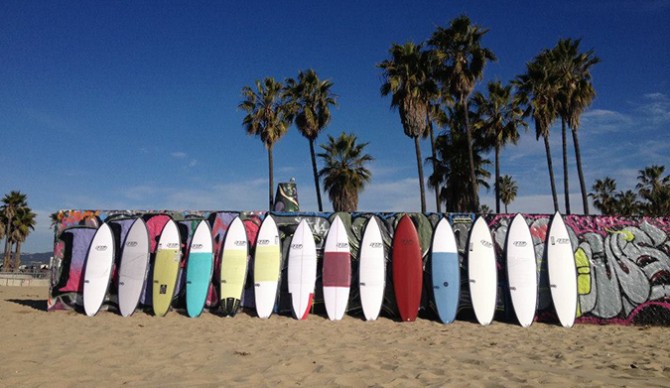
Choose wisely, my friend. Photo: Nathan Oldfield

So you have an old board that no longer interests you. There’s no need for you to hang on to it, and it would be a shame to let it collect dust. It’s time to use the magic of the internet to unload the old piece of foam and give it a new home in the process. Here are a few tips to make it happen:
1.Know the details.
Style and brand are important. Guns, fish, performance longs, retros, and reproductions: all styles aren’t created equal. Not only that, the brand can mean the difference in hundreds of dollars. I’d recommend researching what has sold and for how much by visiting Craigslist in your area and other surf communities. Or go an even easier route by visiting an online surfboard marketplace. This way you can get an accurate market value for your board.
Don’t forget to post an image or list the board’s dimensions. You can post all the pictures you want of your board at angles with artistic flare on a $2000 camera, but if you only list the length of the board, any surfer who knows what they’re looking for could skip over your listing.
2. Price is important
Would you buy it for that price? Don’t get caught in board purgatory with a pay-off-my-debts price. Know what you have. If you bought it new, dings and damage happen, and, like a new car, the value drops nearly immediately after it’s off the lot. If you don’t want to lose so much value in your purchase so quickly next time think about buying used from local shops, Craigslist, or expand your selection using a surf community marketplaces.
Know that if you’ve had your listing up for weeks and nobody is biting, it’s almost certainly the price. Sure, some have sentimental value that might push you to drive up the price. It’s time to get over it. Drop the price and try again. It doesn’t hurt to aim high, but always ask yourself: would I pay that much for this board?
3. Let the pictures do the talking.
When sharing photos of the board keep in mind you’re trying to create value.
What are your boards best or unique features? If it has a well-shaped tail, show it off. Are the graphics rad? Take a shot of its best angle. Does your board float enough to hold a whale? Show it from the side. Know what makes your board a unique ride, and then take pictures that let others understand why.
Also remember that the quality of the photos create a perceived value. Is it fair? Maybe not, but put yourself in the buyer’s shoes. If two similar boards are for sale at the same price, but one has higher quality images, which listing would you be drawn to? Take some time to make the photos and your board look good. Choosing a listing service that will allow you to post plenty of photos and that won’t diminish the quality of the images you post is important. Services like Panjo are good for this.
4. Choose the right place to sell.

Photo: Dmitry Khazhinov
Most people want to sell local, but there is a growing demand for boards all over the United States and the world. Your board in Santa Cruz might be perfect for someone in Huntington Beach or New Symrna. eBay, Panjo, Boardhunt, and some message boards offer a great way to find all of your potential offers.
Fees are an important consideration. Craigslist is a free service, and you get what you (don’t) pay for. The quality of buyers is often terrible, and some are just trying to lowball you to turn a profit on your board. Even eBay can have its disadvantages, with higher selling fees and a marketplace that isn’t ideal for finding other serious surfers.
An online service or marketplace aimed at surfers has its bonuses. You’re dealing with true enthusiasts and you’re going to pay lower fees than a place like eBay. If you’re looking to deal with qualified and knowledgeable buyers and sellers this is a great fit.
5. Know how to say the right thing.
Think of enticing and actionable words.
Use adjectives that will grab a surfer’s attention. Talk about that list of unique features your board has. Describe the type of ride you get from it. What are the perfect conditions to ride your board? Paint a picture where the buyer can imagine how they’re going to surf it without having to actually see your board. Putting a sense of urgency in the buyer will expedite their decision making process.
Check out a good example of these tactics here, here and here.
Good luck selling your board online.