
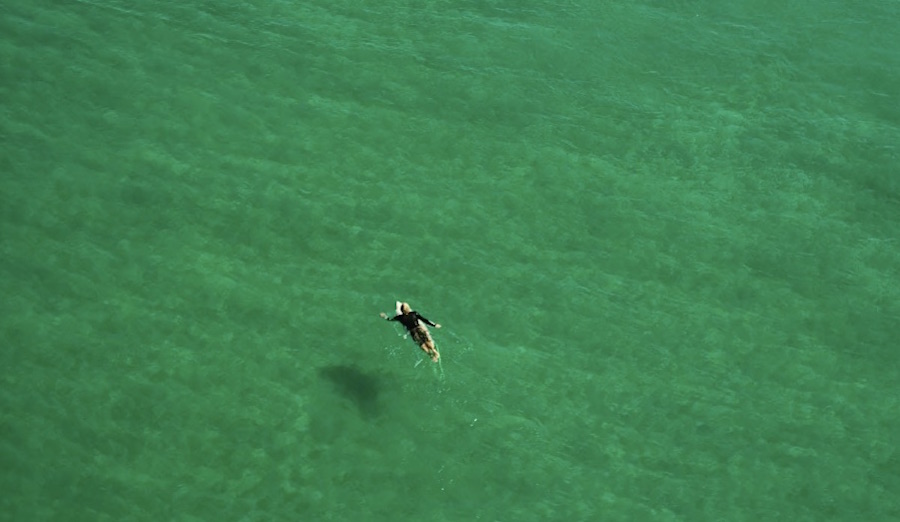
This view comes at a price. Photo: Screenshot/Vimeo

Drones are all the rage. So much so, that from companies like Amazon to humanitarian and disaster relief organizations, many are investing heavily in research and development of new applications for unmanned aerial vehicles (UAVs). In surf, drones are almost exclusively used in the film space. And they’re just as hot as in other contexts. It makes sense. They offer the ability to capture surfing from a completely new perspective–from above.
On Tuesday, the Federal Aviation Administration released long-awaited new regulations regarding the commercial use of drones that will go into effect in August. So, for those flying drones and taking video for personal use, there’s a different set of rules for you. But if you film or take photos using drones that you plan to sell, you fall into the commercial category to which these new rules apply.
Few were surprised over most of what was released, including: drones having to be under 55 lbs.; only being allowed to fly them where the operator can see them; a ban on any night flying whatsoever; and a maximum flight altitude of 400 ft.
But what did emerge somewhat unexpectedly was the need for drone pilots to posses a, “remote pilot airman certificate”.
For companies like Aether Films–who famously produced that video of Kelly’s wave 6 months ago–this new rule is a watershed moment.
“The new laws basically mean that it’s going to become easier to operate drones commercially,” says Aether’s Director of Sales and Marketing Kyle Bullington.
Before the new regulations dropped, Aether had to secure what’s called a 333 exemption. “All our paperwork took us a long time to file and get approval,” Kyle says. “Now the FAA is making more lenient regulations to become a commercial operator–likely because they are overwhelmed with all the requests.”
And that’s accurate. Navigate to to the FAA’s 333 exemption page and you get the following disclaimer: “Due to the high volume of Section 333 petitions received, we are experiencing delays in processing petitions.”
But even though these new regulations make it easier for videographers and photographers to get certified to fly drones for video projects, many complain that the FAA hasn’t worked closely enough with drone operators to develop these rules.
“Overall I don’t feel that the new regulations are a leap forward,” Kyle says. “I’m really hoping for an expanded FAA department on UAVs that works closer with operators to form a proper streamlined regulation system.”
It’s also unclear what the long-term impact of more lenient regulations will be for surfing. So far, drones haven’t reached the level of popularity where they’re crowding airspace over lineups across the world. But with less red tape, is it just a matter of time?

