
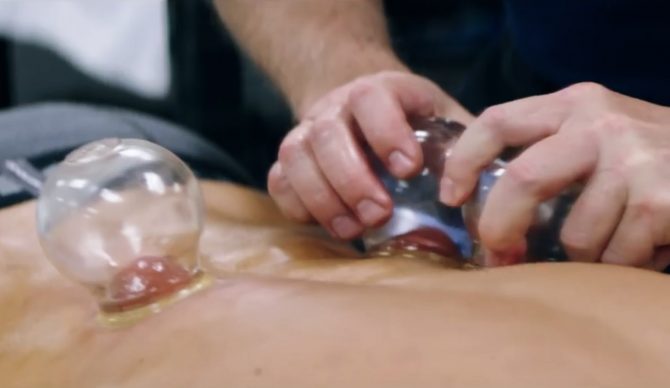
Michael Phelps uses cupping therapy. Should you?

In a recent Under Armour commercial, bong-ripping Olympic swimmer Michael Phelps is seen undergoing cupping therapy. If you thought that this ancient practice of Chinese medicine was an unproven technique with questionable benefits, well…you might be right. Then again, paddling a surfboard is similar to swimming, and those red circles on your back would be a small price to pay for lats like Phelps’. Is he on to something we should know about? Snap on a Speedo and find out.
What Is It?
Cupping works like this: A vacuum is created inside glass or plastic cups which are then placed on the skin. The vacuum pulls the skin up into the cup before being released 5 to 10 minutes later, leaving red rings for as long as a week and a half, but usually only a few days. Nowadays, practitioners may use cups that are squeezed or pumped to create the vacuum. But the old way involves lighting a match or alcohol swab on fire inside the cup, then placing it on the skin. As the skin and air within the cup cool, they contract, creating suction. This treatment is technically called dry cupping, as opposed to wet cupping, which involves small amounts of controlled bleeding.
(BTW, Phelps and fellow swimmers aren’t the only athletes who’ve turned to it. In the past few years, the Oakland Athletic, New York Mets, rugby players and others have been seen sporting the circles.)
In dry cupping, the suction pulls blood to the skin, encouraging blood to flow where otherwise it may not. The body is responding as if it has been injured, using antibodies to promote healing.
What’s It For?
Cupping purportedly treats a huge range of maladies, from migraines to digestive problems. But athletes have used it for muscle soreness, strains and tightness, mobility problems and pain — everything your body is likely to feel after a grueling surf.
Does It Work?
Tough to say. A lot of athletes and practitioners swear by it while researchers and doctors point to an utter lack of empirical evidence supporting its effectiveness. Some researchers suspect the placebo effect is at work in people who receive cupping. The best that can be said about it is probably this: It’s not going to hurt you and, who knows, it might really help.
https://youtu.be/Xh9jAD1ofm4?t=1s

