
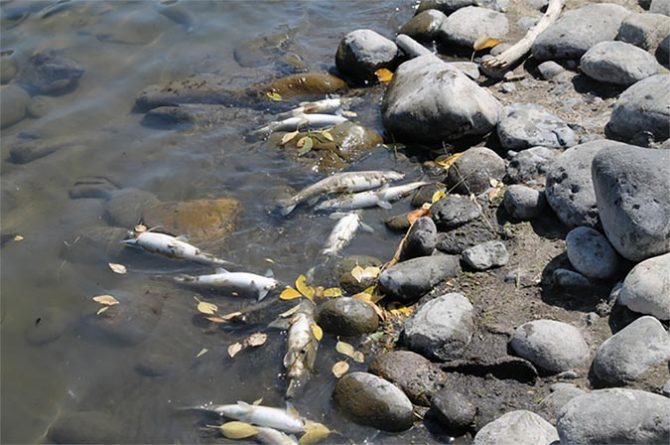
Photo: Crisis Forum

A parasite has killed some 4,000 fish in the Yellowstone River, forcing officials to shut down access to the storied waterway that runs east through Montana. Officials say most of the fish are Whitefish, a native bottom feeder, but fear that the actual number of the species killed is in the tens of thousands.
Apparently the parasite is part of the myxozoan family. These tiny being’s entire life is spent as microscopic spores and their closest relative is the jellyfish, corals and sea anemones.
The closure includes a 183-mile stretch of the Yellowstone and hundreds of miles of other tributaries that include the Boulder, Shields and Stillwater Rivers. According to the Montana Fish, Wildlife and Parks Department, the parasite actually causes the fish to go into kidney failure which eventually kills them with a mortality rate up to 90 percent. Outbreaks have also occurred in Washington, Oregon and Idaho. The Yellowstone is famous for its Rainbow and Cutthroat Trout fishing and many people are worried that it might signal things to come as Whitefish are traditionally an indicator breed because of their sensitivity to environmental factors like disease. And heat.
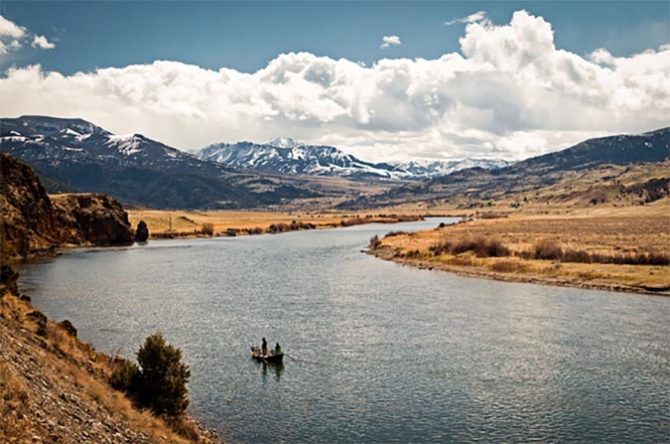
Photo: Sweetwaterflyshop.com
“Basically, the Yellowstone River has been low and hot,” Reba Brinkman told The Inertia. Brinkman is with The Rivers Edge, a flyshop and guiding outfitter in Bozeman, Mont. Warm water makes these cold-water species more susceptible to diseases.
“We need above average winters to continue,” added Todd Lanning with Henry’s Fork Angler, which is in Island Park, Idaho on the Henry’s Fork of the Snake. “We’re still in a pretty severe drought.”
The fish kill has affected outfitters of both rafting and fishing in the Billings, Mont. area. The parasite is not native to the region and was transferred in from somewhere else, via human equipment like boats and gear, or by migrating birds. Officials are emphasizing that anglers and boaters need to clean watercraft so as not to pass the disease to other waterways.
“We all support the decision (to close the river),” said Brinkman, who added that most outfitters have permits on the Madison and other bodies of water so they will survive. “If we don’t get this under control it could really affect all of our livelihoods for years to come.”

