
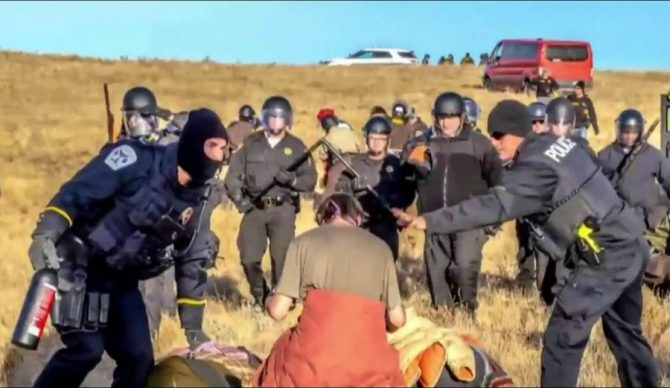
A protestor of the Dakota Access pipeline getting arrested. Photo: NVC News

Hundreds of protestors at of the Dakota Access pipeline are steeling themselves for a clash with authorities today ahead of a deadline to vacate camps on federally managed land.
Authorities have given protesters until 2 p.m. CT, Wednesday to leave the Oceti Sakowin camp, the main protest camp and the one closest to where the pipeline will be laid underneath the Missouri River. Some activists have already cleared out, with few taking part in a ceremonial act in which they prayed and set fire to their tents and teepees.
“People are being very mindful, trying very hard to stay in prayer, to stay positive,” said Nestor Silva, 37, of California. “I am not aware of any plans for belligerence.”
At times, the number of protesters reached 10,000, though only a couple hundred remained by Tuesday, according to news reports. It’s those remaining protesters that have law enforcement organizing as the deadline looms. And while some called the burning of structures a ceremonial act, other protesters disagreed.
“It’s an act of defiance,” one protester told the New York Times. “It’s saying: ‘If you are going to make us leave our home, you cannot take our space. We’ll burn it to the ground and let the earth take it back before you take it from us.'”
The months-long protests have gotten violent before, with authorities using rubber bullets, tear gas and water cannons, whose effect is intensified by the frigid temperatures of the North Dakota winter.
“I have no fear…I am living in the purest form I can,” a protestor told reporters. “If they are people who want to harm me, then that’s on them.”
President Donald Trump greenlit the controversial pipeline with an executive order last month, just a few days into his presidency and after months of protests. That order wiped away a short-lived victory from the Obama administration in which it was announced an easement to continue construction wouldn’t be granted. With its completion imminent, the Army Corps is clearing out the lands for the construction of the final stretch of the 1,100-mile long pipeline.

