
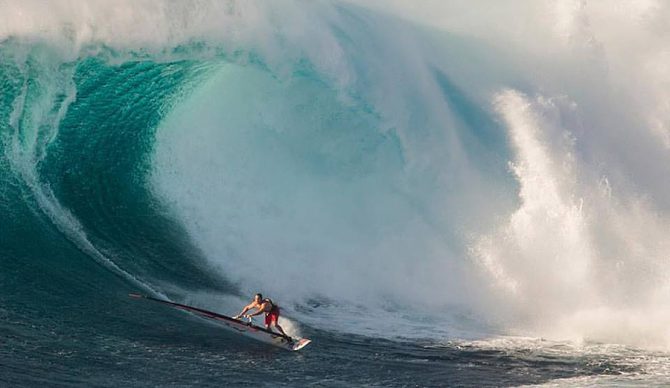
Graham Ezzy. You know where… Photo: John Carter

“It’s the most magical wave I’ve ever ridden,” says Graham Ezzy. Jaws, a big wave surf break located off the coast of Maui, can produce waves north of 60 feet tall when it’s pumping. Once considered the largest breaking wave in the world, Jaws has become a legendary spot that beckons the few surfers capable and willing to ride it. Ezzy is a professional windsurfer who grew up near the break in Maui and knows it better than most. “It’s special for how calm it stays even with its size,” he says. “Most waves over 20 feet turn into survival at sea, but Jaws is calmer despite waves the size of mountains.” The channels to the left and right of Jaws make for the glassier, not-too-choppy face. Don’t misunderstand him though, the power of Jaws is undeniable. “It’s still scary though,” he says.
Approaching waves the height of city buildings, fear inevitably courses through the body beforehand. Something can always go wrong. But once you catch a wave instinct takes over. “In the moment, the fear fades away,” says Ezzy. Conquering these giants requires the right mindset though, and Ezzy always prioritizes safety, staying keenly aware of the commanding forces at play out of respect for the ocean and self-preservation. “Riding a wave with so much force, it’s a humbling yet addictive feeling,” he says. The adrenaline induced by riding such a heavy wave often leaves him feeling withdraw afterward. “I feel kind of shitty after, “ says Ezzy, “like an endorphin hangover. But I always have the feeling that I wish I went harder.”
On smaller waves, this isn’t a problem, as Ezzy rips as hard as he wants. Bigger waves carry heavier consequences though, and the margin for error is slim. “In a normal session with 10 to 12-foot waves, I can go harder,” says Ezzy, “but when it’s big, there’s a limit to how much you can push it.”
Pushing the limits of windsurfing himself, Ezzy has brought new tricks and style into the sport. He pioneered the “no-handed push loop,” a no-handed backflip of sorts. He was also the first to carve the “taka,” which looks like a reverse in traditional surfing, out in bigger wave runs. Before Ezzy, surfers only pulled the trick off in mushy, onshore conditions. Much of his inspiration spawns from moves in kite or traditional surfing.
Like any good athlete, Ezzy has drawn inspiration from other windsurfers as well. He looks up to Jason Polakow, a top Aussie windsurfer who revolutionized the sport with a radically aggressive style as well as Levi Siver, who really defines the act of free surfing in the sport. As to whether Ezzy rises to those ranks, time will tell. But he’s less worried about his legacy and more concerned with catching the next wave. “I don’t know if I’ve thought about legacy before,” he says. “I worry more about who I don’t want to become, rather than who I want to be.”
Over the next three months, Ezzy will continue honing his craft, training and competing in Hamburg, Germany for a few events before heading back to Maui in the fall. “It’s an amazing time of year in Maui because the waves are just starting to roll in,” says Ezzy. And come the early winter months, you can bet Ezzy will be charging the swell at Jaws once again.
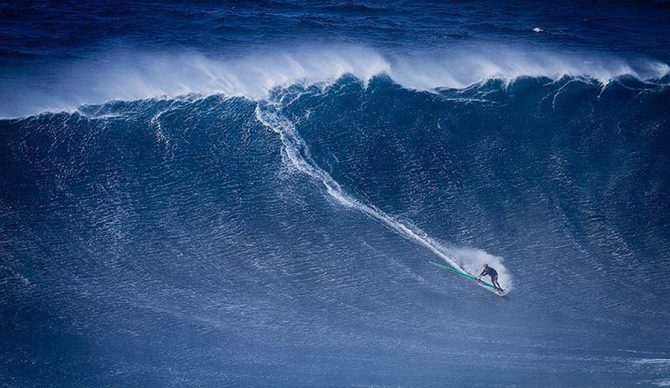
“I feel kind of shitty after, like an endorphin hangover. But I always have the feeling that I wish I went harder.” – Graham Ezzy
Note: From June 26th through the July 16th, 10% of your purchase of any product from The Frynge will support Graham Ezzy. For action sports disciplines like windsurfing, funding doesn’t always come easy, and elite athletes often times have to incur large personal costs to compete at a high level. The Frynge is proud to provide a platform that allows readers and customers like yourself, to have a direct impact in supporting athletes like Graham.

