

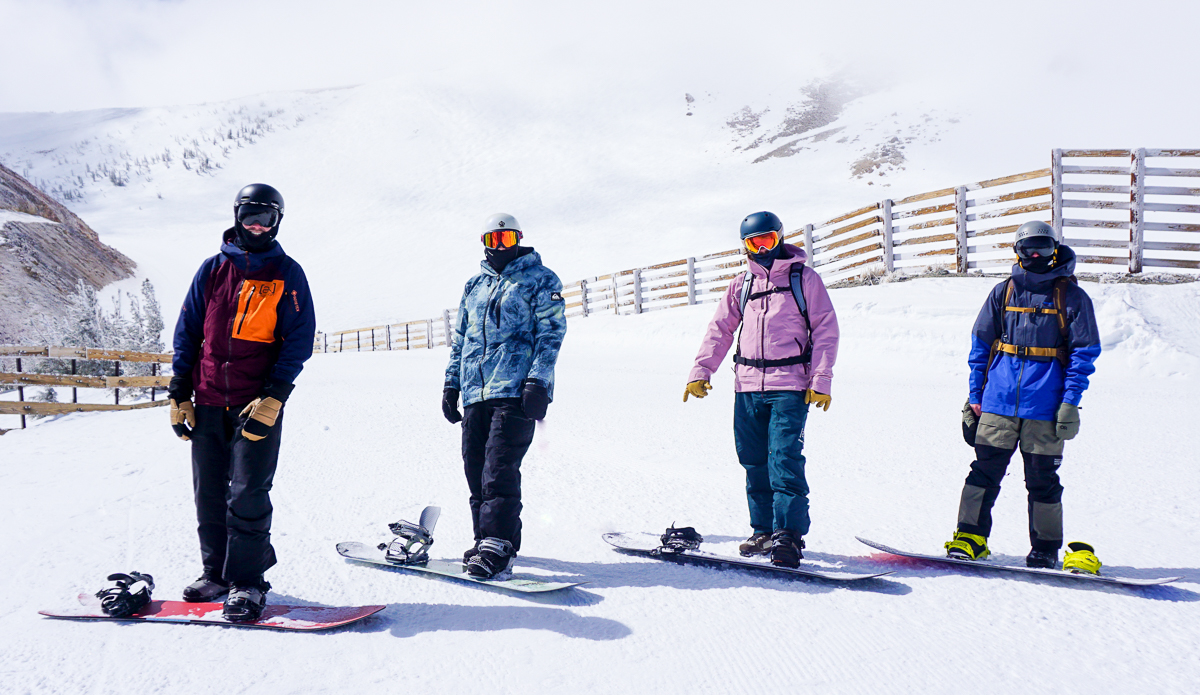
Snowboard jackets from Burton, Quiksilver, The North Face, Patagonia, and more were mountain-tested for this guide. Photo: Will Sileo//The Inertia

To properly enjoy a day on the mountain, a great snowboard jacket is imperative. With so many options on the market, choosing the right one can be overwhelming. We’ve been putting the best snowboard jackets to the test for more than three seasons now, and with each iteration, we get more dialed in on our top picks. Testing has included sub-zero temperatures, rainstorms, peak powder, windy days, sunny days, and all-of-the-above-days. We’ve tested shells, 3-in-1s, and insulated snowboard jackets.
Throughout our testing, we’ve had a whole team of riders contribute thoughts, favorite picks, and real-world testing to this guide. Some of us prioritize backcountry use and need a breathable, mobile snowboard jacket. Others snowboard only at the resort and want a comfortable, warm option. A few of us opt for a one-and-done, durable, and premium jacket that can be used anywhere. The good news: All of us pitched in our thoughts and opinions to bring this guide to life. Check out The Inertia’s picks for the best snowboard jackets below!
Navigate To: Comparison Table | How We Tested | Buyer’s Guide
Related: Best Women’s Snowboard Jackets | Best Snowboard Pants | More Snowboard Gear
Editor’s Note: We updated this guide in March 2026 with a couple of new picks (686 Waterproof Hoody and Backcountry Cottonwoods LT Xpore 3L Snowboard Jacket) after in-season testing. We also removed a jacket that was difficult to find and added some insights from more testing. The Burton [ak] Swash remains our top choice snowboard jacket. We’ll update this guide one more time at the tail-end of the snowboard season.
The Best Snowboard Jackets of 2026
Best Overall Snowboard Jacket: Burton [ak] Swash
Best 3-in-1 Snowboard Jacket: The North Face ThermoBall Eco Snow Triclimate
Best Budget Snowboard Jacket: 686 Waterproof Hoody
Best Backcountry Snowboard Jacket: Jones Shralpinist Stretch Recycled Jacket
Best 3-Layer Shell Jacket: Patagonia SnowDrifter
Jump To More Snowboard Jackets
Best Overall Snowboard Jacket
Burton [ak] Swash ($520)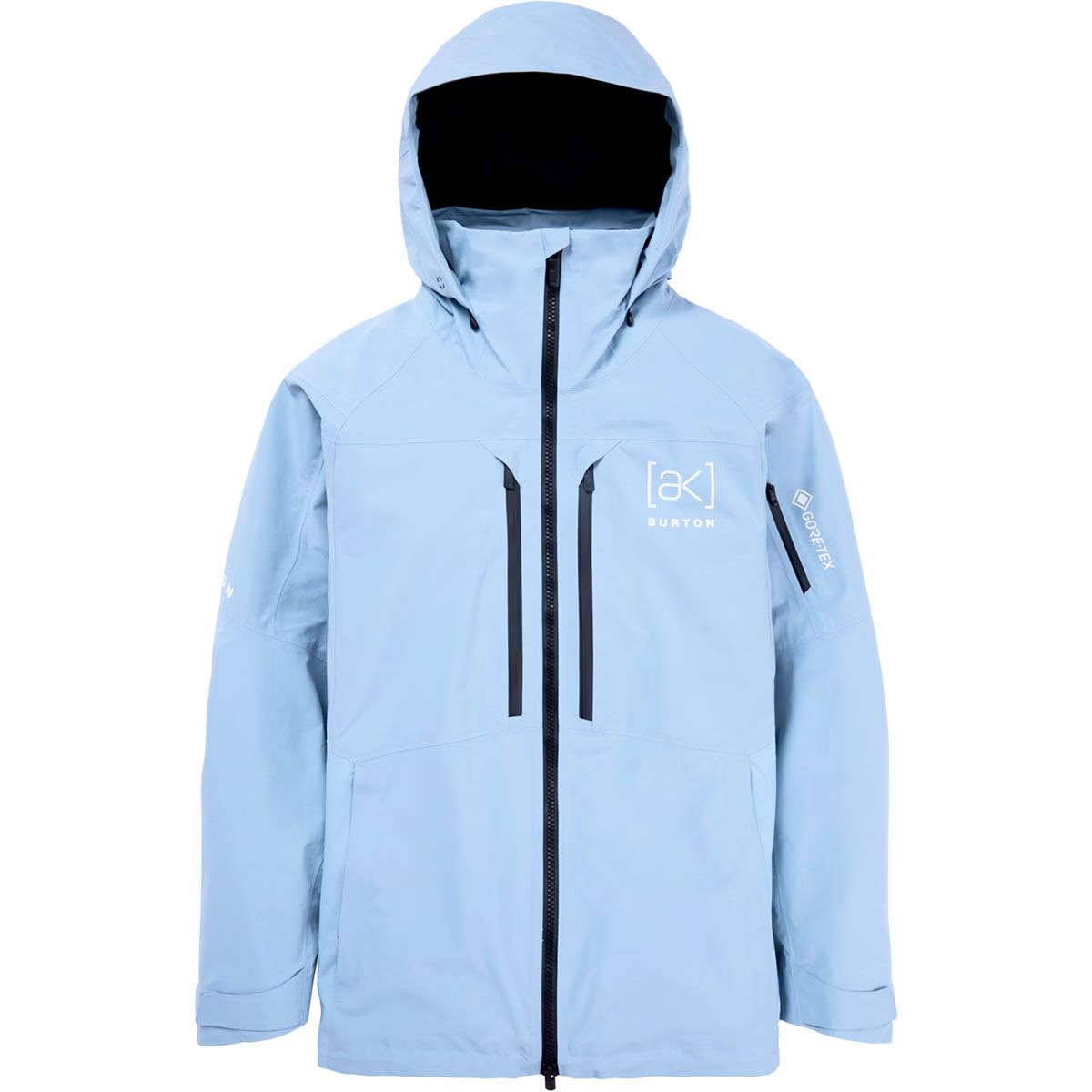
Waterproofing: 2L Gore-Tex
Insulation: 60 g PrimaLoft Silver
Notable Features: Wrist gaiters, excellent pocket arrangement, core-mapped insulation, powder skirt
Pros: Durable, just enough insulation, full-featured
Cons: Pricey for 2L Gore-Tex
When testing snowboard jackets this season, our team was seeking the perfect combination of price, features, functionality, and durability. We’ve tested north of 30 jackets in the past couple of years, and the Burton [ak] Swash stood out this season as a near-perfect all-around snowboard jacket. The Swash is insulated, but just enough (60 grams of PrimaLoft Silver) for versatile wear. The jacket also features 2-layer Gore-Tex waterproofing with excellent durability (75 Denier face fabric). But the baseline stats didn’t differentiate the Swash; it was the range of features and practicality combined with stylish looks and a solid price that helped the Swash secure our top spot.
On the mountain, the Burton [ak] Swash is an ideal insulated resort jacket. In a category that often feels like you have to sacrifice one feature for another, the Swash provides everything we want. It boasts four zippered exterior pockets on the torso (two hand and two chest) plus a pass pocket on the arm. Inside, there are two huge stretchy drop pockets for goggles, gloves, etc, plus an insulated zippered pocket that’s ideal for a phone. Pit zips, dual zippers on the main zip, integrated stretchy thumb-loop cuffs, an effective powder skirt, and an easy-to-use-with-mittens cinch hood complete the feature list.
Sure, it’s feature-laden, but does it perform? Unequivocally. We’ve now had this jacket out in a range of conditions—from falling wet snow to shimmering bluebirds—and it has impressed us on every lap. The tough 2L GTX readily sheds moisture, and the Goldilocks insulation kept us warm from temps hovering just above zero degrees Fahrenheit up to 35 and sunny (with the pit zips open). The insulation is centered around the core, and it’s ideal for just about everything except for warmer backcountry tours (check out the Jones Shralpinist Stretch, below, for those conditions). Sure, it’s not a top-of-the-line three-layer Gore-Tex, but the Burton [ak] Swash left us wanting for nothing on the slopes, and at $520 it’s a snowboard jacket that will serve you well for years.
Check out our full review of the Burton [ak] Swash snowboard jacket.
Check Price on REI
The Burton [ak] Swash is easy to recommend—functional, warm, and stylish. Photo: Tim Manning//The Inertia
Best 3-in-1 Snowboard Jacket
The North Face ThermoBall Eco Snow Triclimate Jacket ($400)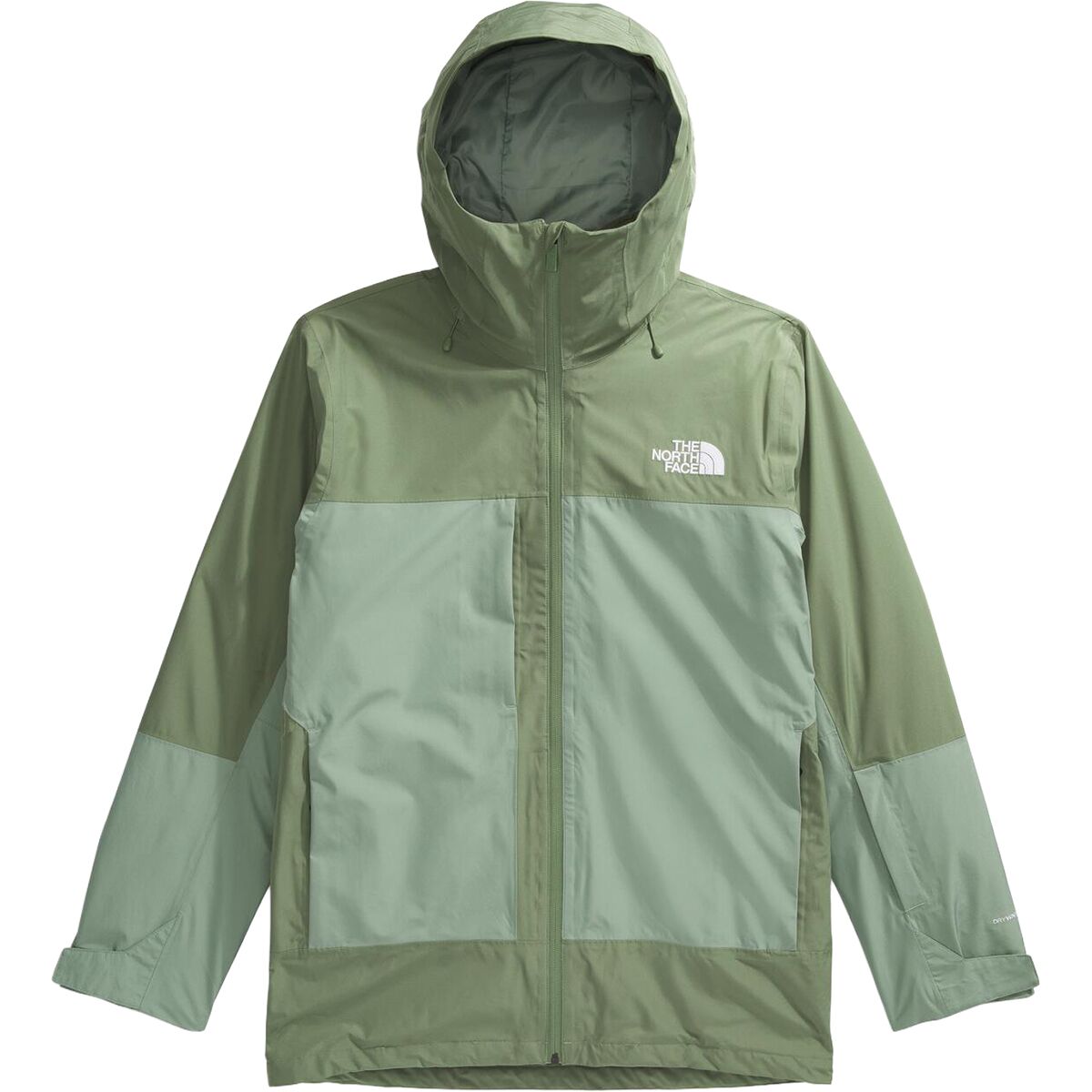
Waterproofing: 2L DryVent
Insulation: Removable ThermoBall eco liner
Notable Features: Stylish and functional liner, better-than-expected waterproofing, good mobility for 3-in-1
Pros: Excellent fit and features for 3-in-1
Cons: Midlayer and shell aren’t quite as high-quality as competition
One of our favorite all-around winter jackets of the year is the venerable The North Face ThermoBall Eco Snow Triclimate Jacket. If you want to buy one jacket that will serve you for three seasons of the year, plus work great out on the slopes, look no further. The ThermoBall is a well-constructed synthetic puffer surrounded by a DryVent shell. Waterproofing is good, and breathability is so-so, but the features on this jacket punch well above its price point. With a powder skirt, excellent pocket layout, one of our favorite hoods, and a mid-layer puffer that actually looks decent on its own, if you need one jacket to rule them all, then The North Face ThermoBall Eco is the way to go.
One standout for this TNF jacket was the excellent fit (for snowboarders at least). It’s a bit roomier, which makes layering the puffer and outer easy, plus it leaves space for even more mid-layers if it’s a super cold day. While the material feel might not be as premium as the Jones or Arc’teryx, we were plenty impressed with the DryVent shell, which easily held off wet snow at Arizona Snowbowl. And many 3-in-1s skip the powder skirt, which we really appreciated here; it lends versatility to an already versatile jacket. Plus, it even has an interior pocket on the mid-layer, in case you are wearing both and you need to stash your phone inside (some 3-in-1s skip this feature, and you can’t access the inside pockets of the shell).
Check Price on REI
The North Face ThermoBall Eco 3-in-1 is popular for good reason: It just works. Photo: Tim Manning//The Inertia
Best Budget Snowboard Jacket
686 Waterproof Hoody ($160)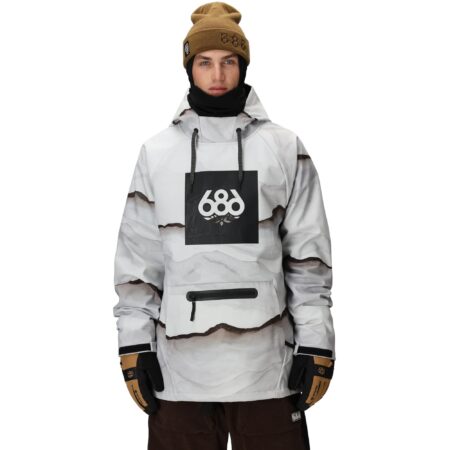
Waterproofing: 10K/10K infiDRY
Insulation: Fleece-lined
Notable Features: Price, anorak style, comfortable liner
Pros: Affordable, functional at the resort, looks good, decently waterproof
Cons: Lacks breathability, not versatile
Our guide features a new budget king, the unassuming 686 Waterproof Hoody. While our former budget pick was also a 686 (the admittedly more capable Smarty 3-in-1, below), the simple Waterproof Hoody provides resort riders with just enough wet protection and warmth for fun days on the mountain. Sure, the Smarty was inexpensive ($310), but the Hoody is about half that, and at just $160, you can ensure you have cash leftover to spend on hard goods.
With a few bells and whistles, the 686 Waterproof Hoody is plenty of jacket for most days at the resort. We found the fleece lining to be super comfortable, and on warm days, a t-shirt underneath this jacket felt totally reasonable. The kangaroo pocket has a dual-zippered pass-through area with another zippered pocket on top for smaller stash items. The classic side-entry anorak zip allows you to wear this wide-open as the day warms up, and the 2-way stretch fabric is really comfortable and moves with you. To be clear, this isn’t a breathable jacket, and its waterproofing is so-so, and as such, it won’t be great for wet, snowy days or hoofing it in the backcountry. But for the majority of riding days, say 15-35 degrees, we don’t see why you’d need much more than this simply upgraded hoody.
Check Price on REIBest Backcountry Snowboarding Jacket
Jones Shralpinist Stretch Recycled Jacket ($500)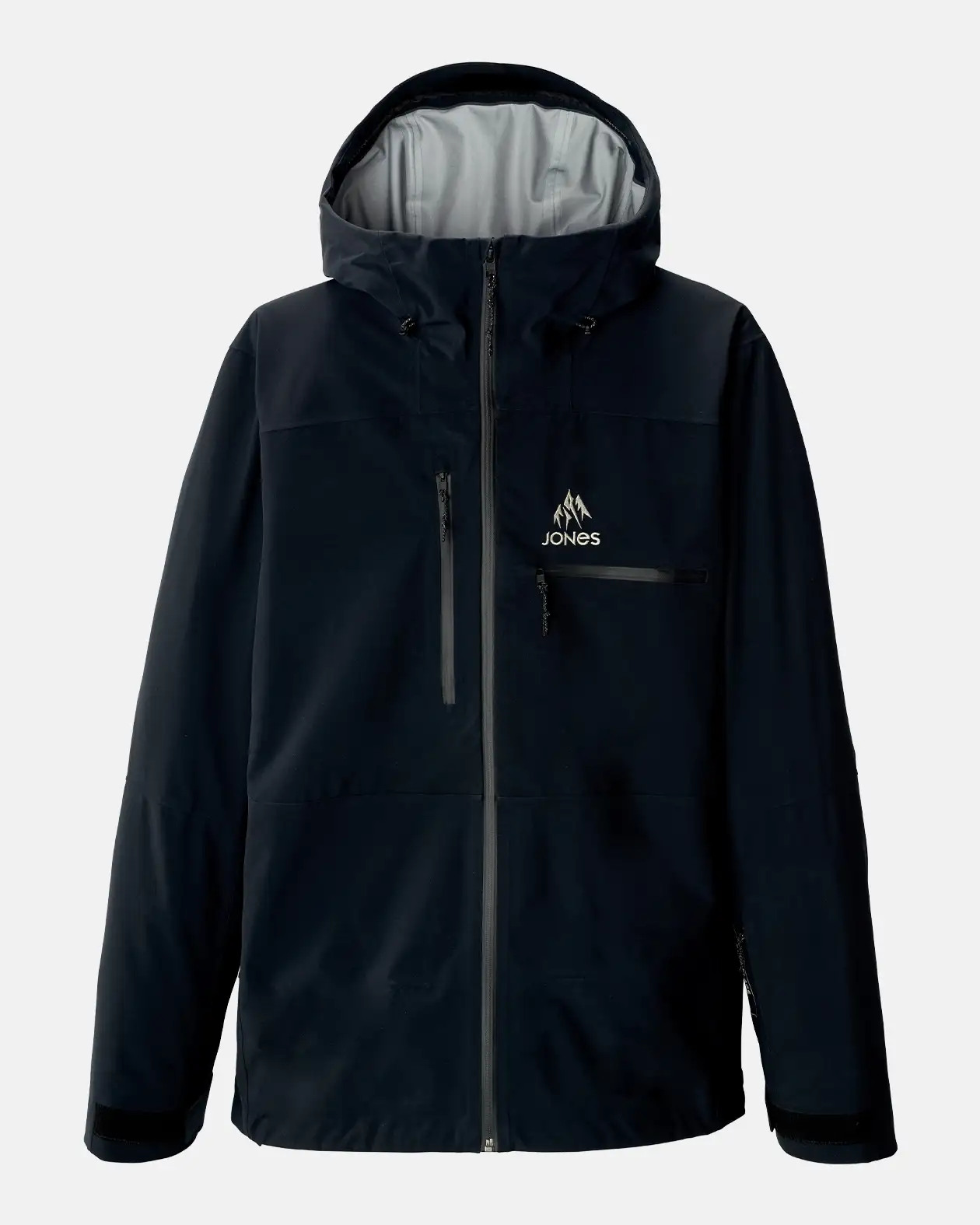
Waterproofing: 3L 30K/30K Stretch
Insulation: None
Notable Features: Class-leading breathability and mobility, fabric feel is our favorite
Pros: Excellent range of motion, improved durability, best breathability
Cons: Not quite as effective in truly wet weather
We’ve been rocking with Jones for some time now, and the updated Shralpinist Stretch jacket is one of the most comfortable, flexible, and packable backcountry snowboard jackets we’ve tested. Upgrades to the durability took what was a comfy jacket and made it more resilient, which is much appreciated when ripping through tree lines. The breathability is superb, and while we might opt for the Patagonia Untracked below in truly wet weather (think PNW), we found the Shralpinist Stretch held up really well in the types of snow that the western and southwestern US gets hit with.
In the backcountry, packability and ventilation are key. When hiking uphill, you want a jacket that will either stash in your pack or be able to be zipped wide open in the pits to quickly dump heat. We didn’t find any other jackets that packed down smaller yet still offered such effective protection, and the 30K breathability rating was noticeably more breathable than the competition. Plus, subtle attention to details like the fact that 5 Red Flags and avy rescue tips are printed right on the jacket in case you find yourself in an unsafe snowpack. To add to our testing notes beyond the slopes, we actually took this jacket on a few rainy hikes and found that it held up well for a few hours, but for true all-day wet weather protection, you’d be better off with the GTX ePE version of the Shralpinist (note: it is $300 more).
Check Price on Backcountry
At the resort or in the backcountry, the Jones Shralpinist Stretch was far and away the most comfortable snowboard shell we tried this season. Photo: Tim Manning//The Inertia
Best 3-Layer Shell Jacket
Patagonia SnowDrifter ($449)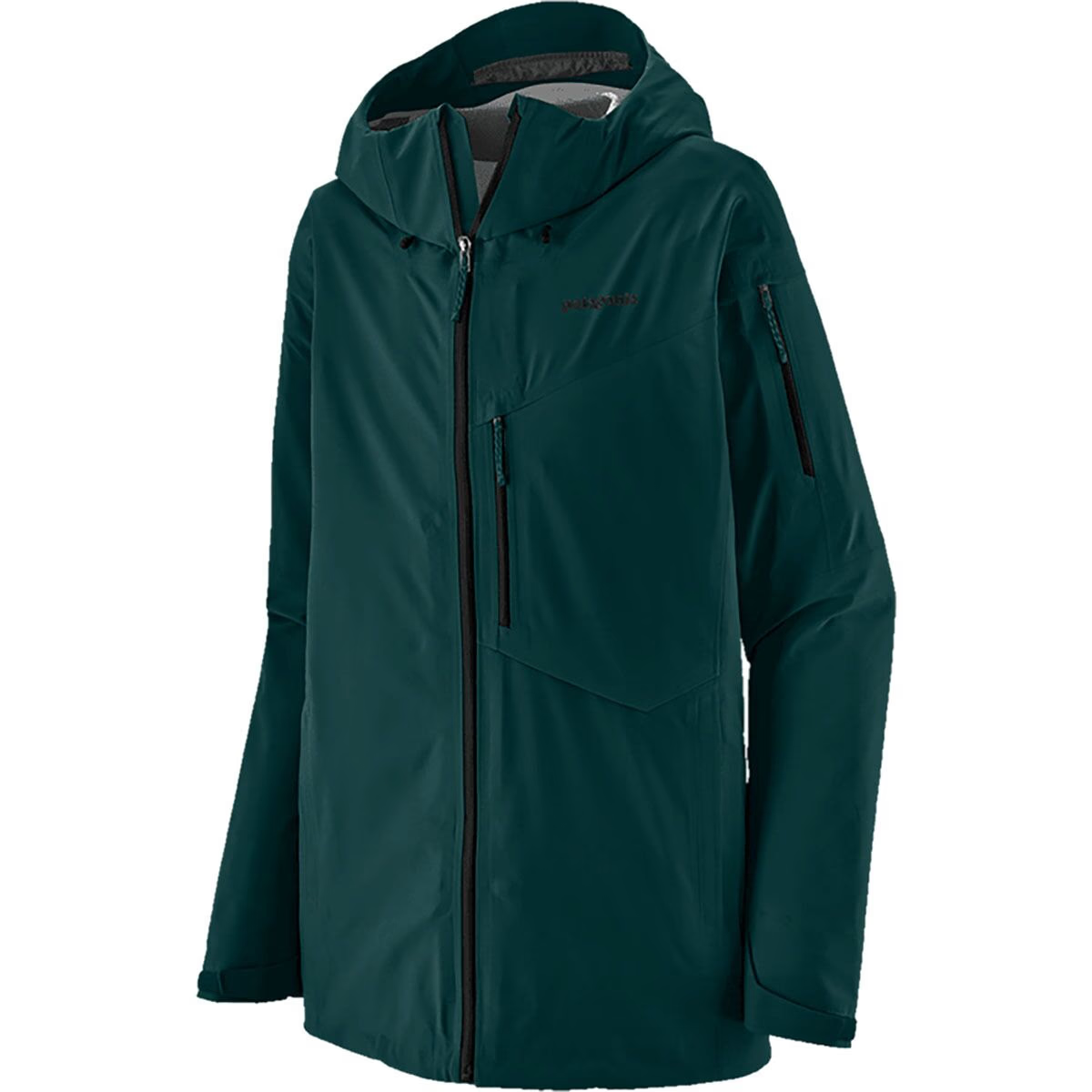
Waterproofing: Proprietary H2No 3L Recycled Polyester
Insulation: None
Notable Features: Impressive value for reliable 3L waterproofing, very good mobility and fit
Pros: Light, stretchy fabric free of PFC chemicals
Cons: Exterior tends to get saturated in a downpour
It’s no secret that Patagonia is committed to more sustainable outerwear. The Patagonia SnowDrifter jacket sets the bar even higher. With a stretchy 3-layer recycled polyester material, the jacket is thin yet will protect you from the elements while giving enough play to fit well, yet also accommodate the demands of riding hard and holding up. The water-repellant (DWR) coating is free of the nasty PFCs that will outlive us all. If that is a concern, then the Snowdrifter may be the choice for you.
But we still need the jacket to perform well when snowboarding, and thankfully, it does. With all the necessary features, such as an inside stash pocket, powder skirt, and pit vents, the jacket sports what you need to have a fun day on the hill. The only issue we found was that in a downpour, the jacket does not bead water away and instead can saturate the top layer. That said, it doesn’t reach inside; however, in high-humidity situations such as the PNW, the material can stick to the skin and cause internal sweating. This isn’t so much of an issue if you have a layer underneath (which you most certainly will), but if using it as a rain jacket, hopefully, the environmentally responsible approach will take a higher priority and not be as much of an issue.
Check Price on REIMore Snowboard Jackets We Recommend
A Do-It-All 3-in-1
686 Smarty 3-in-1 Form ($310)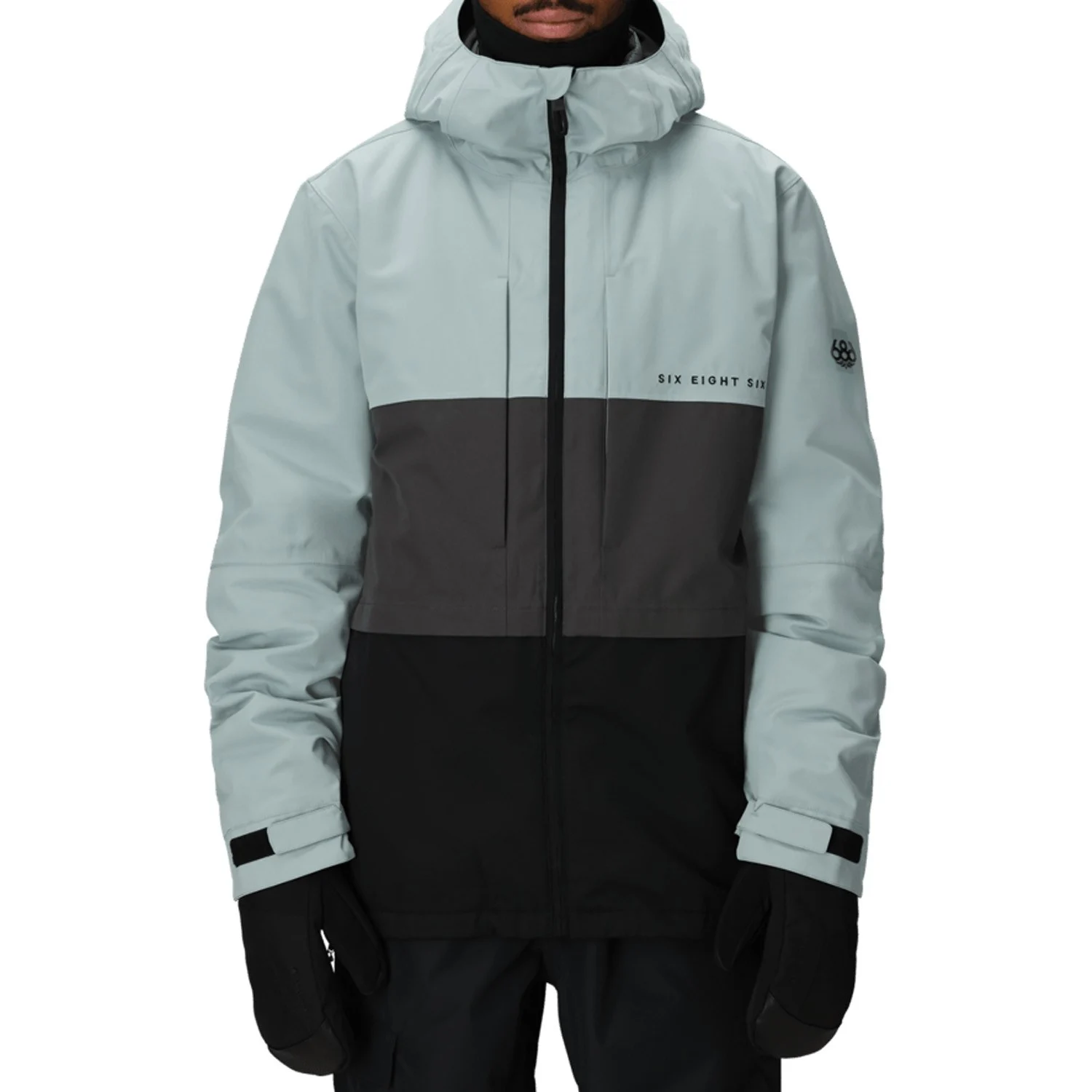
Waterproofing: 2L infiDRY
Insulation: Removable 160g Liner
Notable Features: Wrist gaiters, excellent pocket arrangement, core-mapped insulation, powder skirt
Pros: Great warmth, classic style
Cons: Midlayer isn’t too breathable
Not everyone is a ride-or-die shredder, and that’s okay. We all have different interests to occupy our time. But when you do go shredding, you still need to be safe from the elements and keep scoring those all-important style points. The 686 Smarty 3-in-1 Form jacket suits a day on the hill, but it’ll also work in a variety of forms off the hill as well, with a stylish removable underlayer that looks good around town.
The outer shell sports 20k waterproofing, providing total dryness in every condition, though it may take on some water in something like a coastal downpour, which is probably not a problem for most. And we couldn’t find anything with the combo of warmth and dryness for the price. While there are other, cheaper options (like the Waterproof Hoody above), we felt that the ability to add or remove a mid-layer and some of the bonus features, such as mesh-lined underarm venting, give you a well-thought-out jacket(s) that will have many more uses than just on the slopes. This is right behind both The North Face ThermoBall Eco and 686 Waterproof Hoody for their respective awards, and so it’s still an awesome option if you’re looking for great value and versatility.
Read our full review of the 686 Smarty 3-in-1 snowboard jacket.
Check Price on REI
Reasonable and well-featured, what’s not to love about the 686 Smarty? Photo: Steve Andrews//The Inertia
An In-House Champ
Backcountry Cottonwoods LT Xpore 3L Snowboard Jacket ($499)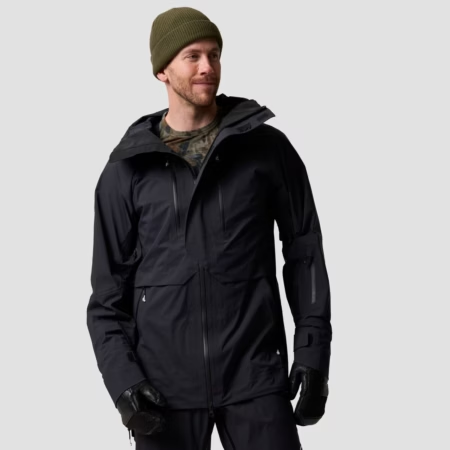
Waterproofing: Xpore 3L
Insulation: None
Notable Features: 40D Stretch Fabric, loads of pockets
Pros: Surprisingly good proprietary fabric, lightweight feel
Cons: Doesn’t feel quite as waterproof with stretch fabric
We’re always stoked when a brand comes out with a proprietary snowboard jacket fabric, and we have been particularly impressed with the Backcountry Cottonwoods LT Xpore 3L Snowboard Jacket. The Xpore fabric is different looking and feeling from a lot of competitors—it’s 4-way stretch and small “pores” give it a fairly soft touch feel, and there is no doubting its mobility. While there are top-of-the-line backcountry jackets that may cost double, if you’re a frequent splitboarder or want an active-oriented snowboard jacket, the Cottonwoods is worthy of your attention.
Now, with stretch fabric, there’s always the slight concern of wetting out, but we found the Cottonwoods LT held up really well to moisture even in warm spring conditions. We still prefer the material feel of the Jones Shralpinist and Patagonia SnowDrifter, above, but this jacket is coming along beautifully. We’d say it has a better pocket setup than either of those, too. While it’s not cheap, the $500 price-point seems like a perfectly reasonable value for all you get in this Backcountry shell.
Check Price on BackcountryAnother Great Value 3L Shell
The North Face Ceptor Jacket ($475)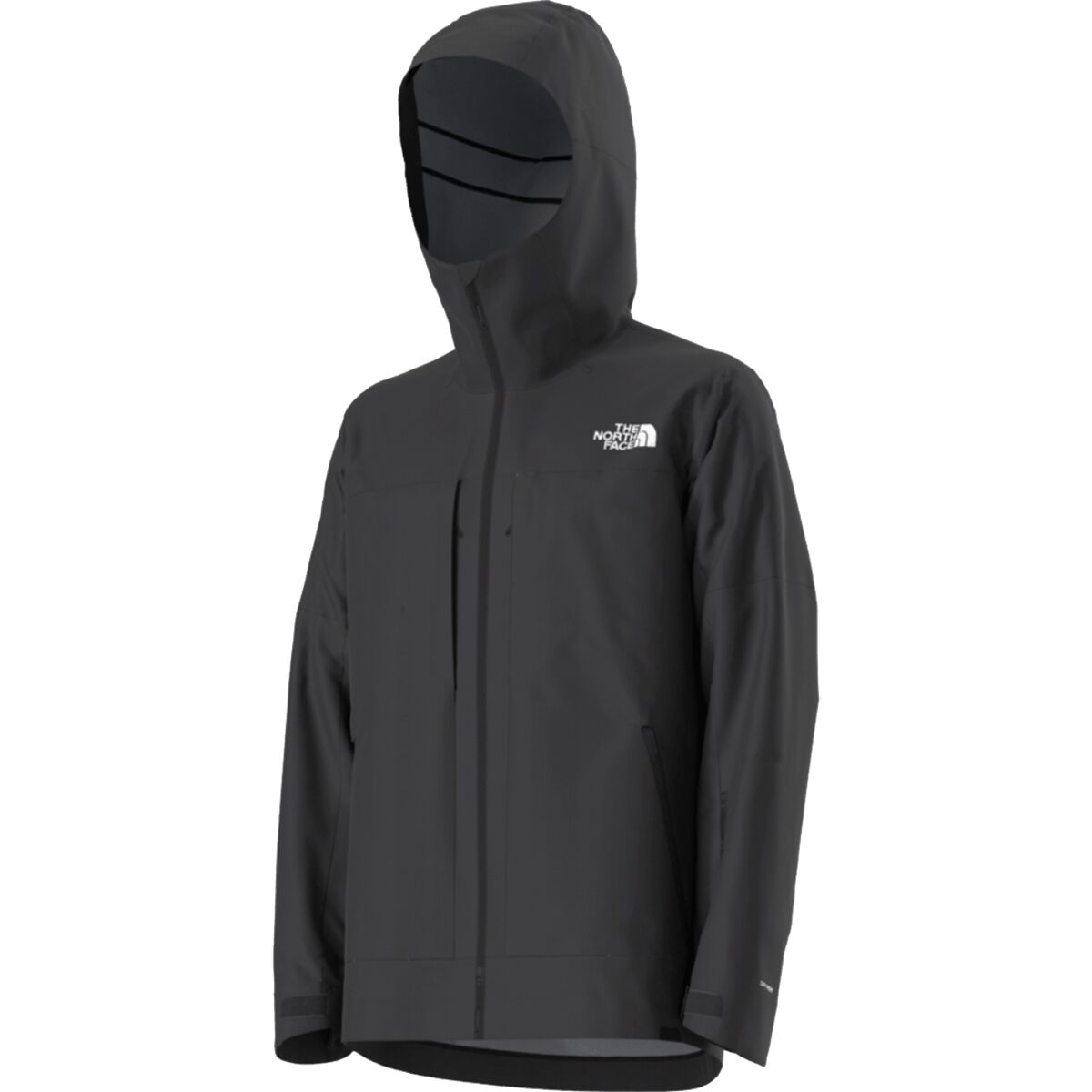
Waterproofing: 3L DryVent
Insulation: None
Notable Features: Waterproofing is surprisingly good, articulation and relaxed fit make it super mobile
Pros: Great value for reliable protection, relaxed fit, good pocket layout
Cons: Doesn’t feel quite as durable as competition
We got to testing The North Face Ceptor Jacket at the end of the 2025 season and were absolutely stoked on its performance, especially at the sub-$500 price point. It’s getting harder and harder to find a breathable, reliable 3-layer snowboard jacket for a good price, but The North Face showed up with their proprietary 3L DryVent. The material feel on this jacket is excellent—it’s super soft and pliable, and from a waterproofing standpoint, it held up super well. It feels a touch thinner and less durable than top-tier competitors with GTX Pro, but it’s also, like, 300 bucks cheaper than jackets with that tech.
We found the pocket arrangement was just what we needed, with nothing extraneous, and there was a reliable powder skirt. This jacket actually fits a bit more relaxed than some others, which, as snowboarders, we liked for a bit more mobility on rotations and laying down carves. The only reason the Patagonia SnowDrifter above beat out the Ceptor was because, with similar features and waterproofing, it’s just a touch less, but both are great 3-layer shell jackets.
Check Price on REI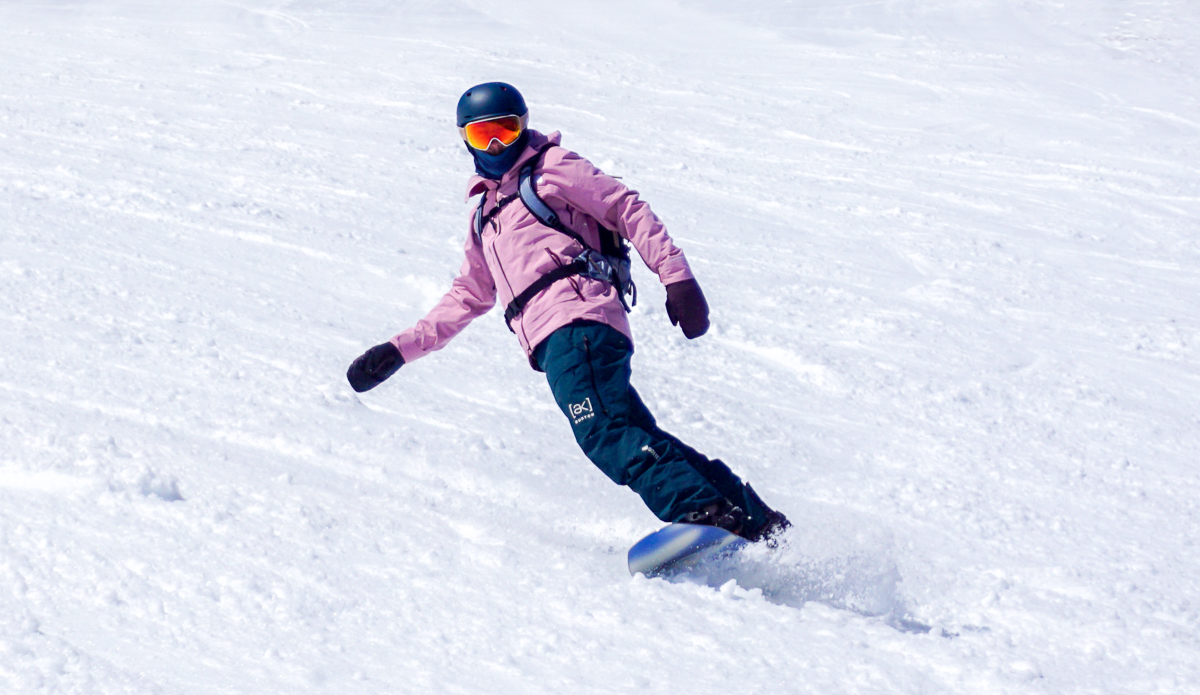
The North Face Ceptor low-key wowed us with its chops for under $500. Photo: Will Sileo//The Inertia
Runner-Up Best Backcountry Jacket
Patagonia Untracked ($699)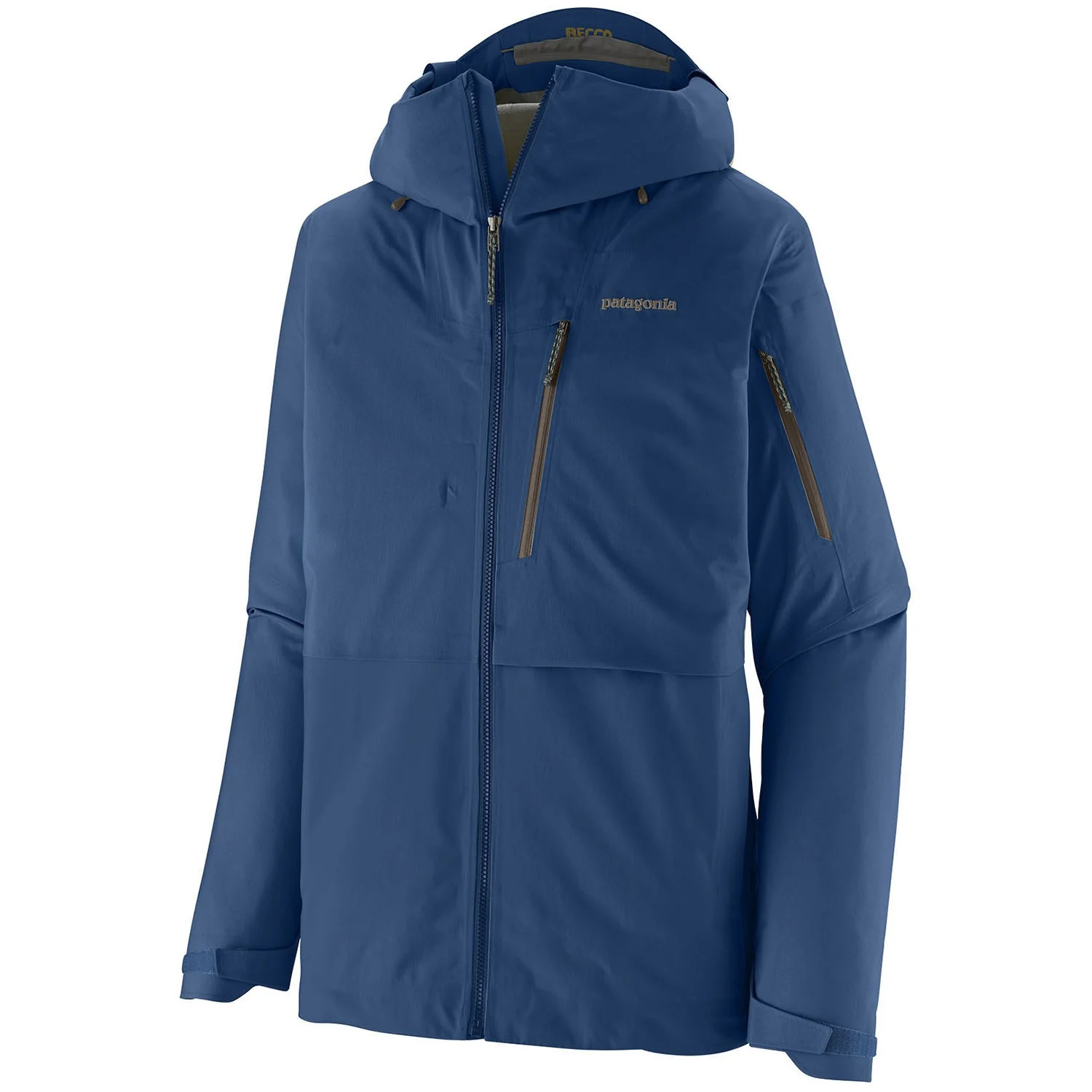
Waterproofing: 3L Gore-Tex
Insulation: None
Notable Features: Excellent mobility and ventilation, top-quality fabric feel, slimmer fit, powder skirt
Pros: Felt lining improves mobility and comfort
Cons: Not as breathable as Jones Shralpinist Stretch
The Patagonia Untracked is our pick for a wet-weather backcountry beast. While it offers less breathability than the Jones Shralpinist Stretch (20K vs 30K), this is our pick for PNW shredding and other truly wet backcountry conditions. Comfort was a standout feature in the Untracked, as the jacket features a soft-touch feltish lining. Better yet, the lining helped the jacket slide effortlessly over mid-layers, which made this jacket especially mobile and suited to uphill routes. This jacket really won us over with subtleties, and the construction is typical of Patagonia: superb.
This jacket has an adjustable powder skirt that fits really well and keeps out the fluff. The pocket arrangement is pretty typical, but we loved the pass-thru chest availability, allowing you to tuck something in your bibs or mid-layer if needed. A big stretch glove drop pocket, dual-zippered pit vents, and a really dialed-in fit round out our runner-up backcountry pick. While the Shralpinist is still our go-to for dryer or warmer conditions, the Untracked is an excellent option for wet snow.
Check Price on EVO Check Price on Patagonia

The dialed powder skirt and excellent durability of the Patagonia Untracked jacket made it ideal for wet backcountry efforts. Photo: Tim Manning//The Inertia
Terrific Value
TREW Gear Tatoosh ($419)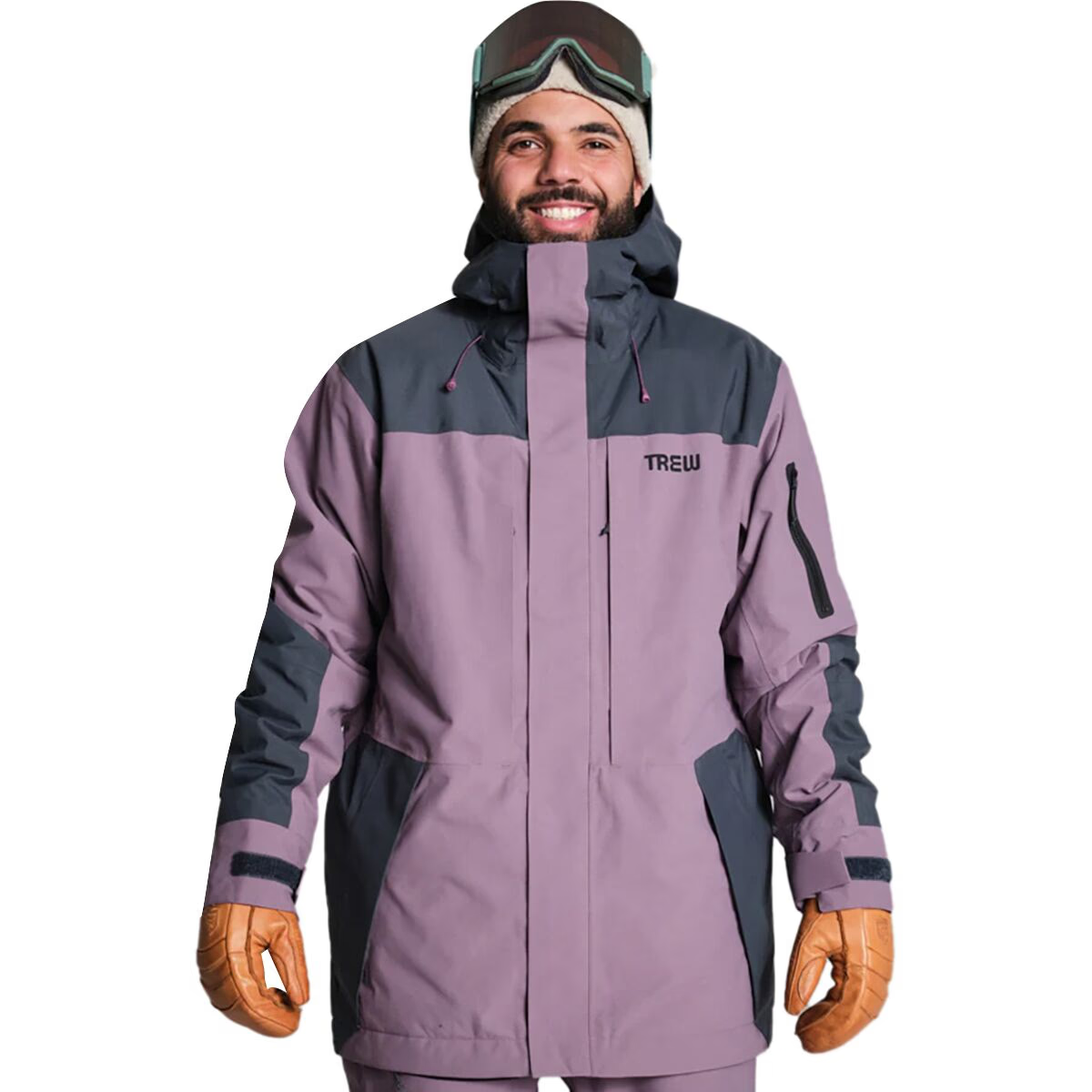
Waterproofing: PNW 2L
Insulation: 60g Synthetic
Notable Features: Comfortable and versatile, pockets everywhere
Pros: Soft fabric, insulated, great design
Cons: Price jumped, master of none
This jacket (and its accompanying bibs) is named after the Tatoosh range near Mount Rainier in Washington State. This region is known for a couple of things: Amazing riding terrain and wet snow. Thus, if a jacket is to bear the name TREW Gear Tatoosh, it should hold up in wet conditions. And for the most part, it did.
After testing it in numerous wet PNW storms, the jacket never soaked through. The 20k waterproofing held up surprisingly well and only started to show signs of soaking after about 4 hours in a heavy rainstorm.
The upside to this fabric is that it’s soft and nimble, something that most GORE-TEX jackets aren’t. It was one of the most comfortable jackets we wore for not only shredding hard but from start to finish during the day. But this is not a casual jacket, it’s meant for being on the mountain and stashing everything needed to have a good day out there.
For an insulated jacket that is well-designed and quite affordable, and most importantly, comfortable, this is a solid option.
Check Price on BackcountryExtreme Durability
Arc’teryx Sabre SV ($900)
Waterproofing: 3L Gore-Tex Pro
Insulation: None
Notable Features: GTX Pro is class-leading in durability and waterproofing, well thought out for backcountry use
Pros: Virtually indestructible, premium quality construction
Cons: Pricey
Arc’teryx has long left the status of a niche outerwear brand and has hit the mainstream with full force, lining city streets to give designer fashion a run for its money. However, the brand has stayed true to its roots in making some of the best technical outerwear on the market.
Their latest offering, the Arc’teryx Sabre SV jacket, is no exception. Made with the harshest conditions in mind, the jacket will hold up for many seasons to come and perform better than most. The SV sports a longer length to help keep the elements out, and really is as well-made as their reputation suggests. Although it has no insulating properties beyond the 3L GORE-TEX (which does help a bit), it’ll withstand the worst conditions and still has an excellent range of motion, allowing for massive days of freeriding while keeping you warm and dry.
Check Price on REIGreat Pockets
Mountain Hardwear Boundary Ridge ($575)
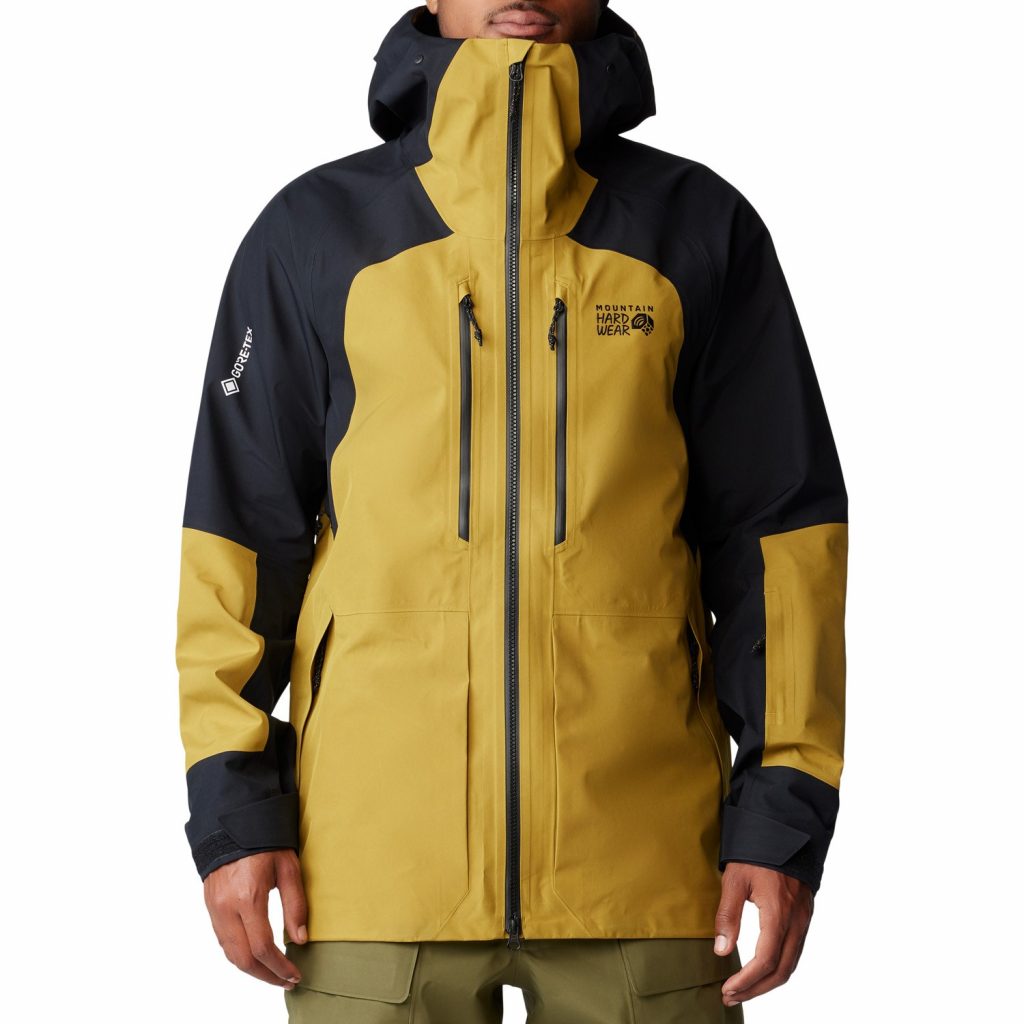
Waterproofing: 3L Gore-Tex
Insulation: None
Notable Features: Top-rated pockets, great value for 3L Gore-Tex
Pros: Tough shell with deep pockets
Cons: Rigid fabric
Whoever designed the Mountain Hardwear Boundary Ridge jacket knows what snowboarders need. Nothing really stood out as a massive point of differentiation compared to the others, yet when adding everything together, it seemed that this jacket had the exact recipe for a good day on the hill.
Mountain Hardwear includes just enough pockets to let you stash what you need without making the jacket too bulky or cumbersome. As a result, you get a well-designed jacket that fits well, offers 3L GORE-TEX protection, and still has a great fit.
The two chest pockets go deep on either end, allowing you to have easy access to goggle wipes, spare gloves, and whatever else you might need in a pinch. Inside are two mesh pockets that can help you dry out goggles or keep skins warm if you’re on a touring mission. The rest of the jacket has all the great features one would expect with a top-of-the-line product, such as a powder skirt and pit vents, and the combo of them all had us confident that this jacket will last for many seasons of thrills and spills.
Check Price on REIJones MTN Surf Jacket ($400)
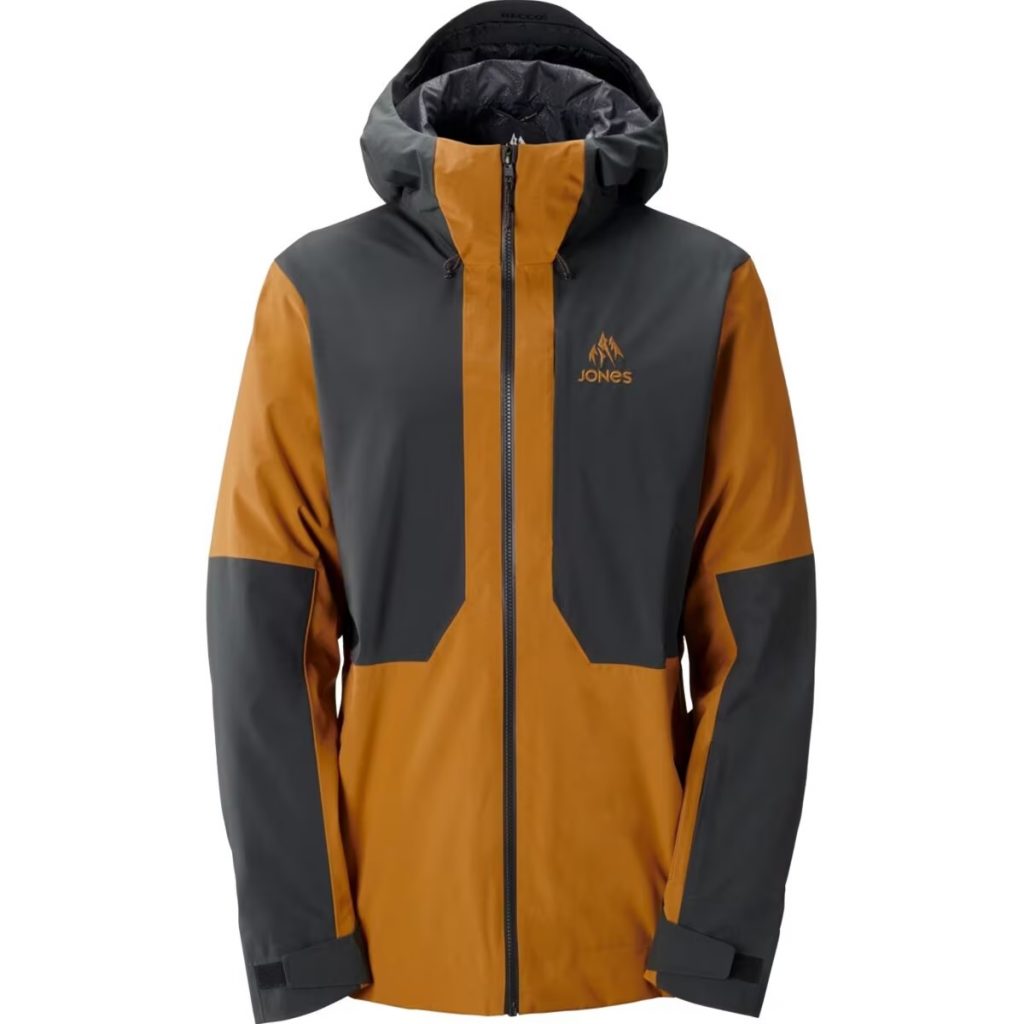
Waterproofing: 2L 20K/20K
Insulation: None
Notable Features: Sweet value, snowboarder-oriented fit, cool colorblocked design
Pros: Recycled materials, easy to layer
Cons: Fabric feels less premium
Jeremy Jones has been leading the pack for big-mountain freeriding for well over two decades. When he set out with his own brand, it was a safe bet that it would be a force to be reckoned with. The boards have been leading the charts for years, and now that the company has an outerwear line, you can be sure it’ll uphold the same quality standards you’d expect from a brand that seeks to provide snowboarders with the best experience possible.
While it’s not GORE-TEX, the Jones MTN Surf Jacket offers 20K waterproof protection and, like Patagonia, a coating free of the dangerous PFC chemicals that many brands are starting to recognize as no bueno. But with the founder of Protect Our Winters at the helm of this ship, you know that sustainability is at the forefront of their decision-making.
Check Price on BackcountrySimilar to Our Top Pick, but Uninsulated
Burton [ak] Cyclic ($485)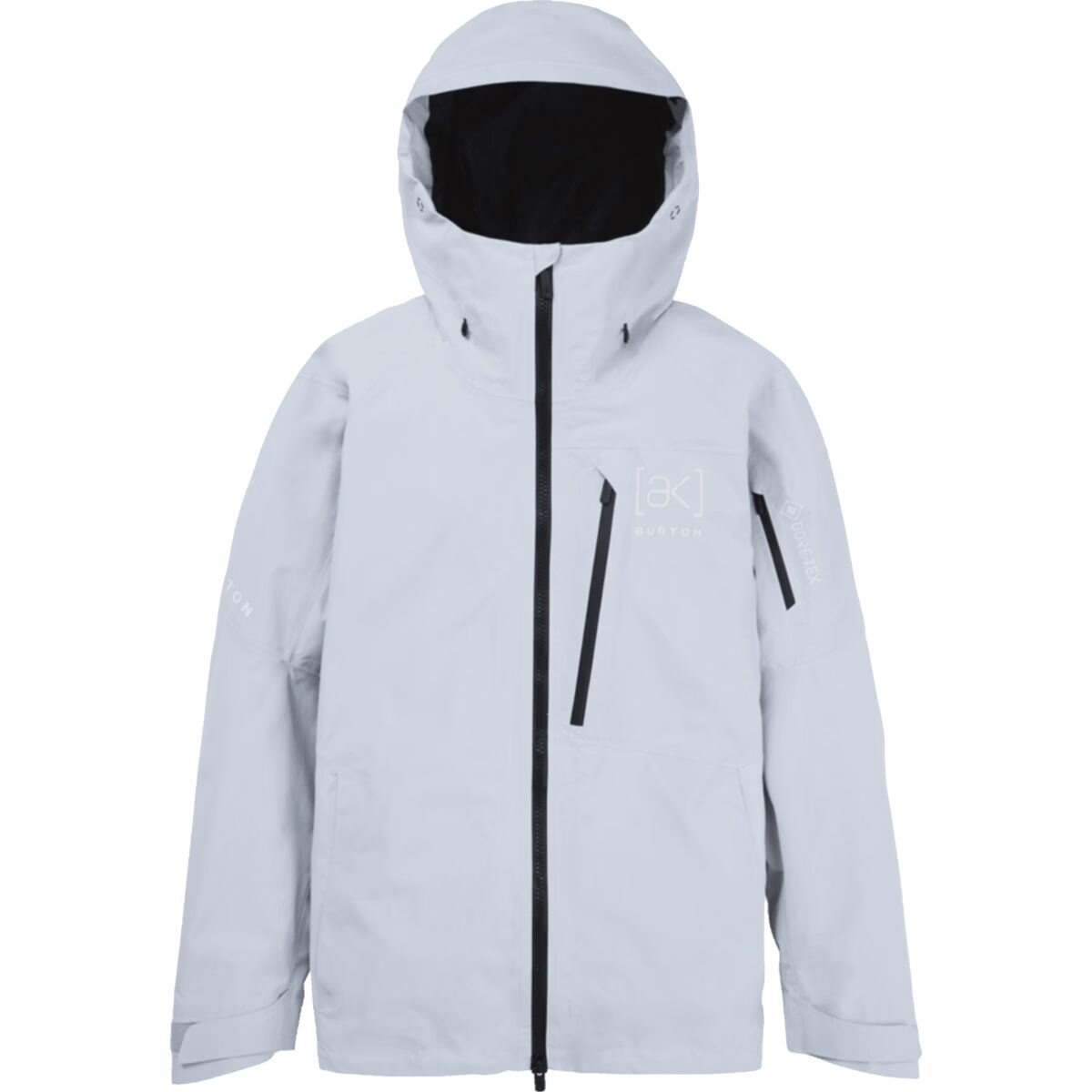
Waterproofing: 2L Gore-Tex
Insulation: None
Notable Features: Great fit and mobility, the pockets are top-tier, 2L fabric feels very durable
Pros: Amazing movement, well-engineered pockets
Cons: GORE-TEX is only 2L compared to 3L in others
Burton’s [ak] line is and has been the best line from arguably snowboarding’s most iconic brand. While we had no trouble layering up with this jacket mid-winter, the lightweight 2-layer GORE-TEX shell of the Burton [ak] Cyclic Jacket had enough breathability to make it ideal for hiking booters and exploring the backcountry.
The Cyclic jacket is chock-full of some standout features. It has a thermo-lined device pocket that helps keep your phone battery (or charging bank) better protected from the elements, allowing it to last longer.
With over 20 years of development in the Burton [ak] line, their product refinement has been a steady progression into something that will stand the test of time. If it doesn’t for some reason, you also have Burton’s limited lifetime warranty, so they will fix or replace anything that is out of whack. Burton has also transitioned their gear to getting the Bluesign seal of approval, helping all of us feel a bit better about where to direct our purchasing power.
Check Price on REI
These are the snowboard jackets we trust to keep us warm and dry. Photo: Reuben Krabbe//The Inertia
Patagonia Storm Shift ($499)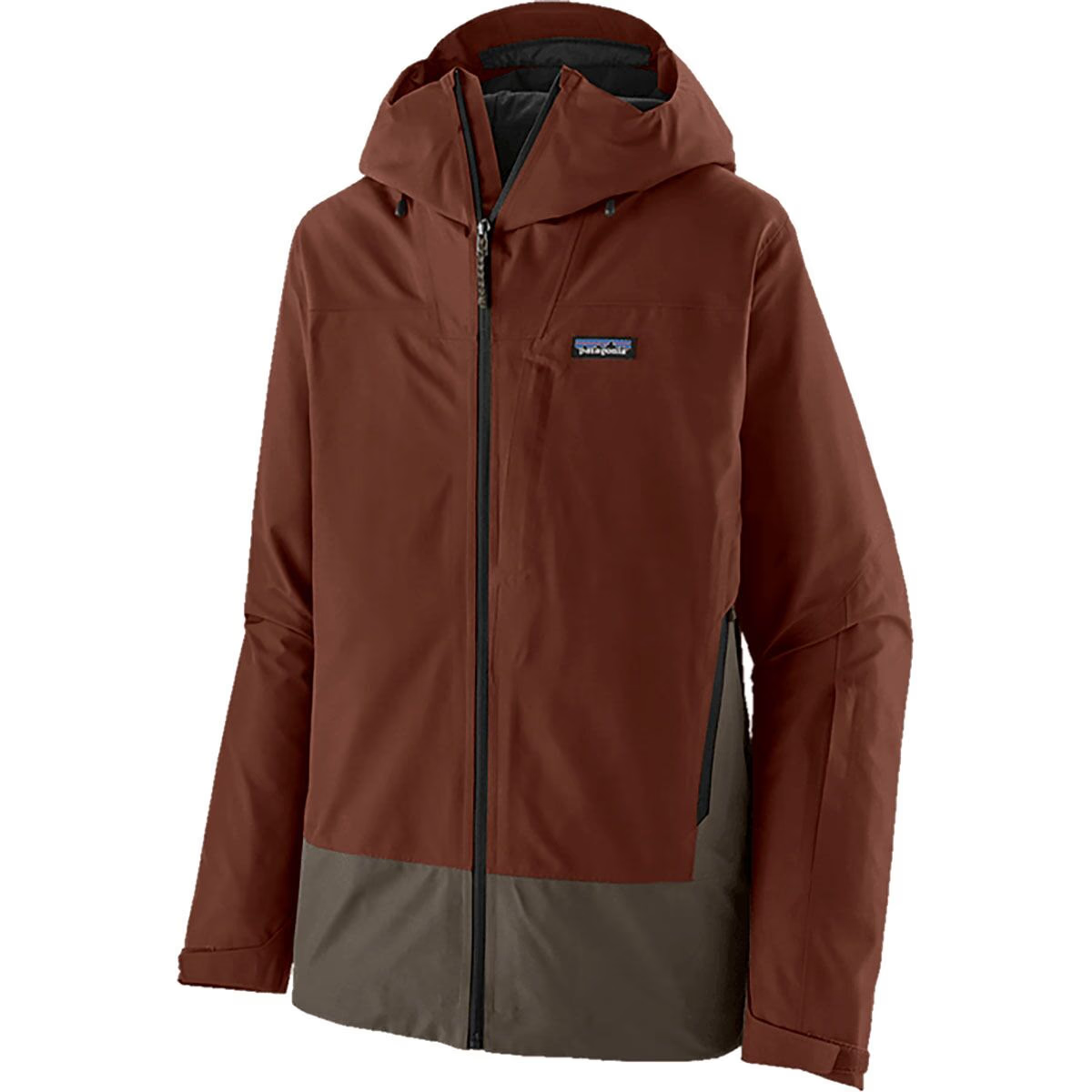
Waterproofing: 2L Gore-Tex
Insulation: None, but fleece-lined
Notable Features: The fleece lining is a nice touch, and great for resort use, zippers feel really high-quality, slim fit
Pros: Environmentally friendly, soft lining
Cons: Lining isn’t warm – still need to layer up underneath
While many snowboard jackets are simply a shell, the Patagonia Storm Shift went a step further and added some soft liners on the inside to make it comfortable even off the mountain, wherever you may be. This isn’t an insulated jacket but rather a shell with some added comfort. The side pockets are also lined, meaning you can warm up your hands even if your gloves are soaked, or you’re just milling about the city and forgot to bring ’em. The only downside of the thin lining is weight for those getting out there in the backcountry. The jacket remains quite breathable and has the ever-essential pit zips to dump heat as needed.
In true Patagonia fashion, they use recycled materials throughout the garment and are the only company to remark on using PFC-free chemicals for waterproofing. PFC-free means no fluorinated chemicals — something that ends up in our ecosystem and is even absorbed by humans and animals. Sounds like a huge win for our future and our health in general, which helps make buying this jacket a wise consumer choice. Furthermore, if something breaks on the jacket, Patagonia famously will fix it for you, ensuring this jacket will be hitting the slopes for many seasons to come.
Check Price on REIWhitespace 3L Performance 3-in-1 Jacket ($549)
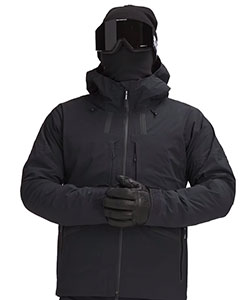
Waterproofing: 3L 10K/20K
Insulation: Removable fleece liner
Notable Features: Sharp looks, lightweight 3-in-1, proprietary 3L
Pros: Unique slim style, removable liner
Cons: Material is fairly rigid
Shaun White achieved legendary status well before puberty, and now, as an adult, he has added designer and fashion mogul to his list of accomplishments in snowboarding. It was worth giving his gear a spin, as he is reported to be an integral part of the design process. The Whitespace 3L Performance 3-in-1 Jacket is his brainchild. The jacket offers a two-piece shell and fleece liner setup that provides plenty of warmth as a combo or as individuals.
The design is meant to give off a slim look, meaning that if someone isn’t into the loose-fitting baggy setup that a lot of snowboarding gear trends toward, this may be more your scene. It’s a style all on its own, which can be a good thing for those lengthy aprés sessions.
Check Price on Backcountry
Testing snowboard jackets is good work if you can get it! Photo: Tim Manning//The Inertia
Best Snowboard Jackets Comparison Table
| Jacket | Price | Insulation | Waterproofing |
| Burton [ak] Swash | $520 | 60g PrimaLoft Silver | 2L GORE-TEX |
| The North Face ThermoBall Eco Snow Triclimate 3-in-1 | $400 | Removable ThermoBall eco liner | 2L DryVent |
| 686 Waterproof Hoody | $160 | Fleece-lined | 10K/10K infiDRY |
| Jones Shralpinist Stretch | $500 | None | 3L Stretch 30K/30K |
| Patagonia SnowDrifter | $449 | None | 3L H2No |
| 686 Smarty 3 in 1 Form | $310 | Removable 160g liner | 2L infiDRY |
| Backcountry Cottonwoods LT Xpore 3L Snowboard Jacket | $499 | None | 3L Xpore |
| The North Face Ceptor Jacket | $475 | None | 3L DryVent |
| Patagonia Untracked | $699 | None | 3L GORE-TEX 28K/20K |
| TREW Gear Tatoosh | $369 | 6og Synthetic | PNW 2-Layer |
| Arc’teryx Sabre SV | $900 | None | 3L GORE-TEX Pro |
| Mountain Hardwear Boundary Ridge | $575 | None | 3L GORE-TEX |
| Jones MTN Surf | $400 | None | 2L 20K/20K |
| Burton [ak] Cyclic | $460 | None | 2L GORE-TEX |
| Patagonia Storm Shift | $499 | None, but fleece-lined | 2L GORE-TEX |
| Whitespace 3L Performance 3-in-1 | $549 | Removable fleece liner | 3L 10K/20K recycled |

Resort ripping, backcountry laps, and everything in between: We really tested these jackets to bring you the best. Photo: Tim Manning//The Inertia
How We Tested Snowboard Jackets
We tested these jackets the best way we know how: by snowboarding hard for long days in all kinds of weather. Testing spots included the backcountry Cascade Mountains and the Coast Range, resort riding at Palisades Tahoe and Arizona Snowbowl, as well as ripping Mammoth Mountain. Other resort testing included Whistler and Mount Baker.

Forum and Jones have produced some worthy contenders in the snowboard jacket space. Photo: Reuben Krabbe//The Inertia
This test began in early 2023, and we’ve been testing all the way through 2026. Each jacket recommended here was put through the wringer, riding in a variety of conditions. And we tested many more that didn’t make the final list. But when the wind is howling, and the snow is coming from every direction, that’s when we get to work.
The Team
Nathan Lemin took the lead on testing jackets for the most recent versions of this guide, and Will Sileo and Dylan Heyden helped recommend and test options as well, as did Steve Andrews.

We got out for some splitboarding to test the breathability and mobility of backcountry jackets. Photo: Steve Andrews//The Inertia
Nathan Lemin is a lifelong snowboarder, first strapping in in the 5th grade, and enjoying laps from the Midwest all the way to the coast. The extremely cold temperatures where he grew up riding have set him up to be over-prepared when it comes to warmth. From 3-in-1s to insulated jackets, he looks for jackets that will hold up to sub-zero riding. Versatility is paramount, and buy once, cry once is his guiding snowboard jacket principle.

Wind resistance helps break the cold on icy resort days. Photo: Tim Manning//The Inertia
As a lifelong snow sports enthusiast. Steve Andrews has been a professional filmer and backcountry guide over the years, knowing full well what it takes for a snowboard jacket to stand above the rest. Over the years, Steve has traveled to the Yukon to film for National Geographic, set up a banked slalom course at Baldface, and leveled up in the Canadian Ski Guide Association. Steve recruited some other local shredders out of Whistler to help with the testing process to give a well-rounded set of opinions so that if one jacket didn’t fit well, someone else could perhaps give more objective feedback.

Powder beware: We came prepared. Photo: Reuben Krabbe//The Inertia
We brought additional gear, such as extra goggles, snacks, and even a full-sized sandwich, just to see how well they held up after some laps. As phones are a part of us all now, a place to keep a phone safe and dry is an unmistakable part of riding nowadays. Aside from outer protection, breathability was and is an important factor, so we would check to see how sweaty we were after riding to make sure we weren’t cooking.
We also tested how well the pockets could open and close with gloves on, and how well they kept the snow out on the deepest of days. We tried to emulate each run to keep things objective, taking note of the nuances between each jacket to see which truly was, is, and continues to be the best snowboard jacket for any type of riding.

The pull-over style of the Arc’teryx Sabre Anorak sports a massive kangaroo pocket, an innovative design choice among snow jackets. Photo: Reuben Krabbe//The Inertia
Snowboard Jackets Buyer’s Guide
When testing these jackets, we used several criteria to evaluate the most important features and scored them out of 10. Each brand has trademarked features that will try to set them apart from the rest, but we made an effort to ignore the marketing-speak and just hit the points that matter. In our minds, these were:
Insulation
The heart of a winter jacket is its insulation, which is responsible for trapping your body heat. There are two main types:
Synthetic Insulation
Great for wet conditions, synthetic insulation is quick-drying and provides warmth even when damp. It’s usually more affordable than down and is hypoallergenic. Our pick for the best snowboard jacket, the Burton [ak] Swash, has PrimaLoft Silver synthetic insulation, which we found was just enough for most conditions, without being overkill on a warmer day.

The Burton [ak] Swash has Goldilocks insulation, making it truly versatile. Photo: Tim Manning//The Inertia
Down Insulation
Known for its excellent warmth-to-weight ratio, down insulation is the gold standard for cold, dry conditions. However, it loses its insulating properties when wet and can be more expensive. Our top pick, the Volcom TDS INF, features some down insulation. To build a full, separable jacket kit with a shell, check out our Best Men’s Puffer Jackets guide.
Fleece-Lined
While not insulation per se, fleece-lined jackets like the Patagonia Storm Shift offer a bit more warmth than a simple shell. We like these for mild conditions, and they are typically quite comfortable. We also love to pair a classic fleece jacket with a waterproof shell for milder days on the slopes

The Mountain Hardwear Boundary Ridge Jacket is a top pick for its durability, pockets, and protection. Photo: Reuben Krabbe//The Inertia
Waterproofing
Your snowboard jacket should be able to withstand the elements. Look for jackets with water-resistant or waterproof exteriors to keep you dry in snow or rain. Breathability is also crucial to prevent overheating and sweating, especially during active pursuits. While Gore-Tex is the industry standard, many proprietary waterproofing membranes are popping up, and we’ve found plenty of them perform just as well. The 686 GLCR GORE-TEX PRO 3L and Arc’teryx Sabre SV feature some of the more impressive waterproofing in this test.
2-Layer vs 3-Layer
You will hear the descriptors “2-layer”(2L) and “3-layer” (3L) a lot when shopping for a snowboard jacket. We won’t get too in the weeds, but a quick explanation here to follow. Both 2L and 3L jackets feature a waterproof membrane and an exterior face fabric designed to repel water (usually treated with a durable water repellent [DWR] finish). A 3L has a bonded interior layer connected to the other two layers, which is usually designed to pull moisture out of the interior and shed it to the exterior, as well as allow the interior of the jacket to breathe. You’ll see ratings like 10K/10K or 20K/20K, which quantifies how waterproof the membrane is, as well as how breathable the membrane is. The higher the number on both ratings, the more the waterproofing and the breathability increase, respectively.
With that in mind, a 3L jacket will be more breathable, often more mobile, and typically more durable, because the waterproof membrane is better protected. A 2L jacket can still provide excellent waterproofing, but it won’t breathe as well because it’s usually attached to either a fleece, fabric, or insulated liner. Neither is necessarily better or worse, but 3L is typically a bit more versatile, and 2L is usually less expensive. Our top pick, the Burton [ak] Swash, is a lightly insulated 2L jacket. A great value 3L is the Patagonia SnowDrifter, which is actually cheaper than our top pick. We specified each jacket’s type of waterproofing in the descriptions and comparison table.

Your jacket should be comfortable and move with you on the mountain. Photo: Tim Manning//The Inertia
Fit and Comfort
A well-fitting jacket should allow for layering without being too bulky. It should offer freedom of movement, especially around the shoulders and arms. Adjustable cuffs, hoods, and hem can help seal in warmth and keep out the cold. The Burton [ak] Swash won us over with an excellent blend of stylish fit and comfortable mobility.
Features and Functionality
Consider the features that are important to you. Breathability is great for backcountry climbs, but it’s not ideal if you spend a lot of time at windy resorts (lifts can be a particularly chilly ride with the wrong jacket). Insulated jackets make ideal resort options, but you probably won’t want to snowboard in late spring or other warm, wet weather with them. Pockets, hoods, and fit are other crucial considerations.

Hoods should fit over your helmet and be able to cinch down tightly to seal out the conditions. Photo: Nick Bruckbauer//The Inertia
Hoods
Removable or adjustable hoods offer versatility. We lean toward jackets with a hood that fits over a helmet and cinches down tight—this helps prevent wind and snow from sneaking in on blustery powder days. The Jones Shralpinist Stretch had an excellent hood that sealed out the cold on backcountry and resort laps alike.

Pockets! The more the merrier—well thought out pockets make or break a snowboard jacket. Photo: Nick Bruckbauer//The Inertia
Pockets
Ample pocket space can keep your hands warm and store essentials. We loved the Mountain Hardwear Boundary Ridge for its excellent pockets. Big stretchy drop pockets for gloves, hats, and goggles are nice, and ski pass pockets on the sleeve are great for modern lift scanners. Or, an anorak like the Arc’teryx Sabre Relaxed Anorak is ideal if you like a big pass-thru hand pocket.
Zippers
Look for durable, easy-to-use zippers, and consider features like storm flaps to block wind. YKK is typically the industry standard, but every zipper can have a bit different construction, with waterproofing, smooth gliding, and snagging all being factors we test. The North Face ThermoBall Eco Snow actually surprised us with some of the smoothest zippers in our test.

Burton always has some of the best colors in the game. Photo: Tim Manning//The Inertia
Style and Aesthetics
Your winter jacket should reflect your personal style, whether it’s a sleek, minimalist design or a bold, eye-catching color. Consider how the jacket will pair with your existing winter wardrobe. The Burton [ak] Swash and Whitespace 3L Performance 3-in-1 we some of our favorites for aesthetics.
Price vs. Quality
While it’s tempting to opt for a cheaper jacket, investing in a high-quality jacket can save you money in the long run. Look for jackets from reputable brands with good warranties and customer reviews. The Arc’teryx Sabre SV may cost a pretty penny, but we’re stoked on its ability to last and last, year after year with proper care.
Choosing the right winter jacket is a blend of understanding your needs, knowing what to look for, and personal preference. With this guide, you’re well on your way to finding a winter jacket that will keep you warm, dry, and stylish all season long.

The Burton [ak] Cyclic Snowboard Jacket will put a smile on your face. Photo: Reuben Krabbe//The Inertia
Caring for Your Snowboard Jacket
These snowboard jackets are all an investment in your comfort and safety on the mountain. It’s true they cost a decent amount, but if cared for properly, they should last many seasons to come. Here are a few tried and true methods for making sure your jacket will remain as good as the day you bought it.
Storage
Storing your jacket with care will prolong its life. Unfortunately, we know from experience that simply tossing it in the backseat will add further wear and tear and invite some microscopic friends. The more the fabric rubs against surfaces, the more the waterproof coating will go away, so be sure to hang it up, if possible, in a warm and dry place. Stashing it outside in the elements will result in extra wear.

Washing your jacket occasionally and re-applying DWR can do wonders for its longevity. Photo: Tim Manning//The Inertia
Repairs
Many companies offer some sort of repair policy for their gear. The key is to take advantage of it, and to read the fine print on what’s included. Don’t let something small turn into something big from procrastination. These days some repair marks can be seen as a badge of honor; It means that you’re really using the gear to its fullest. Plus, it’s so much cheaper than buying something new, so there isn’t really a good reason to let things go unrepaired. Pay close attention to the seams at the zippers. Those are often the first places to go.
Washing
Be sure to check the tag for detailed instructions, but a good idea is to only wash cold and to use liquid (not powder) detergent. If you use the dryer, use a low-temperature setting, and if you hang dry, you may need to use an iron afterward (but not too hot!) to reactivate the waterproof coating. Synthetic Jackets are generally machine washable but check the care label. Avoid fabric softeners and dry on low heat or air dry. For Down Jackets, use a down-specific detergent and wash on a gentle cycle. Tumble dry on low with tennis balls to break up clumps of down. Our team swears by Nikwax, and we wash and re-DWR our jackets at least seasonally, if not more depending on conditions.

Keep that expensive GTX working like new: Nikwax is a great DWR treatment. Photo: Nick Bruckbauer//The Inertia
Waterproofing
While your shell’s waterproof membrane might technically still be so, the water-repellent finish needs a refresh at least once a season to keep water beading up and shedding from the surface. It’s a good idea to re-up with a waterproof treatment every so often. Be sure to test a small area before applying to make sure it gets the desired result. Don’t forget to read the instructions, as different products work better for various fabrics. Depending on where you ride and how often you ride will determine how often you want to add more waterproofing. Generally, every 12-15 or so days of riding should be good. That number will change based on how much the material is getting rubbed or exposed to rain or wet snow.
Early Signs of Wear and Tear
Regularly inspect your jacket for signs of wear, such as:
Tears or Rips: Small tears can quickly become larger issues if left unrepaired.
Loss of Insulation: If your jacket feels less warm, it may be losing its insulating properties.
Water Repellency: If water no longer beads off the surface, it may be time to reapply a water-repellent treatment.

Freedom of movement is essential for the best snowboard jackets. Photo: Reuben Krabbe//The Inertia
Final Thoughts
All the jackets listed here will be a good choice for getting out there and sliding sideways. The idea of which snowboard jacket is the best will come down to who is doing the choosing. You want the gear to last but also be functional and allow the material to work with your riding style. If it’s strictly for riding, you might want something different than someone who uses it in other situations all winter, from the mountains to the trails to the rainy city streets.
Whatever you choose, make sure to take good care of it so it takes care of you. If you keep it dry and clean, it’ll keep you warm and protected for many great seasons to come.
Happy shredding!
Editor’s Note: Looking for women’s specific options? Check out our Best Women’s Snowboard Jackets guide. Don’t miss our Best Snowboard Pants, either. For more gear reviews and features on The Inertia, click here.
Return to Comparison Table | Top Picks

Seeing Is Believing: The Best Snowboard Goggles of 2026


