
Photo: Ross Stone // Unsplash

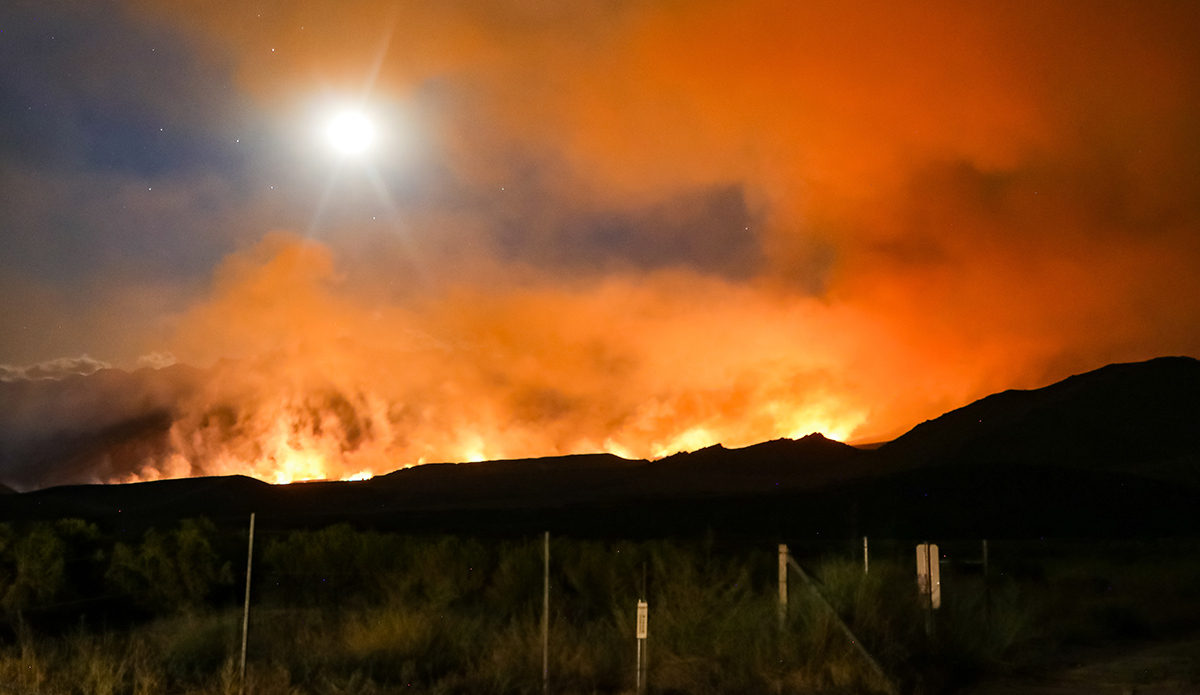
Back in 2017, the Thomas Fire burned for nearly 40 days in Southern California. The blaze, caused by power lines downed by powerful winds, burned a total of 281,893 acres, destroyed 1,063 structures and resulted in one civilian and one firefighter fatality At the time, it was the largest wildfire in California history, though since then it has been eclipsed multiple times. Amid the devastation caused by the inferno, scientists at UC Santa Barbara wondered what effects the huge amount of ash that settled into the ocean would have on marine ecosystems. Their research, recently published in the Proceedings of the Royal Society B, shows that the ash from these fires can actually provide important atmospheric sources of nutrients to coastal marine systems.
As it happened, the UCSB researchers already had a research cruise scheduled, giving them the opportunity to investigate. “We planned this out in just a few weeks,” lead author Tanika Ladd told UCSB. “The fire broke out Dec. 4; our cruise was scheduled to go out on Dec. 17, and this clearly wasn’t in our plans for all of the cruise prep before the fire started.” The team revised their entire schedule with just a couple weeks before setting sail.
Former UCSB doctoral student Eleanor Arrington collected ash from car windshields around town and mixed it into a saltwater solution for about 24 hours, then filtered out the solid ash particles. The resulting leachate was then added to seawater cultures in various concentrations and incubated for four days.
The researchers then analyzed the cultures and found a variety of benefits bestowed by the ash. By measuring particulate organic carbon, they found that biomass increased significantly in samples with more ash leachate. The ash also enriched the seawater with nitrate, nitrite and ammonium, which provide nitrogen for photosynthesis. Amounts of dissolved organic nitrogen and silicic acid were also incrased. Finally, metals such as copper and iron were added, in levels that were diluted enough to not be toxic. The researchers didn’t observe any harmful effects from the ash leachate.
Of course, results in the wild may vary, depending on what’s burning and local environmental conditions, but it’s notable that the ash can have measurable benefits on ocean ecosystems. “Coastal ecosystems may have increased primary production during these wildfires,” Ladd said, “but we need to know what this actually means on a global scale.”

