
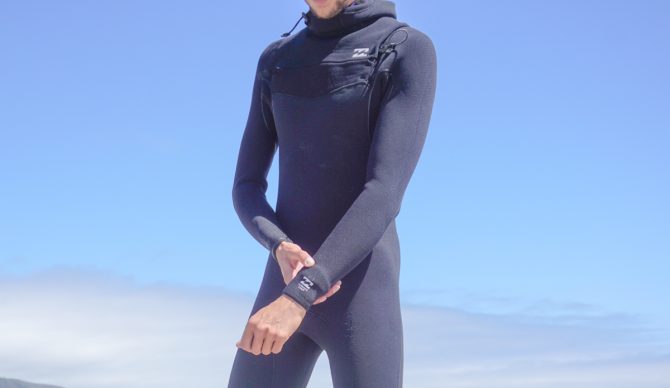
Whether it’s ripping up high-performance waves in Southern California or staying warm in the frigid waters of Northern California, Billabong’s Furnace Natural delivers. Photo: Quincy Sileo//The Inertia

As May Gray and June Gloom have taken hold of Southern California, I’ve been popping down to Upper Trestles, Church, and San Onofre three times a week to test the Billabong Furnace Natural ($399). Water temperatures have hovered in the mid- to low-60s, air temperature has been roughly the same, and the surf has been consistently chest high. My sessions have clocked in at around an hour each, and the Furnace Natural has been nothing short of amazing. While it’s jam-packed with innovations in sustainability, it wins the hardest battle for eco-friendly wetsuits: It feels like a cloud. Constructed using Natural Hevea Rubber and Bolder Black & Soy Bean Oil along with a jersey boasting 100% post-consumer recycled textiles, the Billabong Furnace Natural makes a deep commitment to sustainability without compromising performance.
Bottom Line: The Billabong Furnace Natural is an outstanding wetsuit. It’s exceedingly flexible, warm, frictionless with entry and exit, and prioritizes a minimal environmental impact. You know, if you like, care about the earth and whatnot.
Editor’s Note: Unfortunately, due to some behind-the-scenes shake-ups in the surf industry, the Billabong Furnace Natural is extremely hard to get one’s hands on this winter. We’re hearing reports that it should be hitting the shelves again in Spring of 2026, and we will keep this article updated with more information as we get it. For a similarly awesome neoprene-free wetsuit, we recommend the Patagonia Regulator series.
Check Price on Cleanline SurfRelated: The Best Wetsuits | Best Wetsuit Booties | More Surf Gear Reviews
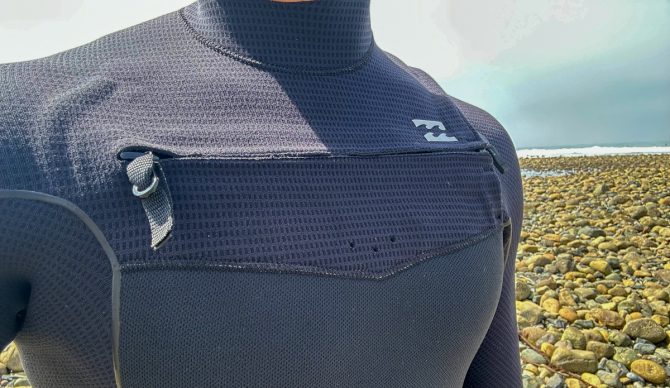
Testing the Billabong Furnace Natural at Trestles. Photo: Zach Weisberg//The Inertia
Testing the Billabong Furnace Natural in Southern California
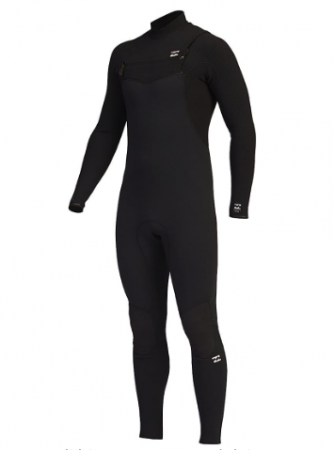
Price: $399
Available In: 3/2mm, 4/3mm, 4/3mm hooded, 5/4 hooded
Construction: Hevea natural rubber neoprene, recycled carbon black from tires and old wetsuits, recycled lining
Features: Chest-zip entry, key loop in chest zip
Thickness Tested: 4/3mm
Suggested Water Temp: 58-65 degrees Fahrenheit
Pros: New standard in stretch and comfort in an eco-friendly wetsuit, frictionless entry and exit, coconut scent
Cons: Chest leak concerns, no floating zipper, a little heavier than some traditional neoprene wetsuits
First Impressions
When I slid into the Billabong Furnace Natural for the first time, I noticed an immediate improvement from my comparable daily driver. Minimal friction. I shaved a few seconds off my wetsuit entry without even trying. This thing is stretchy. While general wetsuit technology has continued to evolve – with flexibility and comfort making exponential gains in the last decade, the same comfort innovations have lagged with eco-friendly wetsuit materials. Effectively, surfers have had to make a choice: Eco-friendly or comfortable?
It was an ultimatum, no doubt. Which do you value most? If you’re surfing three or more times a week, fifty-two weeks a year (or you just, understandably, prefer to be comfortable when spending hundreds of dollars on a product and hours using it), you’d be forgiven for choosing the latter. The Billabong Furnace Natural kills that ultimatum. It offers environmentally-friendly construction delivered in possibly the most comfortable wetsuit I’ve ever worn.
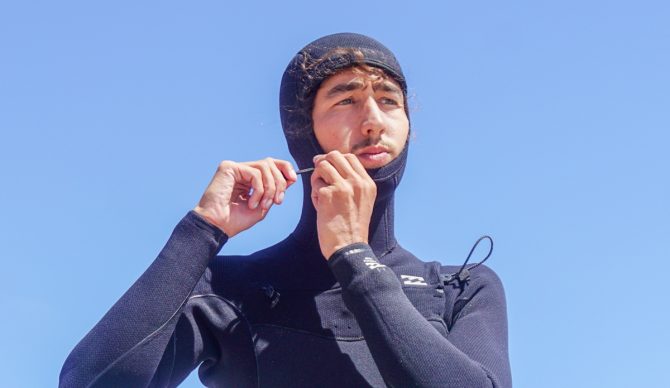
In testing the 4/3 hooded version of the Furnace Natural in Northern California, we were very impressed with the comfort that the hood provides. Photo: Quincy Sileo//The Inertia
Notable Features
First, I love that it smells like coconut. While that might be a tertiary trait for a wetsuit, it’s still notable, because most wetsuits smell like rubber. Then, after a year of abuse, they smell bad. We’ll see how the Billabong Furnace Natural smells twelve months from now, but that coconut scent sure got things started on the right foot.
As mentioned, the eco-friendly (and extremely comfortable) materials represent a huge innovation. My go-to suit for the last two years has been the O’Neill Hyperfreak, which is an outstanding wetsuit. Stretchy. Warm. Comfortable. (Pretty) durable. No complaints at all. I suspected the Furnace would offer a stiffer, less comfortable alternative that would collect dust. I couldn’t have been more wrong. Head to head, I’d prefer to wear the Billabong Furnace Natural when it comes to flexibility and comfort. It’s easier to get on and off, no question. And I’m typically rushing in and out from my surf sessions – squeezing them into a busy, working-parent-with-young-kids life. That means I deeply value ease of entry and exit. The Billabong Furnace Natural hits the mark. It’s the most comfortable wetsuit I’ve tested.
Wetsuit kneepads tend to thread a delicate needle. Too bulky, and they’re annoying. Too thin, and they feel cheap. The Billabong Furnace Natural kneepads walk the line with aplomb: just enough armor to feel secure, but thin enough to feel intentionally streamlined.
The Inertia’s Managing Gear Editor, Will Sileo, also had a chance to test the 4/3 hooded version of this wetsuit out in his home waters of the San Francisco Bay Area for the 2025 update to our Best Wetsuits review. Similar to Zach’s assessment, he was blown away by the comfort and flexibility of such an eco-friendly suit, a stark contrast to most other suits made with natural rubber, instead of traditional neoprene. The only other “natural rubber” suit we’ve tested that even comes close to the level of flexibility seen here is the new Patagonia Yulex Regulator series of wetsuits, which, since 2024, have sported vastly improved stretch and flexibility. These suits come very close to the Furnace in terms of stretch, but in our testing, we found the Billabong to have a slight edge in flexibility and performance. Sileo also found the hood on his 4/3 hooded version of the wetsuit to be among the most comfortable and functional hoods that he has tested, keeping water out without squeezing the noggin too much.
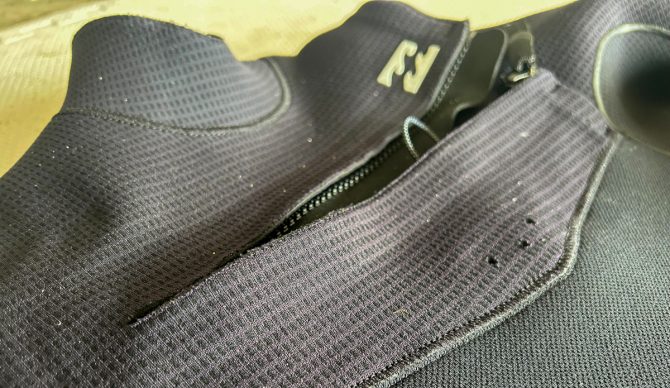
The exterior jersey of the Furnace Natural is soft and stretchy. Photo: Zach Weisberg//The Inertia
Drawbacks
On the first few duck dives, things were going so amazingly, I wanted to ignore the chest leakage, but, unfortunately, it persisted. I’ve felt water permeate the chest zip at some point in nearly every session, so I’m slightly concerned how that will feel when the water drops into the fifties and below. Due to timing, I’ve only been able to test the suit in water temperatures in the low sixties, so I’ve yet to do battle with it in truly cold conditions.
The Furnace Natural is a touch heavier than top-tier neoprene wetsuits like the O’Neill Hyperfreak. I think this is a function of the 100% post-consumer recycled textiles having a more jersey-like composition. The suit is more like wearing a very tight, warm sweater than tightly constructed neoprene, which creates a more breathable, spacey textile that seems to hold more water than neoprene. As a result, I’ve noticed that it dries a little more slowly than my neoprene suits because the fabric appears to absorb more water. It still keeps me warm, which is my top priority. And the extra weight doesn’t interfere with surfing or paddling performance; it’s a detail. But if you’re looking for the most streamlined, light suit, there are more minimalist options.
This is a tiny detail, but my personal preference in a chest zip suit is for the zipper to automatically tighten the zipper teeth when zipped, what some brands call a floating chest zip. That eliminates the need to manually align a zipper, which is especially useful when my big red lobster fingers are either numb or covered in neoprene. The Billabong Furnace Natural requires the user to align the zipper, and, in my view, that’s a drawback.
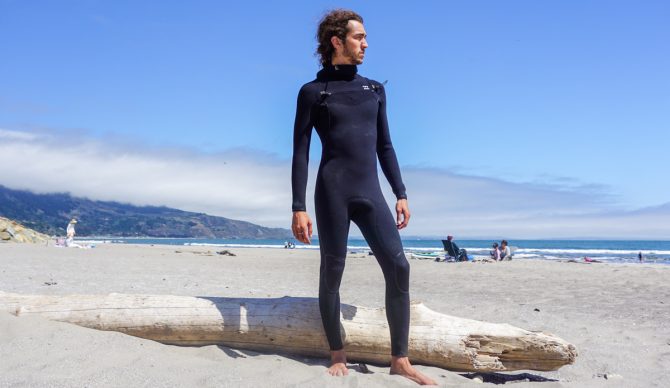
Comfortable, high-performing, and eco-friendly, the Furnace Natural is a winner in our books. Photo: Quincy Sileo//The Inertia
Final Thoughts
The Billabong Furnace Natural has quickly become my favorite wetsuit. That means a lot. Honestly, I didn’t expect it, as I was satisfied with my go-to (the O’Neill Hyperfreak, which I also love), so it had lots to prove to unseat the champ. The Billabong Furnace Natural couldn’t be more comfortable and stretchy, and it leads the pack in eco-friendly wetsuit technology. It’s perfect for my usage: Southern California, where the water rarely dips below the mid-50s. I’d feel slightly less confident with it as temperatures drop further, but between its eco-friendly flexibility, warmth, coconut scent, and frictionless entry and exit, the Billabong Furnace Natural sets the bar for wetsuit excellence.
Check Price on Cleanline SurfRelated: The Best Wetsuits | Best Wetsuit Booties | More Surf Gear Reviews
Editor’s Note: For more gear reviews and features on The Inertia, click here.

