
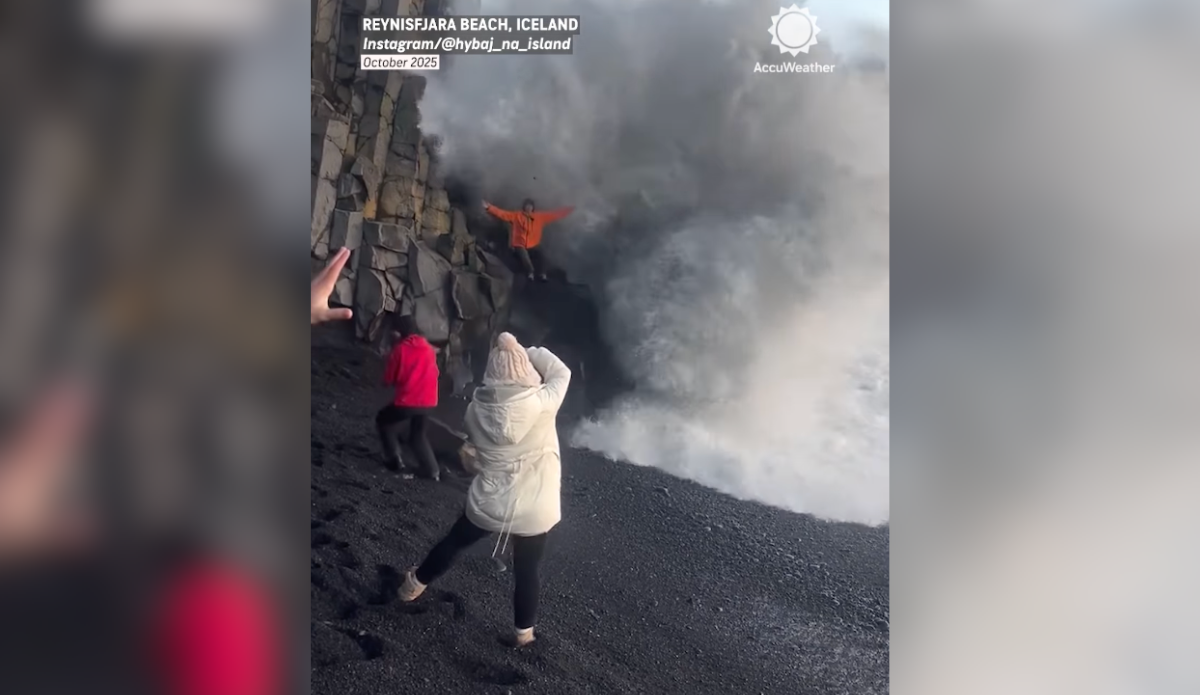
“Make it look natural.”

Iceland’s Reynisfjara Beach is known as one of the most dangerous beaches on the planet. And even if you had never heard this but found yourself there one random afternoon, there would still be no escaping the fact that, as I pointed out, it’s one of the most dangerous beaches on the planet. This is because getting to the popular tourist destination means you’ve passed by signs warning you. And if you missed the signs, there’s a tiered lights system — red, yellow, and green — just to let visitors know exactly which zones they should or should not enter. And rogue waves are a real threat.
If you hadn’t guessed already, red lights at Reynisfjara Beach signal that universal “do not go here” warning, where visitors are instead supposed to be restricted to a viewing platform, staying off the beach entirely. There are no lifeguards and there is no security here. According to Iceland’s own board of tourism, attempting rescues “in such dangerous conditions is too risky for emergency responders,” which should give you a sense of how serious things can get. They are basically waving a white flag at the mere possibility of a person getting swept into the ocean. Tourists often miss these signs and even the lighting system and tragically, a nine-year-old girl died just this past August when she was swept into the ocean.
And just recently, a new video shows just why all those warnings about rogue waves are posted at Reynisfjara Beach, pleading with visitors to stay on alert, or to just stay off the beach altogether.
View this post on Instagram
Here’s what Iceland’s own board of tourism has to say about the potential danger lurking at Reynisfjara Beach, and why it’s one of those places where the saying “never turn your back on the ocean” rings true:
“Regaining balance is extremely difficult due to the wave’s powerful suction, which drags you out to sea while washing away the sand and gravel beneath your feet,” they say. “Once you’re in the water, strong ocean currents quickly pull you farther from the shore, making it nearly impossible to return. The water’s icy temperature naturally causes hypothermia within just a few minutes. Unfortunately, under these conditions, rescue becomes almost impossible.”
This guy is lucky, and so is everybody else who thought turning this into a Kodak moment would be a cute memory to bring back home.

