

The faux-fur ruff on The North Face McMurdo Parka adds cozy warmth, but is easily removable for personal preference. Photo: Ella Boyd//The Inertia

The North Face McMurdo Parka has an interesting history. The name comes from “McMurdo Station,” The United States’ largest research station in Antarctica, which sits along McMurdo Sound. The sound is named after Scottish explorer Archibald McMurdo, who served aboard the HMS Terror on Captain James Clark Ross’s 1841 expedition.
The jacket was debuted by The North Face in 2001, and unlike the super-technical, expensive, and honestly quite fragile jackets worn at the research station it is named after, the McMurdo packages that arctic cachet and “expedition” style, combines it with a real-world level of warmth, along with a dose of everyday durability and a reasonable price, to produce what would become one of the most iconic jackets of the 21st century.
Bottom Line: Durable. Ultra-Warm. Super-Weatherproof. Well-Priced. Those are the first four (well, seven) words that I would use to describe The North Face McMurdo Down Parka ($400). It’s an absolute beast of a jacket, and one of the best values for a winter parka we’ve ever seen. Whether I’m shoveling the driveway during a Sierra storm cycle or wandering the streets of New York, it’s the jacket that I want to be wearing, and it’s both warmth and weather protection that I can count on to get me through just about anything.
Check Price on BackcountryRelated: Best Winter Jackets | Best Puffer Jackets | More Winter Gear Reviews
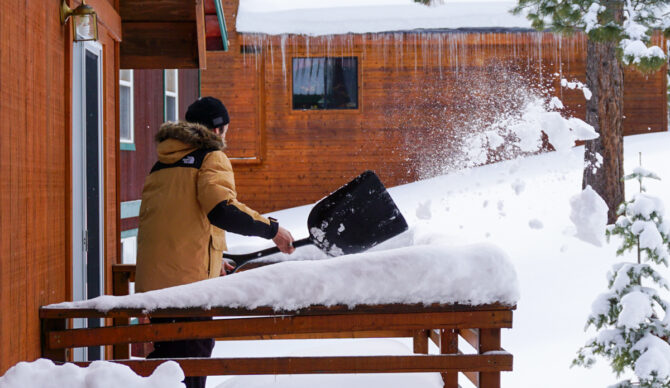
We actually don’t recommend the McMurdo for shoveling the deck unless it’s really, really cold out. Photo: Aleena Vigoda//The Inertia
Testing the McMurdo Parka
I’ve owned and have been testing the McMurdo Parka for the past three years. Being based in San Francisco for most of the year, it spends that time stashed in a back closet, but when winter rolls around, I’m very glad that I have such a warm option to fall back on. I spend most of the winter in the Lake Tahoe area, which is where I primarily use the McMurdo.
It’s my fallback for when it gets too cold for just a sweatshirt and thin puffer jacket. When the temps drop, or I know I’m going to be standing around outside for an extended period of time, it’s the coat I choose for no-holds-barred warmth.
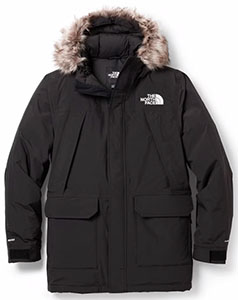
The North Face McMurdo Down Parka ($400)
Length: Hip
Weight: 52 oz
Insulation: 600-fill-power down
Shell: 2L Dryvent
Pros: Super warm and cozy, weatherproof with great pockets and features
Cons: Bulky, no hem adjustment, too warm for milder temperatures
Notable Features
Insulation
The McMurdo is absolutely brimming with down insulation. 600-fill recycled waterfowl insulation, to be exact. That speaks to the quality of the down, and unfortunately, the fill weight – how much of that insulation is actually packed into the jacket – is unavailable. That said, to put it in layman’s terms, the McMurdo is stuffed to the point of feeling overstuffed. This is definitely a piece that prioritizes warmth over mobility.
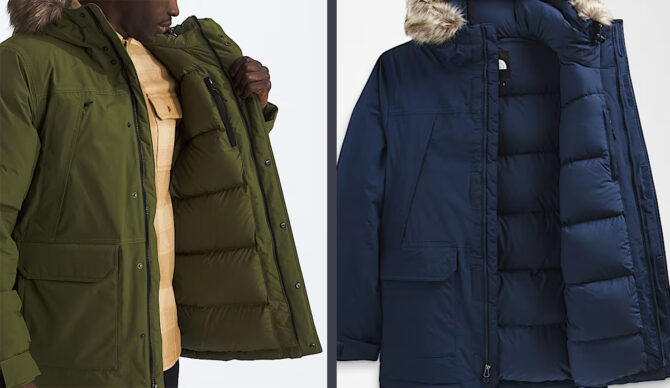
The McMurdo’s interior baffles are absolutely brimming with down insulation. Photo: The North Face//The Inertia
Durable Shell
Per the TNF website, the McMurdo Parka shell is made from: “70D X 160D 128 g/m² DryVent 2L—100% Recycled Nylon Woven With Non-PFC Durable Water-Repellent (Non-PFC DWR) Finish.” That’s a lot of technical gobbledeygook, so let’s break it down piece by piece.
70D X 160D 128 g/m²: The jacket uses both 70 and 160 Denier thread in the face-fabric weave, for a durable, but not overly stiff exterior. Coming out to 128 grams/square meter, this is a moderate-weight fabric, not lightweight like a windbreaker, which would often be around 60-90 g/m2, or overly heavy like a canvas chore coat, which often comes out to about 300-400 g/m2.
DryVent 2L is The North Face’s proprietary waterproof/breathable membrane, providing true waterproof performance as well as some breathability, although the down insulation of the jacket certainly cuts against the jacket’s overall breathability.
The non-PFC DWR Finish is applied to the exterior of the jacket, helping rain bead up and roll off instead of soaking in to be blocked by the DryVent membrane.
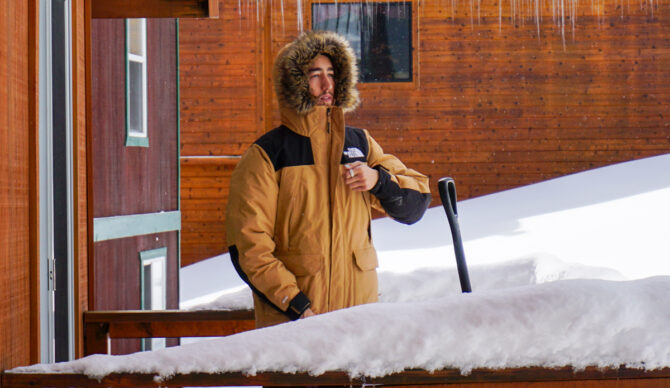
A storm placket helps seal out drafts from the main zipper. Photo: Aleena Vigoda//The Inertia
Sealing Out the Elements
Beyond the waterproof, windproof, almost-anything-proof shell, the McMurdo keeps you protected in more ways as well. Drafts are one of the quickest ways for cold air to sneak into a cold-weather fortress like the McMurdo, so TNF has done a great job of sealing things up. Wrist cuffs have a hook-and-loop closure, and the front zipper has a storm flap that also secures with velcro. The hood can be adjusted as well and has that faux-fur ruff, which is removable.

Fleece-lined “alpine pockets” are a great place to shove your frozen digits. Photo: Ella Boyd//The Inertia
Other Features
The McMurdo has pockets upon pockets: dual-entry patch hand pockets with side zippers and a velcro flap on top, and what TNF calls “Alpine pockets,” basically backpack-compatible hand pockets above and a little further back than the patch pockets. There’s also an interior zippered pocket for small items.
It comes in a lot of colors and, style-wise, is nothing less than a classic.
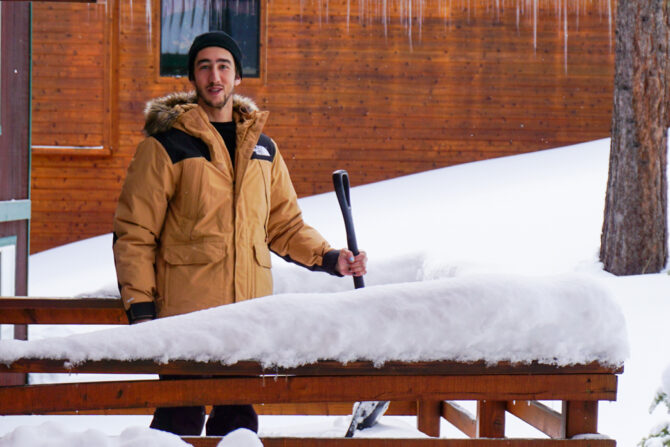
There’s no doubt that one feels a bit like a puffball in this thing. Photo: Aleena Vigoda//The Inertia
Downsides
No Hem Adjustment: This won’t be an issue for everyone, but the current version of the McMurdo does not have a hem adjustment/drawcord hem. That’s understandable given the fact that the McMurdo is a moderately long jacket, but the jacket is only a little below hip length, and a drawcord is one of my personal favorite ways to seal out drafts.
Bulky: The combination of durable, robust weatherproofing and thick down insulation means the McMurdo can feel a little bulky, and is certainly best for casual, low-output use – keeping warm while waiting for the bus or watching a football game, not climbing mountains. Then again, it’s nearly impossible to make a jacket that’s warm, durable, and weatherproof without it being either bulky or exorbitantly expensive. In a sense, a bit of bulk is just the price you pay for winter warmth.
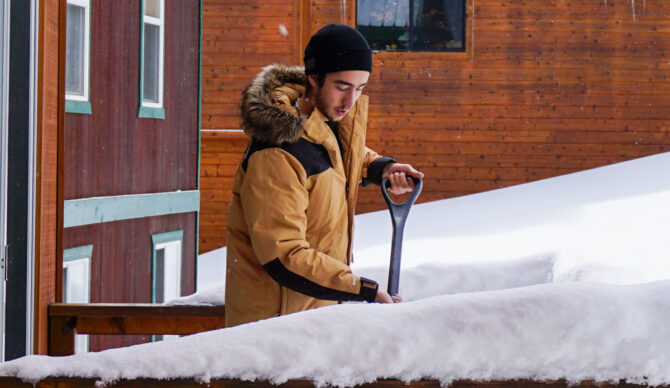
When it comes to bang-for-buck in winter jackets, the McMurdo is tough to beat. Photo: Aleena Vigoda//The Inertia
The Competition
The McMurdo Bomber is a shorter-hem version of the classic McMurdo Parka, with some slight style and pocket changes as well. Despite the shorter hem, there is still no hem adjustment as far as I can tell.
The Fjallraven Nuuk Parka is surprisingly similar to the McMurdo, with some key differences. It uses synthetic insulation rather than down, has a lot more pockets, a bit softer and less stiff material, and it costs $100 more. With the synthetic insulation, rather than down, it’s not quite as warm, but there is more room to layer underneath than the McMurdo’s fluffiness provides.
The McMurdo is bulky because it combines durable weatherproofing and insulation. The Rab Neutrino Pro is a puffer jacket that has just as much insulation as the McMurdo, but because it doesn’t have the tough, waterproof outer shell, it is much easier to move around in, and can actually be packed down into a reasonable size, unlike the McMurdo. However, you lose out big time on weatherproofing, as well as overall durability.
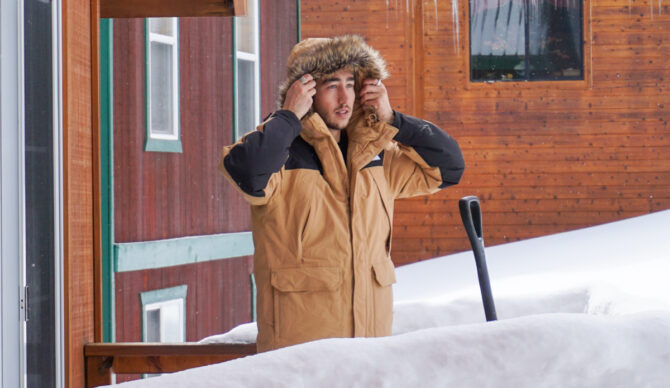
The faux-fur ruff on the hood is removable. Photo: Aleena Vigoda//The Inertia
Final Thoughts
The McMurdo Parka is a wintertime beast made for those who want to look good and stay warm without breaking the bank. And thanks to a very durable design, it’s a piece you can count on winter after winter for years to come. It’s not the most technical piece, as the plentiful down insulation and tough outer shell make for a bulky feel, but as long as you’re not trying to use it for anything more strenuous than a casual walk, that bulky warmth will be a blessing, not a curse.
A decades-old classic with timeless appeal, the McMurdo is a standout among the many winter jackets we’ve tested here at The Inertia.
Check Price on BackcountryRelated: Best Winter Jackets | Best Puffer Jackets | More Winter Reviews
Editor’s Note: For the most recent gear reviews and features on The Inertia, click here.

