
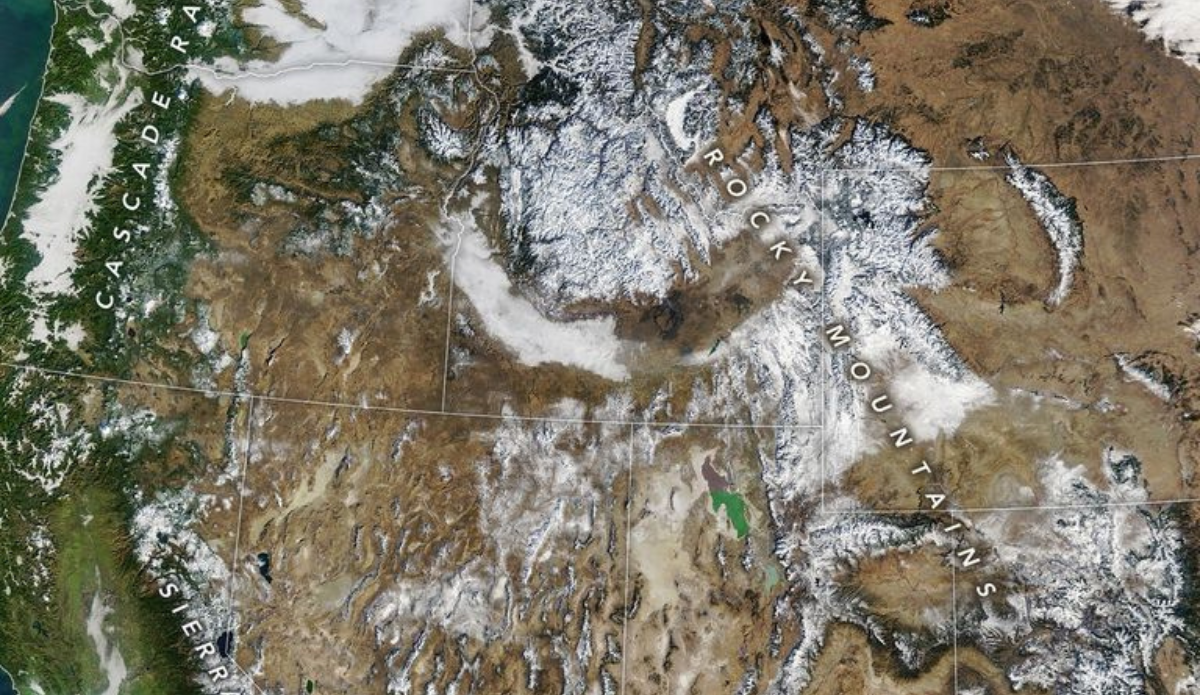
Photo: NASA

The National Aeronautics and Space Administration (NASA) might’ve just summed up the current experience this winter out West: “The mountains of the western United States are sporting thin winter coats.” That description came alongside an image shared by the administration on Wednesday showing much of the western U.S. looking barren on January 15, 2026.
“On that day, measurements derived from satellite observations showed that snow blanketed 142,700 square miles (369,700 square kilometers) of the West. That’s the lowest coverage for that date in the MODIS record dating back to 2001 and less than one-third of the median. Coverage had increased slightly by January 26,” they said.
NASA says the current pace of snowfall (or lack thereof) has the region facing a “snow drought,” a term that indicates a critically low snowpack leading to the amount of water that is retained for use in reservoirs. While La Niña has brought rainfall to places like the Southern Sierra and Northern Rockies, NASA says that water tends to run off before it can recharge reservoirs and groundwater. Overall, the past few months have been “wet and warm,” throughout the West.
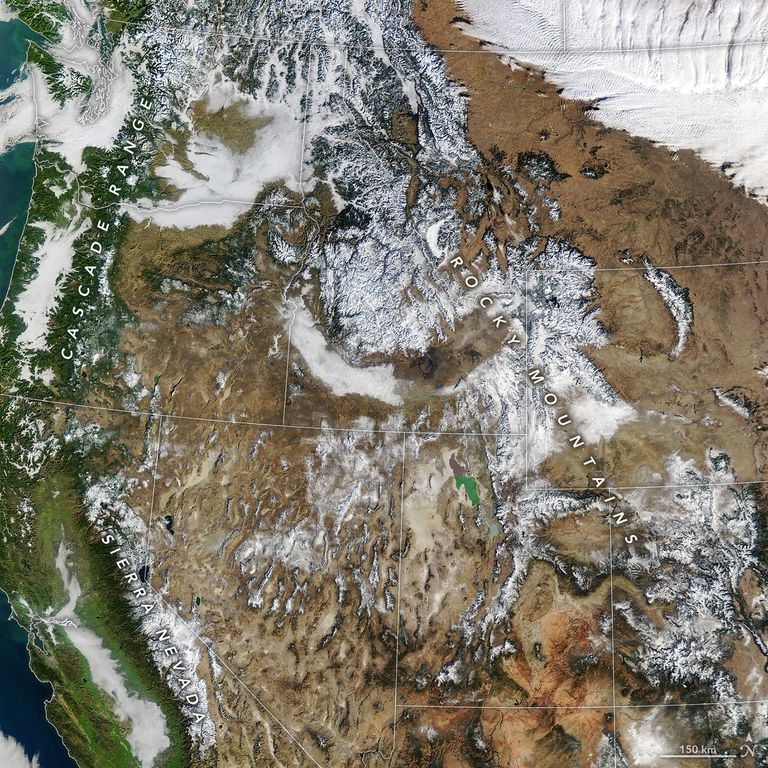
Satellite image of the Western U.S. on January 15, 2026. Photo; NASA
“This is a classic climate-change, temperature-driven, elevationally dependent snowpack deficit,” said Daniel Swain, climate scientist at the California Institute for Water Resources, in a presentation.
For skiers and snowboarders, that’s meant boom or bust depending on which part of the region you’re in. A recent report from The Cool Down detailed how the slow winter has impacted businesses within the industry. The publication pointed out that Colorado employs 46,000 people within its statewide ski industry economy, bringing in nearly $5 billion each year. Shops that provide rentals, service, and retail are reporting sales down between 20 and 30 percent this season.
NASA did point out, however, that “there is still a lot of winter remaining, and February and March can bring significant amounts of snow.”

