
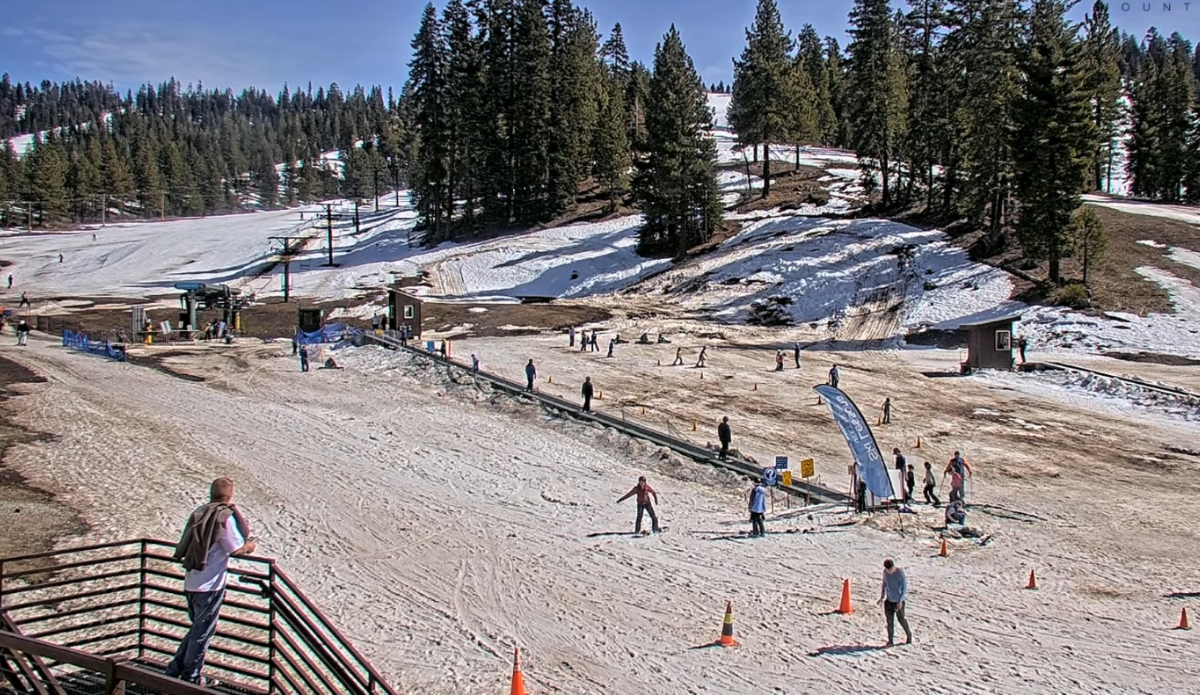
Photo: Dodge Ridge Mountain Resort cam on March 15, 2026

On March 14, Mount Shasta Ski Park closed down for the season. The closure wrapped up a season that included more than one pause in operation and just 55 days of riding for California’s northernmost ski area. Dodge Ridge Mountain Resort likely joined Shasta as another California ski area to end its season early the very next day, thanks to the “unseasonably warm conditions” that have soured ski and snowboard seasons across much of the West.
“We are hopeful that this will not be the end of our season, and aim to resume operations should we receive significant snowfall at a later time,” said the resort, although a late-season storm isn’t expected to change their circumstances. That puts a wrap on a season that lasted just three months for Dodge Ridge, which opened for the winter on December 27, 2025.
Unlike Mt. Shasta, which is at the southernmost section of the Cascade Mountain Range and only about 40 miles south of the California-Oregon border, Dodge Ridge sits much further south in the Sierra Nevada. It’s technically the closest ski area to the San Francisco Bay Area and California’s Central Valley, approximately 2.5 to three hours and 1-2 hours east of each region respectively. For reference, the ski area closed down for the season last year in mid-April.
The second early closure in the Golden State sums up the experience of the season for many, but it’s a strong swing from the massive and historic storm that rolled through the West just a month before. The mid-February event transformed the Sierra Nevada snowpack, but that turned out to be temporary, as warmer weather followed right after. The same storm did provide enough snow in the Eastern Sierra for Mammoth Mountain to announce it’d stay open until at least Memorial Day, but the plan for resorts in the Northern Sierra seem uncertain. A report from California’s Department of Water Resources in early March said that the Eastern Sierra’s snowpack had reached 90 percent of its historic average by the end of February, just after the historic storm. The Northern Sierra, meanwhile, was at just 46 percent of its historic average at the time.
Early closures are happening throughout the region due to a March heatwave.

