
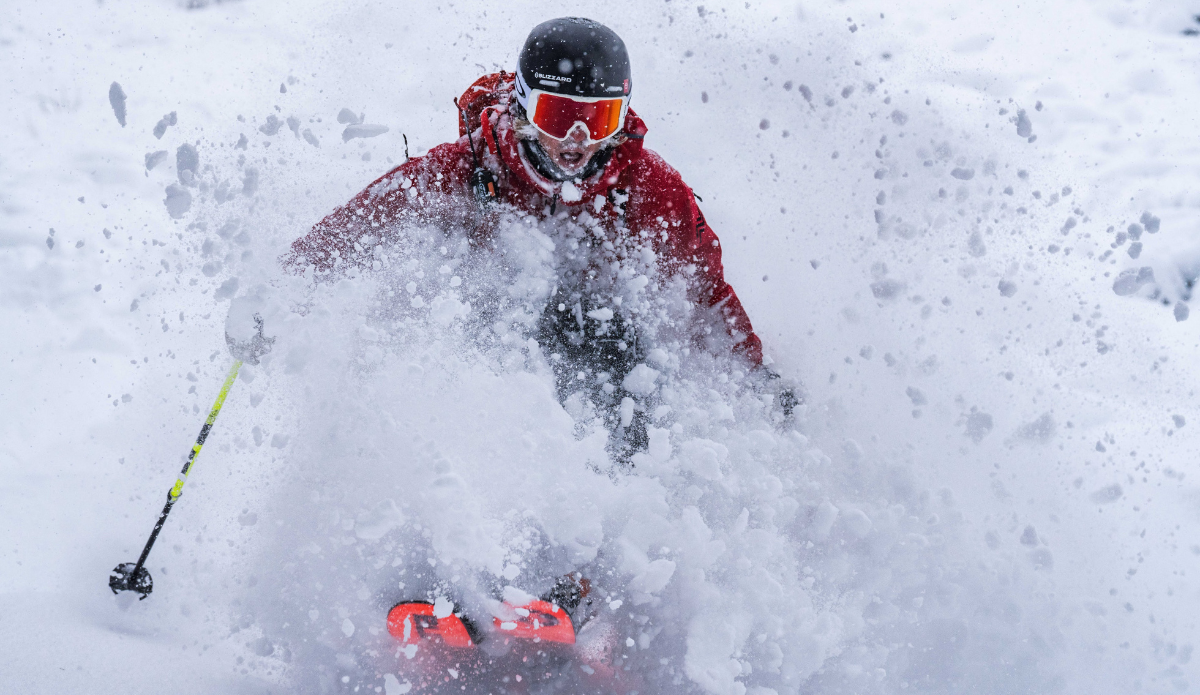
The design grind appears to have worked. Photo: Blizzard Skis

Brands and athletes have been collaborating on equipment for as long as brands and professional athletes have existed. Name a sport and there’s a signature model: a shoe or board with a pro’s name on it. In surfing, for example, athletes and shapers work side by side searching for magic in a single hand-shaped design. The process is fascinating, taking one human’s expertise and a craftsman’s skills, some creativity from both, and creating something neither could have developed on their own.
But what about taking an entire team of athletes and an entire team of engineers to build something? I’ve always been intrigued by that dynamic — something akin to an F1 team building and refining the perfect race car — only for equipment packaged for the everyday athlete. Too technical? Too many cooks in the kitchen? Or maybe even totally unnecessary for the common athlete-consumer or weekend warrior to use?
The F1 metaphor was all-too relevant when I talked to professional skier Connery Lundin about this exact process.
“Skiing on Blizzards is like driving a Ferrari. It’s got stiff suspension. It’s high-end performance. People who buy a Ferrari or buy Blizzard, they expect a certain amount of performance out of these skis, and you also got to give energy to get that performance,” he says of the Austrian-based brand.
Lundin’s been on Blizzards for more than a decade, and over the course of two seasons he was part of a team of engineers and athletes that designed, built, and tested over 160 prototype skis which were eventually filtered down to a single shape. The collaboration, which they called the Canvas collection, produced three freeride twin-tip skis from arguably the last brand you’d expect to roll out three freeride twin tips.
“You got to be at a certain level to really be able to enjoy the performance of your standard Blizzard ski. And so for someone that’s not a former ski racer or didn’t grow up skiing their entire life or whatever, Blizzard’s been out of reach or unapproachable in some ways. That’s sort of been the brand identity,” Lundin admits, pointing to the Blizzard team’s inspiration to create something that’s nowhere near new to skiing, but definitely new to the Austrian company.
Some other athletes who joined the Palisades Tahoe local in that two-year testing process include Piper Kunst, who just won the 2026 Kings and Queens of Corbets, Tahoe’s Kaz Sankowski, and Zeb Schreiber, another young standout talent groomed in the freeskiing hotbed that is Palisades Tahoe. They were tasked with skiing the first designs from Blizzard’s engineers and then returning with feedback, then going back out and skiing some more. Rinse and repeat.
Lundin says he probably rode and tested around 10 different prototype shapes himself through almost 10 different rounds with the entire athlete team. Each prototype was part of a three-width collection, giving them a park ski, an all-mountain ski, and a pow ski. That’s just one athlete on 30 skis, 10 different shapes, different materials, and riding them all in different corners of the world, too. Every time they’d sit down with engineers after riding a shape, they’d go over feelings, of all things. Not materials or outline, for example. Those were for the engineers to use in order to recreate the sensations athletes were searching for through a turn.
“We wanted something that was lighter and just didn’t require so much, but still fun to ski,” he says of the brand’s baseline. “Something you could do nose butters on and ski more sideways and, like, basically, ski a lot… surfier.”
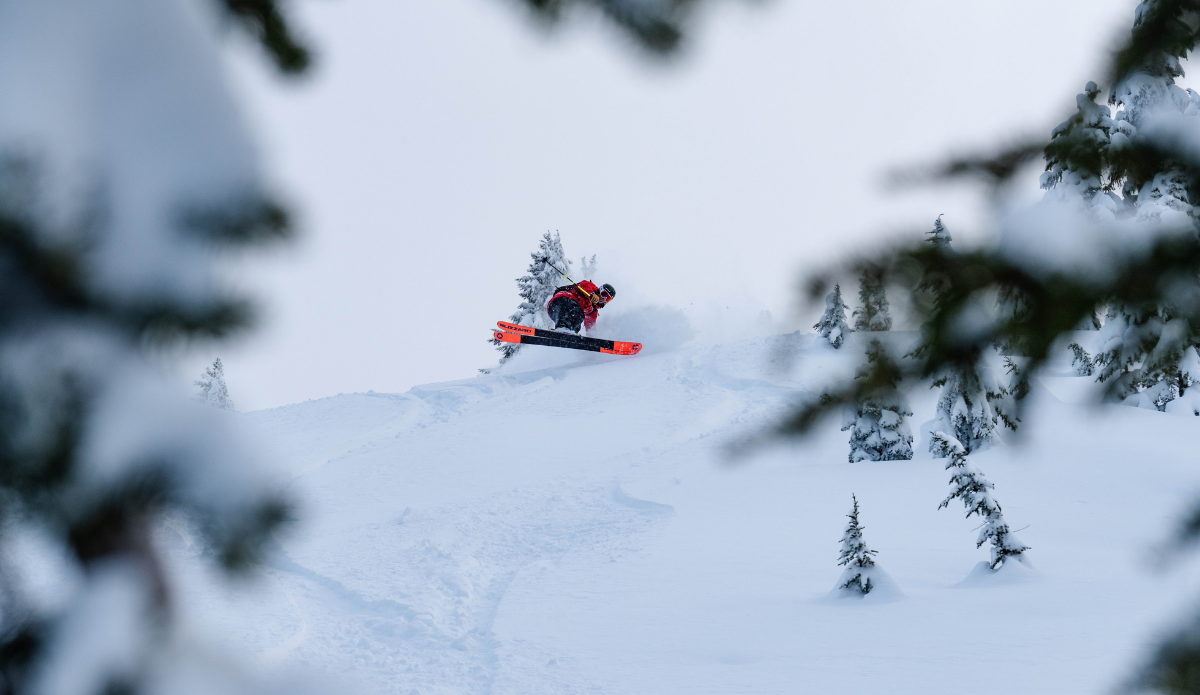
Can you say “playful?” Photo: Blizzard Skis
“You told engineers you wanted something ‘surfier,'” I asked, my interest piqued. The big mountain skier shared some stories about a recent trip to Nicaragua, his time living in Santa Cruz, and the mechanics of riding waves that, at least for his part, he used to articulate the feelings and the flow he was asking engineers to recreate.
“Feelings that are hard to describe,” he says. “Like freedom and looseness, and slashing (sensations).” It took several rounds, he estimates somewhere near the halfway point of the whole process, when he recalls “the lights came on” — the athletes finding a groove and the team of engineers locking into a recipe that was coming closer to hitting the mark.
As mentioned, the skiers didn’t know what materials were used in each prototype and didn’t necessarily know how engineers executed the adjustments they were directed to with each testing session. Another layer, or barrier maybe, was being an American skier working with European engineers who experience an entirely different ski culture from a place like Palisades Tahoe.
“I think that was the great challenge of creating the Canvas. Basically telling the Austrians it doesn’t need to make the best GS turn in the world, you know? That’s not the criteria anymore.”
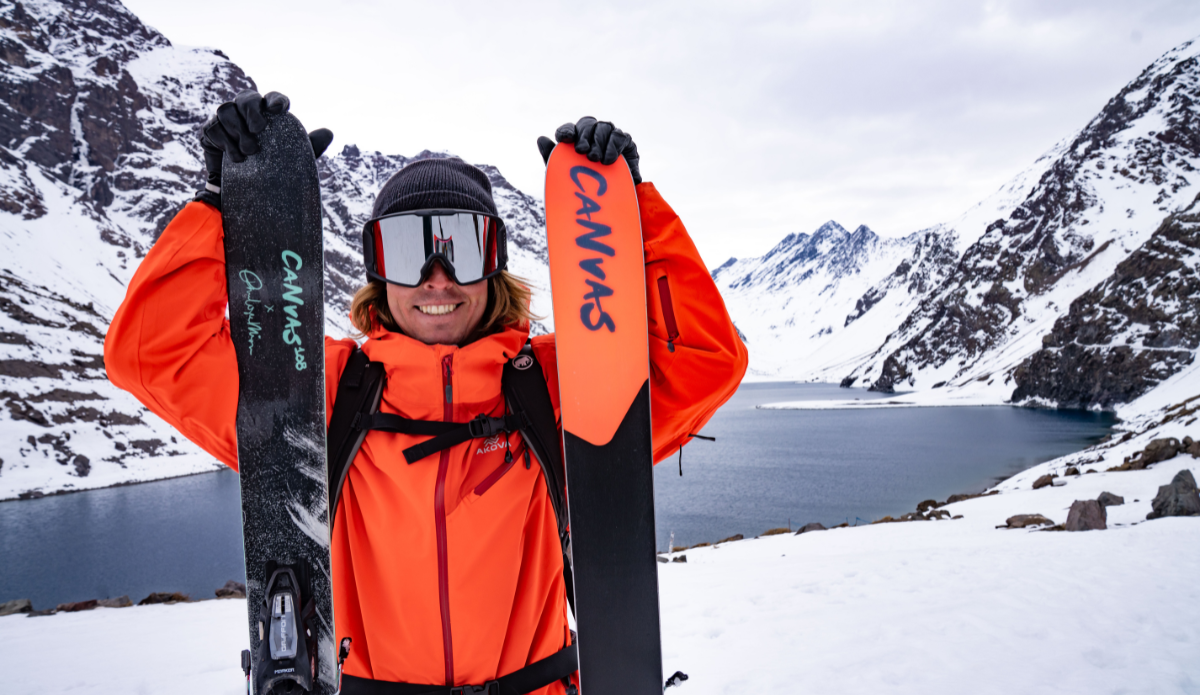
Blizzard’s new Canvas: fully tested by fun hogs. Photo: Blizzard Skis
The collaboration was finally revealed to the rest of the world in December, 2025. The brand only rolled out one of its three skis though — a 108mm-width (at the waist) twin tip Lundin calls the “quiver killer.” Blizzard didn’t invent a whole new ski with the Canvas, but it did create something new to them, executing the task of building a playful freeride ski for the everyday athlete. In fact, if I could describe the new ski in just one word myself, “playful” would fit the bill (yes, I was lucky enough to test them this season). The ski feels lighter and more nimble than the mid-fat outline would lead you to expect. They’re responsive in steeper terrain and at speed. They weren’t made to outshine every other ski on groomers, and well, this winter in the West didn’t exactly deliver many opportunities to veer far off the beaten path. Funny enough, the fact they’re still as fun as they are on those groomed runs bodes well. A 100-millimeter ski built for the skier who prefers jibbing and butters as well as a 118-waist ski for sniffing out deeper snow will finally come out later in 2026. Lundin says the upcoming 118 is his new favorite.
“It’s a lot easier to whip around and spin and flip (because it’s so light). It’s just soft in all the right places.”
It turns out the collaboration process between world-class athletes and the brands that make our equipment can be incredibly extensive. Forget the technology, the high-tech materials, or the physics at work. The sheer manpower, time, vision, and creativity of entire teams tasked with designing something new puts a whole new perspective on how your gear finds its way to shop racks and, eventually, under your feet.

