

Photo: Andrew Miller

It’s been a rollercoaster ride for the folks at the Farmer’s Almanac lately. Last November, it was announced the 200-plus-year-old publication would be shutting down. The 2026 winter forecast would be its last, its owners shared. It was learned just a few months later that a new owner was coming in to save the whole operation. Fast forward to August, in the midst of a strengthening El Niño year and a winter on the horizon (far out on the horizon, but it’s out there), and the 2026-2027 winter forecast has arrived.
With this being an El Niño winter, and a big one at that, this is a season people are even more intrigued to learn what the seasonal outlook will be in their given region.
“Winter 2026–2027 is shaping up to be a season of sharp contrasts, with an active southern storm track, quick bursts of snow and bitter cold across the North, and a tricky mix of rain, sleet, ice, and heavy wet snow in the Northeast,” reads the forecast. “Keep the shovel, rain boots, and ice scraper close — this winter may bring plenty of surprises.”
Below is a more detailed rundown of this winter’s El Niño outlook.
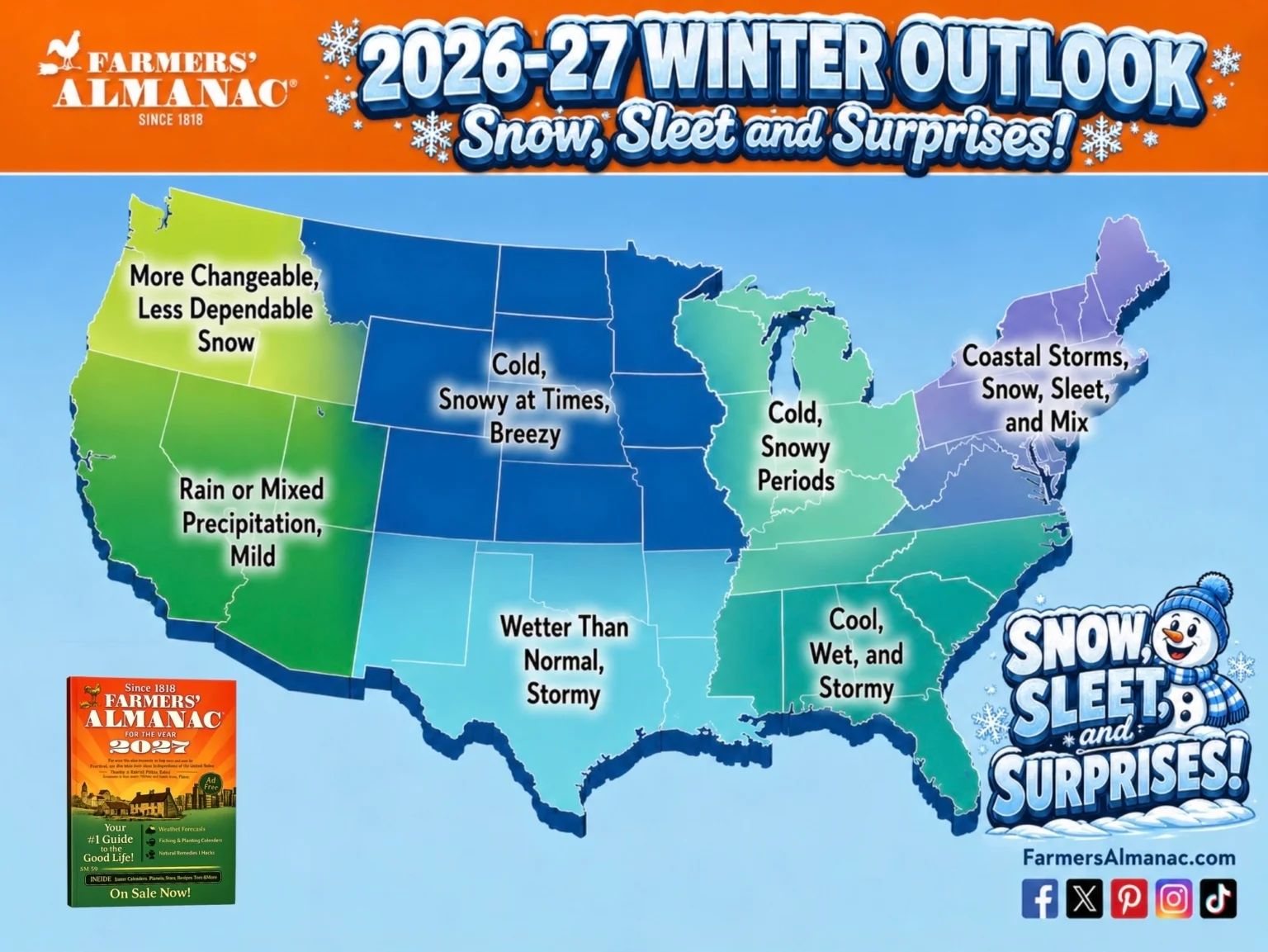
Photo: Farmer’s Almanac
Wet and Stormy Down South
The Almanac forecasts an active storm season stretching from Southern California through the Gulf of Mexico and into the Southeast. “When that colder air meets abundant moisture, some storms could produce sleet, freezing rain, or heavy, wet snow. The southern Rockies may fare especially well for mountain snowfall.”
Bundle Up in the North
Winter temps are expected to be “normal” “across much of the West, northern Plains, Upper Midwest, and Great Lakes.” We know that’s a diverse region, where winters can range from cold (out West) to “Nahhhh, thanks though…” (the Great Lakes), for example. The Almanac forecasts these northern regions to experience temporary or intermittent “cold snaps,” though, which will bring snow squalls, winds, and burst of bitter cold.
The Northeast Gets Complicated
The Northeast is going to endure storms, but the Almanac says everybody should be prepared for shifty forecasts as they approach. Coast communities may see more rain during those storms than snow, while inland areas get hit with “several rounds” of heavy snow in January and February.
It’s Even Less Predictable in the PNW
“The northern Plains and Upper Midwest could turn drier at times, especially when the southern storm track becomes dominant. Even so, brief but intense periods of cold, wind, and snow will remain possible,” the Almanac reads.

