
Photo: Ilya Shishikhin / Unsplash

Vail Resorts, Alterra Mountain Company, and the National Ski Areas Association (NSAA) are three defendants named in a new lawsuit alleging industry giants have shared confidential revenue and cost information with each other, which guided business strategies and artificially inflated lift ticket prices and other costs to consumers by 55 percent since 2020. The lawsuit, Green et al v. Vail Resorts, Inc. et al, was filed on August 6 by three individuals and is different from the class-action lawsuit filed against Vail and Alterra earlier this year, also claiming the two companies artificially inflated lift ticket prices, albeit through strategies of bundling access to marquee ski areas with multi-mountain season passes.
This new lawsuit also includes Boyne Resorts, PWODR, and Boulder-based research firm RCC Associates. It alleges that the effort between all parties to share confidential and proprietary information allowed them to coordinate their pricing and skip the practice of competing with one another for business altogether.
Regardless of the reasons, consumers have undoubtedly seen the price hikes occur rapidly. As mentioned, lift ticket prices have increased by 55 percent since 2020, according to the new suit. It was major news when North American skiers saw a single-day lift ticket top $300 for the first time in early 2023 at Arizona Snowbowl. That particular incident was the result of the resort’s surge pricing model, which dictates single-day pricing based on how busy it is on a given date. And it’s fair to point out that Arizona Snowbowl isn’t owned by any of the defendants in this case (Mountain Capital Partners), but the $300 mark was news at the time simply because it was unthinkable.
A report in August 2025 showed just how common that same benchmark had become only one full season later. The Storm Skiing Journal reported that prices for the 2024-2025 season had topped $300 and more at resorts ranging from Whistler Blackcomb to Heavenly, and Northstar on 22 different peak days for non-season pass-owning visitors. Beaver Creek, Breckenridge, and Vail Mountain ranged from $321 to $356 for a single lift ticket on 56 different peak days.
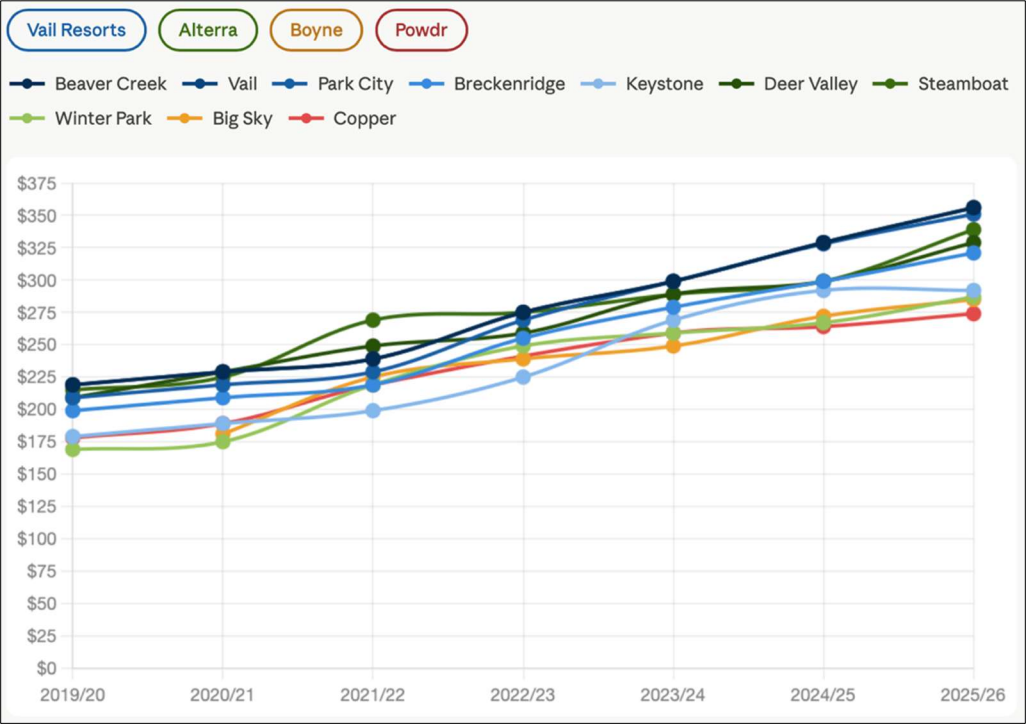
Photo: Screenshot from Nicholas Green et al. v. Vail Resorts Inc. et al
Back to the lawsuit at hand, the argument is that a system of data sharing among companies included information about everything from season pass sales to rental sales, operating costs, demographics of visitors, resort capacity, and more. As a result, each were directed to set strategies for multi-mountain pass sales, which have steadily increased, and single-day lift tickets, which have skyrocketed. Consumers, according to the suit, have been left with no choices in the matter.
“Because (resort companies) no longer compete on the value of the destination ski package, they have systematically reduced the quality of the experience,” the complaint states. “Overcrowded mountains, depleted rental fleets, and reduced ‘on-mountain’ staffing levels are consistent complaints from skiers and snowboarders.”

