
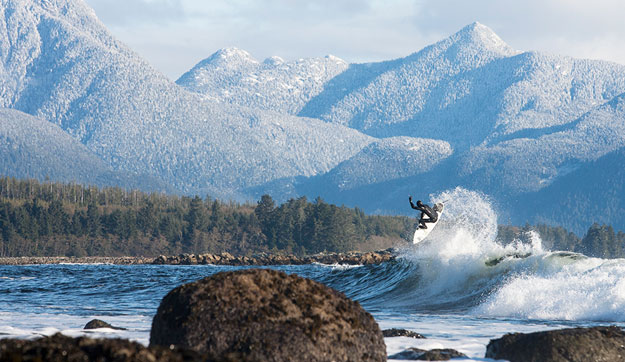
Peter Devries, reaping the rewards of a lifetime of cold water experience. Photo: Kyler Vos

I recently went on a trip to Haida Gwaii, a chain of waveswept, lushly forested islands off the British Columbia mainland. We were there to film for a video call The Fortune Wild. I learned a lot from that trip, and all the other cold-water trips I’ve been on. Here’s my list of the absolute essentials for your next one.
1. Know what you’re in for: Modern day forecasting is really good, and it can give you a great indication of the weather, wind and swell you will receive during a camping mission. Plan according to the forecast and know it well, but always be ready for it to change. Having a weather radio with you to get an up to date forecast is key up here.
2. Rain gear and change of clothes: It doesn’t matter how good the weather looks, always have a top layer of water proof gear with you. Whether you’re hiking through the bush or jumping in a boat, you will most likely be getting wet at some point. Being wet for the duration of a trip is the worst, and it certainly doesn’t make you want to put on a wet wetsuit for the morning session.
3. Fire: This is an obvious one, but fire is the most important thing when camping in the cold. You can cook and warm yourself up after a long session. It’s also great for giving you something to do in between sessions. Dry wood can be hard to come by during the winter months, so either bring a fire log, dry kindling or a chainsaw to buck up some dry rounds off the beach. Waterproof matches or multiple lighters in case one gets wet are also a good idea, and never forget your axe. Chop up wood found on the beach to get to the drier insides, especially to get your fire going.
4. Overdress: Always bring your warmest gear camping. From your wetsuit to clothing to sleeping bag, it is way better to be too warm than too cold. This one is for surfing especially. It’s a lot better to spend more hours in the water when the waves are pumping and no one is out than huddled around a fire trying to warm up.
5. Think about your setup: When setting up camp, think about the weather and wind conditions. Set up somewhere sheltered from the wind and rain, preferably close to a source of water. It’s also nice to be able to see the waves so you can time the tides perfectly. Bring tarps and a waterproof tent. Have a sheltered area for your tents and for cooking and hanging out if there is any rain in the forecast.
Check out Sitka and The Fortune Wild.

