
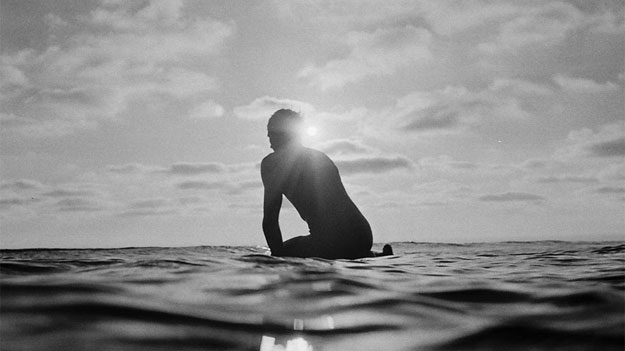
“Everybody is a genius. But if you judge a fish by its ability to climb a tree, it will live its whole life believing that it is stupid.” Photo: Brooks Sterling

The other day, while paying my physician a visit, I picked up a leaflet in the waiting room aimed at people who suffer from stress and anxiety. A consortium of psychiatrists and psychologists runs this particular organization. In the literature, a testimonial said, “Stress is an unavoidable part of life. So I took the point of controlling it rather than curing it.”
So now we are advising people to control stress instead of making changes in their life?
Stress occurs when the circumstances you are in are deemed a threat to your natural preferences. Assuming your instinctive drive is to survive first, and to do so in the most contented way second, stress occurs when something is in conflict with this basic human modus operandi.
Firstly, let’s look at the spectrum of stress and acknowledge there are two kinds of stress. The first one is natural stress. This occurs when your survival is at stake. For example, let’s say you are out for a leisurely walk in the woods. All of a sudden, you find yourself face to face with a brown bear. Or you are on the edge of a very high cliff, someone has put a gun to your head, or you have just been in a terrible accident and blood is pouring out of you faster than the Niagara Falls. This is natural stress. It tells you that, where possible, you have to change something quite dramatically, should you wish to survive. The increased heartbeat, the adrenalin, and the fast breathing all facilitate a rapid response.
One can say it is nature’s way of enabling us to make that change. So, yes, stress can be good.
Let’s go and look at the other kind of stress: the unnatural variety. Unnatural stress occurs when circumstances are in conflict with our values, like being in a relationship that conflicts with your needs. Or being in a work environment that, simply, isn’t matching your natural skills and talents.
Albert Einstein said, “Everybody is a genius. But if you judge a fish by its ability to climb a tree, it will live its whole life believing that it is stupid.”
Initial stress from exposure to such environments is usually unnoticed. We are doing what we are “supposed” to do. We are simply “too busy” doing whatever we are doing – like earning a living.
However, prolonged exposure to environments and circumstances that are a mismatch to your natural preferences gradually builds up to a tipping point where our bodies start behaving in the way we are designed to do when faced with natural stress. Folks on the outside question the filters and perspectives of those who seem to overreact to their surroundings. “Pull yourself together,” they say. “Man-up and get some perspective.” These are common platitudes.
However, what seems to be ignored is the imperceptible build up of small doses of stress signals that inevitably flood your life like a tsunami. These signals force change. If you are lucky, the discomfort along the build up has pushed you to change your job and end those relationships before the tidal wave knocks you off your feet.
Either way, nature always catches up, and it always enables you to evolve to find better surroundings for your contented survival.
One can say it is nature’s way of enabling us to make that change. So, yes, stress can be good.
Stress is not something to cure. What needs to be cured is your habitual self-exposure to surroundings, environments, and circumstances you frankly do not prefer to experience.
You have to know yourself well, though, and you should not be too lost in being a “somebody,” or having a false contented addiction to your status, things you own, or your life partner.
When you live according to your natural preferences – your natural self, as it were – your perspective is clear. When you experience stress, you know circumstances are mismatching your preferences. Forget trying to control your stress and sustain the discomfort and instead, start making changes to the way you live your life.
Remember change happens gradually. Every destination is eventually reached by taking one small step after the other. And when your circumstances start to compliment your natural self, you are ready for what is really important: Dealing with natural stress and unexpected, undesired change.
Stress is nature’s way to guide you to a better life. The next time my heart rate goes mental, my breathing goes shallow, and my stomach feels carsick, I think to myself: “Welcome my old friend, thank you for your guidance.”

