
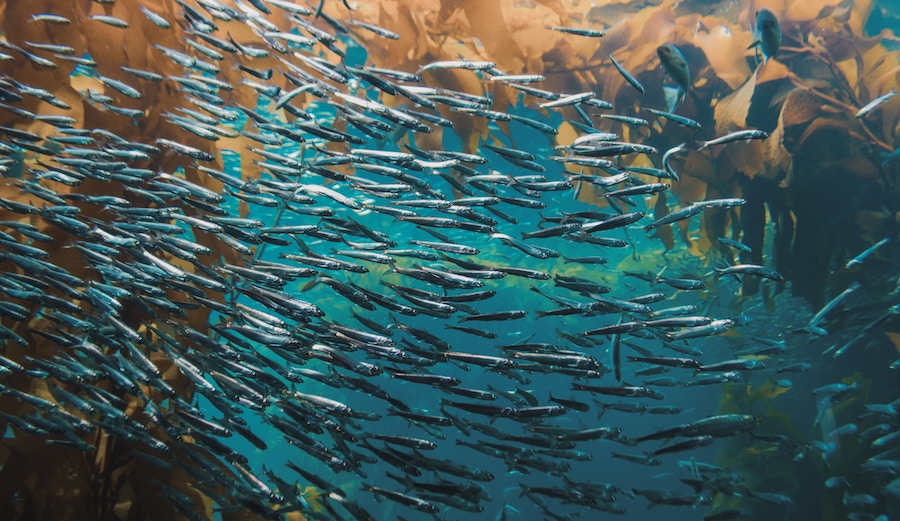
The study found that local extinctions were twice as likely in the ocean as on land. Photo: Zhan Zhang/Unsplash

Marine animals are twice as likely to lose their habitats as a result of climate change than their counterparts on land, and thus even more vulnerable to extinction, according to new analysis of over 400 cold-blooded animals.
Because ocean dwellers have fewer ways to find refuge from the heat – e.g. they can’t scurry into a cave or hide under a tree – they’re less capable of adapting to a warming planet, according to a study conducted by a team of researchers at Rutgers University and published Wednesday in the journal Nature.
The research marks the first time scientists have sought to compare the resilience of cold-blooded creatures on land to those in the ocean. Although previously published studies suggest that on land reptiles are more vulnerable to the effects of a warming planet than mammals and birds, the new study underscores how much more threatening warming ocean temperatures are to undersea life – in some cases especially to key species many communities rely on for food.
“Marine animals live in an environment that, historically, hasn’t changed temperature all that much,” Malin Pinsky, the Rutgers ecologist and evolutionary biologist who led the research team, told National Geographic. “It’s a bit like ocean animals are driving a narrow mountain road with temperature cliffs on either side.”
To use Pinsky’s metaphor, the task of his team at Rutgers was effectively to determine how wide of a “mountain road” 406 animals – 88 marine species and 318 terrestrial species – are driving on. A term scientists call “thermal safety margins.”
The margins determine how much heat individual species are capable of tolerating. Across the board, those margins were narrowest for marine species, especially around the equator.
According to Pinsky, though, many species are already feeling the results of warming. Local extinctions, the study found, were, “twice as common in the ocean as on land,” because of smaller safety margins at sea.
“These impacts are already happening,” Pinsky told NatGeo. “It’s not some abstract future problem.”

