
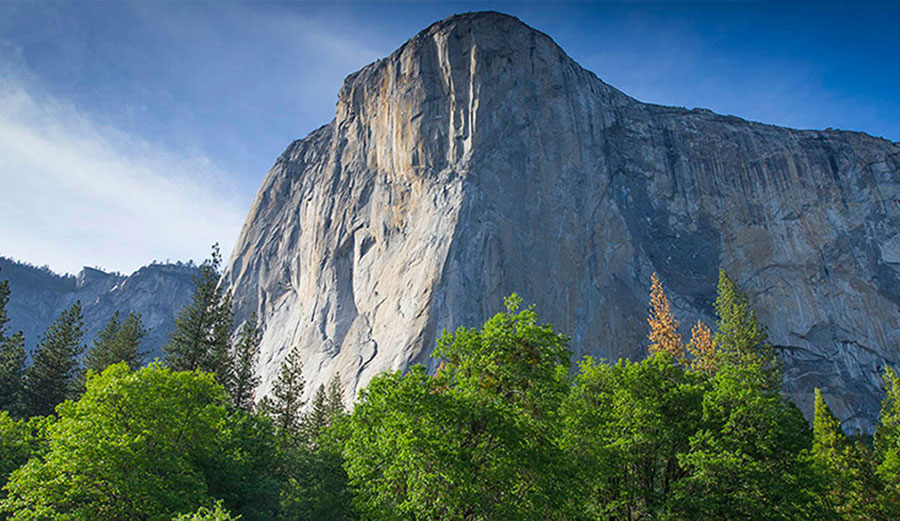
El Capitan. Photo: Yosemite.com

Late last month, the United States Department of the Interior announced a “modernized” plan intended to create more affordable access to National Parks. Updates included new digital passes, affordability and access changes for motorcycle riders, what the department is calling “America First pricing,” and changes to the National Parks’ calendar of fee-free days. The latter, which saw two notable dates removed and another added, is still drawing criticism two weeks after the plan was rolled out.
Martin Luther King Day, which reserves the third Monday of January each year in remembrance of Civil Rights leader Martin Luther King Jr.’s birthday, was removed from the list of fee-free days. Juneteenth, which commemorates the freeing of slaves in the United States on June 19th, was also removed. Flag Day (June 14), which the department noted is also President Donald Trump’s birthday, is now a fee-free day at National Parks.
While the announcement didn’t specifically point out Flag Day/Trump’s birthday as an intentional replacement of MLK and Juneteenth observations, the White House is dealing with plenty of fallout given its stated policies to scale back and pause federal initiatives related to the Civil Rights Movement, DEI policies, and more. It’s also not common practice in the United States to single out a President’s birthday for national observance. Flag Day is a day of federal observance, however, it’s not a federal holiday. Meanwhile, Presidents Day, which can also be referred to as “Washington’s Birthday” at the federal level, is a federal holiday set aside to observe and celebrate all who have served as President of the United States.
Kristen Brengel, a spokesperson for the National Parks Conservation Association, told Newsweek the changes will have a tangible effect on public maintenance and conservation efforts. She said those fee-free days, which have been National Holidays, are often used by community groups to perform volunteer projects at various parks.
“Not only does it recognize an American hero, it’s also a day when people go into parks to clean them up,” Brengel said. “Martin Luther King Jr. deserves a day of recognition…For some reason, Black history has repeatedly been targeted by this administration, and it shouldn’t be.”
“This policy shift is deeply concerning,” said Tyrhee Moore, the executive director of Soul Trak Outdoors, a nonprofit that connects urban communities of color to the outdoors. “Removing free-entry days on MLK Day and Juneteenth sends a troubling message about who our national parks are for. These holidays hold profound cultural and historical significance for Black communities, and eliminating them as access points feels like a direct targeting of the very groups who already face systemic barriers to the outdoors.”
Starting Jan. 1, the 2026 National Park free-entry days for U.S. residents will include:
-President’s Day – Feb. 16, 2026
-Memorial Day – May 25, 2026
-Flag Day / President Trump’s Birthday – June 14, 2026
-Independence Day weekend – July 3-5, 2026
-110th Birthday of the National Park Service – Aug. 25, 2026
-Constitution Day – Sept. 17, 2026
-Theodore Roosevelt’s Birthday – Oct. 27, 2026
-Veterans Day – Nov. 11, 2026

