
Photo: Alexander Hafemann//Unsplash

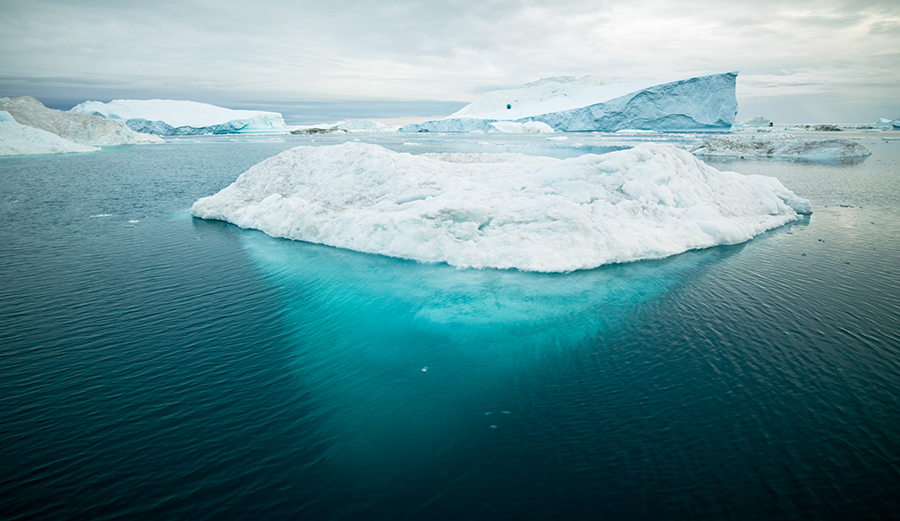
Last year’s extreme North Atlantic Ocean temperatures and record-breaking low Antarctic ice levels are far more extreme than was expected, based on the current rate of global warming. According to a new study, the conditions could be a glimpse of what is to come in an ever-warming world.
The findings, published last month in the Bulletin of the American Meteorological Society, were made by comparing the North Atlantic sea temperature and the Antarctic sea ice against established computer simulations. They found that the conditions were consistent with a world that had warmed by 5.4 degrees Fahrenheit (or three degrees Celsius) since pre-industrial times. However, the problem is that the world has only warmed by half that much.
“The climate of 2023 with all the disasters, you know, with all the wildfires in Canada and all the flooding events in Europe and everything, you can interpret this as, this is what we will have every year. Year after year after year in the 3-degree world,” study author Till Kuhlbrodt told the Associated Press. “You don’t want to go there.”
That “3-degree world” is still predicted to be decades away. However, while 2023 appears to be an anomaly, that doesn’t mean it can be ignored.
Soon, the North Atlantic will have gone a full year of consistently breaking world-record temperatures. Recently, the Antarctic sea ice has returned to hovering at or below record levels, rather than the “off the charts” levels of previous months. The hope is that the extreme conditions will pass and return us to more “normal” conditions, consistent with the predicted rate of warming. However, if it doesn’t, Kuhlbrodt warns that it could be a cause for great concern.
“If it’s not like that, and the North Atlantic stays in this crazy area,” said Kuhlbrodt. “Then it’s absolutely essential to find out why this is happening and how bad it’s gonna get.”

