
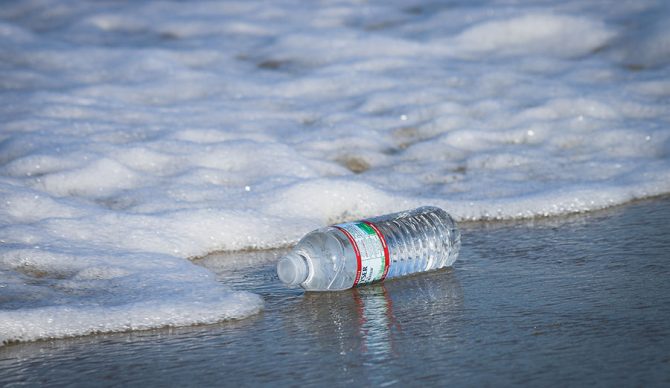
Photo: Brian Yurasits//Unsplash, CC BY-SA

Welp, if you thought you were confused about the scale of problems like plastic pollution in the ocean, here’s new research muddying the waters some more. A new study published in the journal Nature Geoscience suggests we have been overestimating just how much plastic we’ve been dumping into the ocean. Good news? I’d think so. But then again, if a group of scientists publishes research about the environment that sounds good but doesn’t conclude that humans are still somehow destroying the Earth, did they really even publish research at all?
I’m really just poking fun at the most eye-catching point of the conclusion — that there’s technically less plastic pollution entering our oceans than we’ve thought. “Previously thought” refers to a 2015 report that said humanity is responsible for about eight-million metric tons of plastic entering the oceans each year. This new research, however, estimates the number is closer to around 500,000 metric tons/year. That’s a significantly smaller number but researchers pointed out it’s only one small piece in a very complicated puzzle their data put together.
“Based on studies from 2014 and 2015, it was thought that between 4,000 and 12,000 kilotons of plastic reaches the ocean every year, with only about 250 kilotons floating,” said lead author Mikael Kaandorp, of the Institute for Atmospheric and Marine Research at the University of Utrecht in the Netherlands. “That would mean an incredible amount of plastic disappears every year, so we think our new numbers — 500 kilotons of input and around 3,400 kilotons of plastic in the water — make much more sense.”
The amount of plastic entering our oceans isn’t stagnant. It’s increasing by approximately four percent each year, according to the study. They also found that a disproportionate chunk of our plastic problem is in larger plastics floating in the sea for longer periods of time without breaking down.
“We find that larger plastics (>25 mm) contribute to more than 95 percent of the initially buoyant marine plastic mass: 3,100 out of 3,200 kilotonnes for the year 2020,” they wrote. “The results support higher residence times of plastics in the marine environment compared with previous model studies, in line with observational evidence. Long-lived plastic pollution in the world’s oceans, which our model suggests is continuing to increase, could negatively impact ecosystems without countermeasures and prevention strategies.”
In total, they estimate there are about 3.4 million tons of plastic floating in our oceans today. So however you cut it, even if the scale of what’s entering waterways each year is smaller than we thought, the study still presents a big problem. If nothing else, this most recent paper shows that there’s still a lot to learn about the effects of plastic pollution.

