
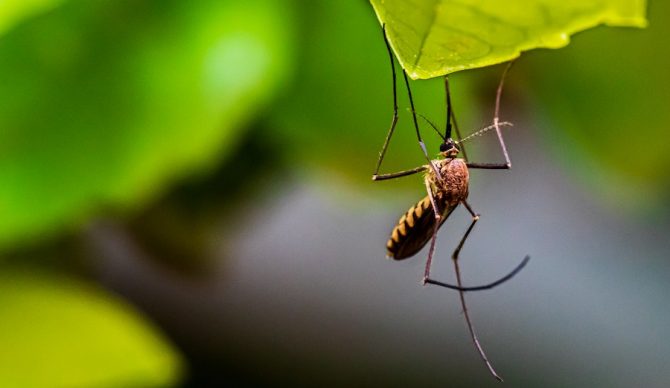
New studies show that being a “mosquito magnet” is a real thing, and it has nothing to do with one’s blood type. Photo: Syed Ali//Unsplash

Folklore and myth have been proven right, again. Well, sort of. It has always been evident that some people are “mosquito magnets” while others can go for a week-long camping trip without a single bite. We’ve just never known what makes us one or the other. In my family, my grandma and sister were always the ones who got bit, while my mother and I got off scot-free. We, like many others, chalked it up to them having “sweet blood.” New information confirms the theory that some of us are more attractive to mosquitos than others, but at the same time suggests that blood has nothing to do with it. Instead, it’s the compounds in our skin and the body odors they produce that mosquitos are, or are not, attracted to.
In a new study, released yesterday through the online journal Cell, researchers found that mosquitos are drawn to those whose skin produces high levels of carboxylic acid.
In the past, it was often held that blood type was a leading factor for mosquito attractiveness. But without supporting evidence, science has shifted away from that theory and towards the idea that body odor must have something to do with it. But until now, it was unknown what body odors lay at the heart of this pesky attraction.

Mosquito nets in use in Klaserierivier, South Africa. Photo: Jane Stroebel//Unsplash
To test the theory, Leslie Vosshall, a neurobiologist and mosquito expert at Rockefeller University, gathered 64 volunteers and had them wear a nylon sleeve on their forearms for six hours to pick up their unique body scents, not something you or I might notice, but certainly enough for a mosquito to tell the difference. These scented nylons were then pitted against each other, round-robin style, in a container filled with mosquitos. The mosquitos had some clear favorites. After several months of testing, and with additional samples being collected, it became clear that some of the trial participants’ skin was far more attractive to the mosquitos than others. “Subject 33 was the most attractive, yielding an attractiveness score that was four times the attractiveness score of the next most attractive subject, and over 100 times greater than that of the two least attractive subjects 19 and 28,” the study reports.
Then, it became a question of what about those skin odors was so attractive (or not) to mosquitos. In comparing data, researchers found that test subjects whose skin produced higher levels of carboxylic acid were those who attracted the most mosquitos, while the opposite was true for those who weren’t as tasty to the blood-sucking pests. Currently, we don’t know what personal characteristics might affect a person producing more or less carboxylic acid, but we do know that this isn’t something a different body wash or a new diet can impact as the levels of carboxylic in one’s skin tends to remain constant over time. “This property of being a mosquito magnet sticks with you for your whole life — which is either good news or bad news, depending on who you are,” Vosshall says.
However, mosquito magnets shouldn’t give up hope just yet, as this new information could help researchers develop new and more effective mosquito repellants that would either mask or alter the scent profile of one’s skin. For now though, if you are a mosquito magnet, at least you’ve got something to blame it on.

