
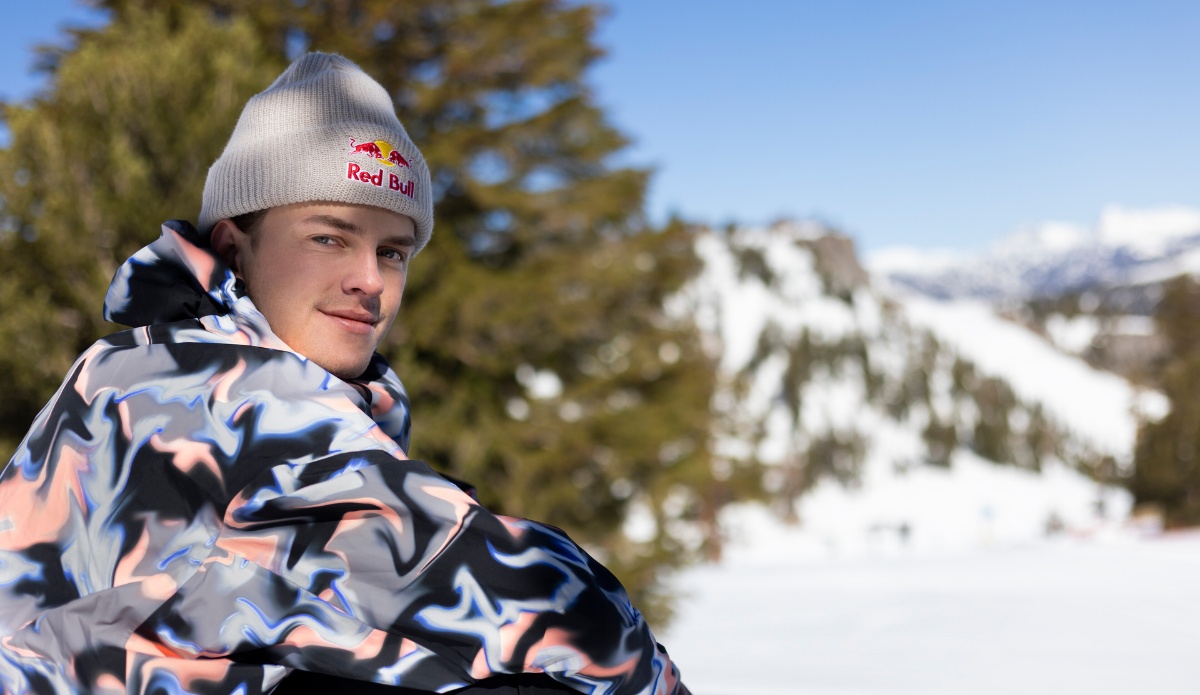
Mr. Canter has come a long way, baby. Photo: Red Bull

Watch any sports movie, no matter the sport, and your main character’s greatest triumph will come down to that final moment where they complete their comeback. The game-winning shot at the buzzer. The Hail Mary that falls into somebody’s hands for a touchdown as the clock strikes double-zeros. The walk-off home run.
Sometimes they win, sometimes they lose. But the morals of all these stories tend to hinge on that one moment, success or failure. There’s no nuance, no time to evaluate anything other than the result: a win or a loss.
The story of American snowboarder Jake Canter’s biggest professional accomplishment doesn’t fit that mold though. Ironically, his life story is that of an Oscar-worthy script — an Olympian who spent six days in a coma as a teen. His life was changed when a trampoline accident left him with four skull fractures, more than one battle with meningitis as a result, and permanent hearing loss on his right side, just to list a few of his injuries. Standing on the podium at the Milano Cortina Games in February marked an incredible comeback. But the day he won his bronze medal didn’t unfold like a Hollywood script.
Canter finished 10th in the men’s snowboard slopestyle qualification round at the Games, and his first two runs in the final hadn’t been enough to place him in position for a medal. So with one run left, Canter decided to lay everything on the line. Looking back, he says these moments weren’t always his strong point as a competitor.
“I think I struggled a long time with pressure,” he says. “When the pressure got hot it was very difficult for me to overcome that, you know? The overthinking, anxiety, the stress of the contest. It definitely affected me for a while.”
The 22-year old has grown an affinity for two athletes in recent years, though, who are synonymous with clutch moments: Kobe and Jordan. Canter loves The Last Dance documentary about the 1990s Chicago Bulls and their sixth NBA Championship with Michael Jordan. He also recalls taking a deep dive into stories about Kobe Bryant’s “Mamba Mentality,” and one nugget of wisdom from the Lakers legend has turned into something he tells himself all the time now: “Pressure Is a Privilege.”
“Being under pressure is truly a privilege. To be at the point where it’s like, ‘Hey, I need to do my absolute best in this very moment to achieve my dreams,’” he says. “I just added this switch. It made it that much more fun for me, and I enjoy the pressure now.”
So there he stood with one run to go and a decision to make with his coach, repeating those four words to himself. One option in front of them was to “put down something light” and see how it might hold up in the standings. Canter had fallen in his second run that day, and he believes a lot of athletes would have chosen that safe route for their final shot. You imagine nobody would blame him for taking that route. But his coach encouraged him to lay it all on the line.
“Let’s do the 19,” was the exact suggestion — a backside 1980 saved for the final jump of his final run. He nailed it and catapulted up the leaderboard from the bottom half of the field into a podium finish…with seven more athletes still waiting to throw down their final runs.
There was no room to give between Canter’s 79.36 third run and those competitors. The remaining field included 2018 Gold medalist Red Gerard, for example, and Norway’s Marcus Kleveland, who’d put up scores comfortably in that range during qualification runs.
Pressure may be a privilege, but it’s a whole other animal when you’ve done your part and are still tasked with waiting 30-plus minutes to learn if that moment is enough to bring home an Olympic medal.
“It was so difficult. I remember just sitting there. I had my headphones blasting music. I was playing games on my phone, like, I was not trying to look at scores,” he admits. On the one hand, he wanted a medal. On the other, he’d only leave with one if the group of friends he’s competed against and traveled the world with fell short in their own high-pressure moments. “That was really difficult mentally, just a conflict of emotions.”
The mindset at this point had to shift, of course. Everything else that night was out of Jake Canter’s hands.
“I was just like, ‘If it’s meant to be, it’s meant to be. I laid it all out on the line, and there’s nothing I can do now, so (I just had to be) happy with my performance, regardless.’ It was a stressful 30 minutes. It felt like two hours.”
That 79.63 did hold up, and Jake Canter is now an Olympic medalist. If there’s another Kobe or MJ mindset parallel here, it’s that he says as much as he loves that bronze medal, it’s only made him hungrier to get to the French Alps in 2030 and win gold. “Nothing but gold,” were his exact words.
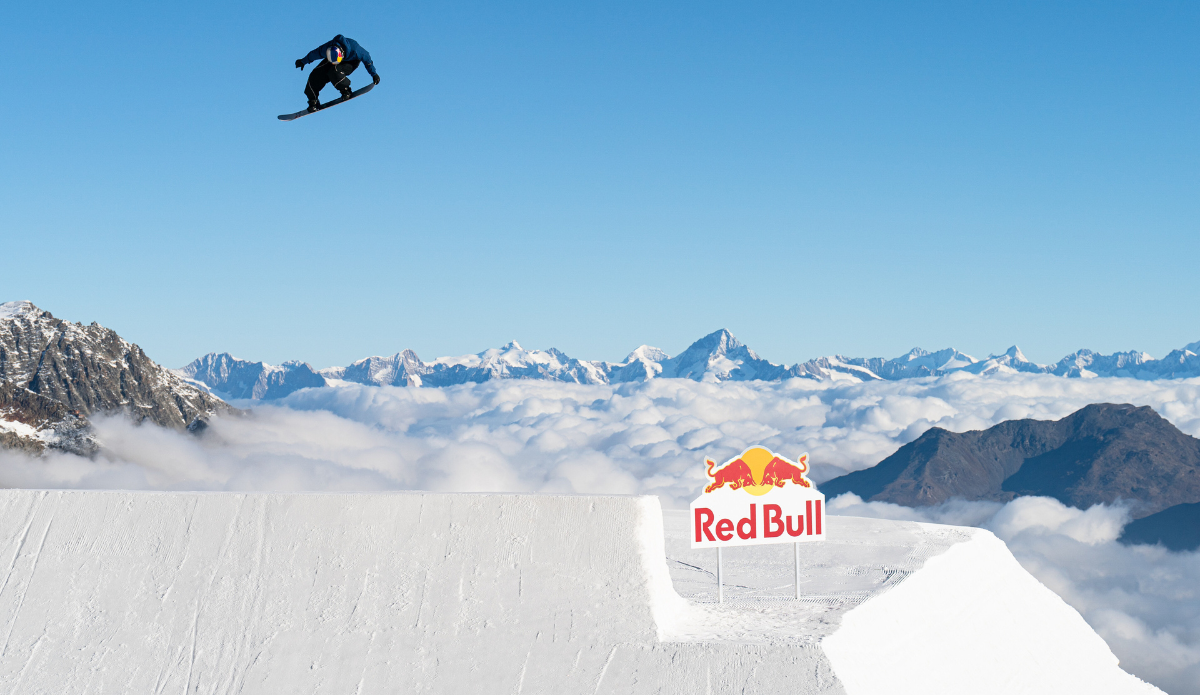
“On TV, (athletes) look super human. But at the end of the day, when you take everything away, we are human. We have our own battles.” Photo: Red Bull
It’s one of those stories that brings things full circle when you rewind to the life-changing accident that could have ended his professional career before it even got started a decade ago. The fallout from that accident was still rearing its head in tremendous ways in recent years when Canter took on his second bout with meningitis, an inflammation of the protective membrane around the brain and spinal cord, and another brain surgery. A serious concussion suffered at the X Games had triggered severe panic attacks. Medication to treat that opened the door for struggles with depression and a period of time where he says he didn’t leave home for two months.
So now, when he talks about going for gold in 2030, it’s partly to build a bigger platform where his success can mean helping others get through tough times. He says it’s another nod to Bryant, who was a strong advocate for coaching, motivating others, and mental health awareness after he retired from the NBA.
“On TV, (athletes) look super human. But at the end of the day, when you take everything away, we are human. We have our own battles outside of (competing), that we’re all struggling with,” he says. “I want to be the best version of myself to everyone around me. And the nicest, because at the end of the day, you have no idea what’s going on behind closed doors. So, if you can, make someone smile or be happy, give something to somebody, or help them in any way.”

