The other day I dropped my board outside and trudged into our tiny rental near the beach. “I hate surfing,” I said. “I’m done.”
My wife’s heard me say this before, in some way or another, over the last month or so. After a fun fall and winter, where I found myself surfing better than ever, I’ve been suddenly stumbling over myself. Going out at the wrong times, missing the best waves, finding my feet in all the wrong places, and getting in my head about my worst waves. It’s been a fully maxed tide of back pain, lack of swell and, somehow, still a crowd — resulting in a mental state that feels, well, waterlogged.
It’s easy to get down on your surfing, regardless of what level you’re at. There’s something about the performative act of riding waves that makes us compare ourselves to others, which can be difficult when you’re having an off day and the surfer 20 feet away is sending buckets in your face. If I can’t find a sense of flow for a while, I start trying too hard, and forcing it leads to me surfing as though I’m trying to kill a bug with the bottom of my board.
The thing is, many of our surf sessions are ordinary. They offer just enough spark to keep us coming back, but we’re also constantly dealing with conditions outside of our control. It helps to consider how many things must come together — waves, tides, reading the ocean, timing — for us to get one good wave; never mind have a satisfying surf.
Ironically, when we do have a day where everything goes our way, surfing feels effortless, and we wonder: why can’t every session be like that? The fact is, however, that the ocean is always changing, and we, as humans, are perpetually thinking, computing, storing information as we respond to stimuli. Surfing depends not only on our athleticism, but also accumulated wisdom. Gaining that wisdom is not a straight path, but one that jumps around and is sometimes rutted with bumps and holes.
The first thing that helped get me out of my funk was remembering the advice of an old surf buddy. When I first came out to California, beyond stoked to be able to pretty much surf every day, I struggled to perform as well as I’d imagined I would. From back in New England, the guy offered once simple tenet of advice: “Just keep paddling out.” The mantra ultimately worked, a simple example of the importance of practice and muscle memory.
This time, I kept paddling out — but also played around with variables. I switched boards, switched spots, and re-switched boards. I lost weight, then gained it back remarkably easily — smash burgers and California burritos really help. I worked out more, then worked out less. I broke some fins when I smacked my bike into a concrete ledge one morning, and repaired them.
And then, in the middle of another sub-par session, I found myself in a strange spot in-between two crowded breaks, neither of which were really working. I sat there out of place, and out of position, and thought about calling it.
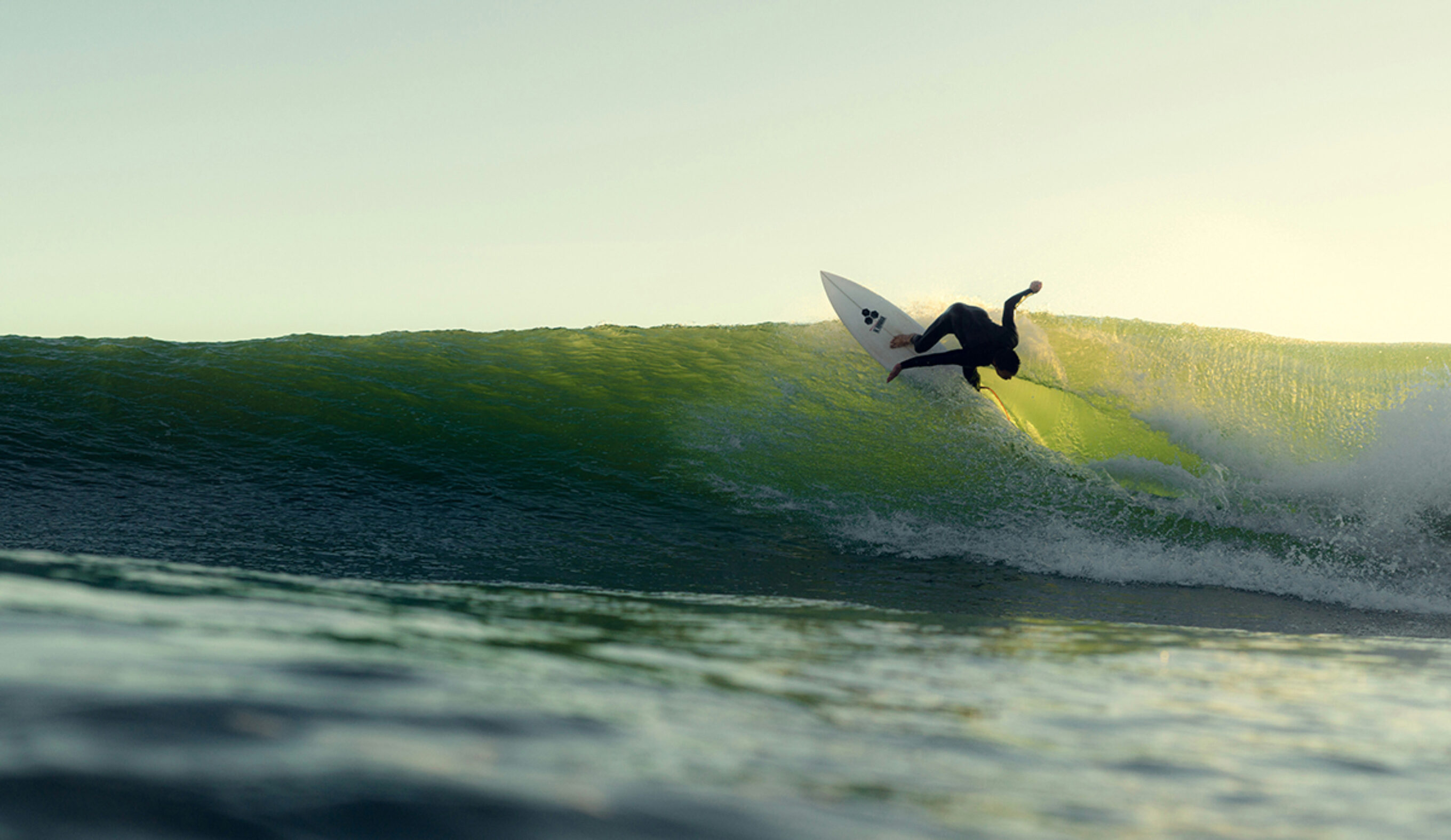
Suddenly, a set rose out of the mist, the waves gathering speed as they lurched towards me. I looked left, then right, and then went. And went. I rode so many fun waves over a 10–15-minute stretch that I couldn’t turn and burn anymore. As it happens with surfing, others ultimately notice the dimensional portal you’ve found and wing over, moths to a flame. Thirty minutes later, the wave disappeared.
It wasn’t even the entirety of that session that turned things around: it was a 10-minute surprise period where the waves found me, and I remembered how to surf. Just like that, everything was magic again: making the drop, hitting the lip, paddling back out with a huge grin on my face.
Surfing, once again, had the uncanny power to shift my perspective. It’s days like that that make us 100-percent sure we’ll be paddling out tomorrow.
And most likely, nothing out of the ordinary will happen.
But you never know.