


Chaco’s Z/1 Classic sandals are classic for a reason – comfortable and supportive, they’re our top pick for 2025. Photo: Dylan Heyden//The Inertia

Nothing personal against close-toed shoes, but there’s something absolutely liberating about a good pair of sandals. Maybe it’s the sensation of letting your tootsies breathe, slipping into cushy comfort after a marathon surf session, or the ability to manage a creek crossing on a hike without so much as untying a shoelace. Whatever the case, a good pair of sandals is an essential piece of gear for the kit whenever the prevailing temperature permits.
For those looking to upgrade their sandal game or build out their quiver of styles, we took it upon ourselves to test some of the best out there. This list of best sandals takes into account both flip flops and classic sandals, as well as recovery slides and some alternative “sandals.” Our top overall pick for sandals is the Chaco Z/1 Classic, and our favorite overall flip flop is the Olukai Tuahine, which you can also learn more about in our flip flop-specific review. Our best value pick is the Teva Original Universal.
Navigate To: Comparison Table | How We Tested | Buyer’s Guide
Related: Best Beach Sandals for Women | Best Hiking Sandals | Best Flip Flops | More Gear Reviews
The Best Men’s Sandals
Best Overall Sandals: Chaco Z/1 Classic
Best Overall Flip Flops: Olukai Tuahine
Best Value (Sandals): Teva Original Universal
Best Budget (Flip Flops): Havaianas Top
Best Recovery Sandals: Hoka Ora Recovery 3
Comfortable And Stylish: Rainbow Double Layer
Iconic for a Reason: Birkenstock Arizona Soft Footbed
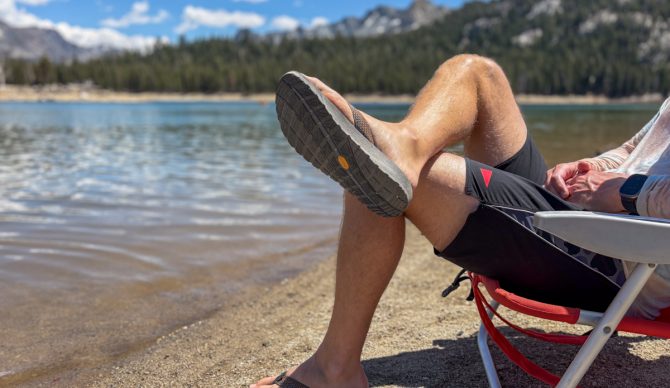
Photo: Dylan Heyden//The Inertia
Best Overall Sandals
Chaco Z/1 Classic ($95)
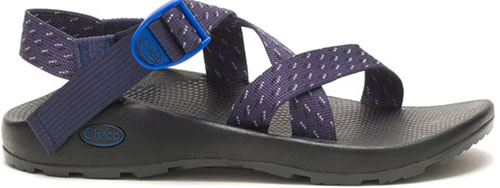 Pros: Supportive, comfortable, and stable
Cons: High profile, heavy, strange tan lines
Sizing Recommendation: For half sizes, Chaco recommends sizing down. We found this to be right for the Z/1 Classics
A decent walk — say, over a mile — is when even the most comfortable sandals begin to show their quirks. A sore heel here, an uncomfortable strap there, or a sloppy, loose feel that’s just not designed to be worn over an extended period. Not the case for Chacos Z/1 Classics. In testing, we found the Chaco Z/1 to stand high above the rest in terms of comfort for more demanding physical pursuits, where we wanted the breathability of a sandal and the comfort of a capable shoe. With a polyester webbing strap that threads through the footbed, a couple of tugs to loosen or tighten create the maximum dialed-in fit. Chaco’s proprietary Luvseat midsole felt springy but not overly so and provides adequate support for all-day wear. And finally, the Z/1 Classic sole features a 3.5 mm lug that’s ideal for splashing through wet trails.
Versatility, comfort, and style are the primary considerations when assessing which sandals should be named best overall. We chose Chaco’s Z/1 Classic over Teva’s Universal here, for example, because we liked that the Chacos had a rugged, grippy lug sole that was more off-road-ready than the Tevas. A major trade-off between the Tevas, though, is that the Chacos do ride a bit high and are a bit heavier, which contributes to a chunky feel that takes some getting used to. While the Chacos are without a doubt the most versatile pair of sandals to make our list, some may find them to be too much sandal. Chaco has also recently released the Lowdown Sandal, which has a thinner sole for a less-chunky feel and a different strap pattern, for those who want to stay true to Chacos but aren’t fans of the Classic’s very supportive sole. Read our full review of the Chaco Z/1 Classic here.
Check Price on REI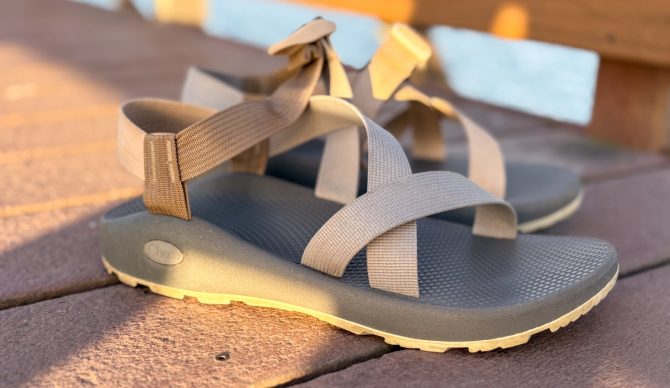
Photo: Dylan Heyden//The Inertia
Best Overall Flip Flops
Olukai Tuahine ($100)
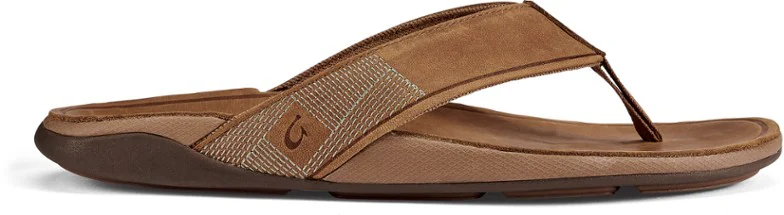 Pros: Waterproof, premium materials, comfort that improves with time
Cons: Price
Sizing Recommendation: For half sizes, we recommend sizing at least to the next size up
There are few things more ubiquitous or timeless than the simple leather flip flop. We’re huge fans of this style of flop due to their durability and the fact that they get more comfortable the more you wear them. However, they come with some drawbacks. Being made of leather, they don’t like getting wet, and they often take some time to break in.
Olukai’s Tuahine takes the concept of the simple leather flip flop and gives it the upgrades it deserves, namely, waterproof leather and no break-in period. Being made of waterproof leather, these are ideal for the beach, pool, or anywhere getting your flip flops wet is unavoidable, and make them much more durable in the long run. And as far as fit goes, the Tuahines are comfortable right out of the box with a nicely cupped heel and contoured footbed that doesn’t require the lengthy break-in period required for other leather flip flops to achieve optimum comfort.
Other top-notch features of the Tuahines include a wet-grip rubber sole that is non-marking, a plus for the boat-people among us. They also have great arch support, some of the best out of any flip flop we tested for this review. It’s worth noting that they do run a bit small, so we’d recommend sizing up if you’re unsure. They are also fairly pricey and lack the plush comfort that other flip flops on this list offer. For those looking for a spongier flip flop or a cheaper one, we’d recommend you take a look at our Runner Up Best Overall Flip Flop, the Hari Mari Fields, below. For premium waterproof leather, the Hari Mari Clippers, also below, fit the bill nicely.
Read our full review of the Olukai Tuahine here.
Check Price on REI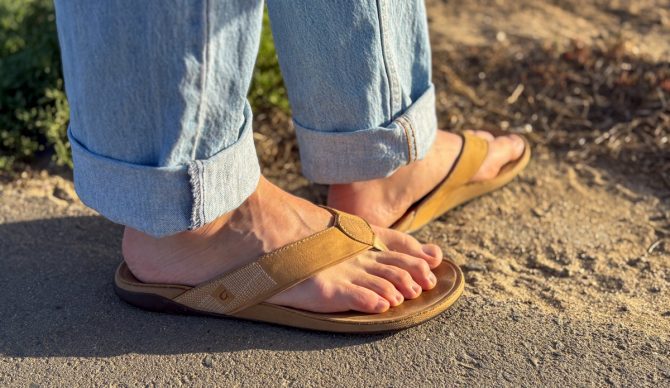
Photo: Dylan Heyden//The Inertia
Best Value (Sandals)
Teva Original Universal ($65)
 Pros: Go anywhere, adventure/off-road ready, great price
Cons: Not a ton of structure or arch support
Sizing Recommendation: For half sizes, size up to the next full size
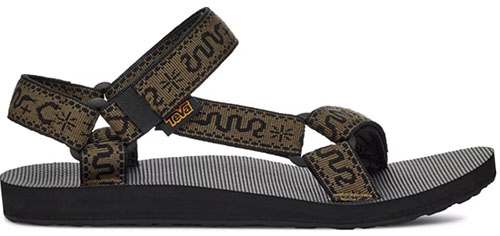
During a surf trip to Panama a few years ago, our tester got caught hiking through a jungle in the kind of mud that eats regular flip flops alive. The worst part of the trail was literally a graveyard of abandoned, poorly-made flip flops, and hidden razor wire along the edges of the trail made things especially dicey. While the Teva Original Universal sandals aren’t the most popular in California coastal towns that prioritize fashion over function (though they are making a retro-style comeback), a hiking trail coated with six inches of jungle mud with a 1-in-10 possibility of a foot laceration may be the perfect use case for a shoe originally designed to meet the demands of rafters on the Colorado River.
We’d argue that for the traveling surfer who enjoys exploring remote corners of coastline in equatorial climates, a fully off-road capable, waterproof sandal like Teva’s Universal is a necessary part of the quiver and totally worth the weird tan lines. To be clear, Teva’s Universals are not what you’d call hiking sandals – for something more trail-ready, consider burly lugs like those on the Chaco Z/1 or the Teva Hurricane XLT3, which also add on a bit of support, unlike the Original Universals (learn more about those in our Best Hiking Sandals guide).
However, the lack of weight is exactly what makes them perfect for travel in a carry-on or backpack – you never know when you might need a pair of adventure sandals, and you’ll be stoked to pull these out when you do. Unlike flip flops, Tevas can also be worn with socks, which adds to their versatility, and the price point is pretty incredible. At the end of their lifecycle, they can also be recycled through Teva’s TevaForever recycling program, so they never see a landfill. Read our full review of the Original Universals here.
Check Price on REI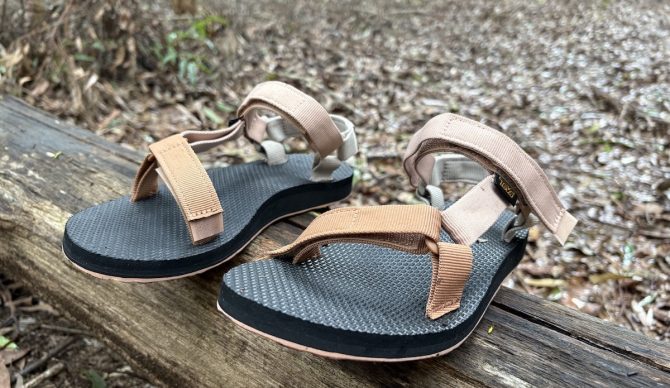
Photo: Rebecca Parsons//The Inertia
Best Budget (Flip Flops)
Havaianas Top ($32)
Pros: Dirt cheap, good style, lots of color options
Cons: Super-minimal, you get what you pay for
Sizing Recommendation: For half sizes, size up to the next full size
It’s hard to beat Havaianas for dirt-cheap but good-looking footwear. Priced (almost alarmingly) at only $20 (and often on sale for much less), if all you need is a thin strip of rubber to separate your bare feet from the ground, look no further. While you could probably find basically the exact same flip flops for half the price from a no-name overseas manufacturer, in our minds, the bonus style points of such a classic design, and the support of a well-known company, should anything go wrong (Havaianas offers a 60-day satisfaction guarantee), are worth the extra few dollars.
Design-wise, there’s not much to write home about – the sandals consist of a single piece of flat rubber (no arch support) for the sole, with a classic flip flop strap that runs between the toes. Comfort-wise, they have some mixed reviews, so it could be worth making the time to try a pair on before purchasing. However, it’s worth noting that the comfort certainly improves with time, especially after the initial break-in period. And while they’re not the most durable sandal on this list, the longevity of these simple flops might surprise you.
That said, these are certainly a more casual flop, and our tester notes that the simple thong design with straps inserted through the sole and a plug on the bottom is prone to popping through under strenuous use. We certainly don’t recommend these for rock climbing. For price-conscious buyers interested in a longer-lasting, or simply more comfortable “budget” sandal, take a look at the Teva ReFlip, below.
Check Price on Amazon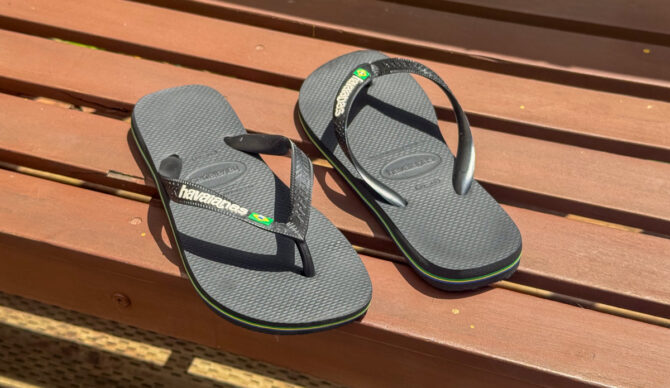
Photo: Will Sileo//The Inertia
Best Recovery Sandals
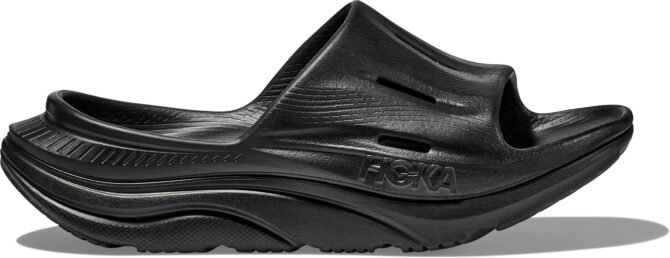
Hoka Ora Recovery 3 Slides ($60)
Pros: Super light, shaped footbed aids recovery
Cons: Limited use-case, not ideal for sandy beach days
Sizing Recommendation: Size down to the nearest full size
HOKA’s Ora Recovery Slide 3 was one of the most comfortable sandals that we put through testing. While it’s not exactly a fashion-forward sandal, it quickly became our go-to pair for giving tired feet a break after runs, hikes, or just long days on our feet.
Billed as a recovery slide by the brand best known for its ultra-cushioned running shoes, the Ora Recovery Slide 3 wouldn’t be our first choice for a day at the beach or all-day adventuring. But for post-activity comfort, walking around the house, or running quick errands, it’s tough to beat. Compared to the midsoles of other recovery sandals we tested, the Ora Recovery Slide 3 strikes an excellent balance between plush cushioning and supportive rebound, delivering plenty of softness without feeling overly squishy or unstable.
The updated design is molded from lightweight EVA foam, making the slide fully waterproof, easy to rinse clean, and surprisingly light despite its chunky appearance. Deep foot cradling, HOKA’s signature oversized midsole, and a dual-density construction help reduce fatigue while still providing enough stability to walk comfortably for extended periods. Unlike the Ora Luxe (our previous pick here, now discontinued), which featured adjustable Velcro straps, the Recovery Slide 3 uses a one-piece slip-on design that makes it even easier to throw on after a workout.
Speaking of fit, compared to other sandals on the list, these seemed to run a little big. Being that they don’t come in half sizes, we’d recommend sizing down rather than up if you are typically between sizes. All the cushy padding does give them a bit of a bulky feel, too, but for how high they ride, they’re incredibly light.
At around $60, the Ora Recovery Slide 3 is also a better value than the discontinued Ora Luxe, delivering outstanding recovery-focused comfort at a more accessible price point. For those wanting an even more budget-friendly option, we still recommend Crocs’ Mellow Recovery Slides a little further down the list.
[buyt-button title=”Check Price on REI” url=”https://rei.pxf.io/c/2259592/1448521/17195?u=https%3A%2F%2Fwww.rei.com%2Fproduct%2F217238%2Fhoka-ora-recovery-3-slides”]
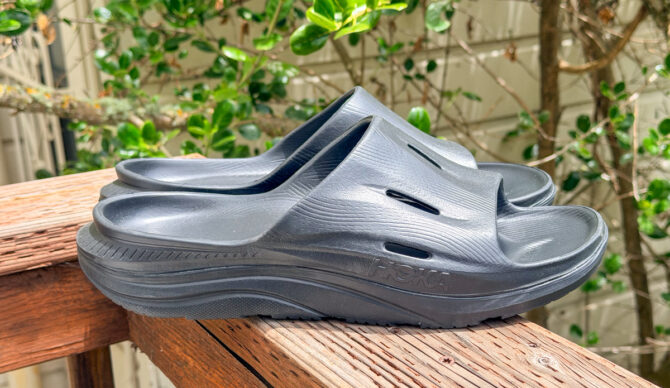
Photo: Will Sileo//The Inertia
Comfortable, Durable, And Stylish
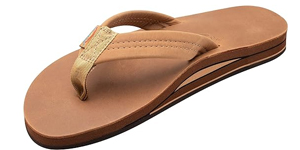
Rainbow Double Layer Arch ($74)
Pros: Cushy comfort in a premium leather package, Rainbow’s iconic styling
Cons: Bit of a break-in period, limited structure out of the box, not waterproof.
Sizing Recommendation: Size up to the nearest size for half-sizes
Rainbow has been crafting timeless, quality sandals since 1974 and was the first company to build a rugged sandal meant to meet the demands of surfers. Rainbow’s flagship Single Arch sandal continues to be the benchmark for other leather sandals, but for those looking for a more plush and supportive upgrade with the look and durability Rainbows are known for, the Rainbow Double Layer Arch sandal delivers. Featuring an additional layer of foam from the arch to the heel, the Double Layer has a much spongier, bouncier feel than the timeless Single Layer Arch, without sacrificing that iconic Rainbow style.
The Double Layers, like all Rainbow Sandals, are designed to mold to your feet over time. However, it’s worth noting that the break-in period is very noticeable. Out of the box, there is a very minimal heel cup, and the straps start off fairly tight. This is all by design to allow them to mold to the shape of your foot, but Rainbow recommends starting slow and working your way up to longer wear instead of making them your only pair of shoes right off the bat. If the strap tightness is a problem for your feet, Rainbow also recommends using a tennis ball or water bottle wedged under the strap overnight to help the break-in process.
These sandals are not waterproof, so we definitely don’t advise soaking them to loosen things up. Rainbow sandals are a longer-term commitment, but between the foot molding and their insane durability, these could be the last pair of flops you buy, at least for the next decade or so. Just remember to treat them right, meaning, avoid leaving them to bake in the sun, and avoid getting them wet.
While the Double Layers definitely ride a bit higher than the Single Layers, the extra support and cushioning are definitely welcome on longer walks or for all-day wear. If bounce and squish are not what you’re looking for, the Single Layer Arch is where it’s at. If you want to skip the break-in period, we suggest either the Hari Mari Fields, Hari Mari Clipper, or Olukai Tuahine, both of which are great right out of the box.
Check Price on Amazon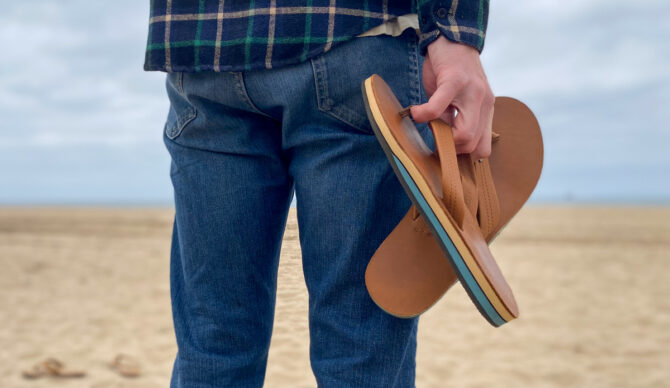
Photo: Dylan Heyden//The Inertia
Iconic for a Reason
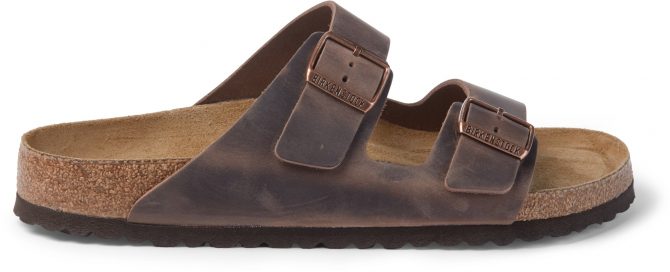
Birkenstock Arizona Soft Footbed ($155)
Pros: Birkenstock contoured footbed with cushion support, classic Birk styling
Cons: Price, overall durability around water or sun, not geared for rugged terrain
Sizing Recommendations: True to size
Gone are the days when we might describe the Birkenstock Arizona as having a cult following. No, the secret is out on Birks and the magic of their cork, contoured footbeds that mold to the shape of your foot over time and support all-day comfort, plus the Arizona’s hassle-free slide-in-and-go styling.
We had the privilege of testing the Arizona in the soft-footbed version for a recent update to this guide and were immediately smitten. While the classic footbed molds to your foot over time, the break-in period can require patience. With an added layer of foam for cushioning, the soft footbed version is comfortable straight out of the box and strikes the perfect balance of added cushion without being overly squishy and sacrificing the supported, cupped feeling Birks are known for. The adjustable suede straps dial in fit but are soft and supple enough to not result in hot spots or rubbing, even after full days on our feet.
That said, this is not a sandal built for versatility or performance in wet or variable conditions. Compared to the Birkenstock Arizona Essentials EVA, which is fully waterproof and designed for beach days or post-surf recovery, the Soft Footbed Arizona needs a bit more TLC. So, if you’re frequently around water – or just want something more forgiving in terms of maintenance – you might want to opt for the EVA version (featured below) or go with a hybrid sandal like the Olukai Tuahine, which offers leather styling with more water resistance and better grip.
In terms of durability and terrain, the Arizona also doesn’t quite match the ruggedness of something like the Chaco Z/1 Classic or Bedrock Cairn Evo. Those are built for miles of trail and adventure, while the Arizona Soft Footbed is best suited to urban wear, light travel, or all-day standing – think airport security lines, farmer’s markets, or shooting the shit with the denizens of the parking lot at your local surf break.
At $160, the Arizona is not cheap, but ask any Birk superfan, and they’ll tell you: if you treat your Birks well (read: don’t dunk ’em or leave ’em out in the sun), they’ll easily go for years and years, where cheaper material versions will break down over time. So, if comfort and quality materials are top of mind for a casual-use sandal, and you prioritize longevity and timeless design over versatility, the Arizona Soft Footbed is well worth the investment.
Check Price on REI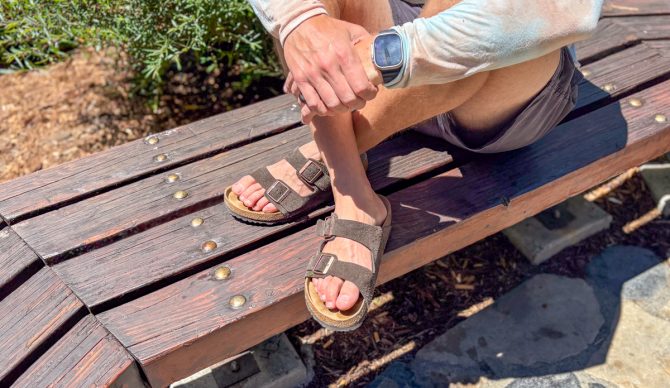
Out on a hike, lead tester Dylan Heyden breaks in the Birkenstock Arizona Sandals. Photo: Dylan Heyden//The Inertia
Best of the Rest
Runner-Up Best Overall (Flip Flop)
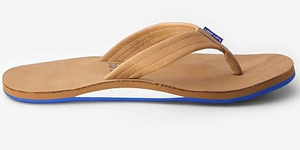
Hari Mari Fields ($75)
Pros: Soft premium leather comfort, low-profile minimalist style, solid price
Cons: Limited structure and support, leather is not waterproof
Sizing Recommendation: For half sizes, size up to the nearest full size
It was a narrow race for the top in choosing between the Olukai Tuahine and Hari Mari Fields as our Best Overall flip flops. While we went with the Tuahines in the end, the Hari Mari Fields have a lot going for them. In comparison to the Tuahine’s we found the Fields to have a spongier feel, which isn’t as durable over time (or waterproof, which the Olukai Tuahines and Hari Mari Clippers are), but provides incredible comfort right out of the box.
Hari Mari describes the leather used in the Fields as “buttery,” and after testing, we find ourselves agreeing. Overall, comfort is the standout feature here, with a plush footbed and midsole made of memory foam. Even the toe post is made of memory foam, a small feature, but we found it makes a big difference in preventing blisters or rubbing on longer walks. However, the plushness does compromise arch support, which is fairly minimal compared to flip flops like the Olukai Tuahine or Rainbow Double Layer Arch.
Overall, the Fields are a fairly minimal flip flop, but that’s one of the reasons why we love them so much, as it makes them incredibly versatile, and in our opinion, darn stylish to boot. Branding is low-key, and there are few frills, which fits the leather flip flop aesthetic to a T. We should note that the colorway we tested did feature a bright blue sole, but other colorways feature more subdued colors.
Check Price on Zappos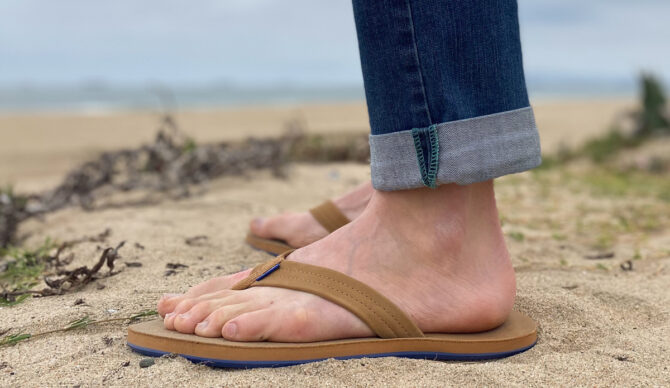
Photo: Dylan Heyden//The Inertia
Runner-Up Best Budget
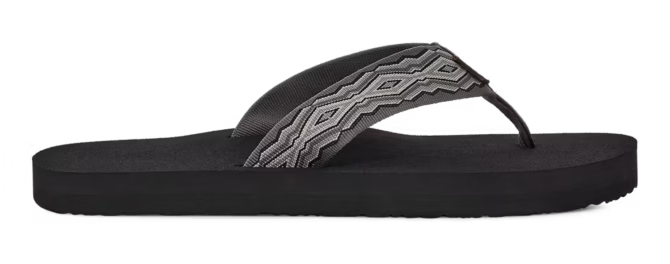
Teva Mush II ($39)
Pros: High on sustainability, low on price
Cons: Tight-fitting webbing strap, hard to slide on
Sizing Recommendation: Size up to the nearest size for half-sizes
For years, Teva’s Reflip was our go-to recommendation for shoppers looking to maximize value. It offered a great mix of comfort, durability, and water-ready construction without creeping into premium flip flop pricing. Unfortunately, the Reflip has since been discontinued (limited sizes are still available on Amazon), but Teva’s Mush II has stepped in as a worthy replacement.
Compared to the old Reflip, the Mush II leans even further into comfort. Its soft, squishy foam footbed gradually molds to your feet over time, creating a personalized fit that’s ideal for everyday wear, whether you’re heading to the beach, hanging around camp, or just knocking around town. The quick-drying webbing straps are comfortable against the skin, and the sandals are light enough that you’ll barely notice them in a duffel or carry-on. Like the Reflip before it, arch support is minimal, so these aren’t the flip flops we’d choose for all-day hikes or anyone who needs extra structure underfoot.
At around $40, the Mush II strikes a nice middle ground between bargain-bin flip flops and premium options that cost two or three times as much. Compared to the Havaianas Top, our Best Budget pick, the Mush II has a noticeably sturdier sole and higher-quality webbing, making it a worthwhile upgrade if you plan on wearing your flip flops regularly. One thing to note is the fit: they run a bit narrow, so we’d recommend sizing up if you’re between sizes or have wider feet. They won’t win any style contests against leather flip flops like the Olukai Tuahine or Rainbow Double Layer, but for comfortable, dependable, water-friendly flip flops at a fair price, the Mush II is hard to beat.
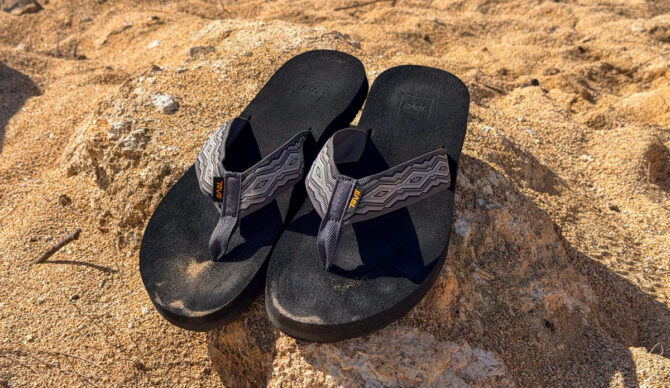
Photo: Will Sileo//The Inertia
Runner Up: Best Waterproof Flip Flop
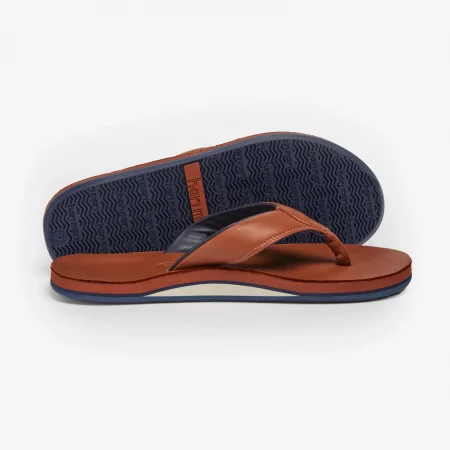
Hari Mari Clipper ($125)
Pros: Premium waterproof leather upper, designed to float, memory foam cushioned straps, and toe post are a high-end touch
Cons: Cost, limited arch support
Sizing Recommendations: For half sizes, size up to the nearest size
Hari Mari has quickly developed a reputation for churning out some of the most handsome flip-flops out there by making small but meaningful tweaks to the classic flip-flop formula, and their new waterproof Clipper sandal is their most premium yet. What on the surface looks like your classic leather number has quite a bit going on – from a memory foam toe post to memory foam cushioned straps – all of which are welcome upgrades for all-day wear.
At first glance, the Clipper looks like something you’d throw on for a dockside dinner or casual summer wedding – and that’s absolutely where they shine. But we were pleasantly surprised to find the Clipper more than just a pretty face.
The full-grain leather is waterproof, making it ideal for the beach or pool. The foam footbed gives immediate comfort underfoot, with a plush step-in feel that rivals more technical sandals. And while the Clipppers aren’t built for true adventure travel, the traction provided by the outsoles was better than expected for a fashion-forward flip. On trips out to dinner, walks on the pier, and on uneven terrain, they gripped well and felt stable.
That said, this isn’t a sandal we’d choose for long days on our feet or any terrain that veers toward technical. The arch support is minimal, and though the footbed is comfortable, it lacks a defined heel cup like the Olukai Tuahine, which has a more locked-in feel. Where the Clipper does excel is in presentation and its buttery feel. As the price tag suggests, the premium materials are definitely luxe, and for those looking for a little more squish and bounce in their sandals compared to the rigid, sturdy support of a contoured footbed like the Olukai Tuahine or even the Birkenstock Arizona, the Clipper is a great option.
In short, if you’re after a waterproof flip flop that effortlessly bridges the gap between beachy and refined with premium comfort-forward features, the Hari Mari Clipper fits the bill. It’s a lifestyle flip-flop elevated by thoughtful material choices and solid construction, ideal for everything from summer beach days to sunset drinks with a view.
check price on zappos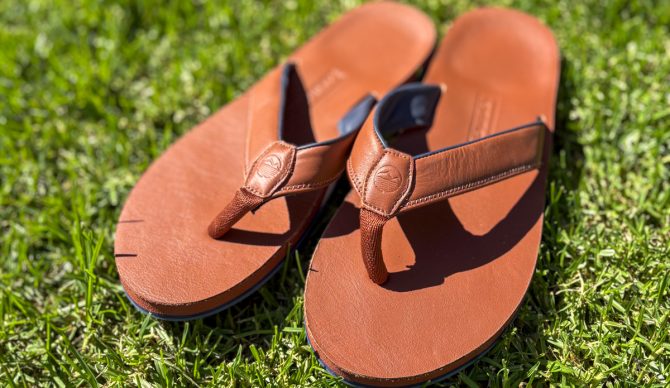
For buttery soft waterproof leather, the Hari Mari Clippers are hard to beat. Photo: Dylan Heyden//The Inertia
Iconic Slides
Adidas Adilette ($30)
Pros: Great style, cheap, wide variety of use cases
Cons: Complaints about a tight fit, no adjustability, lacks support for all-day wear
Sizing Recommendation: Size up to the nearest size for half-sizes with wide or high-volume feet
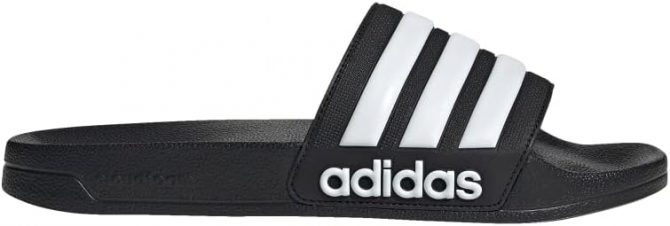
The Adidas Adilette is a true icon. These ubiquitous slides have been spotted on the feet of such celebrities as Jennifer Lawrence, Leonardo DiCaprio, and Justin Bieber, to name a few. And with a price tag of $30, these are far from luxury footwear. The concept was dreamed up for pro athletes looking for a versatile pair of sandals they could wear with socks or take a shower with. And their enduring appeal speaks volumes to the comfort and versatility of these sandals. They’ve truly hit a sweet spot, making them a go-to choice for a wide variety of activities.
The sole is formed from a single piece of what Adidas calls Cloudfoam, and what our tester would describe as “a soft, squishy footbed with little support but oodles of comfort.” There are some complaints about a tight fit, but our tester’s narrow feet had no issues with this. That said, if you have a wide or high-volume foot and find yourself between sizes, we do recommend sizing up, as the top strap is not adjustable. As the sandal wears in, it will mold to your feet to a certain extent, but that’s not a significant part of the design.
Check Price on Amazon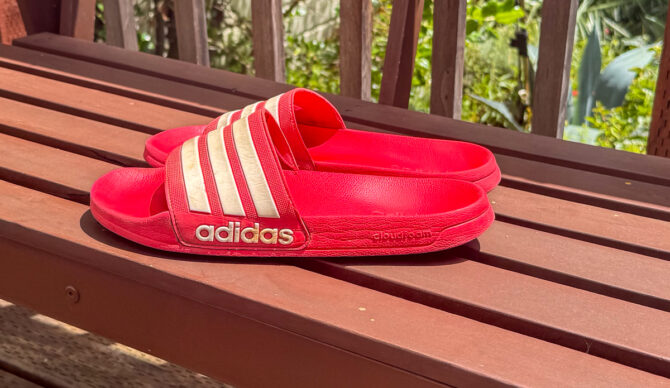
Photo: Will Sileo//The Inertia
A Great Minimalist Active Sandal
Bedrock Cairn Evo Sandal ($115)
Pros: Light all-terrain style, rugged outsole
Cons: Minimalist structure, no arch support, style is not for everyone
Sizing Recommendation: Size up for half sizes
With their Cairn Evo sandals, Bedrock takes the simple design of the flip flop and pushes it to the most rugged extreme. Fitting in with the minimalist and barefoot-shoe trend, don’t let that minimalism fool you – the Cairn Evo is designed to be fully capable of taking on the gnarliest of adventures. Some people –our tester’s wife – aren’t the biggest fans of the aesthetics, but, in terms of functionality, Bedrock’s Cairn sandals are designed to take on the world.
A “barefoot” sandal by design, if not by name (Bedrock uses the term “freedom footwear”), the footbed is relatively thin and has no arch support. However, a grippy Vibram sole means these can take on rocky scrambles, loose gravel trails, and a whole lot more. We’re certainly not devotees to the barefoot-shoe trend, but our tester was surprised by their comfort. He found them to be incredibly light, and with plenty of adjustability, you can really keep your foot from slipping around, providing a great, semi-barefoot experience. Worth noting, a drawback compared to other sandals like the Chaco Z/1 Classics or Teva Original Universals, is that the flip flop-inspired toe post isn’t sock-friendly when temperatures cool.
Check Price on REI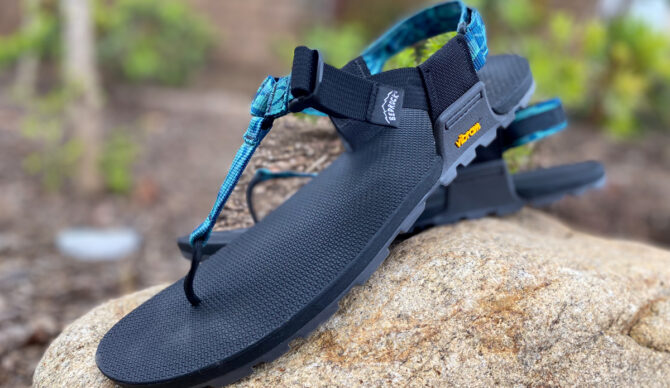
Photo: Dylan Heyden//The Inertia
Best Non-Sandal Sandals
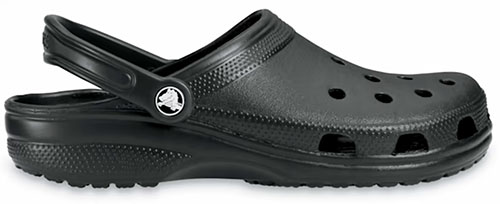
Crocs Classic Clog ($49)
 Pros: Soft spongey comfort, easy on and off, price
Cons: Heel slides around
Sizing Recommendation: For half sizes, we recommend sizing up if you have wider feet, but for regular or narrower feet, sizing down will give you a more secure fit
The silhouette of Crocs’ iconic clog is as divisive as it is ubiquitous these days. Likely because the comfort of Crocs’ foam footwear is pretty undeniable. For those looking to experience Crocs’ comfort, the Crocs Classic Clog is a great entry point. They feature the same foam Crocs are known for in a design that’s fully waterproof.
Unlike other sandals on the list, the spongy feel of the Classic Clog did cause our heels to slip around a bit, and the foam outsole lacks any sort of real traction, so definitely not the sandals you’d want for anything remotely strenuous or with any sort of variable terrain. For a budget pick that’s more adventurous, try the Teva Original Universal Sandals, above. Still, for the price point, the Crocs Classic Clog offers great comfort and versatility.
Check Price on Backcountry Check Price on Amazon
Best Eco-Friendly Sandals
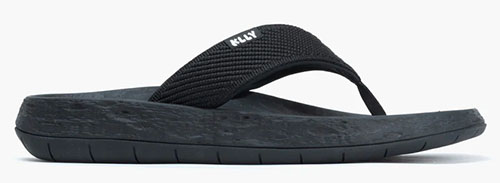
KLLY Lunar ($90)
 Pros: Perfect balance of comfort and support
Cons: High profile and limited color and style options
Sizing Recommendation: KLLY recommends sizing down a full size; however, for those in-between sizes, sizing down a half-size worked well
Being on the Championship Tour of surfing for over thirty years, Kelly Slater has spent a lot of time in flip flops. And while flip flops are many things, designed for all-day wear, they are not. So when Kelly decided to put his own name on a pair of flip flops designed with better arch support and cushioning, specifically for all-day wear, we took notice. And once we got our hands on the KLLY Lunar, it was easy to see the difference.
Out of the box, the Lunars are supremely comfortable. Our tester describes them as “springy and snappy in all the right ways,” and with a healthy arch designed to promote healthy alignment, we found the Lunars to live up to their promise. The strap is soft and comfortable, but it fits a bit tighter than some other flip flops we tested for this review. Traction is surprisingly good between the sole and footbed, with surface patterns designed to mimic the surface of the moon and the shells of sea turtles, respectively.
Made using rPET and BLOOM foam made from algae, the Lunars are some of the most sustainable sandals on our list. One of the only knocks we had on the Lunars is that they have a higher profile feel than other flip flops on the list, even more so than the Rainbow Double Layers. Though that’s the tradeoff for great support.
Check Price on KLLYBirkenstock Arizona Essentials EVA ($50)
Pros: Classic Birkenstock styling and comfort at an approachable price, fully waterproof, super light
Cons: EVA can get a bit sweaty
Sizing Recommendations: True to size
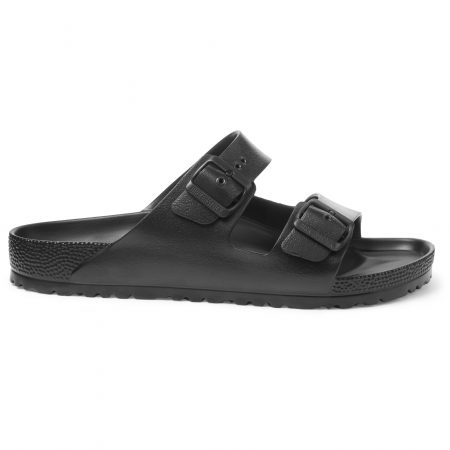
A quick browse of Birkenstock’s website will reveal countless silhouettes paired with the company’s famous cork footbeds. Still, the style that immediately comes to mind when a friend is yapping about how much they love their Birks is the two-strap Arizona. The sandal is iconic, to say the least. And, especially in its soft footbed version, which earned top marks for us, it’s a damn good combination of comfort, style, and durability.
But the iconic Arizona has two major downsides. The first and most obvious is the over $150 price tag. For those new to Birkenstock comfort and unsure whether they want to commit, $150 is a bit of an investment. Second, cork footbeds and suede or leather uppers don’t mix all that well with water, so beach and pool days require a bit of extra caution.
This is where the Birkenstock Arizona Essentials EVA comes in. Made from one piece of molded EVA, the Arizona Essentials EVA is fully waterproof, making it a more versatile option around water. And at just under $50, the Arizona Essentials EVA is a much more budget-friendly introduction to that classic Birk contoured footbed that’s unmatched in comfort. Truth be told, the EVA material has a bit more squish and spring than Birk’s cork footbeds, but not overly so, making the sandal a great recovery sandal option post gym or surf, too. And unlike other foam sandals like Crocs Mellow Recovery Slides, the EVA material Birkenstock uses for its Essentials line doesn’t have the rubbery-sticky feel that can make for frustrating sliding on and off with socks on.
We especially liked the adjustability of the Arizona Essentials EVA, which features two plastic buckles to adjust each strap, and the overall styling that gave them broader utility than Crocs Mellow Recover Slides or the Hoka Ora Luxe, which tend to look out of place poolside or at a family beach day. They are also much lower profile than these options or even the KLLY Lunar Sandal, making them great for those looking for a less chunky feel.
Lastly, while the single piece of molded foam the Arizona Essentials is made from is durable and waterproof, we wouldn’t classify them as adventure sandals. The outsole has a bit of tread, but it isn’t rubber, so it doesn’t grip. And even fully locked down feet slide easily in and out. Overall, the Arizona Essentials EVA is a great pick for moderate commutes to the pool or beach and is a great style-forward option for that purpose, but for more high-angle adventure, we recommend something a bit more rugged and sturdy like Chaco’s Z/1 Classic.
Check Price on REICrocs Mellow Recovery Slides ($49)
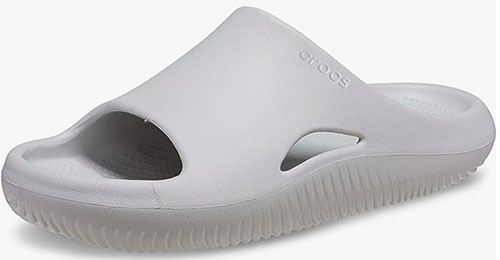 Pros: Light, spongy Crocs comfort, great price, waterproof
Cons: Not the most sturdy or supportive
Sizing Recommendation: Size up for a looser fit and down for a tighter fit, depending on preference
For the uninitiated, sandals that fall into the “recovery footwear” category may best be described as the sandals you never knew you needed. Sure, any pair of sandals could be your post-gym or workout go-tos. But why rob yourself of plush, airy comfort?
Like most sandals in this category, Crocs Mellow Recovery Slides are built on a thick foam sole that offers the kind of cushioning our tender feet need (nay, deserve) after a surf, trip to the gym, or run. This offering from Crocs lacks the adjustability of the Hokas, for example, but at this price point, they absolutely deliver.
Check Price on Backcountry Check Price on Amazon
Ideal Adventure Flip Flops
Chaco Men’s Rapid Pro Flip ($100)
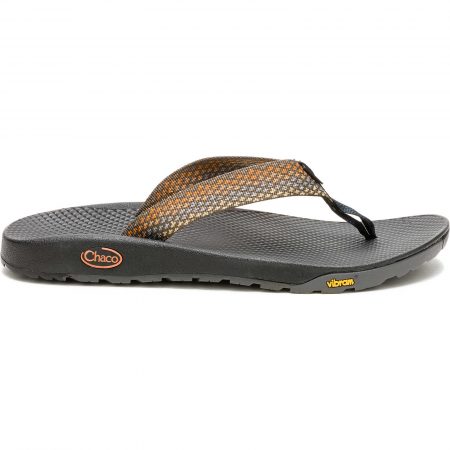
Pros: Easy on and off of a flip with rugged Chaco footbed, Vibram outsole
Cons: Nylon webbing can rub during break-in, tricky sizing, price
Sizing Recommendations: True to size. For those in between sizes, we recommend sizing down for a more snug fit.
Chaco’s rugged and dependable Z/1 Classic has been a go-to sandal for us for a while now and continues to earn top marks in our sandal test year after year. So when Chaco recently reached out with a newer offering, the Rapid Pro Flip, that combines some of the best features of the Z/1 – including Chaco’s signature Luvseat footbed and webbing straps – plus a Vibram outsole in a flip-flop, we were excited to give it a go. The result is an adventure-ready flip that doesn’t compromise on durability. Seriously, these things feel bulletproof and like they’d last a lifetime.
We recently put the Rapid Pro through its paces during a summer jaunt in and around Mammoth Lakes, CA, and it did not disappoint. From mellow mountain hikes to a bit of spontaneous fly fishing lakeside, the Rapid Pro transitioned easily from trail to in-water and back without skipping a beat. The rugged outsole gripped extremely well on mossy rocks along the shoreline, and when re-emerging from water, they notably lacked the annoying squelch you get with other sandals when fully waterlogged. Though they didn’t feel quite as locked down as strappier waterproof numbers like Chaco’s Z/1 Classic, Teva’s Original Universal, or Bedrock’s Cairn Evo, the easy on-and-off was a nice change of pace for lower-angle pursuits and transitioning from the trail to the lake to sun-soaked cornhole games at a local brewery.
A literal rub was sizing. I am between sizes in my normal street shoe, and to size up was a pretty loose fit, while sizing down was snug. I chose to predominantly test the half-size-down version, thinking the webbing would stretch, but the break-in period wasn’t immediate. This led to some hotspots and discomfort during the first several wears. Overall, there are definitely more comfortable flip flops out there (read: leather flip flops like Olukai’s Tuahine), but for adventure seekers looking for a do-anything flip flop designed for all types of terrain, the Rapid Pro is it.
Check Price on Chaco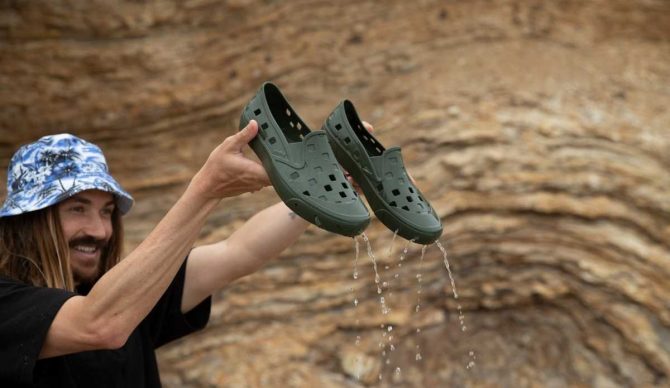
Dylan Graves and his Vans TRK Mules. Photo: Courtesy of Vans
Honorable Mentions
If we’ve learned anything from testing sandals over the years, it’s that there are tons of high-quality options out there. Unfortunately, as we’ve continued to refine our list over the years to give you what we believe are the best of the best, we’ve had some really great pairs that we’ve had to drop. But we still wanted to give them their flowers by including them here.
For example, Vans has really pushed the envelope over the years, first with its Slip-On TRK shoes and later with its Slip-On Mule TRK shoes. They’re more stylish than the Crocs Classic Clogs, but just as versatile and fully waterproof. They’re just made of a bit harder material, and therefore not as comfortable.
The Birkenstock Boston Clogs in suede are another great pair of “not quite sandals, not quite shoes” with the flagship Birk footbed that has only gotten better with time. Retailing for around $160, though, they’re a bit cost-prohibitive as a sandal that can’t get wet and is really too nice to get sandy at the beach, which kept it out of our list here.
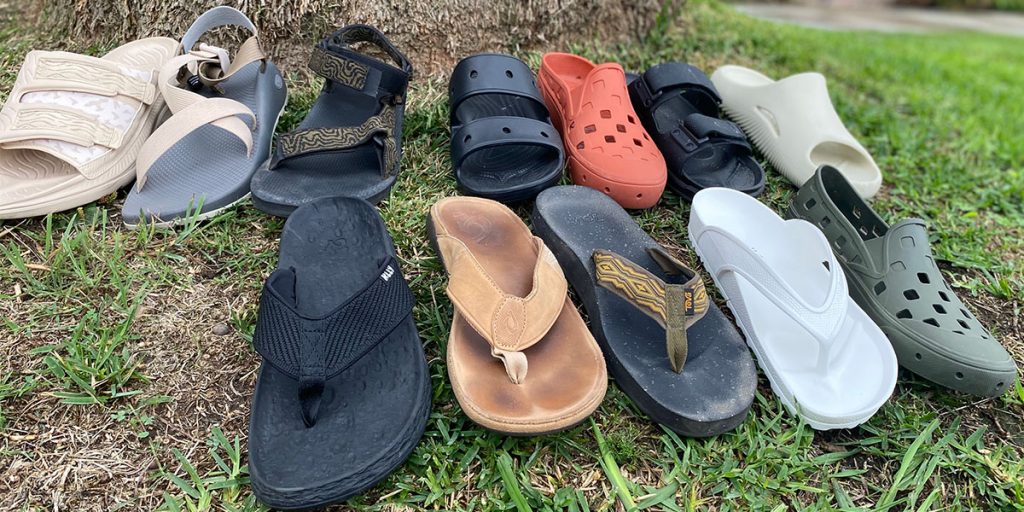
We tested a wide array of sandal styles to bring you the best of the best. Photo: Dylan Heyden//The Inertia
Best Men’s Sandals Comparison Table
| Sandals | Price | Style | Testing Notes |
| Chaco Z/1 Classic | $95 | Sandal | Great for extended mileage on foot |
| Olukai Tuahine | $100 | Flip Flop | Premium leather feel |
| Teva Original Universal | $65 | Sandal | All-terrain sandal |
| Havaianas Top | $28 | Flip Flop | Great price |
| Hoka Ora Recovery 3 | $80 | Slide-On | Post-workout recovery comfort |
| Rainbow Double Layer Arch | $64 | Flip Flop | Classic Rainbows with extra support and cushioning |
| Birkinstock Arizona Soft Footbed | $150 | Slide-On | Classic comfort, support, and style |
| Hari Mari Fields | $75 | Flip Flop | stylish leather and plush comfort, great price |
| Teva Mush II | $39 | Flip Flop | Great value |
| Hari Mari Clipper | $125 | Flip Flop | Waterproof leather |
| Adidas Adilette | $30 | Flip Flop | Lacks a toe-post for easy wearing with socks |
| Bedrock Cairn Evo Sandal | $115 | Sandal | Minimalist, barefoot-feel |
| Crocs Classic Clog | $49 | Clog | Easy drainage, foam cushioning |
| KLLY Lunar | $90 | Flip Flop | Eco-friendly, supportive |
| Birkenstock Arizona Essentials EVA | $50 | Slide-On | Waterproof Birks! |
| Crocs Mellow Recovery Slides | $49 | Slide-On | Thick foam for great comfort |
| Chaco Rapid Pro Flip | $100 | Flip Flop | Super durable and waterproof |
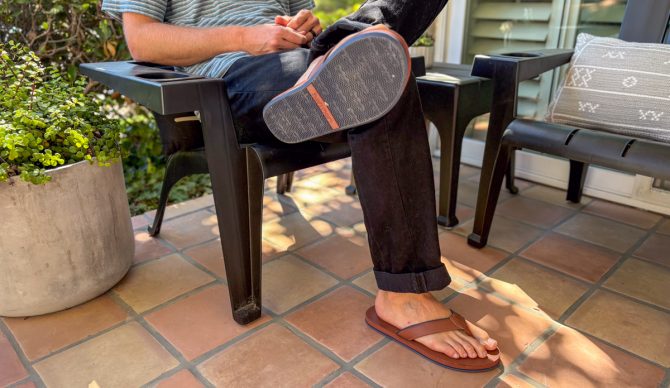
We’re constantly testing the best sandals on the market. Stay tuned for more updates! Photo: Dylan Heyden//The Inertia
How We Tested The Best Men’s Sandals
Growing up in coastal Orange County, California, our lead tester, Dylan Heyden, has spent an inordinate amount of time in sandals and flip-flops. But we didn’t just rely on institutional knowledge for this review. We went out there and got our hands on long-standing favorites, new and exciting products, and the top-rated sandals and flip-flops on the market to provide head-to-head (er, toe-to-toe?) comparisons.
From strolls around town to chaperoning kids’ sports events, surf checks, trips to Joshua Tree, and fishing in Mammoth Lakes, Dylan and our testing team wore these sandals in a variety of environments, personally testing all of the sandals in this review and a lot more that didn’t make the cut. The above list is the result of our findings.
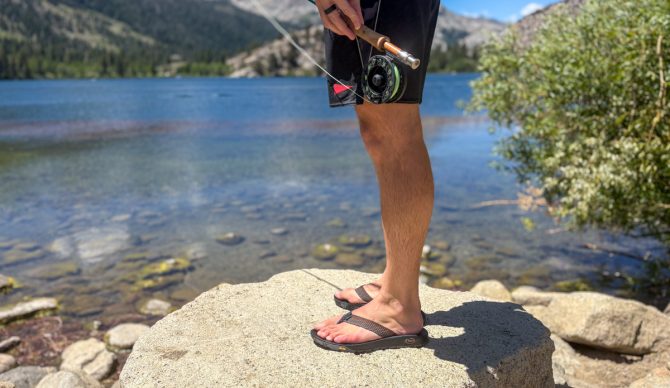
Getting after it in the Chaco Rapid Pro Flips. Photo: Dylan Heyden//The Inertia
We first published this article in the spring of 2023, and in our May 2024 update, added three additional sandals (and removed a couple that got bumped out of the rankings), updated some product information based on longer-term testing, and expanded our Buyer’s Guide, which you can find below.
In our fall 2024 update, we updated some product information, added product comparisons to further enhance our reader-friendliness, and further expanded the Buyer’s Guide. This article was updated in May of 2025 to include the Adidas Adilette after extensive testing and to do some housekeeping. In August of 2025, we added four new styles and dropped a couple that we no longer consider to be top picks. For our most recent update in July of 2026, we added two new updated styles, the Teva Mush II and the Hoka Ora Recovery 3, and removed the products they are replacing, the Hoka Ora Luxe and the Teva ReFlip.

The Bedrock Cairn Evo sandals provide great performance for longer treks, but, designed to give a barefoot feel, they lack arch support. Photo: Dylan Heyden//The Inertia
Best Men’s Sandals Buyer’s Guide
Types of Sandals
Scrolling through our list of best sandals, you’ll quickly realize that sandals come in all shapes and sizes, from burly, strappy numbers to low-profile leather things that you’ll forget are on your feet. Our list above can generally be split into three buckets: flip flops, slides, and strap sandals.
Flip flops like the Olukai Tuahine are sandals with a single post between the big toe and second toe, with two straps that cross over the instep of the foot. Slides like the Birkenstock Arizona have no toe post (sock-and-sandal-lovers, rejoice!) and allow you to slip them on and off. And strap sandals like the Chaco Z/1 Classics are the pairs that require you to fiddle with a buckle or velcro closure to get into them, but won’t fall off your feet once you’ve done so.

Nothing beats the style of a classic leather flip flop (pictured, the Olukai Tuahine). Photo: Dylan Heyden//The Inertia
Each style has its merits. For instance, flip flops are the most ubiquitous sandal style in coastal towns during the summer months because they’re comfortable, light, and easy to slide off and on. Rainbow Sandals are basically a badge of membership to the Southern California beach scene, and with good reason, as you can’t ask for much more out of beachside footwear.
Slides are equally easy to pop on, work with socks, and come in all kinds of styles. Strap sandals are ideal for more adventurous pursuits where support and keeping the sandal on your foot are imperative. For full-tilt adventures, you may even consider a pair of hiking sandals, which take support and durability to the next level (check out our review of the best hiking sandals here).

Lug sole comparison between the Birkenstock Atacama, Cairn Bedrock Evo, and Chaco Z/1 Classic. Photo: Dylan Heyden//The Inertia
What Makes a Good Pair of Sandals?
Like all footwear, the ideal pair of sandals for you depends on where and how you’ll be using them. If you spend any amount of time on a boat, for example, you may want to prioritize a pair that can handle getting wet from time to time. On the other hand, if you’re looking to prioritize comfort and style, leather might be right for you. It may also be worthwhile to consider having a few pairs for specific uses — e.g., everyday use, travel, or the gym.
Another consideration is weighing how much support you need. If you spend days on end in sandals, a more supportive option like the KLLY Lunars may be right for you. Unfortunately, the trade-off is that more supportive sandals tend to have a chunkier look and feel. On the other hand, if you don’t spend hours on your feet, you may be able to get away with a more low-profile option that prioritizes fashion and low weight over support and function, like the Olukai Tuahine or the Rainbow Single Layer.
So, without further ado, let’s dive into some key considerations.

The Chaco Z/1 Classic sandals start from the ground up with a nice grippy outsole. Photo: Dylan Heyden//The Inertia
Anatomy of a Sandal
It isn’t rocket science, tbh. But a bit of fluency in the terms sandal makers use to refer to specific parts of a sandal will go a long way when determining what pair is right for you. In general, a typical sandal from the ground up is comprised of a sole (our outsole; the part that touches pavement), a midsole (the material between the part that touches the ground and the part that touches your foot, a footbed (the part that touches the bottom of your foot), and an upper (the strappy part that keeps the sandal on your foot).
Additionally, there are two general types of construction of sandals on the market. The first, which is most common, is a mix of materials that are layered on top of each other, either by being sewn or glued (see the Olukai Tuahine, for example).

Recovery slides are often injection-molded. Photo: Dylan Heyden//The Inertia
The second is what’s called injection molding, which means a piping hot liquid form of the material of the sandal is shot into a mold, then it cools and hardens into a standalone sandal with no glue or seams (see Crocs Classic Clogs or the Birkenstock Arizona Essentials EVA).
In some cases, these processes can be combined, where the entirety of the sandal is injection molded except for the strap, which is added later in the process. This is the case with KLLY Lunar sandals that are made of rPET and Bloom foam with a neoprene/webbing strap.
Which construction process is right for you depends largely on what you’re trying to get out of your sandals. A fully injection-molded foam sandal is going to lack the comforts of a leather upper or the traction of a rubber lug sole. But a sandal with more premium materials glued to each other commands a higher price and may offer a marginal difference (or maybe less) in comfort.

Layers of squishy comfort define the Rainbow Double Layer (middle) and Hari Mari Fields (bottom) while the Olukai Tuahine (top) has a stiffer construction for better support. Photo: Dylan Heyden//The Inertia
Comfort Versus Support
Speaking of comfort, across the market these days, comfort and support seem to be used interchangeably. In our opinion, that’s a major issue because comfort and support are different (occasionally competing) demands.
Comfort, on one hand, often refers to a plush, bouncy feel that’s great in the short term but can be murder on your feet over prolonged periods because of limited support. On the other hand, a footbed meant to cradle natural curves in your foot may take some getting used to and feel uncomfortable if you’ve grown accustomed to flat footwear.
One option to consider when shopping for a pair of sandals that prioritizes support and promotes foot health is looking for a Seal of Acceptance from the American Podiatric Medical Association (APMA). According to the APMA, a seal of acceptance is provided to a product after review by a group of APMA podiatrists to ensure it promotes foot health. An APMA seal of acceptance is definitely not the final word on whether a sandal is supportive or not, but it’s a good start. Chaco, Teva, and Hoka are the only companies with products on our list that have received the APMA seal of acceptance.

KLLY Sandals are comfortable to wear all day and are made from sustainable materials. We wouldn’t expect any less from the GOAT of surfing, Kelly Slater, putting his name on them. Photo: Dylan Heyden//The Inertia
Materials
Another consideration is materials. Classic leather sandals like the Rainbow Double Layer offer the benefit of conforming to your foot over time, whereas a more plush foam/synthetic material like the Teva Mush II might offer immediate comfort with no break-in period. Leather also tends to be averse to water, while synthetics don’t mind it. And then you have waterproof leather like that on the Olukai Tuahine that combines the best of both worlds, but at a premium.

A few of our favorite flip flops, the Olukai Tuahine, front and center. Photo: Dylan Heyden//The Inertia
Sizing
Arguably, one of the most frustrating aspects of purchasing a new pair of sandals is sizing, especially given that most sandals are not made in half sizes. If your street shoe, like the author’s, falls between whole sizes, you understand this well. Through testing, we experienced just how difficult it can be to get the right fit, finding inconsistencies in sizing across brands and with the same brand from style to style.
Obviously, the best solution to sizing is going to a shop and trying the sandals on in person. If this is not feasible, a quick perusal of a company’s return policy is absolutely crucial. In addition, we would highly, highly recommend against purchasing “final sale” sandals online unless they’re a style you’ve purchased in the past. After testing, we included our best recommendations on sizing to aid you in this effort. Still, operating under the assumption that it may take a return to get the sizing right is a good rule of thumb.

Velcro straps on the Hoka Ora Luxe sandals help dial in a precise fit. Photo: Dylan Heyden//The Inertia
Cost
As a general rule, the more a pair of sandals costs, the better the construction and materials. But it’s of equal importance that you don’t get caught shelling out for features that you don’t need. A high-quality rubber outsole, the likes of which you might find on the bottom of a hiking boot, is of little importance if your primary use for a pair of sandals is something to quickly slide into after a surf for the drive back home.
That said, quality materials and construction often translate to a longer product lifespan, meaning that a higher front-end investment may even itself out after buying two, three, or four pairs of a cheaper alternative.
Return to Top Picks | Return to Comparison Table
Editor’s Note: For ladies’ options, check out the Best Beach Sandals for Women. While there are plenty of flip flops in the above review, for more options, here’s our guide to The Best Men’s Flip Flops. If you want trail-ready sandals, take a look at The Best Hiking Sandals. For more gear reviews and features on The Inertia, click here.

