

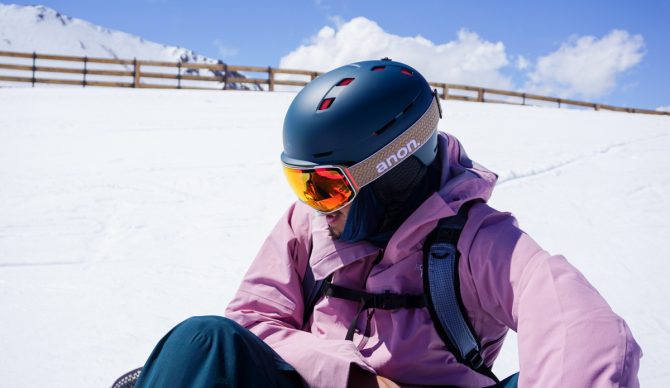
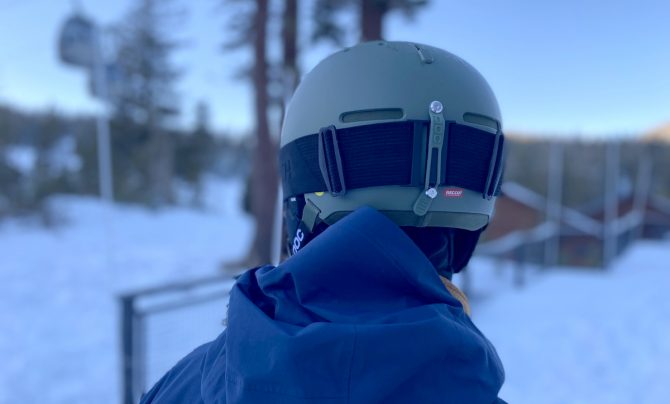
The Anon Merak impressed with clean looks and high-tech features. Photo: Will Sileo//The Inertia

Snowboard culture has come a long way from the days when a beanie was considered “protection.” Today, helmets are an essential piece of kit for just about every rider, from park rats to powder hounds. The shift comes down to a few things — better awareness around safety, sure, but also the fact that today’s helmets are lighter, more breathable, and way more comfortable than the brain buckets of old. That mix of evolving safety culture and seriously improved design has made helmets a standard piece of snowboarding kit – not a buzzkill accessory.
Given the growing popularity of snowboard helmets, the number of options these days can be overwhelming, to say the least. That’s exactly why we reached out to the top snowboard helmet brands to get our hands on – and noggins in – some of the top-performing helmets on the market to help even the most discerning rider find their ideal choice. After plenty of testing, our top pick is the Giro Owen Spherical.
Navigate To: Comparison Table | How We Tested | Buyer’s Guide
Related: Best Snowboard Goggles | Best Snowboard Jackets | More Snowboard Reviews
The Best Snowboard Helmets of 2026
Best Overall Snowboard Helmet: Giro Owen Spherical
Best Value Snowboard Helmet: Giro Ledge Mips
Best Adjustability/Runner-Up Best Overall: Smith Vantage
Best Backcountry Snowboard Helmet: Smith Summit
Most Innovative Snowboard Helmet: Anon Merak WaveCel
Best Overall Snowboard Helmet
Giro Owen Spherical ($280)
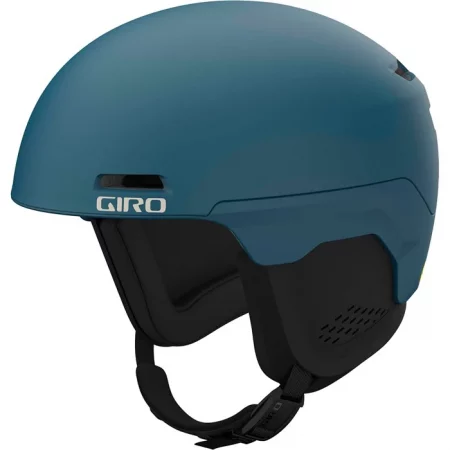
Construction: In-mold
Weight: 514g
Key Features: Mips Spherical, dialed fit, magnetic buckle
Pros: Minimalist styling, innovative venting system, comfy liner, works well with a beanie
Cons: Vent adjustability is on the inside of the helmet
The helmet that impressed us the most in testing is the Owen Spherical helmet from Giro. Magnetic buckle closure, a rear dial for a snug fit, and ear pads that cup the ear without blocking out ambient noise are all great. Under the hood, the Owen features some unique tech, too. It takes Mips to the next level with Spherical Technology, which Giro developed together with Mips. Spherical technology uses two separate liners in a ball-and-socket design to manage impact forces. The system also uses EPP foam, which is more resilient than EPS foam in the event of a crash.
The round, skate-inspired look is high on understated style, with best-in-class safety features. That balance is often hard to strike in helmets, which is why the Owen takes our top honors. But the no-frills aesthetic does make for less adjustability on the fly, which isn’t for everyone. To open or close the Owen’s vents requires that you take the helmet off and play with a toggle on the inside. For a visor helmet that offers max adjustment on the go, the Smith Vantage may be a better option and has a bit more ski-inspired styling if that’s your jam. The Owen is also more limited on vents, with zero on top. With 19 vents, Anon’s Merak, below, has a similar skate-inspired design with a bit more airflow. Read our full review of the Giro Owen Spherical here.
CHECK PRICE ON REI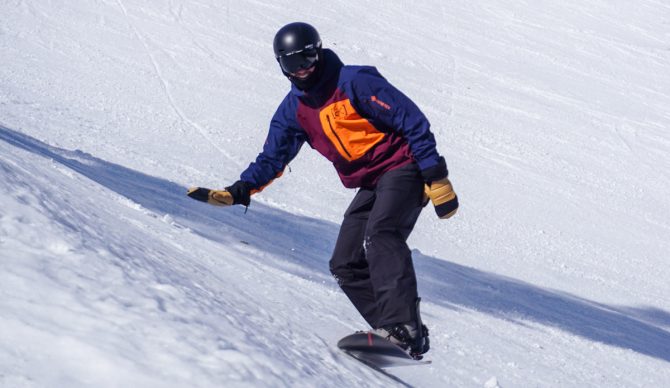
Photo: Will Sileo//The Inertia
Best Value Snowboard Helmet
Giro Ledge Mips ($125)
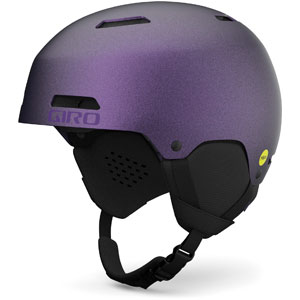
Construction: Hardshell/injection-molded
Weight: 587g
Key Features: Mips, hard shell construction, EPS foam liner
Pros: Skate-inspired, minimalist styling, removable fit system, ear pads
Cons: No adjustable venting
If your ideal day of riding consists of innumerable hot laps in the terrain park and you need a helmet that’ll protect your head in a crash but will also match your style when hitting your favorite jibs, the Ledge is for you. An absolute skate-inspired minimalist, the Ledge is a hard-shell helmet Giro built specifically to meet the demands of street and park riding. With Mips protection and a $125 price tag, few other helmets come even close to the level of bang-for-buck you get with the Giro Ledge.
The ear pads, fit system, and goggle retainer are all removable for a clean look — especially if you prefer to wear your goggles under your helmet. Being a stripped-down, everything-you-need-and-nothing-you-don’t helmet, you do sacrifice some features, such as adjustable venting, but in our books, that’s a small price to pay for solid, dependable protection at a great price.
For the 25/26 season, the Ledge has increased in price by $20. With its current list price of $125, we didn’t feel this helmet is significantly cheaper enough than the competition to be considered a “budget” helmet. With that in mind, we awarded the Ledge the “Best Value” snowboard helmet. The Smith Rodeo (below) is cheaper at $105, but we had some nitpicks that didn’t have us placing it in our top picks over the Ledge. We also plan on testing the Outdoor Master Kelvin this season, which is an astonishing $60 with features like Mips, a dial-fit system, audio-ready earpads, and, perhaps surprisingly, was rated as one of the most protective helmets in Virginia Tech’s lab-tested 2025 Snowsport Helmet Ratings. We’ll update this review once we get out on the snow with it.
CHECK PRICE ON REI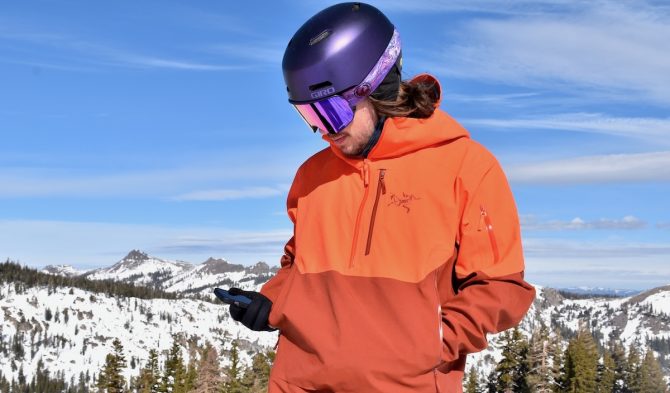
Photo: Nick Bruckbauer//The Inertia
Best Adjustability/Runner-Up Best Overall
Smith Vantage ($275)
Shop Men’s | Shop Women’s | Shop Vantage 2
Construction: Hybrid in-mold
Weight: 554g
Key Features: Mips, Zonal Koroyd, 21 adjustable vents, BOA 360 fit system
Pros: Complete adjustability with super generous venting
Cons: Expensive, style can be a bit sporty for some
Editor’s Note: For 2025/26, Smith just announced the Vantage 2, which sports a 3-piece hybrid construction, double the vents, full Koroyd protection (instead of zonal), and a price of $295. Initial reports are overall positive, and we’ll update this review as we get out and test the Vantage 2 this winter.
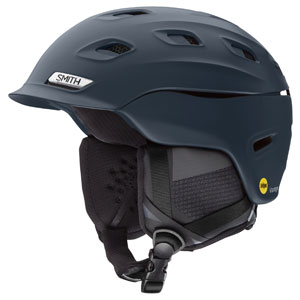
For the snowboarder looking to dial in every single aspect of their helmet for maximum comfort, the Smith Vantage earns top marks. The Vantage’s 21 vents have dual adjusters that allow you to open fully, halfway, or close completely for optimal airflow on any given day. A BOA 360 fit system allows you to literally dial in your fit. And we found the interior padding and liner to be generous, plush, and comfortable without being too hot.
Unfortunately, unlike other Smith helmets, the Vantage did not allow for fitting a beanie underneath as easily. So, we’d recommend sizing up if you fall in this category. Overall, the design may be a bit too “sporty” looking for some. The Giro Owen Spherical fits the bill for riders looking for a more skate-inspired, minimalist look. For others looking for a similar style at a more wallet-friendly price point, the Glade Boundary is another top-tier option. It’s less plush on the interior and has less generous airflow, but it’s adjustable, comfortable, and equipped with MIPS for $70 less than the Vantage. Read our full review of the Smith Vantage (Women’s version) here.
CHECK VANTAGE 2 PRICE ON REI CHECK VANTAGE PRICE ON Smith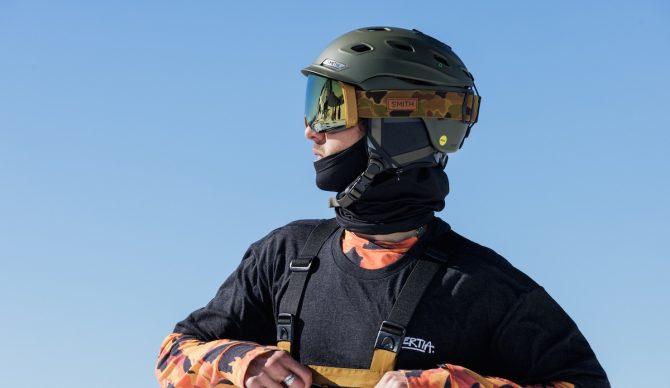
Photo: Tim Manning//The Inertia
Best Backcountry Snowboard Helmet
Smith Summit ($260)
Construction: Hybrid in-mold
Weight: 448g
Key Features: Mips, Zonal Koroyd, triple-certified, Boa fit system, headlamp routing
Pros: Lightweight but protective, very minimalist, great fit
Cons: No ear pads, no rear goggle securing mechanism
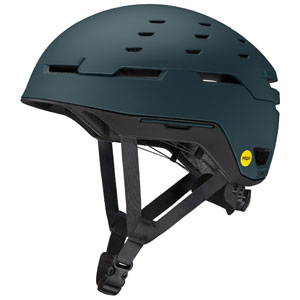
For snowboarders that aren’t immune to dark starts on the skin track, the Smith Summit has you dialed. Developed in collaboration with team rider and bona fide peak bagger Cody Townsend, the Summit boasts a number of features that backcountry enthusiasts will appreciate, including an integrated headlamp router, pack attachment tethers, and a flexible fit system featuring BOA that tucks into the helmet for ultimate packability. It’s well-vented so you can easily wear it during a high-output uphill without overheating. The Summit is also triple certified — designed to meet global alpine ski certifications and international mountaineering standards. With Smith goggles, the Summit had minimal gapping. The only area that could be improved there is that the Summit doesn’t have any way to secure goggles in the rear of the helmet.
What makes the Summit great for off-piste use is a bit of a downside for resort riders. With no ear pads or liner to speak of and no toggle to close its vents, the Summit on its own can be a bit drafty. But in testing, we appreciated the modularity. The BOA system meant you could easily fit a ball cap or a beanie underneath and adjust your fit accordingly. Still, for snowboarders who venture into the backcountry occasionally and want to shed weight on their pack but don’t want to shell out for two helmets, something like the Smith Method (which is even lighter than the Summit) may make a better quiver killer for mixed resort/backcountry use.
CHECK PRICE ON REI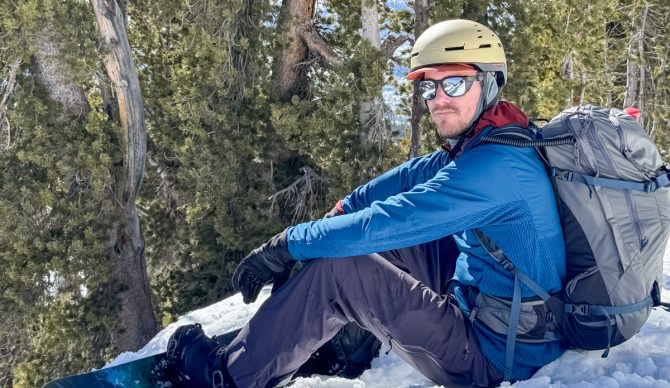
Photo: Dylan Heyden//The Inertia
Most Innovative Helmet
Anon Merak WaveCel ($355)
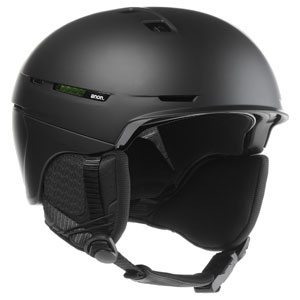
Construction: Hybrid in-mold
Weight: 639g
Key Features: WaveCel, BOA fit system, adjustable venting
Pros: Extremely protective, good ventilation, great goggle compatibility
Cons: Could use more interior padding, heavy
Since WaveCel hit the market, the company has made some pretty big claims. But, perhaps the most compelling is that the company claims a helmet with WaveCel has up to 98 percent less concussion risk than a standard helmet. WaveCel achieves this through its collapsible cellular structure that flexes, crumples, and glides on impact, combining the best aspects of both Mips and Koroyd (see our buyers guide for a breakdown of the three technologies. For the next few years, Anon holds exclusive rights to WaveCel in snow, and the Merak is the Cadillac of Anon’s WaveCel helmets.
With 19 vents and a hybrid shell, in-mold construction, the Merak is feature-packed. The small brim also makes for great goggle compatibility and helps to keep the snow out. And unlike other BOA helmets, the Merak features a dial integrated into the rear part of the shell, rather than just the helmet liner, which works great and keeps things streamlined.
One knock is that the Merak doesn’t have a ton of padding inside, and the WaveCel material isn’t the most comfortable against the head. Anon explains that this is intentional because WaveCel helmets are designed to fit closer to the head. But it’s definitely not quite the plush, cushy liner of the Smith Vantage. The Owen Spherical is a nice alternative to the Merak, too, as it’s a good bit cheaper with similar styling and Spherical technology. Aside from cost, though, choosing between top-tier helmets like the Vantage, Owen, and Merak is ultimately a choice in competing technologies – standard MIPS, Spherical, or Wavecel. For a bit more detail on these different constructions, check out our buyer’s guide.
CHECK PRICE ON REI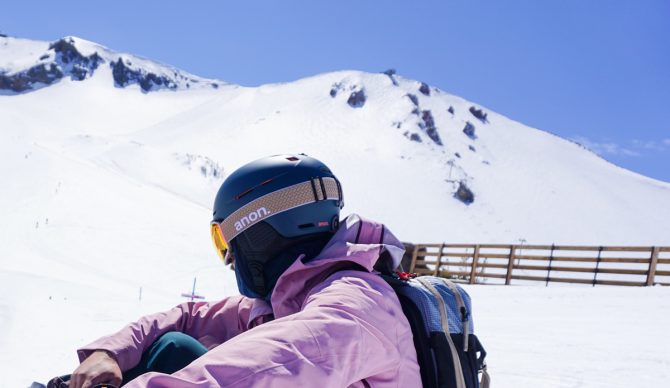
Photo: Will Sileo//The Inertia
Best of the Rest
Best Lightweight Resort Helmet
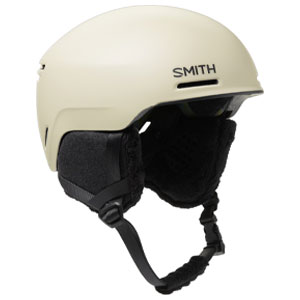
Smith Method Mips ($160)
Construction: In-mold
Weight: 421g
Key Features: Mips, Zonal Koroyd, eight fixed vents, buckle closure
Pros: Incredibly light, understated styling, modestly priced
Cons: Limited vents, no fit adjustability
First impressions of Smith’s Method helmet were how incredibly light it is, even compared to other in-mold helmets in our test. And while the Method lacked a lot of the features of other, more premium helmets — no adjustable venting, no BOA fit system — we would contend that the Method is the ideal helmet for the rider who wants to set it and forget it. After all, there are more important things to do on a powder day than fiddle with your helmet’s settings in the lift line. Right?
In testing, we found that the eight fixed vents were more than enough to keep the head cool on a chilly day. And the self-adjusting fit system, which is an elastic piece in the rear of the helmet, accommodated a beanie underneath just fine. The to-the-point styling looks great, and the tiny brim integrates extremely well with most goggles. While we ultimately landed on the Giro Ledge for the best budget helmet due to its price tag, paying $160 for a lighter, more breathable lid that includes premium features like Mips and zonal Koroyd tech is well worth the cost, especially for all-mountain snowboarders. At this price point, we honestly couldn’t be more stoked on the Method. Released in 2025 is the Method Pro, which, for $25 more, gives you a magnetic buckle and dial-adjustable fit.
CHECK PRICE ON REIRunner-Up Best Value
Smith Rodeo Mips ($105)
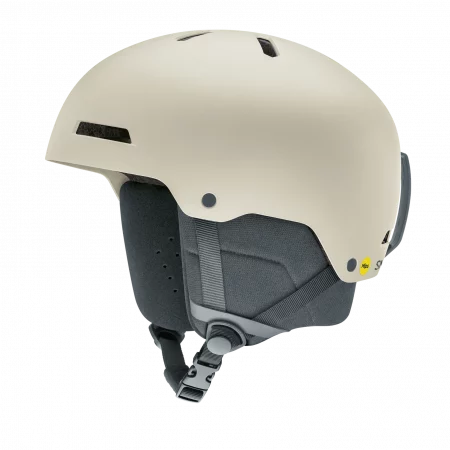
Construction: Hardshell/injection-molded
Weight: 550g
Key Features: Dial-adjustable, Mips, removable liner
Pros: Skate-inspired looks and simplicity with snow-specific design and features
Cons: Too simple for some, sits on top of the head
While Smith’s designs are one of the top choices when it comes to head-protection among skiers, among snowboarders, the brand’s tendency toward in-mold, feature-laden designs doesn’t always resonate as strongly. So last year, Smith released the Rodeo, a laid-back, exceedingly simple design with solid protection and high durability. The skate-inspired hardshell helmet has 10 fixed vents, a removable liner, Mips protection… and that’s about it. The liner is fairly minimal but quite comfortable, and audio-ready.
It’s also extremely similar to the Giro Ledge Mips, our top-pick value snowboard helmet. They both are Mips-equipped, hardshell helmets with skate-style looks. The Rodeo has a dial-adjustable fit, whereas the Ledge uses an elastic-fitting system. However, our tester found the Rodeo to sit on top of his head slightly, especially with the liner removed. He also had some concerns about the durability of the dial-adjustment fit system over longer periods of use. While we haven’t experienced any issues, with the liner removed, the dial adjuster extends below the bottom edge of the helmet shell, and feels like a potential point of failure. Smith does have a great warranty system, however, so we’re not overly concerned about it. It may be $20 cheaper, but what gave the Ledge the edge over the Rodeo in our book is its long-standing popularity, better fit, and proven durability as the Best Value Snowboard Helmet.
CHECK PRICE ON REITop-Pick In-Mold Helmet
Glade Boundary Helmet ($199)
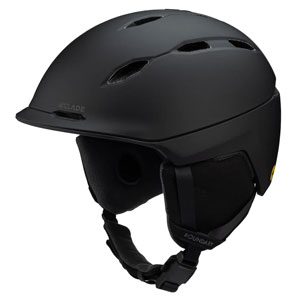
Construction: In-mold
Weight: 470g
Key Features: Mips, Adjustable venting, dial for adjusting fit, magnetic buckle
Pros: Super light, generous amount of padding in liner, well-vented, beanie-compatible
Cons: Sporty silhouette
Glade’s fully featured Boundary took top honors among in-mold helmets for its minimal weight, generous venting, customizable fit, and comfortable liner that made the helmet great for long days on the mountain. The top vents are controlled by two sliders that allow you to fully control the airflow for ideal temperature control. The visor is great for minimizing the gap between goggles and helmet, and the magnetic buckle closure is easy to operate with gloves or mittens on.
A more cost-effective option than the uber-customizable Smith Vantage, the Boundary is a high-quality mid-tier option that’s equally comfortable, albeit with less ventilation. In testing, we noticed that the outer shell of the Boundary seemed to show minor knicks and scrapes faster than our other favorite in-molds like the Giro Owen Spherical or Smith Vantage. So, if you spend time dipping into the trees, it may be worth it to drop the extra coin on the Giro or Smith for less visible wear over time.
CHECK PRICE ON GLADEPremium Hard Shell Helmet
Sweet Protection Igniter 2Vi Mips ($270)
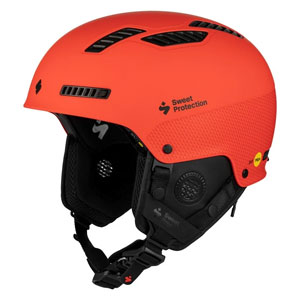
Construction: Hardshell/injection-molded
Weight: 640g
Key Features: Proprietary 2Vi construction, Mips
Pros: Premium styling, bomber feel, ample venting, good interior padding
Cons: Runs small, top vents not adjustable
Forget what you thought you knew about hard shell helmets. Sweet Protection’s Igniter takes the performance you’d expect of an in-mold design and puts it in an ultra-durable, hard-shell package. The stylish venting and premium features — like the leatherette exterior of the ear flaps — give off the vibe that the Igniter would be equally content in the cockpit of a fighter jet as it would be booting up a couloir.
The Igniter sports big safety features like Mips and Sweet Protection’s proprietary 2Vi tech. A dial in the rear of the helmet ensures a perfect fit, while ample venting makes the Igniter cool on warm days. Unfortunately, we found sizing to be a bit tricky. The Igniter comes in S/M, M/L, and L/XL. Our tester is normally a size large, and he tested the M/L, which felt a bit snug. If you find yourself between sizes, we’d recommend sizing up. The venting is mostly non-adjustable (save for the “goggle garage” vents). If that’s a deal-breaker for you, check out the Sweet Protection Switcher.
Hardshell helmets often get the unfortunate label of being the economical option in helmet construction. A quick perusal of our list will show you that every other hardshell (the Giro Ledge, Bern Hendrix, and Anon Windham all retail for under $200, which is around the MSRP for most mid-tier in-mold helmets. But, a more premium hard shell helmet like the Igniter is ideal for riders who go hard in the resort or backcountry and are willing to eschew a lighter weight option for something more burly and durable that can handle a few bumps and bruises without needing to be replaced.
CHECK PRICE ON BackcountryPOC Calyx ($250)
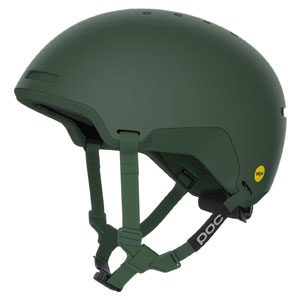
Construction: Hardshell/injection-molded
Weight: 695g
Key Features: Mips, hard shell construction, dual-density EPS foam liner, RECCO Reflector, adjustable fit
Pros: Multi-sport design, highly packable, high on comfort
Cons: A bit heavy, sits on top of the head, pricey
When a company as embedded in cycling and snow as POC announces a helmet designed to shine equally in both pursuits, our ears perk up. And in testing, the Calyx did not disappoint. Featuring a dual-density EPS liner, adjustable venting, and a cozy interior, the Calyx is comfy and warm on the mountain, even on overcast days in the Sierra when temperatures stubbornly stick around in the single digits.
We’re fans of the removable ear pads, which cup the ear instead of covering it, allowing you to hear better. An adjustable fit system, which can also be pushed into the helmet for storage/packability, works well with a beanie and without. POC bills the Calyx as an ideal lid for in-bounds and out-of-bounds. And while we like the easily-removable earpads, the Calyx conks out at 695g, the second heaviest helmet we tested. Compare that to Smith’s featherweight backcountry-focused Summit at 448g, and you’re looking at a decent amount of additional weight.
CHECK PRICE ON BACKCOUNTRYBern Hendrix ($150)
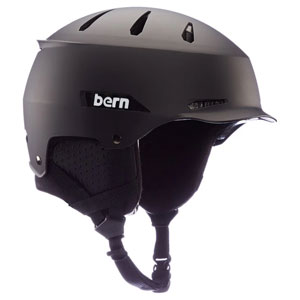
Construction: Hardshell/injection-molded
Weight: 519g
Key Features: Mips, thin shell, adjustable fit
Pros: Skate-inspired, big brim aids in goggle compatibility
Cons: Styling may not be for everyone, non-adjustable vents
The silhouette of Bern’s Hendrix definitely earns points for being the most unique that we got our hands on. Featuring a decent-sized brim in the front and a spoiler in the back, it may not be everyone’s cup of tea. But, for those with the confidence and steeze to rock such a piece, the Hendrix will stand out. The Hendrix features some premium features that you’d expect at this price point, including Mips, and a dial in the rear to adjust the fit. There is also ample padding inside the helmet, making it high on comfort.
However, compared to other helmets at similar or lesser price points like the Smith Method ($160) and Giro Ledge ($125), we really would have liked to see more premium features packed in the Hendrix to command the price. The Ledge, for example, is extremely comparable to the Hendrix (minus a rear dial to control fit) and will save you $45. And for $10 less, the Method will get you a lighter in-mold design with zonal Koroyd tech, at the expense of some durability.
CHECK PRICE ON backcountryAnon Windham ($190)
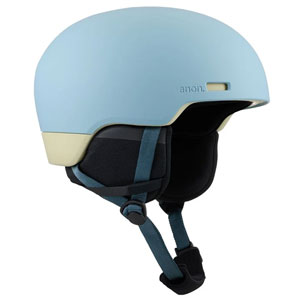
Construction: Hardshell/injection-molded
Weight: 738g
Key Features: WaveCel, Boa 360 fit system, magnetic buckle
Pros: Streamlined look, decent price, some premium features, more padding than Merak
Cons: Heavy, no adjustable venting
For those looking for a WaveCel helmet at a more affordable price, Anon’s Windham fits the bill. Whereas Anon’s Merak WaveCel features adjustable vents, hybrid construction, and other premium features, the Windham features a more to-the-point design with fixed venting in a hard shell package.
But the Windham isn’t completely devoid of premium features. Like the Merak, the Windham has a BOA 360 fit system integrated into the rear of the shell and a Fidlock magnetic buckle. In testing, we found the Windham is also a bit bigger than the Merak and accommodates a beanie nicely, so we wouldn’t recommend sizing up.
While the Windham is a safety upgrade compared to similarly styled hard shell helmets like the Giro Ledge, shelling out an additional $65 for WaveCel tech may not be for everyone. And it’s hard to justify spending $190 on such a simple design when you could spend $40 more for adjustable venting in Sweet Protection’s Igniter hardshell. But for those interested in a WaveCel lid for snow, picking up an Anon helmet is the only way to get one at the moment, and the Windham is the company’s most affordable model.
CHECK PRICE ON Backcountry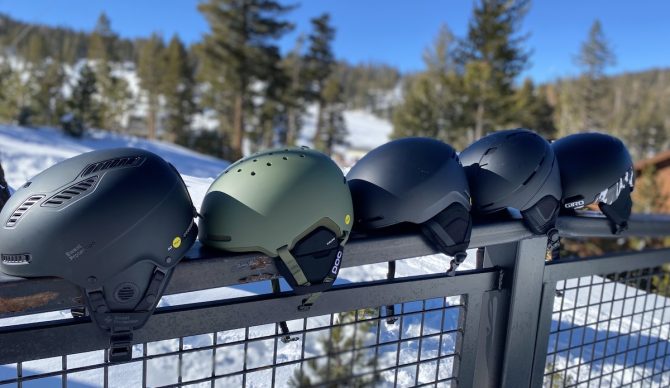
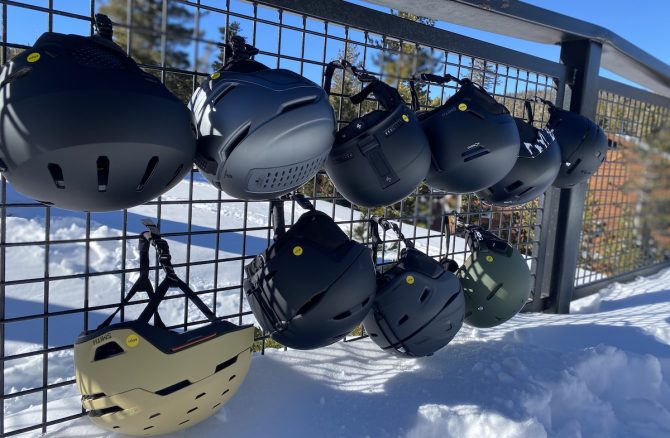
A selection of the helmets we tested this season. Photo: Dylan Heyden//The Inertia
Best Snowboard Helmets Comparison Table
| Helmet | Price | Weight | Construction | Features |
| Giro Owen Spherical | $280 | 514g | In-mold | Mips Spherical, dialed fit, magnetic buckle |
| Giro Ledge Mips | $125 | 587g | Hardshell/injection-molded | Mips, hard shell construction, EPS foam liner |
| Smith Vantage | $275 | 554g | Hybrid in-mold | Mips, Zonal Koroyd, 21 adjustable vents, BOA 360 fit system |
| Smith Summit | $260 | 448g | Hybrid in-mold | Mips, Zonal Koroyd, triple-certified, Boa fit system, headlamp routing |
| Anon Merak WaveCel | $355 | 639g | Hybrid in-mold | WaveCel, BOA fit system, adjustable venting |
| Smith Method Mips | $160 | 421g | In-mold | Mips, Zonal Koroyd, eight fixed vents, buckle closure |
| Glade Boundary Helmet | $199 | 470g | In-mold | Mips, Adjustable venting, dial for adjusting fit, magnetic buckle |
| Sweet Protection Igniter 2Vi Mips | $270 | 640g | Hardshell/injection-molded | Proprietary 2Vi construction, Mips |
| Smith Rodeo Mips | $105 | 550g | Hardshell/injection-molded | Simple, removable liner |
| POC Calyx | $250 | 695g | Hardshell/injection-molded | Mips, hard shell construction, dual-density EPS foam liner, RECCO Reflector, adjustable fit |
| Bern Hendrix Mips | $150 | 519g | Hardshell/injection-molded | Mips, thin shell, adjustable fit |
| Anon Windham | $190 | 738g | Hardshell/injection-molded | WaveCel, Boa 360 fit system, magnetic buckle |
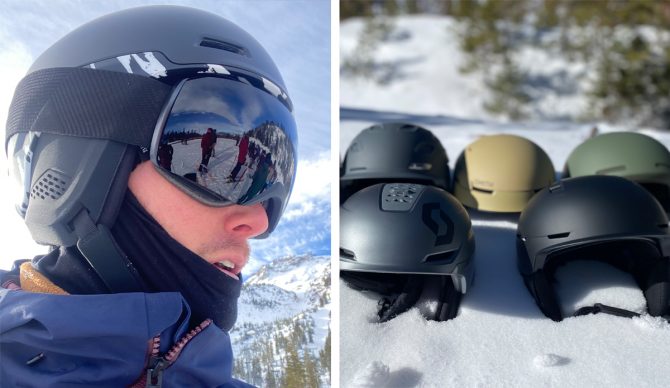
Lead Tester Dylan Heyden sports the Giro Owen Spherical in testing. Photo: Dylan Heyden//The Inertia
How We Tested The Best Snowboard Helmets
As a general rule, products designed for safety provide a bit of a quandary for testing. What we mean by that is helmet makers can tell you all about how their technology is superior for safety than another company’s, or make use of well-reputed technologies such as Mips or Koyroyd in their constructions. But the only actual way to get a sense of whether or not a helmet is safer than another is to see how they hold up in identical scenarios, and that just isn’t possible without access to a controlled lab setting. For this review, it’s beyond our scope to make recommendations based on safety. All we can do is point to the claims of the product makers, independent studies, and voluntary safety standards. If you want to learn more about lab testing of helmets, check out Virginia Tech’s Snowsport Helmet Ratings Guide.
All that said, from everything we’ve learned from both inside and outside the industry, helmets work. They might not save your life if you hit a tree going Mach 10, but they significantly reduce the risk of smaller head injuries and the severity of larger ones while snowboarding. And while it’s hard to determine just how much newer technologies like Mips or Koyroyd help, we’ll take every edge we can get when it comes to protecting the ol’ noodle.
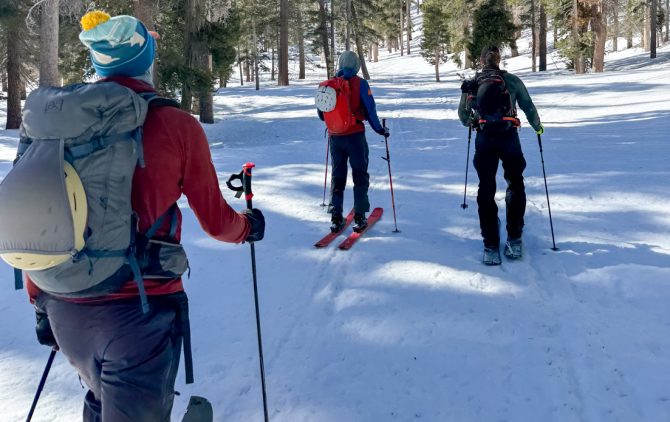
Testing the Smith Summit in the backcountry of the Sierras. Photo: Dylan Heyden//The Inertia
For this review, we focus on the other features that make a good helmet, such as fit, style, warmth, and extra features. Our lead tester for this review is Dylan Heyden, who has spent the past two winters testing helmets in different conditions and locales, from warm sunny days at SoCal mountains with an entirely manmade snowpack to extended periods in the Eastern Sierra with temps in the single digits. Additional testing for this review has been provided by Managing Gear Editor Will Sileo.
Editor’s Note: For more in-depth reviews of the best snowboard gear, check out our guides to: The Best Snowboard Jackets, The Best Snowboard Pants, and The Best Snowboard Goggles. And for even more than that, here’s our full suite of ski and snowboard reviews.
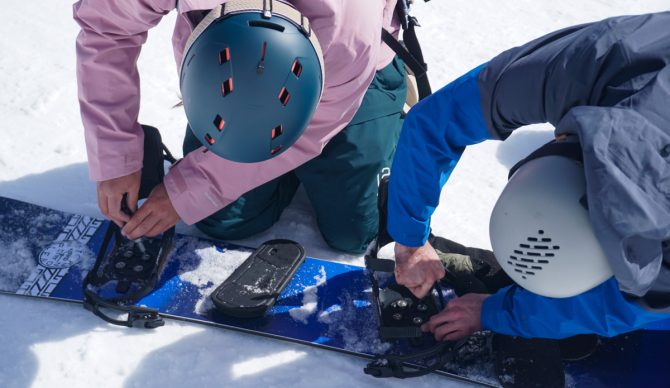
Showing off the adjustable venting on the Anon Merak WaveCel Photo: Will Sileo//The Inertia
Best Snowboard Helmets Buyer’s Guide
Key Features
The key features that we looked at when evaluating snowboard helmets fell into three buckets: safety, comfort, and style. Safety comprises all of the different features specifically designed to best protect your head, from industry-standard tech and certifications to proprietary technologies and innovations. Comfort is everything that allows you to wear a helmet for an entire day on the hill without feeling too cold, too hot, or that it’s too tight or too loose. Finally, Style is that intangible factor that makes a helmet look good and is, admittedly, the most subjective of the three. We took all of these points into consideration when reviewing the best snowboard helmets.
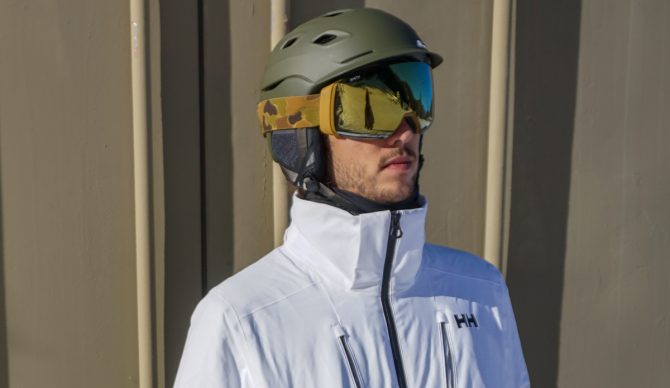
Smith’s Vantage works the best with Smith-branded goggles, but the integrated visor helps prevent gapping with non-Smith goggles. Photo: Ken Cox//The Inertia
Helmet Construction
In general, snow helmets are constructed in one of two ways. In-mold helmets, such as the Giro Owen Spherical or Smith Method, are created with an EPS foam layer fused to a hard outer shell in a single molding process. These helmets are often able to shave off a bit of weight by using a thinner outer shell. Injection-molded helmets (also called ABS or hard shell helmets), like the Giro Ledge, mean the inner EPS layer is glued to the hard outer shell with an adhesive.
In-mold helmets are generally lighter and can be more expensive. Injection-molded helmets can be heavier but are generally more budget-friendly, and don’t show their wear as easily thanks to a more durable outer shell. Both construction styles protect the head equally well, so choosing between the two comes down to personal preference. Also, some helmets, like the Smith Vantage, use a hybrid construction technique to harness the benefits of both construction methods.
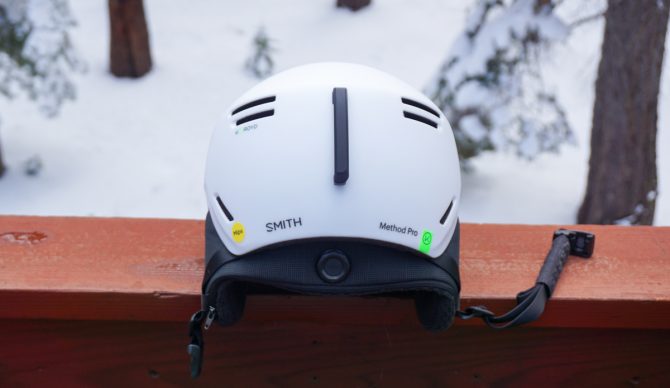
The Smith Method Pro has zonal Koroyd for added protection. Photo: Will Sileo//The Inertia
Koroyd and WaveCel
Two innovative materials you’re likely to see in some higher-end helmets on the market are Koroyd and WaveCel, and they’re actually pretty similar. Both materials are collapsible cellular structures designed to crumple at impact, absorbing force, and protecting the head. Koroyd has a honeycomb-like look, while WaveCel takes its name from its wavy look. Both technologies purport to absorb more force than a full EPS foam liner.
Koroyd is favored by brands like Smith (used both on the Method and Summit helmets) and is integrated in certain “zones” of the helmet with EPS foam covering the rest. Smith’s Koroyd helmets also feature Mips (see below). Meanwhile, Anon has gone all in on WaveCel. WaveCel is designed both to crumple like Koroyd during impact and glide to redirect energy away from the head like Mips, and is featured in helmets like the Anon Windham and Merak.
See that little yellow circle? That’s how you know your helmet is protecting your head with Mips technology. Photo: Dylan Heyden//The Inertia
What Is Mips?
Pay close enough attention at ski resorts and you’re likely to have noticed little yellow dots on the back of strangers’ helmets to denote being equipped with Mips technology. Mips stands for multi-directional impact protection system, which sounds pretty complex, but the reality is pretty straightforward. A helmet with Mips includes a sliding internal layer that is supposed to reduce rotational movement of an impact to the head at an angle by allowing the head to move inside the helmet just slightly.
Stick your fist in the liner of a Mips helmet, and you’ll be able to wiggle it a little compared to a helmet without Mips. This play in the inner part of the helmet is designed to work much like the fluid that surrounds the brain in your skull to protect the brain from trauma. Mips is basically industry-standard these days, and while a Mips-equipped helmet generally comes at a slightly higher cost, it’s well worth the upgrade if you can swing it.
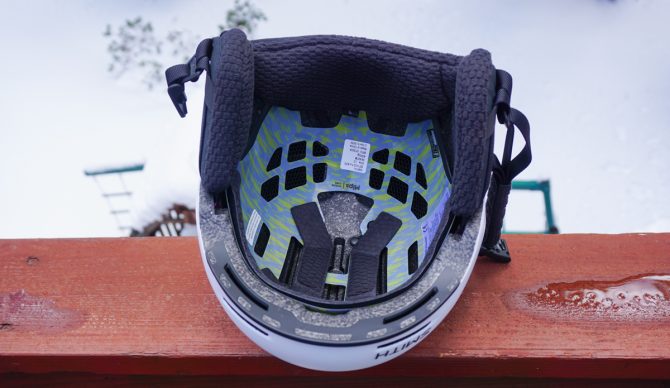
The Mips lining on full display in the Smith Method Pro. Photo: Will Sileo//The Inertia
Safety Certifications
At present, there are no mandatory standards that snowboard helmets must meet in the United States, but there is a voluntary standard, ASTM F2040, that manufacturers often reference. This standard was developed by the American Society of Testing and Materials and includes impact with different-shaped anvils at different temperatures and a dynamic strength retention test.
The European standard, CE-EN1077, is also often referenced in the industry. This standard includes many of the same tests but from a reduced height and only using flat anvils, but it also includes stipulations around the overall helmet design, including coverage area, straps, and ear covers.
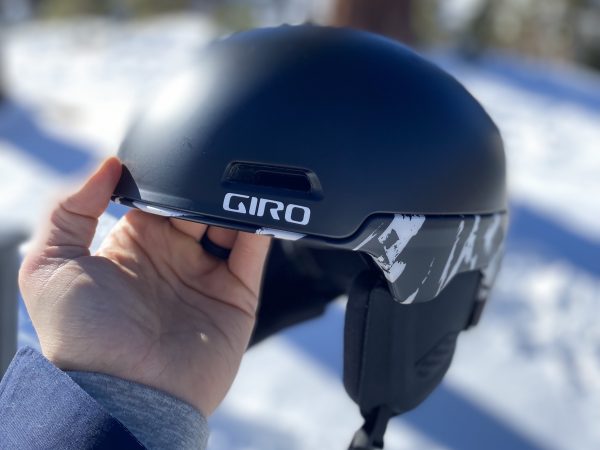
The Giro Owen Spherical is our top pick for snowboard helmets. Photo: Dylan Heyden//The Inertia
Key Comfort Features
Helmets must strike an interesting balance in a snow environment – they must insulate on colder days but also be able to dump heat when a low-visibility morning gives way to a bluebird afternoon. To thread this needle, many of the helmets we tested feature vents that can be opened or closed with a sliding mechanism – sometimes the slider is on the outside of the helmet, or, in the case of the Giro Owen, the slider is inside the helmet to preserve the sleek look.
Additionally, to literally dial-in fit, many helmets also feature a BOA, or similar dial-fit knob in the rear of the helmet to tighten and loosen a helmet as necessary. This is especially helpful if you’re anything like us and on colder days you need to loosen things up to fit a beanie under your helmet.
Last but not least, goggle compatibility is a major consideration when scoping out helmets. Ideally, a helmet should have as close to a seamless look from the top of your goggles to the lip of the helmet as possible to avoid the dreaded “gaper gap.” It looks silly and lets air in, resulting in a worst-of-both-worlds scenario. Keep in mind that companies that make both goggles and helmets often design them to work best together. So, sticking with the same ecosystem of products has its benefits. Helmets with a small visor in the front, like the Smith Vantage, often provide wider compatibility with other goggle brands.
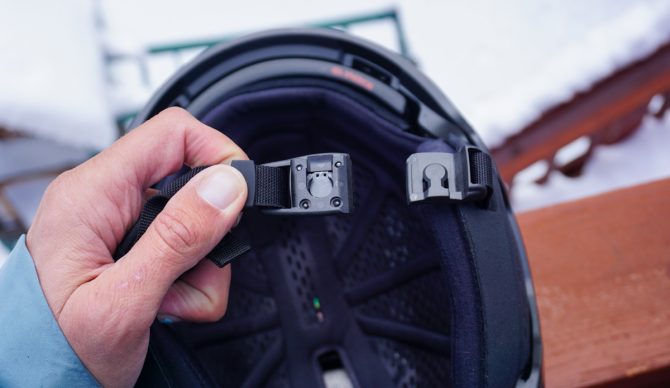
Fidlock magnetic buckles are a nice upgrade. Photo: Will Sileo//The Inertia
Other Considerations
The humble plastic buckle that’s been used on everything from backpacks to helmets since time immemorial is brilliant in its simplicity. So, far be it from us to criticize. But, recently, helmet manufacturers have taken to replacing this tried and true closure with unique magnetic closure systems, and after significant testing, we are definitely fans. These magnetic closures, like the one featured on the Sweet Protection Igniter, are easy to operate with gloves, mitts, or even one-handed, but are fully secure when closed.
Another nice-to-have is a goggle securing system in the rear of the helmet that’s made of rubber or some similarly elastic material. The little plastic removable numbers tend to break off.
The POC Calyx sports a simple and easy-to-use goggle retainer strap. Photo: Dylan Heyden//The Inertia
When Should I Replace My Snowboard Helmet?
We’ve spent a lot of time here discussing what to look for when buying a snowboard helmet. But, how do you know when it’s time to replace the one you have to begin with? The answer depends on two key considerations: crashes and age.
First: crashes. Most manufacturers suggest that a snowboard helmet should be replaced after a major fall or collision that results in significant impact to the head, even if the outer shell is not broken. This may seem like overkill if your helmet still looks perfectly fine and doesn’t feel all that different after a crash. But, during a major impact, the EPS foam protects your head by absorbing impact and deforming or breaking. Once this happens, the helmet cannot be repaired and will not offer the same protection in the event of a second impact. So you’ll want to replace it.
Second: age. The age range most manufacturers give for the efficacy of a helmet is about three to five years. This depends on how often you use it and other factors. If you ride regularly, you’ll want to be toward the front end of that range. If not, around five years is likely okay. The justification here is that EPS foam becomes less protective in that span. Even small, everyday impacts can add up over time, as well as environmental exposure.
To determine if your helmet needs replacing, inspect it for any signs of wear, including cracks and dents on the outer shell and cracks and signs of wear on the inside of the helmet. Remember to remove the fabric liner if it makes it difficult to get a good look at the foam interior.
Additionally, because the quality of protection a helmet provides is so linked to age and use, most manufacturers advise against buying used or even selling or giving away your own previously used helmets.
Return to Comparison Table | Return to Top Picks
Related: Best Snowboard Jackets | Best Snowboard Goggles | Best Snowboard Boots | Best Snowboards
Editor’s Note: For more ski and snowboard gear reviews on The Inertia, click here.


