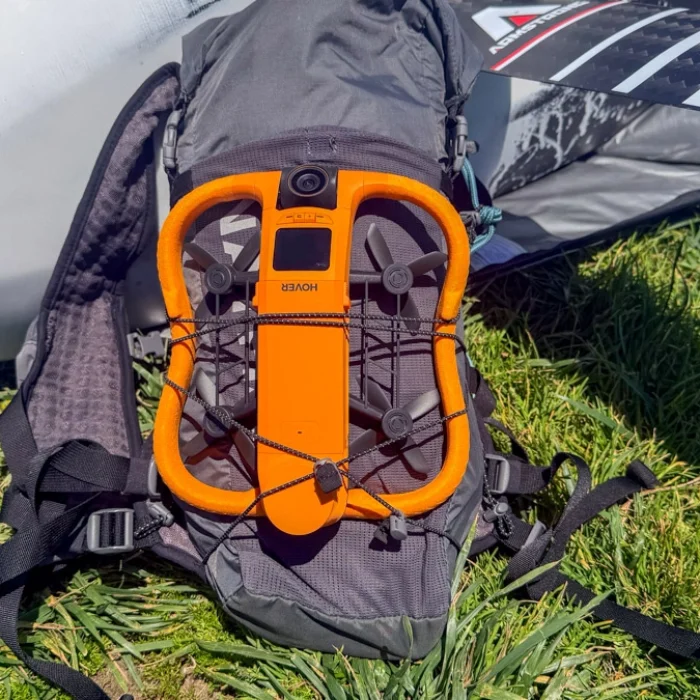
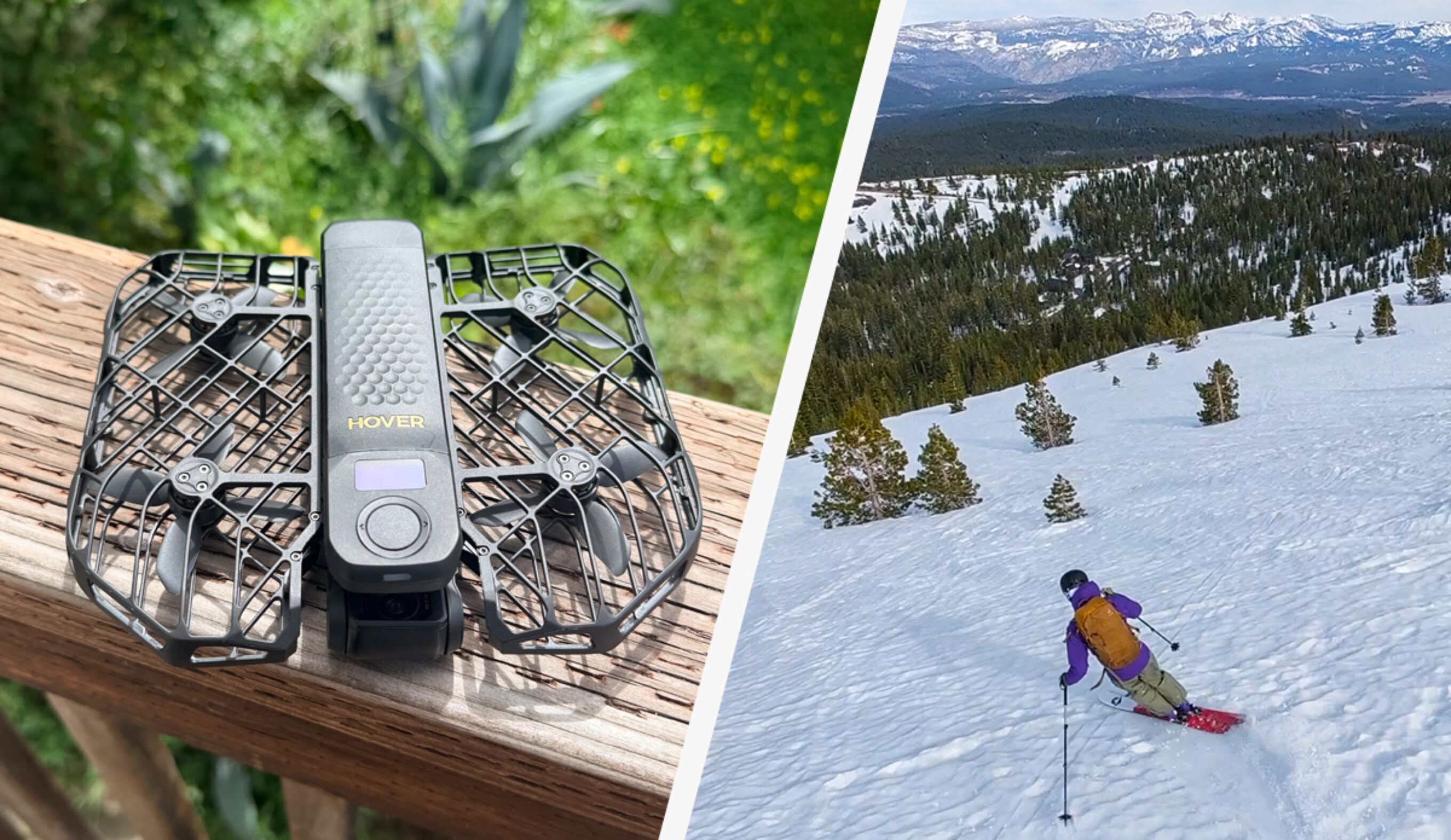
The HOVERAir X1 PROMAX can capture some stunning visuals for action sports. Photo: Will Sileo//The Inertia
The rate at which the action camera industry is evolving is truly wild. A few years ago, there was really only one way to film yourself while getting after it in the outdoors – the GoPro. And while that’s great for filming POV footage, it’s hard to truly film yourself, requiring a selfie stick and some solid concentration to keep yourself in frame. Then 360 cameras started to hit the scene, making that process a whole lot easier – just hit record, hold the camera out away from your body, and choose the angle later – but you’re still the one holding the camera.
Enter the HOVERAir X1 series, a self-flying camera drone that’s getting some attention in the action camera world. Just choose a flight mode, launch it, and it will lock onto the user, capturing smooth, effortless drone footage of your outdoor activities. It can lock on and track you as you run, bike, skateboard, or even ski! Weighing under 250 g, it is exempt from the hassle of FAA registration for recreational users. Three different models (outlined below) offer a range of capabilities and price points to suit everyone from beginner to pro.
Bottom Line: The HOVERAir X1 camera drone (I tested the X1 PROMAX) is a powerful tool for self-photography and videography, significantly expanding the field in a completely new direction. With superb optical clarity, a lightweight and durable design, and user-friendly controls, this camera drone has the potential to truly shake up the action camera industry.
Check Price on AmazonRelated: Best Cameras for Surf Photography | Insta360 X4 Review | More Gear Reviews
Testing the HOVERAir X1 PROMAX
I’ve spent the past couple of months testing the HOVERAir X1 PROMAX. I’ve used it for follow-me videography while skiing, biking, and skateboarding, as well as breaking out the controller and joysticks to use it as a more traditional drone for cinematic footage. I tested it at home in San Francisco, as well as in the Lake Tahoe region.
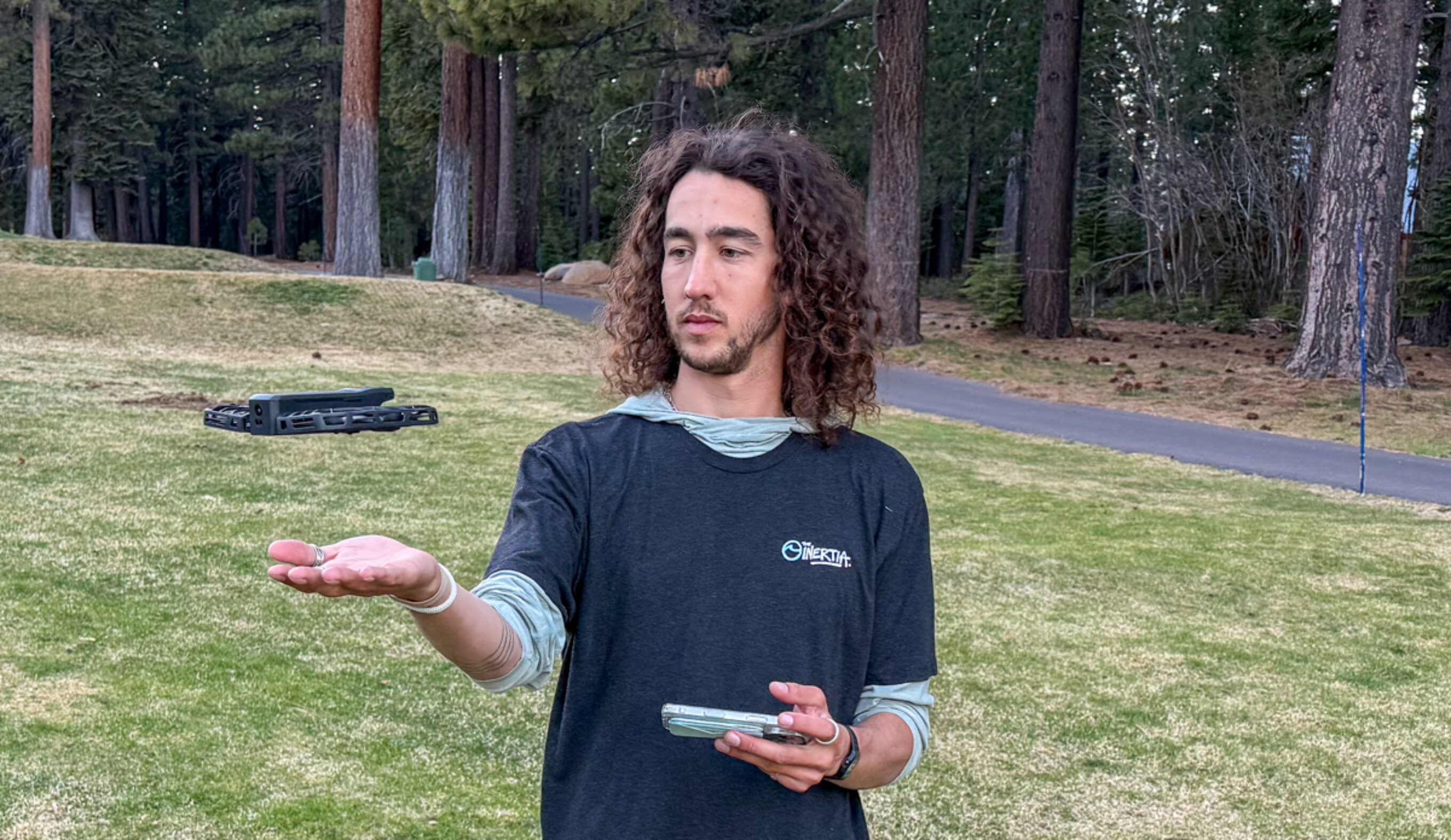
Launching and landing the drone is as easy as holding out the palm of your hand. Photo: Will Sayer//The Inertia
Using the Drone
The drone is surprisingly simple to use, even for first-time drone pilots like myself. The self-flying modes are ridiculously simple. Turn the drone on, use the buttons on the drone itself to choose a flight mode such as Hover, Zoom Out, Spiral, Dolly Track, Follow Cam, and more, with specialized modes for shooting skiing, biking, and other action sports.
To launch, simply press the main button once you’ve selected a flight mode, hold it out on your palm, let the countdown begin, and it launches by itself! Once it has completed the flight path, hold your hand out underneath the drone, and it will land itself on your palm.
With the app, you can adjust the parameters of the different flight paths, tweak video settings, download your clips, take manual control, and so much more.
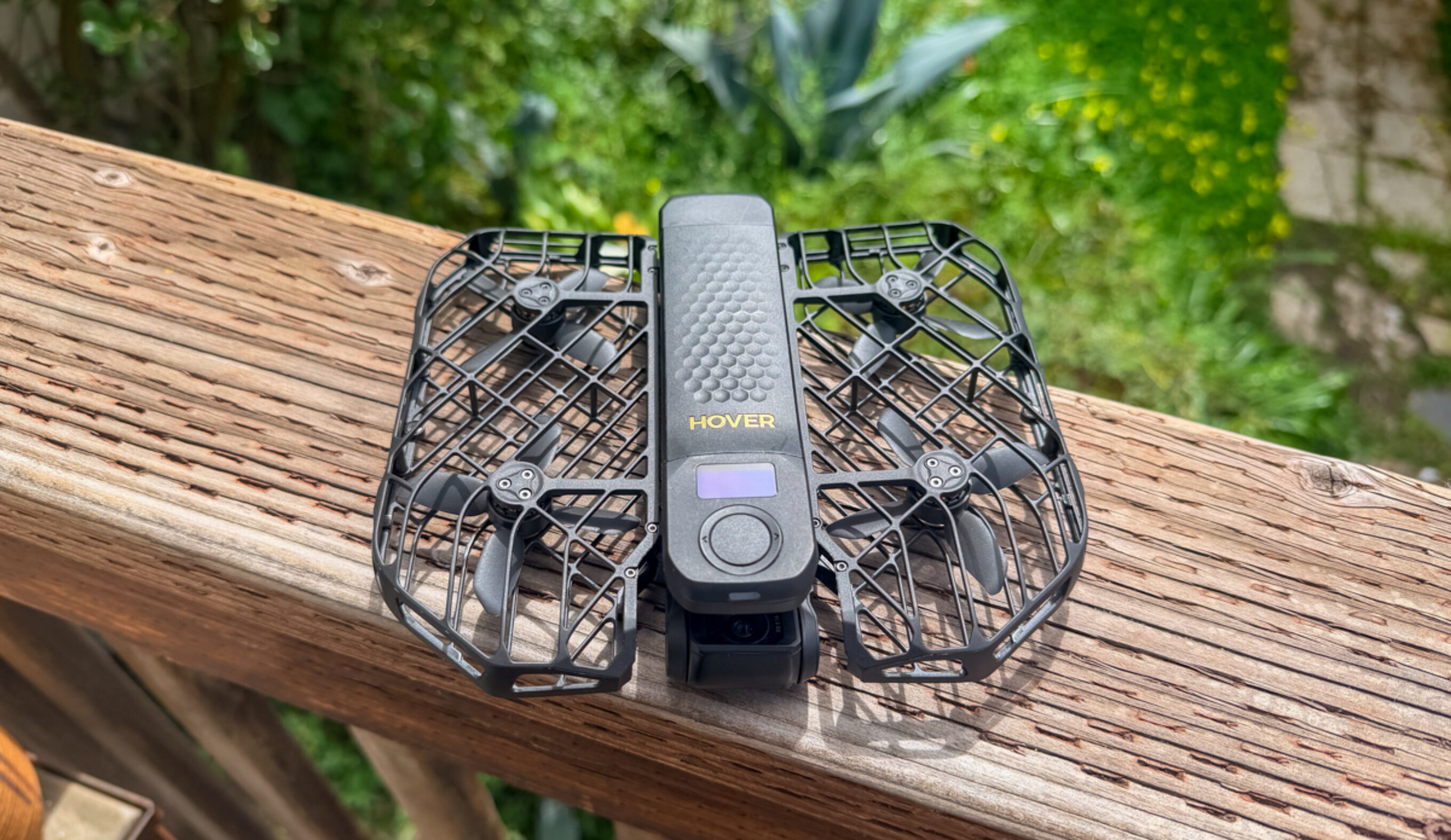
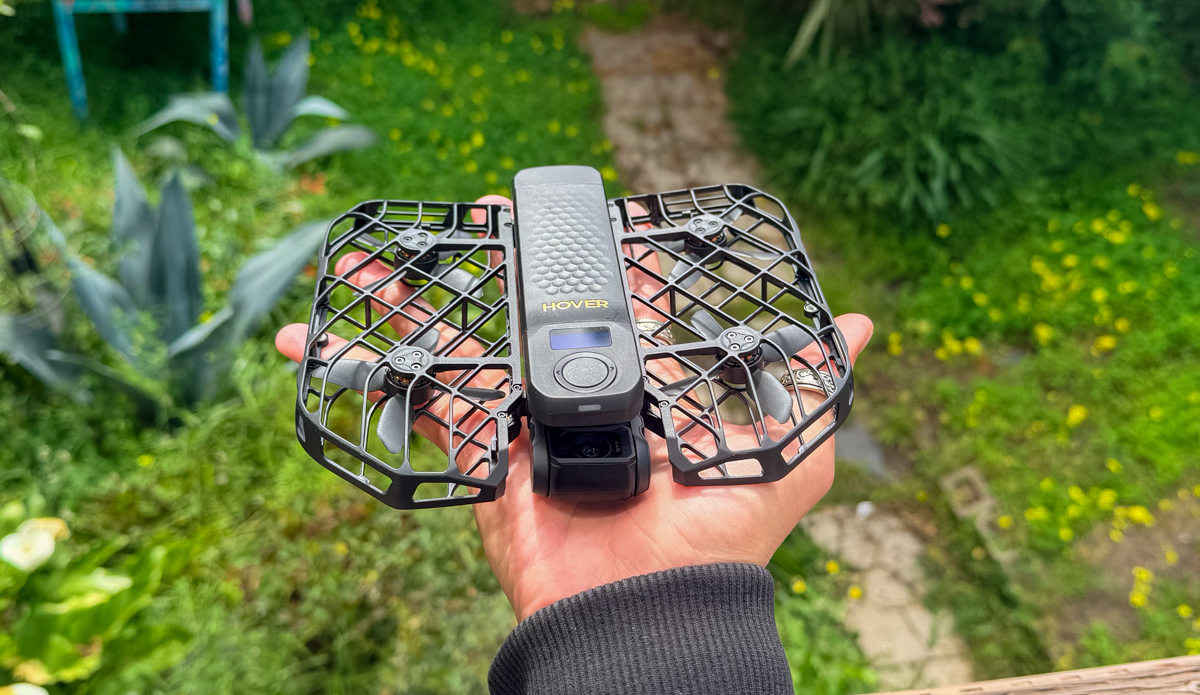
The X1 drones have full propeller guards to make them safer and more durable. Photo: Will Sileo//The Inertia
Notable Features
I could get bogged down for thousands of words talking about all the intricacies of the device here. So instead of doing that, I’ll just discuss the main highlights.
Three Different Models – The drone comes in three variants: the base-model X1 ($429), the mid-tier X1 PRO ($499), and the top-level X1 PROMAX ($599). A new variant, a waterproof version called the Aqua, will be released later this spring. Since I tested the X1 ProMax, that’s the one I’m primarily referring to here. The main differences are the video quality and flight capabilities. The X1 can shoot in 2.7k, the Pro can shoot 4k, and the PROMAX can shoot in up to 8k. The PRO and PROMAX also have improved speed, battery life, and obstacle avoidance.
Small Size and Lightweight – Companies peddling a new product are prone to outrageous claims. “Fits in your pocket!” Was a claim I was skeptical of, until I got the drone in-hand. While I won’t be trying to force it into the hip pocket of a pair of tight jeans, it’s certainly able to fit in just about any other pocket you can think of. Lighter than my iPhone, folded up, it’s not much bigger than one either. This is great for activities like backcountry skiing, where weight and packability matter.
Durability – this is a huge one. In optimizing for low weight, drones can get delicate quickly. And for a drone that’s intended to be stashed in a pocket, you can imagine it’s going to take a few knocks along the way. With full propeller guards made of a Hyper-Elastic Material (HEM), you can fly it into just about anything without too much concern.
Battery Life – For such a compact and lightweight little thing, I’m actually very impressed by the amount of flight time it can pack in.
Tracking Software – This is where the rubber really meets the road. The main selling point of the device is that you don’t need a cameraman to capture your fast-paced action sports activities, and a cameraman who can’t keep the lens on you while you move is arguably worse than no cameraman at all. Well, the X1 really delivers in this category.
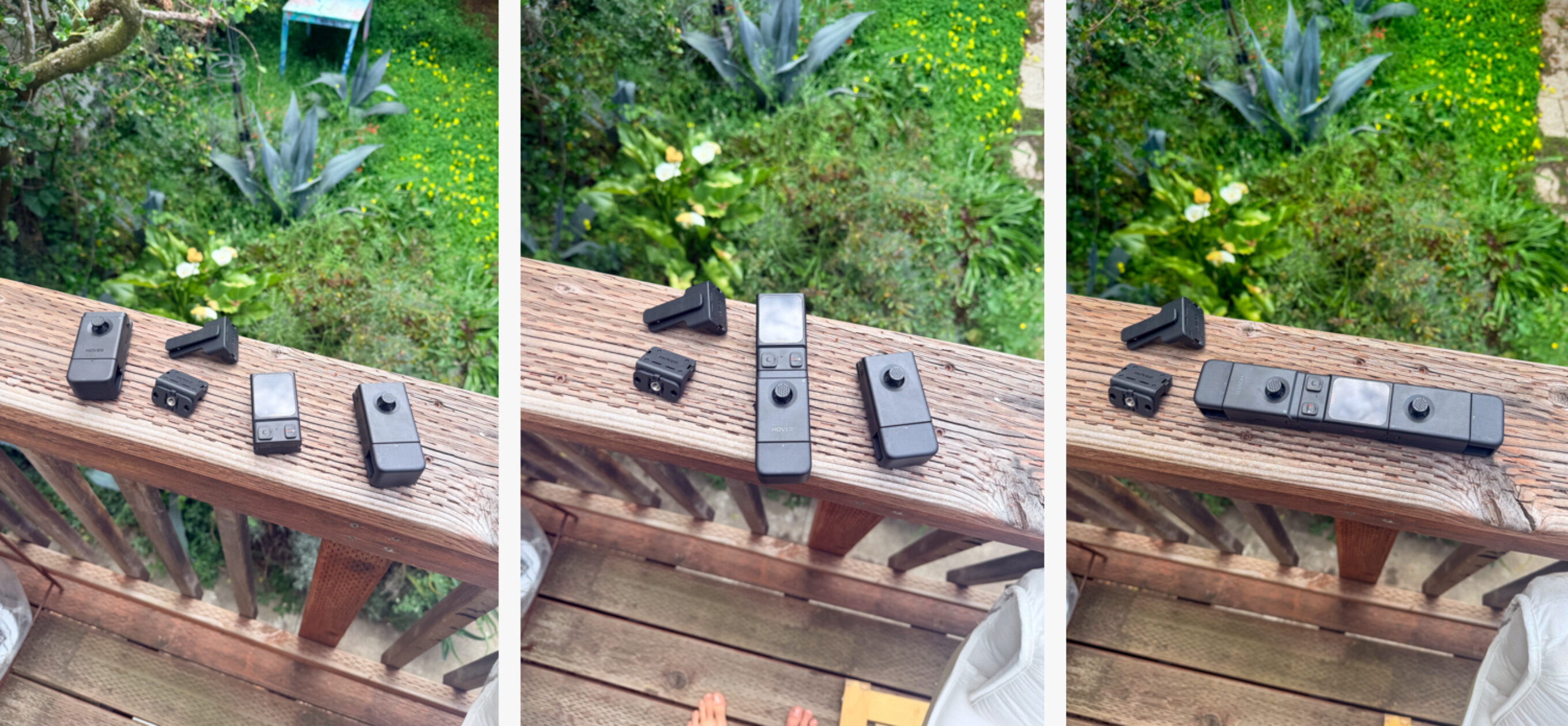
The Beacon can be connected to one or both joysticks for one or two-handed manual control. Photo: Will Sileo//The Inertia
Accessories – To get flying, all you need is the drone itself. Downloading the app is highly recommended, letting you adjust flight parameters, easily download your clips, update the software, and even take manual control of the drone. But it’s worth knowing that you don’t expressly need anything but the drone itself to capture content.
I do recommend picking up an extra battery or two. If you plan on shooting in colder conditions, like skiing, make sure it’s the Thermo battery. The battery hub is also a nice addition for charging two batteries at once.
While your phone can act as a manual controller from the app, the Beacon and Joysticks are another great add-on, giving you greater precision and control of the drone while flying it manually. The Beacon can also be used to aid the drone while it’s tracking you, so it doesn’t have to rely solely on visual tracking.
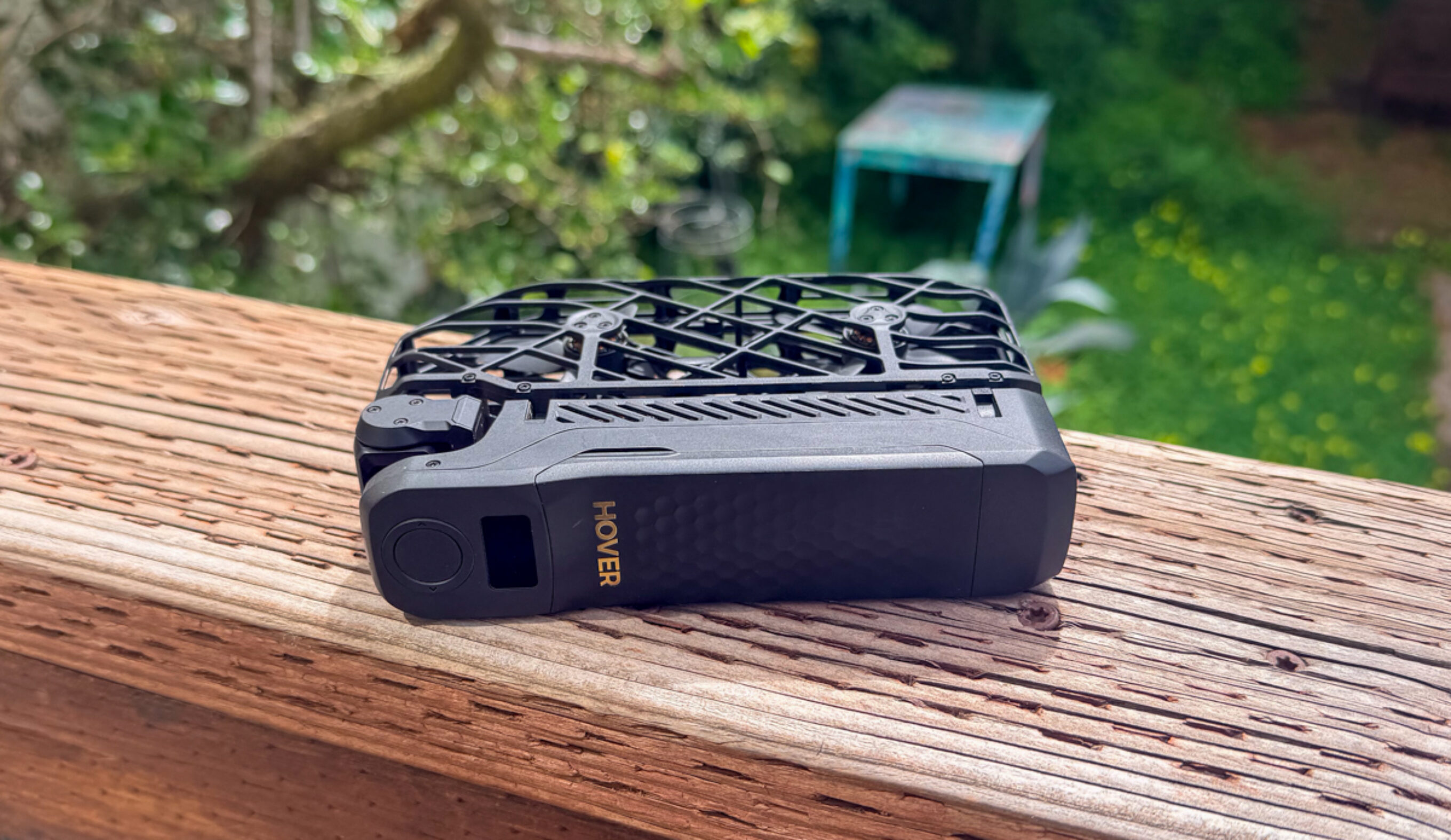
Folded up, the X1 PROMAX isn’t much bigger than an iPhone. Photo: Will Sileo//The Inertia
Drawbacks
This is one of the most complicated pieces of equipment that I’ve reviewed. It’s pretty mind-boggling to realize that when the drone is tracking you, it’s simultaneously recording, tracking, flying, and avoiding obstacles. That’s a lot going on, so to me, it’s understandable that the proverbial wires get crossed on occasion.
While skiing in poor conditions in Lake Tahoe earlier this season, the drone was tracking me until I skidded to a stop right above a patch of dirt. When I continued down the mountain, it didn’t follow me and had accidentally locked onto “tracking” the patch of dirt instead of me. If I had been using the Beacon, however, I doubt this would have been an issue.
Another point to watch for is flying the drone in high winds. While skiing out in the backcountry, I sent the drone up above a ridgeline to scout the surrounding terrain, but the winds on the ridge were gusty and too much for the drone to handle. I received a “high wind warning,” and the drone instantly landed itself, without giving me a chance to stop it. I had to go bushwacking to find the drone, but luckily, when it loses connection, it drops a pin of its location in the app. Once I realized this, finding the drone was a breeze, but it did show me that flying over the water in windy conditions is likely a horrible idea – so I’ll be waiting for the waterproof HOVERAir Aqua to try and film my wing foiling adventures.
It’s also worth noting that, as small as the drone is, it is still fairly noisy, and draws a bit of attention – much more so than an action camera on a selfie stick. In crowded environments, I’d recommend taking extra care to make sure the drone isn’t bothering those around you while you’re filming.
Finally, while the drone is insanely user-friendly, it’s still a drone, which is a complex piece of gear. Less tech-savvy users might get frustrated at times.
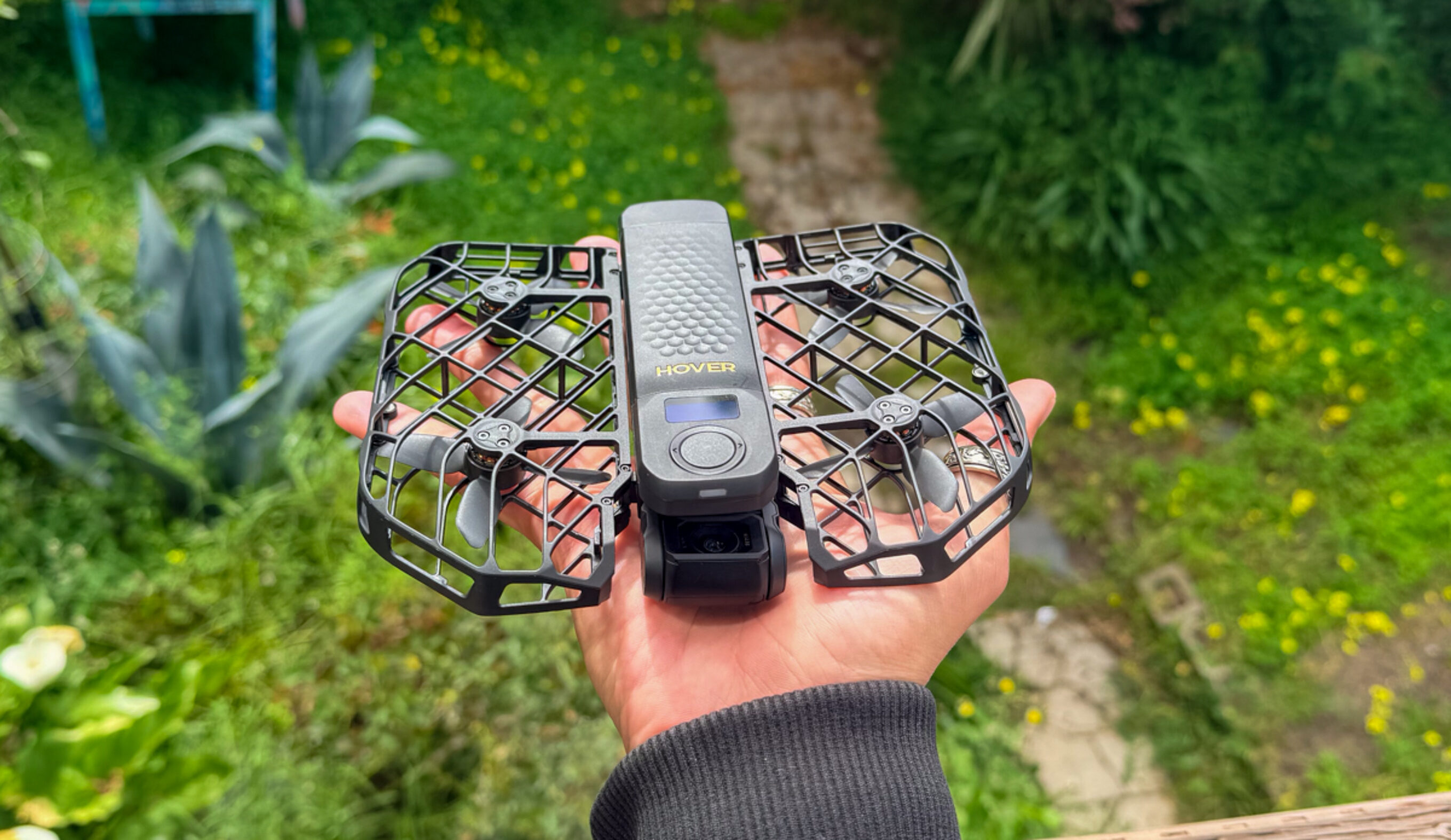
The X1 series could be groundbreaking for action sports. Let’s see if it catches on. Photo: Will Sileo//The Inertia
Final Thoughts
Overall, the X1 series is a huge step forward in the world of self-filming and action sports. True, drones have been able to do this sort of tracking for a while now, but the X1 takes it to a whole new level of action-sports applicability with the small, lightweight, and durable design, as well as top-tier user-friendliness, opening the door to recreational users who are too intimidated by a larger drone to try one out.
The tracking capabilities are very, very impressive, and I’m wowed by how well the PROMAX can avoid obstacles while tracking and filming. This feels like it could be a major shake-up to the action camera industry, but only time will tell if mini camera drones become the new standard for self-photography.
Check Price on AmazonRelated: Best Cameras for Surf Photography | Insta360 X4 Review | More Gear Reviews
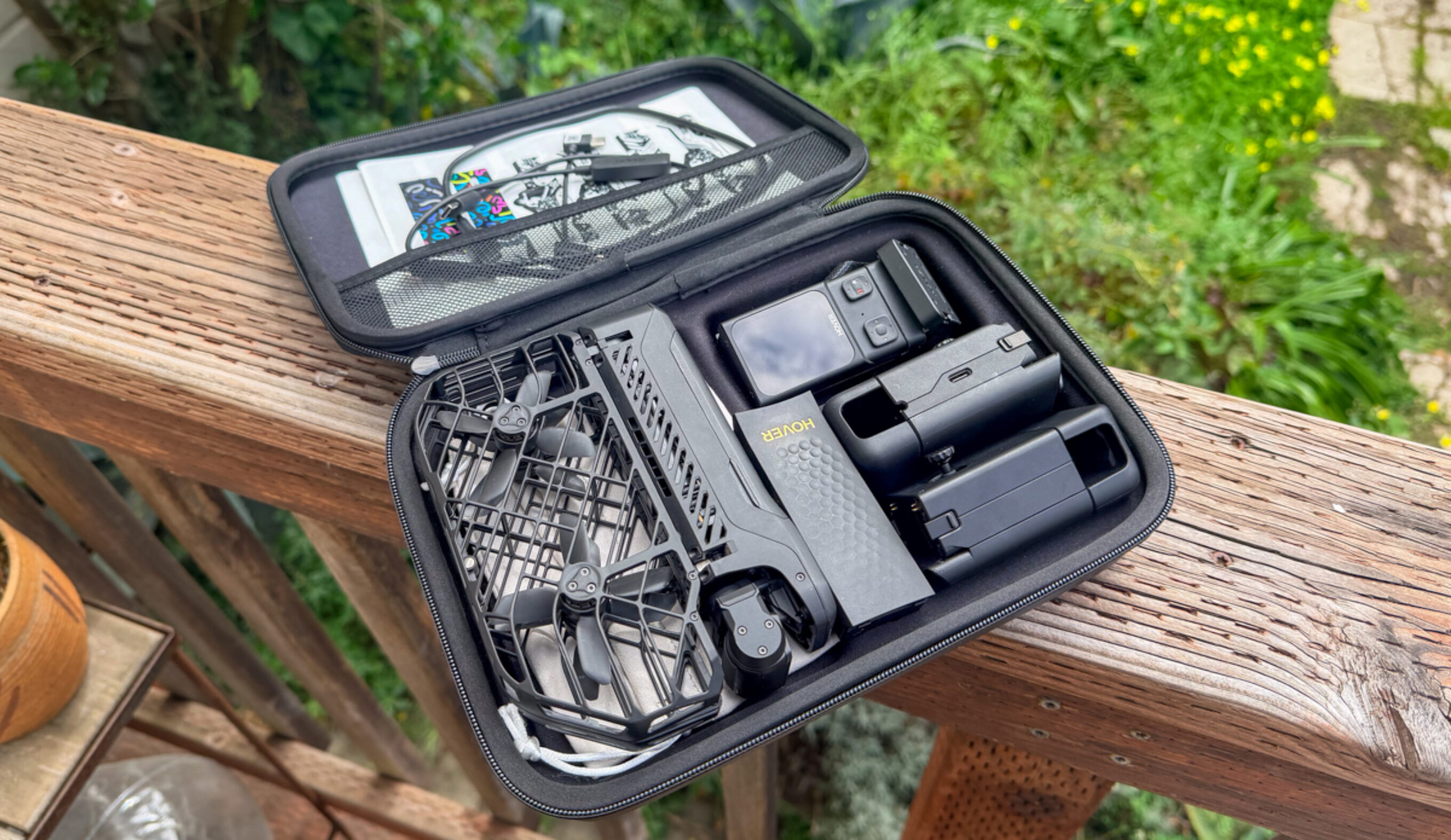
Photo: Will Sileo//The Inertia