The Jones Mercury FASE snowboard bindings readily performed in all conditions. Photo: Skyler Fitzmaurice//The Inertia

It’s not every year that the snowboarding industry gets true innovation, but 2026 was certainly a big year for the biz. The FASE snowboard bindings system dropped for the public early in the 2025-26 season, and it took the snowboard world by storm (though this snow season was notably short on storms). Our team at The Inertia tested the range of FASE bindings, and we came away with a ton of positive feedback. So much, in fact, that the Jones Mercury FASE Bindings were our favorite snowboard bindings this season.
We’re all for the diversification of snowboard binding tech, and while we haven’t yet thought that any faster system (from Burton’s Step-On to the Flow or Supermatic) has fully matched the performance of a well-made two-strap binding, the FASE might have changed the game. It’s as close as you get to the real deal, while being meaningfully easier to use than classic straps. More below!
Bottom Line: The Jones Mercury FASE Bindings are our favorite of the new FASE bindings – these are stiff and performance-oriented, with excellent comfort and solid adjustability. The FASE setup quickly became a favorite, and these bindings live up to the hype.
Check Price on EVORelated: Best Snowboard Bindings | Best Snowboards | Best Snowboard Boots | More Snowboard Gear
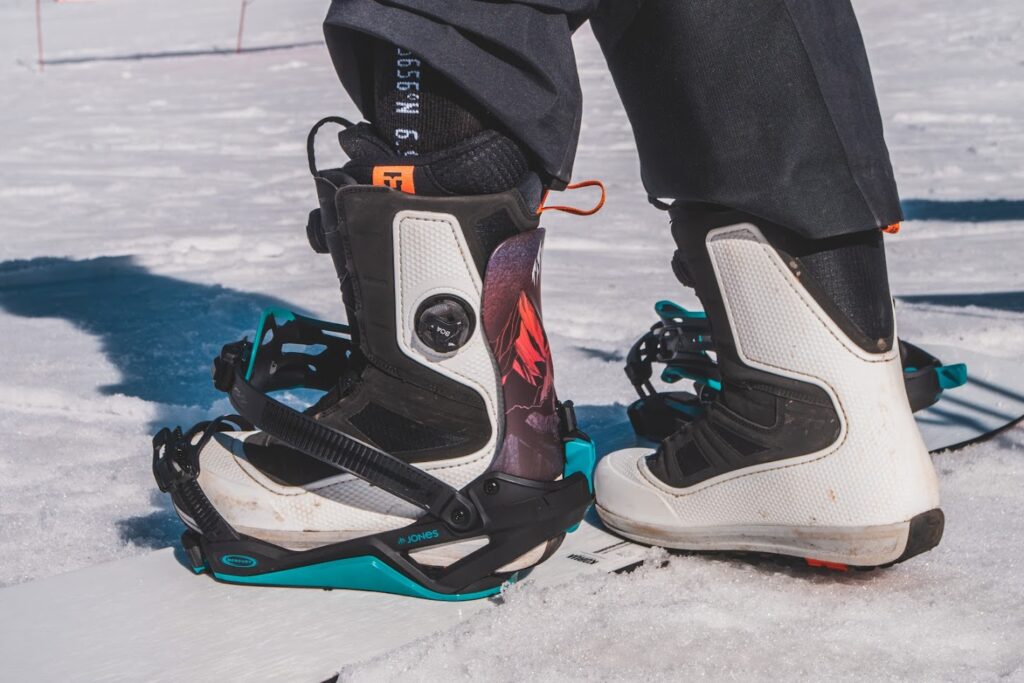
Easy in, easy out: Just slide your foot in and tighten the ankle strap. Photo: Skyler Fitzmaurice//The Inertia
Testing The Jones Mercury FASE Bindings
We put a full season on the Jones Mercury FASE before declaring them our top pick, and even more time before writing up this full review. We tested the 4 FASE bindings (from Bataleon, ThirtyTwo, Rome, and Jones) concurrently, so we learned the nuances and similarities of each as we went. We tested the Jones all over the west, from Mammoth Mountain to Palisades Tahoe to Arizona Snowbowl and others in between. We tested them on a variety of boards, too, to isolate what characteristics were attributable specifically to the design of the bindings.
I think bindings are one of the pieces of snowboarding hard gear that is easiest to overlook. Boots are so crucial to try on and choose what fits your foot and feels most comfortable, and boards are all about finding what works best for your riding style. Bindings, however, play a big role in the equation, and they will significantly affect how you engage your board and how you ride. The baseplate and highback will play a big role in stiffness and response, and the straps affect comfort and overall fit.
Jones Mercury FASE ($390)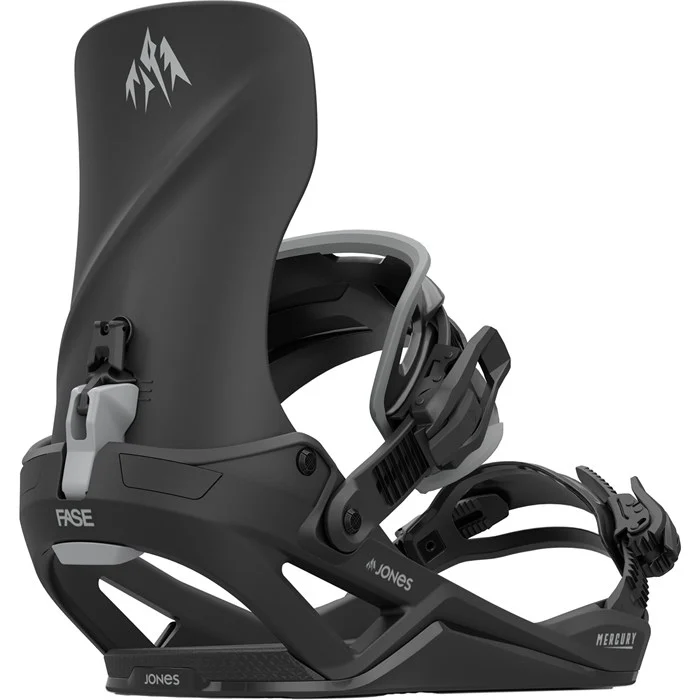
Best For: Serious chargers who want the familiarity of a two-strap binding with enhanced ease of entry
Weight: 900g
Underfoot: Fusion XR Baseplate, ImpactCush Pad
Highback Stiffness: 4/5
Strap adjustment: Tool-less
Pros: Dialed-in performance in highback and base, solid two-strap system, ease of FASE
Cons: Stiff for cruisy or beginner riders, limited sizing
Who Are These For?
I don’t want to declare from on high that a newer rider or an evolving beginner couldn’t ride the Jones Mercury FASE, because for the right rider, it might make perfect sense (think a heavier or physically stronger rider who wants stiffness and a binding to evolve with them). That said, in general, the Mercury FASE is for a high-level rider who wants something oriented toward steeper riding, bigger lines, and powder. For a softer FASE binding, check out the Bataleon Blaster AW FASE, mentioned in our Competition section, below.
These bindings work super well for pushing your progression, as both the highback and baseplate are quite stiff and responsive – they’re quick to engage and enable powerful turns. I’m a huge fan of the ridge running at an angle through the highback – it creates an asymmetrical flex that engages quickly and supports your power on both toe and heelside turns, but flexes a little more internally, which contributes to comfort and response.

The Jones Mercury FASE balanced performance and convenience seamlessly. Photo: Skyler Fitzmaurice//The Inertia
Benefits of the Jones Mercury FASE
First, the FASE System
Let’s get the easy stuff outta the way: The FASE system is probably one of the big reasons you’ll look to this binding. So what is it? Not sure how FASE is an acronym for Fast Entry System, but that’s what they’re going with, and it’s an evolution of the various quick-entry bindings on the market.
You’ve likely heard of Burton Step-Ons, a proprietary setup that you simply snap your (proprietary, step-on specific) boot into without any binding straps. Then there’s the Flow system that Nidecker bought, maintained, but also evolved into the Supermatic system. Both the Flow and Supermatic bindings feature a highback that lays down and opens to slide your boot in, and then the highback ratchets into place behind your boot (the Flow is manual, the Supermatic automatically secures you when you step in).
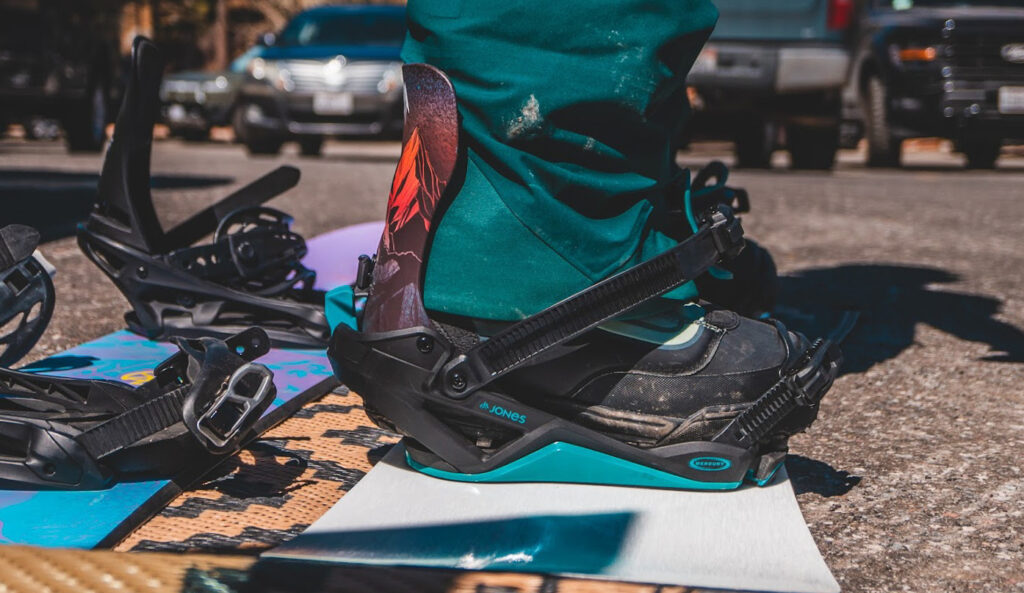
The FASE bindings take a similar approach. The ankle strap is left loose (but still attached; it has a longer slider than a traditional binding). You preset the toe strap to fit your boot size and make the highback snug up perfectly. Then, when you step in against the toe strap, the highback snaps into place, and you simply ratchet your ankle strap down to fully secure the binding.
What Are the Benefits of FASE Bindings? Sure, they’re faster, undeniably so. Once you get used to the positionality and such, they really do make a quicker on/off experience. This can enable you to skate cattrack quicker, get off the lift and onto a run quicker, or pop your boot out for any other odd reason. But I think the real appeal here is that you don’t sacrifice the feel or performance of a traditional two-strap binding. If you want to adjust the fit and feel on the fly, it’s easy to do so. The highback doesn’t shift or feel any different from a normal binding once engaged. And it folds just as quickly to catch the lift or pack into the car.

The Jones Mercury FASE bindings feature the performance and fit that we’ve come to expect from Jones. Photo: Skyler Fitzmaurice//The Inertia
Jones’ Performance
Another reason we were so stoked on the Mercury FASE bindings is that they lived up to the performance and comfort we know and love from Jones bindings. Adjustability remains excellent, especially considering the FASE setup could have potentially limited some of that ability. You’ve got tool-less adjustable straps, an adjustable highback lean, an adjustable footbed, and a really nice universal puck that also works on the channel or any board system.
As I mentioned above, the asymmetric flexing highback engages the board wonderfully in a variety of conditions, and the straps feel solid without any hotspots. The chassis is responsive and has a locked-in board feel. It’s not overly damp, but your teeth won’t chatter from a chunky run. The boot fit is excellent, too, and the heel cup seems to naturally hold you in position as you push power into turns.
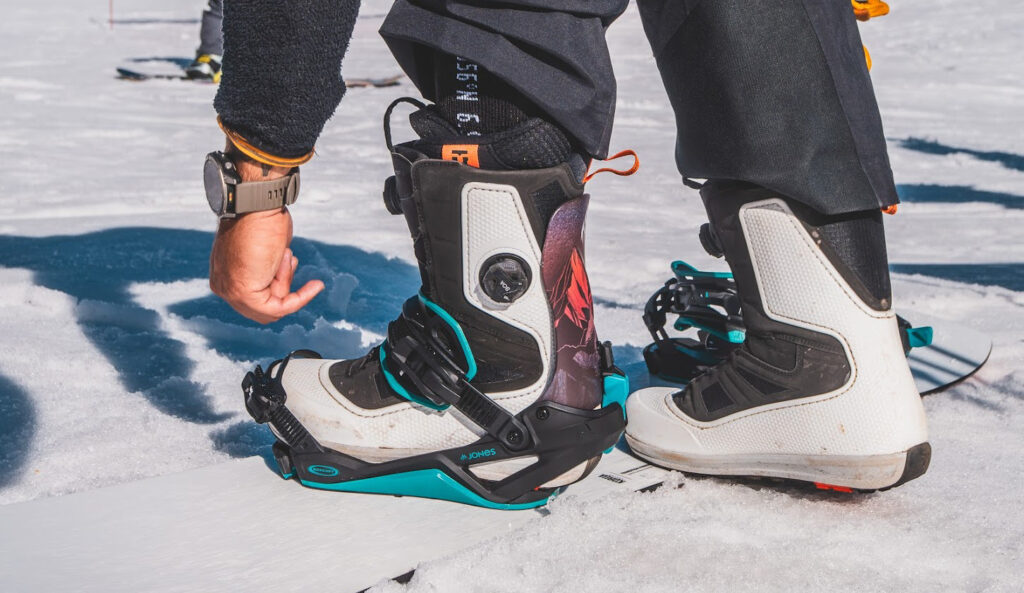
There are some quirks of the FASE bindings, but these are just slight drawbacks. Photo: Skyler Fitzmaurice//The Inertia
Drawbacks
One thing worth mentioning: One of our Jones Mercury FASE testers had a toe strap screw sheer off the first time he rode them. I tested these for a full season and didn’t have the same bad luck, but it’s certainly worth pointing out when there’s a failure. This can sometimes happen with bindings, and he was able to quickly get it swapped out for a new screw, but it’s a bit unsettling when it’s the first rip in a new pair.
One other thing worth noting is that the FASE bindings do slightly limit adjustability and versatility, but not enough for us to seriously ding them on performance. Just know that something like the Union Atlas Pro has a few more degrees of adjustability. I noticed, too, that when you’re in an awkward position on a slope or sitting down, you might have to just treat these as standard two-strap bindings, because getting the angle of your foot right for entry or exit can be hard. That’s also kind of the beauty of these, though, is that you can just revert to what you know in a two-strap if you’re in a weird spot.
These aren’t the only bindings that wowed us this season. Photo: Skyler Fitzmaurice//The Inertia
Other Bindings to Consider
Speaking of the Union Atlas Pro, that’s the binding we tested most alongside this one. It feels maybe a touch stiffer underfoot, but has a pretty similar highback flex. The adjustability is insane on that binding, and it’s one of the better performing pairs of the year. I will say, though, at times, I missed the quick in-and-out of the Mercury FASE when testing the Atlas Pro.
If you want a FASE binding that is a little less hard-chargy, the Bataleon Blaster AW FASE was a favorite of our team. It’s quite a bit softer in the highback for more freestyle orientation, but the aluminum chassis is still fairly stout, so you can engage your board but keep it surfy.

Performance-oriented and quick-entry—what’s not to love? Photo: Skyler Fitzmaurice//The Inertia
Final Thoughts on the Jones Mercury FASE
Whenever something shifts the perspective on how you can make a product, I’m always keen on how it will hold up. In the case of the FASE snowboard bindings, I’m pretty stoked on how good they are right out of the gate. You can tell with the Jones Mercury FASE that this was a carefully thought-out approach to meaningfully improving the category, and there was certainly a good deal of pro-level input in the design.
All in all, I think FASE bindings will continue to grow in popularity, as the Step-On or other quick-entry binding users find solace in the familiarity of the two-strap design. In theory, you’re only saving the time of engaging a toes trap, but it’s wild how much simpler it makes stepping in and out of your bindings, especially once you get the hang of it.
Check Price on EVORelated: Best Snowboard Bindings | Best Snowboards | Best Snowboard Boots | More Snowboard Gear

Ridden and Reviewed: The Best Snowboard Bindings of 2026