
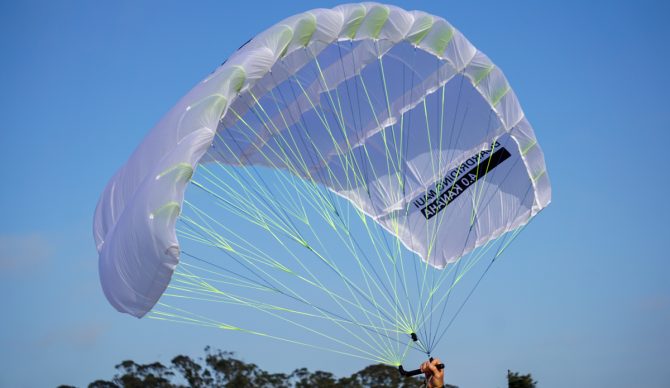
The BRM Kanaha, our writer’s personal choice when it comes to parawings. Photo: Will Sileo//The Inertia

If there’s one thing we know about the windsports industry, it’s nothing if not innovative. From windsurfing, to kitesurfing, foiling, and then winging (which brought kite and windsurf into a more approachable package), the community has been as innovative as any other action sports genre. And the parawing is just further evidence of this inventive spirit. Still less than a year old, the discipline burst onto the scene when Greg Drexler of Boardriding Maui debuted the Maliko V1, the first upwind-capable parawing, on August 21, 2024 – a launch that sent shockwaves through the windsports community.
Wing-foil surfing is one of my favorite aspects of windsport. Using the wing to propel yourself into a wave, boat wake, or piece of wind swell, and then flagging the wing out to the side and just riding the wave with your foil. A surfer at heart, the idea of being able to find waves away from traditional surf breaks is what captured my attention and catapulted me into the sport.
Parawinging takes that version of wing-foil surfing a step further. Now, instead of an inflatable wing, the parawing is like a mini kite on short lines. Once you get up on foil using the parawing, you pull it in and pack it away to ride a wave or downwind, open-ocean bumps hands-free, and then redeploy it when the wave ends to ride back upwind and do it all over again.
View this post on Instagram
It provides a much freer wave-riding experience, and it’s quickly becoming the next big thing in windsports. There are some drawbacks to the design, which I’ll get into later, but these products are less than a year old and will take time to dial in.
The freer foiling experience is part of the reason why everyone’s so hot to get in on the parawing action, but parawings also present some very interesting alternative applications, which I think will be more impactful to the foiling and windsports industry overall.
It’s a huge change of mindset for both wing foiling and downwind foiling. In downwinding, one rides a bigger board and bigger foil, and uses a SUP paddle to propel themselves into the bumps of windswell that form in high winds, and ride them downwind.
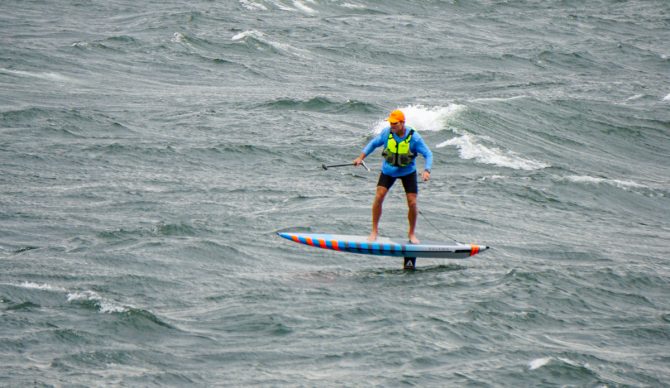
Downwinding requires a bigger board, bigger foil, and a lot more effort. Photo: Will Sileo//The Inertia
Now, parawinging threatens to replace downwind SUPing. Those who want to ride downwind swell are being strongly encouraged by the industry to try the parawing. “The parawing is, to me, the tool that allows you to get into the magic,” says professional foiling coach Gwen Le Tutor on Dan Paronetto’s Foil Rat Podcast. “If anyone was starting to get into downwinding today, I would say, ‘Why are you getting into downwind sup foiling? Skip the struggle, and just go to the fun.'” Below, foiling phenoms Kai and Ridge Lenny weigh in on the subject.
View this post on Instagram
The parawing is also changing people’s mindsets about the foils that they ride. The parawing presents a less-powered experience than the wing, where you are more often relying on the swell or wave you’re riding to keep you aloft rather than the wing itself, or having the wing quickly ready to grab on to to keep yourself aloft and on foil. With that in mind, I’ve found myself riding slightly bigger foils than I would gravitate towards when winging, though nowhere near as big as one would ride for downwind SUP.
The parawing also opens up all sorts of crazy things you can do. It’s been ripping wind here in the San Francisco Bay, and earlier this season, I went out on a two-meter wing (very small, and it requires a lot of wind to use), something I would never normally do from a safety perspective with SF’s often fickle winds, but I had a 3.2m parawing in a backpack just in case. When parawinging in normal conditions, I’ve taken to carrying a larger size with me to swap to in case the wind fades. Parawings are opening up different ways of thinking about just about everything, from the wings and foils that we ride to the plans we make in case of emergencies out on the water.
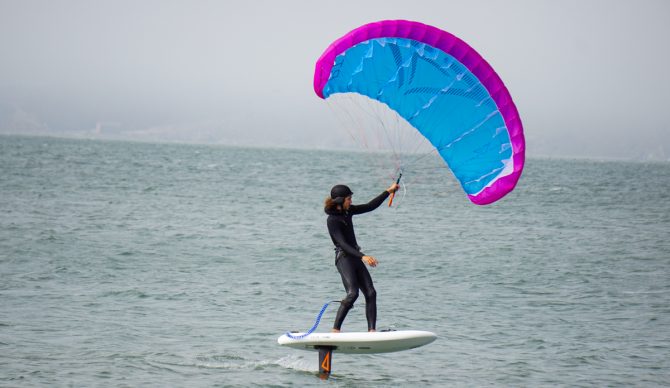
The author swings through a turn in light winds on the 777 P.T. Skin parawing. Photo: Bowen Dwelle//The Inertia
All that said, there are some drawbacks to the parawing — they have a much narrower wind range – it’s tricky to choose the right size for the conditions, and you’re much more likely to be over- or underpowered while out and riding than with an inflatable wing. They have a much less direct connection than a wing, so turns and tricks are more difficult. So for now, their best application will be getting riders on foil to ride waves or wind bumps. Sure, there are people boosting flips and 360s on the parawing right now, but it’s like taking telemark skis to the park. The flatwater freestyle realm will remain with wingers, kiters, and windsurfers for the moment, and I certainly wouldn’t recommend that someone learns to parawing as their first foil sport.
Parawinging in light winds is also exceedingly tricky, as the parawing lacks the structure of the wing that allows you to easily pump it and gain speed. All that said, the parawing segment is only a year old at this point, and it can only go up from here. Already, the latest products from brands such as BRM, F-One, and others are massive improvements over the first parawings that were released in late 2024 and early 2025. And it’s only going to get better from here. If you want advice on choosing the right parawing, head over to our recently published Parawing Buyer’s Guide.
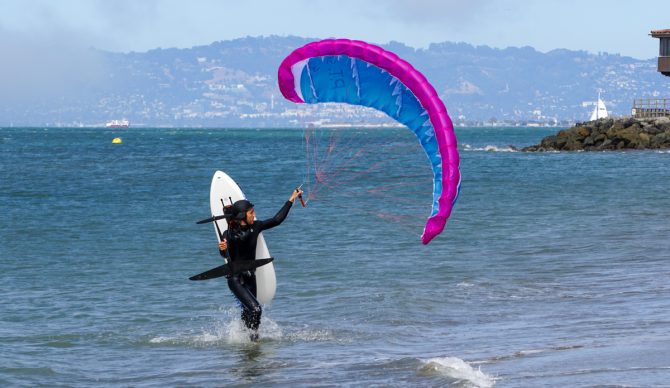
The simple appearance of the parawing belies the technical engineering that brings out its performance. Photo: Bowen Dwelle//The Inertia
I’ve been asked if I’m going to give up winging? And while I’m certainly going to do it less, I’ll keep doing both. The direct connection and control of the wing provides something the parawing doesn’t, just as the parawing provides a level of freedom the wing does not. They both complement one another, and I’ve felt my foiling improve overall since I’ve started parawinging. Each discipline feeds the other. And that’s really exciting.
Editor’s Note: For more parawing coverage, head to our page of Foiling Reviews, or hop straight into our industry-first comparative review of The Best Parawings.

