
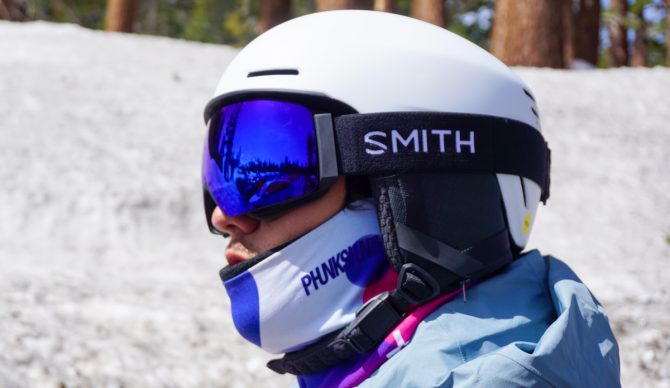
The Smith I/O Mag is the benchmark for high-performance snowsports goggles. Photo: Nate Lemin//The Inertia

On a testing trip to Palisades Tahoe last season, I made my way to the top of the mountain with a couple of different goggles in my pack. The light is flat, the snow is chunky, and if I want to make it down the mountain in style, I’ll need to be able to see the subtle details in the snow below me. I’m wearing a pair of mid-tier goggles, and they’re leaving more than a bit to be desired in terms of contrast and definition. I swap out for the Smith I/O Mag goggles, and the difference is instantly noticeable. What had previously looked like a flat canvas reveals itself to be an undulating mess of bumps and crud with the assistance of Smith’s ChromaPop lens technology. I sigh, and point my skis down the mountain.
Bottom Line: Smith’s I/O Mag is the benchmark that all other snow goggles have measured up against for the past few years running. If what you’re looking for is Smith’s top-of-the-line lens technology in a package that won’t break the $300 threshold, the I/O Mag does just that, along with providing a supremely comfortable fit across a wide range of face sizes and shapes, a wide field of view, and plenty of additional shapes/sizes to make sure the goggles fit as best as possible. It’s still a bit pricey, and doesn’t come with extras like a hard-shell case, but if you are looking for some of the best and clearest vision on the mountain, you can’t go wrong with the I/O Mag.
Check Price on REICheck Price on Smith
Related: Best Snowboard Goggles | Best Snow Helmets | More Snowsports Reviews
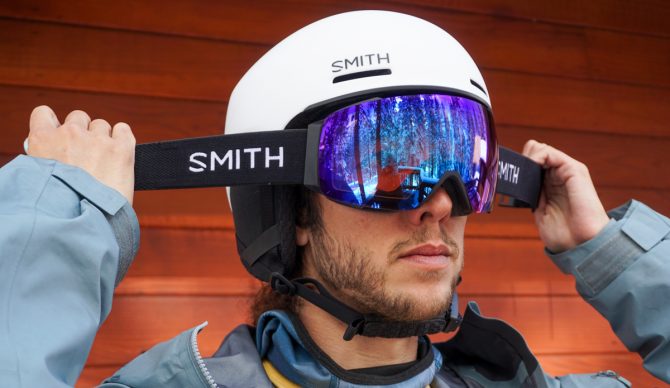
The strap clips together in the back for easy on and off. Photo: Ken Cox//The Inertia
Testing
A time-honored design, I’ve worn the Smith I/O Mag goggles a number of times during my years on the snow, but last season I got my hands on a fresh pair and truly put them to the test. My home mountain is Palisades Tahoe, where the weather can often fluctuate right around the freezing point, making foggy goggles a real danger. Combine that with plenty of mixed-light days, low-light days, storm skiing, bluebird conditions, and everything in between, and last season shaped up to be a great time to find out if a pair of goggles was worth their mettle. And in testing so many at once, I was able to pick out the top performers – like the I/O Mag.
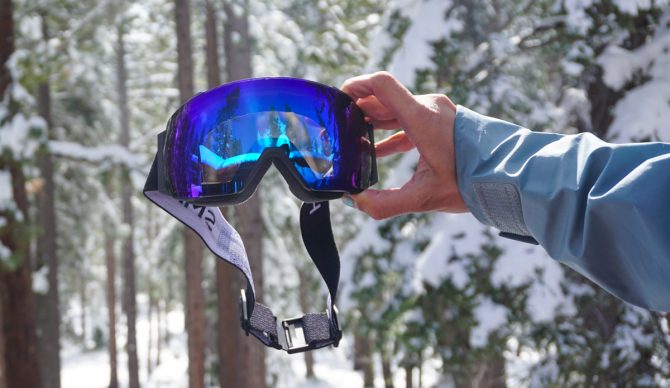
Smith’s ChromaPop lens technology provides as clear a view of the mountain terrain as you could hope for. Photo: Ken Cox//The Inertia
Notable Features
ChromaPop Lens Tech
The I/O Mag uses Smith’s ChromaPop technology in the lenses. And without a doubt, this tech has reigned supreme in the past few years as providing the most crystal-clear, definition-enhancing view in snowsports eyewear. Tech from other brands, such as Oakley’s Prizm, Anon’s Perceive, and Sweet Protection’s Rig lens technologies, have closed the gap in the past year or so, putting things down to a bit of personal preference, but in my book, ChromaPop is still my favorite way to view the slopes, with Sweet Protection’s Rig as a very close second.
Last season, Smith unveiled new photocromic ChromaPop lenses, dubbed ChromaPop Pro PhotoChromic. It’s claimed to transition twice as fast as the prior-generation of ChromaPop PhotoChromic, and is less sensitive to temperature, relying only on UV light to guide the transition of the lenses. We’ve tested the OG photochromic tech from Smith, and will provide updates here when we can test the latest “Pro” level version.
Interior Anti-Fog Coating
Smith goggles (or at least the high-end ones) use a coating on the inside of the lenses to help prevent the goggles from fogging up. With this in mind, it’s important to treat them carefully and try to, at most, lightly wipe or dab the interior of the lens.
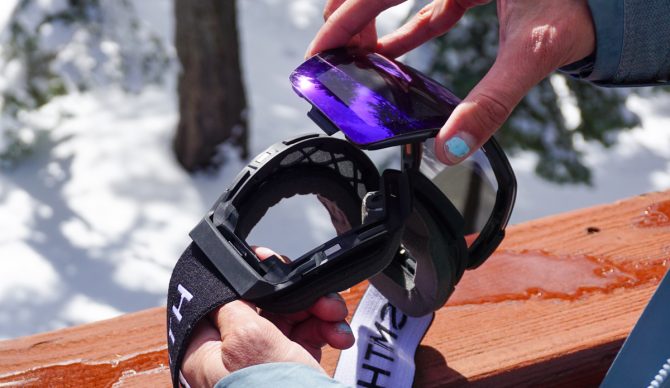
Swapping lenses is straightforward, but you’ll likely have to take the goggles off your face to do so. Photo: Ken Cox//The Inertia
Lens-Swapping System
While it may not be the fastest or easiest lens-swapping system, it’s extremely secure, and it gets the job done. To release the lenses, a small lever on either side of the frame of the goggle (slightly hidden by the goggle strap) must be pressed. It’s a little hard to get to with the goggles on, but only one side needs to be activated to remove the lenses. To put a lens back on, simply let the magnets line things up to where they should be, and press firmly until you feel the lens click into place.
Extras/Accessories
Not much to speak of here, but the goggles do come with a spare lens (usually a low-light lens, or whatever is the best compliment to the lenses they ship with installed), nice lens cover from Gogglesoc, and a microfiber cloth bag for storage.
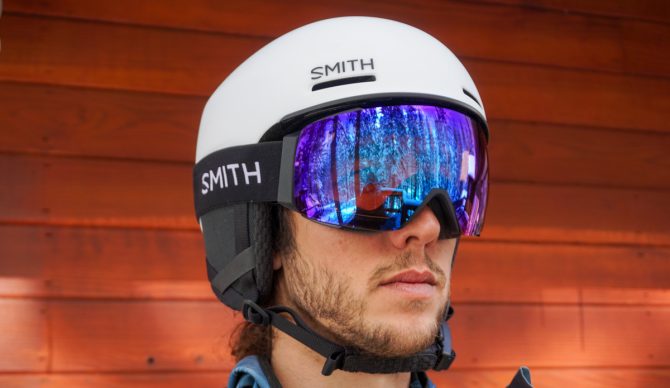
The I/O Mag sports a medium-sized frame that fits a wide variety of faces. Photo: Ken Cox//The Inertia
Fit And Additional Sizes
The standard I/O Mag has what I would describe as a very average fit, perhaps a bit on the smaller side, but definitely not oversized. However, Smith has a few different fits and sizes to help dial things in, depending on your individual face size and shape. The I/O Mag S has a smaller frame size for women and those with smaller faces. The I/O Mag XL has a larger frame for larger faces. The I/O Mag Low Bridge Fit is engineered for those with a low nose bridge or high cheekbones. As for the I/O Mag XL Low Bridge Fit and the I/O Mag S Low Bridge Fit, the names say it all.
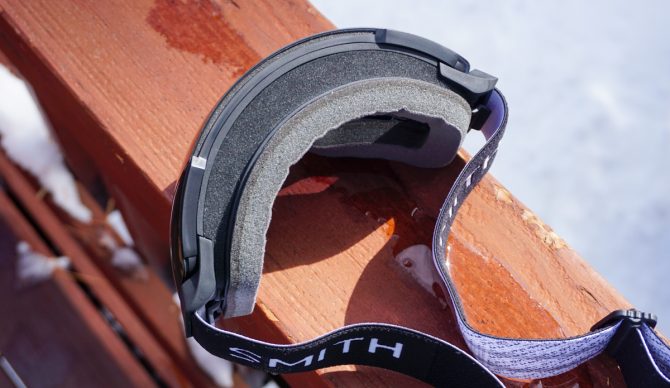
Multiple layers of foam provide a comfortable fit for all-day wear. Photo: Will Sileo//The Inertia
Smith Custom Program
In addition to all of the different styles and fits that Smith provides, if you are down to shell out top dollar for the best fit possible, Smith’s Imprint 3D program will take a scan of your face and produce a custom pair of goggles for the perfect fit. You can read more about the experience in our review of the Smith Squad goggles, here.
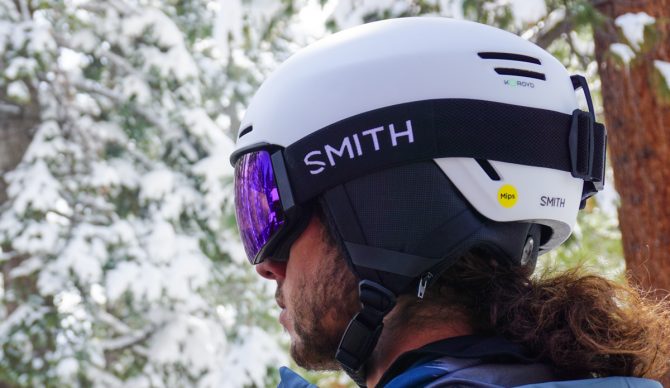
Pair the I/O Mag goggles wiht a Smith helmet for a seamless goggle-helmet fit. Photo: Ken Cox//The Inertia
Drawbacks
Price
While they aren’t Smith’s most expensive option (that award goes to the 4D Mag goggles), for the price point, I wish there were some more extras. A hard goggle case would be nice to make sure the goggles don’t get banged up or scratched in transit, and I’m a huge fan of the single-lens case brands like Scott or Anon have been including with some of their goggles recently, which are great for carrying a second lens while out riding for changing light conditions, without fear of breaking that loose lens in a crash.
Anti-Fog Coating Issues
Some users have reported an issue with the interior anti-fog lens coating that Smith uses on its top-of-the-line offerings, with small bubbles forming as a result of moisture getting trapped inside, or potentially from wiping the inside of the lenses (which Smith strongly discourages). However, Smith has done a great job of warrantying any lenses with which this occurs, and we’ve only heard of this happening from a handful of users.
Relatively Smaller Fit
While the I/O Mag Goggles provide one of the most universal fits we’ve tested in a pair of snow goggles, no goggle is perfect for every size and shape of face. The regular-size I/O Mags run a bit on the smaller side; if you have a larger face, stepping up to the I/O Mag XL is likely the right move. And with smaller goggles comes a smaller field of view – by no means limiting, but those looking for the best of the best in FOV should consider the I/O Mag XL or the 4D Mag.
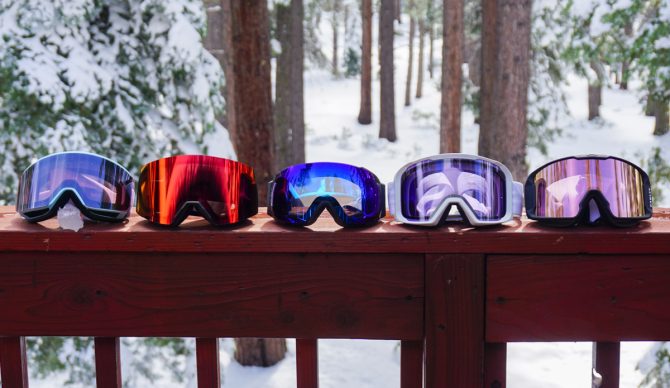
From left to right: Giro Axis, Glade Adapt 2, Smith I/O Mag, Sweet Protection Durden Rig, Oakley Line Miner Pro. Photo: Will Sileo//The Inertia
The Competition
A couple of years ago, Smith launched the 4D Mag, an innovative and interestingly-shaped pair of goggles with what Smith calls “BirdsEye Vision,” providing a noticeable improvement in the downwards-facing field of view with a lens that curves inwards at the bottom. And all in a streamlined, medium-sized frame. There’s no doubt that this is a noticeable upgrade over the I/O Mag’s field of view, as well as basically every other goggle on the market.
However, they’re pricey ($50 more than the I/O Mag) and users with flatter faces or high cheekbones have reported gap issues around the nose or sides of the face, which can let snow or wind in while riding. With these considerations in mind, we named the I/O Mag the Best Overall, followed by the 4D Mag as a close second/upgrade pick in our Best Snowboard Goggles Review.
Anon, a subsidiary of Burton Snowboards, has proven itself to be a top contender in the snowsports eyewear space over the past few years, with top-tier lenses (both toric and cylindrical) and exceedingly comfortable frames. The lenses use Anon’s Perceive technology, which we’d describe as a super-close runner-up to Smith’s ChromaPop, basically just as good, however I find myself preferring the more natural colors of ChromaPop compared to the slightly more orange-tinted filters (espeically on the low-light lenses) of Anon’s Perceive. Quick-change is as easy as it gets with a non-locking magnetic lens-frame connection, and we’ve had no issues with lenses coming out during a crash as the goggles require a twist of the frame to remove the lenses.
But where these goggles really stand out against the competition is in the accessories. The standout accessory is the MFI face mask, which magnetically attaches to the underside of the goggles for a seamless and fog-free experience. The goggles also come with a protective storage case, Gogglesoc cover, and a cloth bag for storing the extra lens. They’re pricey, but certainly worth it, especially if you’re looking for a fully integrated goggle/facemask system.
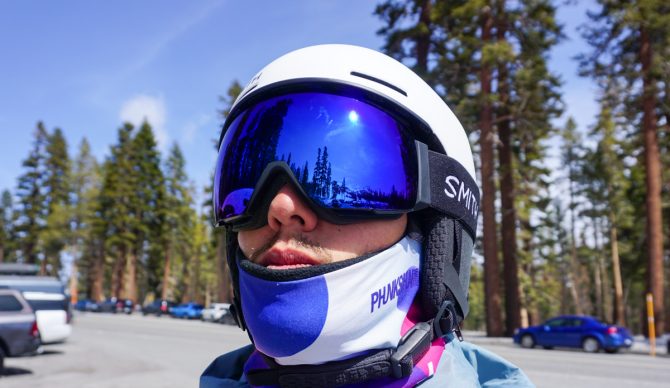
The I/O Mag’s photochromic lens darkens in bright sunlight. Photo: Nate Lemin//The Inertia
Final Thoughts
Yes, they’re expensive, and yes, they have had some quality control issues or something of the kind recently, but in the highly competitive field of snow sports eyewear, Smith reigns supreme for their innovation in the industry and top-notch equipment that truly does help you see better in demanding conditions. As one of their flagship offerings, the I/O Mag brings the best of the best in Smith lens tech, with a comfortable fit that works for most faces, and a slightly lower price point than the brand’s most expensive offering, the 4D Mag.
Check Price on REICheck Price on Smith
Related: Best Snowboard Goggles | Best Snow Helmets | More Snowsports Reviews
Editor’s Note: For the most recent gear reviews and features on The Inertia, click here.


