
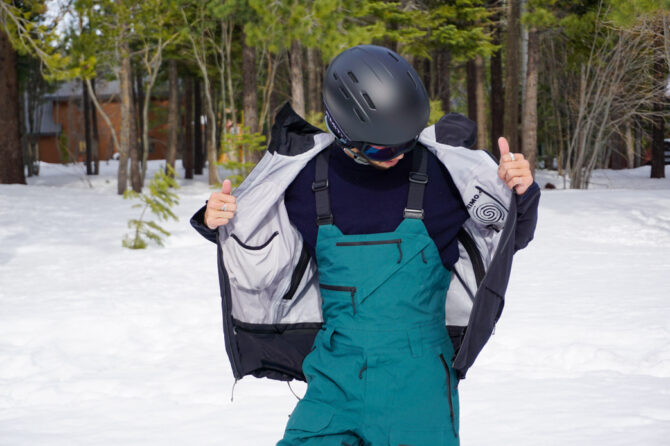
Trew’s new Trewth Bib takes the ski bib game to the next level. Photo: Ken Cox//The Inertia

At this point, Trew Gear should be on every skier and snowboarder’s radar for outerwear. With hardwearing materials, plentiful pockets, and inclusive sizing, they are somewhat of an everyman’s brand, although prices have gone up a bit in the past year (you can blame that one on tariffs). Hailing from the PNW, they’re a brand that knows how to make their gear durable, waterproof, and versatile for both in and out of bounds use.
The Primo collection has long been Trew’s top-of-the-line offering, consisting of the Cosmic Primo Jacket and Trewth Bib Primo ($600) along with the women’s Stella Primo Jacket and Chariot Primo Bib. Primo is the proprietary material that Trew uses, and it provides a great blend of hardwearing durability and easy motion for all-around use. For the 2025/2026 season, both men’s and women’s kits got a makeover, with minor adjustments to the jackets and critical upgrades to the bib.
As I write this now, in late January of 2026 after a half-season of testing to get a feel for the new kit, as well as testing of other “new” additions to the market like the Baker Bib Gore-Tex, TNF Summit Tsirku Bib, and Salomon Scrambler Bib, I can confidently say that the Trewth Bib is one of the best all-around ski bibs on the market, and certainly the best ski bib we’ve tested at that $600 mark.
Bottom Line: The 2026 Trewth Bib Primo brings considerable updates over the prior version, such as mesh-lined inner thigh vents, an updated pocket layout, an adjustable waist, and more. The mesh-lined inner-thigh vents, especially, are a big step up, providing incredible versatility for resort and backcountry use. Overall, the Trewth Bib has done a lot to earn itself a spot at the top of our list of The Best Ski Bibs.
Check Price on Trew GearRelated: Best Ski Bibs | Best Ski Jackets | More Snow Gear Reviews
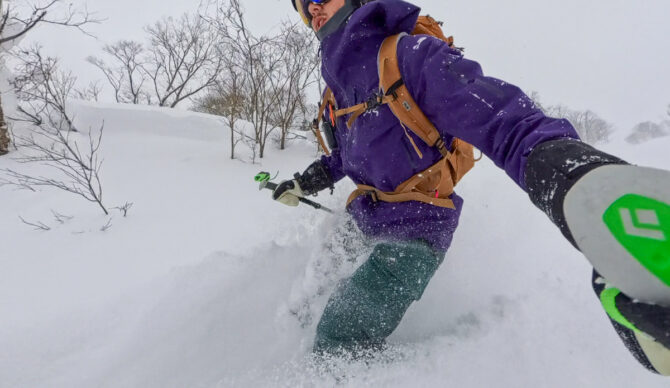
Hard to tell through the knee-deep Japanese powder, but yes, that is the Trewth Bib that I’m wearing. Photo: Will Sileo//The Inertia
Testing The Trew Gear Trewth Bib Primo
I’ve owned the prior-version Trewth Bib for the past two seasons, and it served me incredibly well during that time. I skied it many days in Tahoe, and took it on trips to Utah and Jackson Hole. The hardwearing Primo fabric hardly showed any wear despite plenty of use, and I was always a big fan of the plentiful pockets.
However, there was plenty that could have been improved, and Trew did not hesitate in shaking things up with this current iteration. It’s been a weird season here in the US West, so I’ve only had one powder day at home in them so far, and some “spring” skiing conditions otherwise. With that in mind, and a need to see how the bib performed in true powder skiing conditions, I took the bib with me on a late January trip to Japan for a classic 100-inch-plus Japan storm cycle. There, I was able to put the Trewth Bib to the test in cold, blower powder. It absolutely crushed it, sealing the deal on its title of Best Overall Ski Bib for 2026.
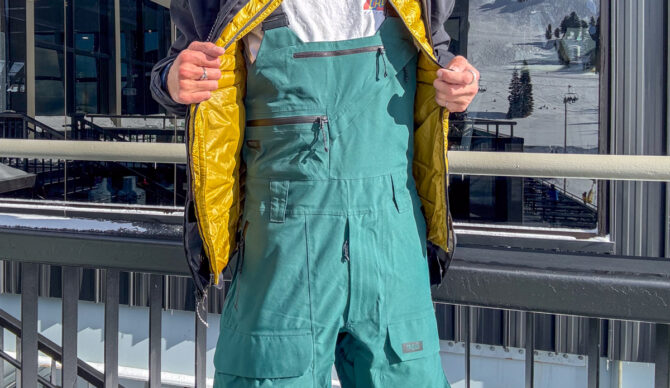
A new bib-upper pocket layout is more intuitive than prior versions. Photo: Will Sileo//The Inertia
Notable Features
Trew Gear Trewth Bib Primo ($600)
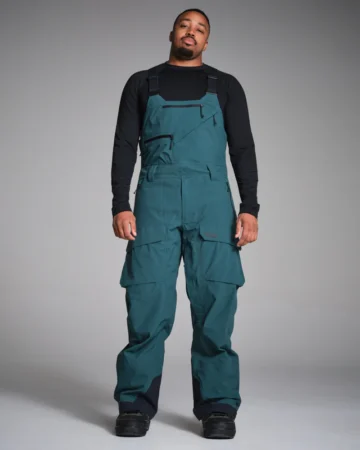
Weight: 895 g
Best For: Resort/backcountry
Fit: Loose
Notable Features: Lots of pockets, great colors, waist-adjustment, belt loops, mesh-lined inner-thigh vents, D-ring in each zippered pocket.
Pros: Great pockets, durable and easy-moving material, wide selection of colors, great style, inner and outer thigh vents
Cons: On the heavy side, price jumped $100 with updates and tariffs
Primo Material
As with any piece of ski or snowboard outerwear, the material you start with is one of, if not the most impactful, elements of outerwear construction. If you don’t start with good materials, you won’t go anywhere. Thankfully, there’s a lot of good material out there these days, and Trew’s Primo is a solid performer for skiing and snowboarding. It incorporates great durability, medium breathability, great waterproofing (it’s gotta be coming from the PNW), and a surprising amount of flexibility given the fabric’s robust nature.
Durability-wise, the fabric feels as robust, if not more, than the Flylow Baker Bib, which is basically my personal gold standard on durability. The Denier (thread thickness) of the Primo fabric is not listed, but it’s at least as thick as the 150-Denier of the Flylow Baker bib.
On the breathability end of things, the material is decent, but the robust durability and solid waterproofing cut against that score a bit. Not so much that a hard-charging resort skier would struggle, but certainly enough that a backcountry explorer should take note of before purchasing. However, the large vents help a lot here, more on that later.
Waterproofing is solid, with the waterproof membrane being rated to 20k, enough to keep you dry in just about anything Mother Nature can throw at you. The DWR is solid as well, though not the absolute top performer that I’ve tested recently.
Flexibility-wise, given the hefty material, high durability, and strong waterproofing, the amount of mobility this bib retains is impressive.
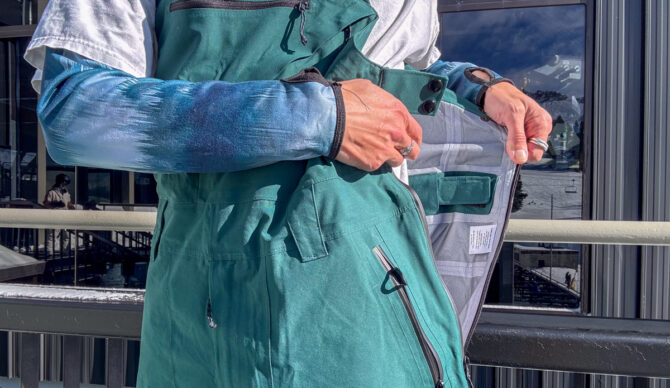
An internal waist adjustment lets you dial in your fit without cluttering the bib exterior. Photo: Will Sileo//The Inertia
Interior Adjustments
A new feature this year, Trew added a velcro-adjusted waistband. Notably, they did so on the inside of the bib, whereas most brands opt for the external velcro. This makes the adjuster less obtrusive, but it becomes more of a set-it-and-forget-it feature rather than something you’re adjusting more regularly. I’m a huge fan of this feature, as previously, I found the Trewth Bib to be far too wide in the waist for my slender frame (30-inch waist).
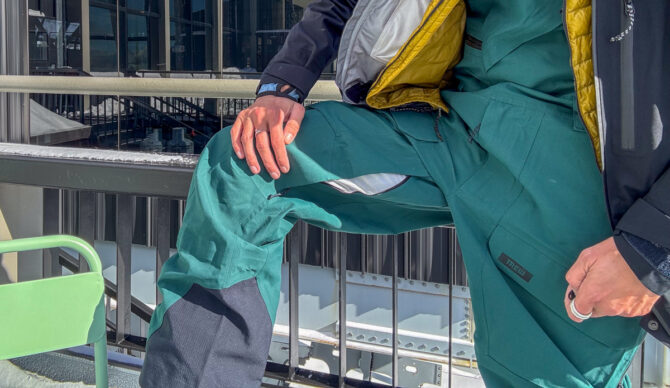
Mesh-lined inner-thigh vents, combined with big outer thigh vents, let you get a cross-breeze going to avoid overheating. Photo: Will Sileo//The Inertia
Mesh-Lined Inner-Thigh Vents
This is the biggest upgrade I’ve found on the new Trewth Bib. Being a bit of a vent fanatic myself, let me explain why this is such a big deal. First, inner and outer thigh vents (a feature I first fell in love with on the Flylow Baker Bib. Having inside and outside vents lets you do two things: first, it lets you get a cross-breeze going by opening both sides, great for really airing things out on spring days, for apres, and of course, while touring. Secondly, if you’re in need of ventilation while skiing, opening just the inner-thigh vents lets you get some airflow without letting much, if any, snow in.
Trew took this feature to the next level by adding mesh-lined inner-thigh vents, meaning you can leave them open without any fear of snow getting in. I heat up quickly when skiing powder, so I found myself leaving them wide open the entire time on my one day of powder skiing so far this season.
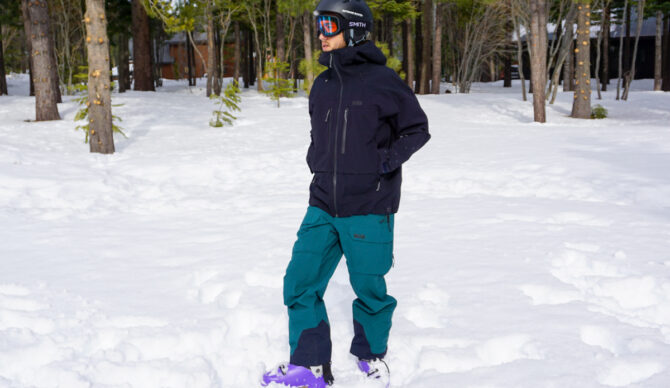
A clean fit with the Trew Gear Cosmic Primo Jacket. Photo: Ken Cox//The Inertia
Style and Colors
One of the Trewth Bib’s biggest strengths is its style. The bib just looks good — so long as you’re into the somewhat baggy “free ride” aesthetic. No, they’re not full-on Henrik Harlaut, size XXXL baggy park rat fit, but with a nice loose fit that drapes the body nicely. Here, the internal waist adjustment is a massive boon, letting you give some more shape to the bib and fit it to your specific body shape.
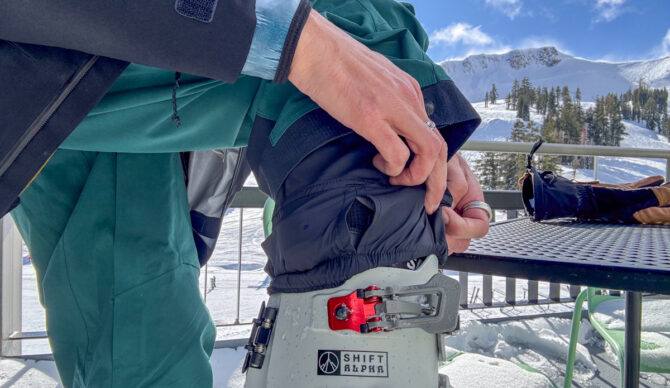
A power-strap slot lets you adjust your boots with ease – while keeping snow out. Photo: Will Sileo//The Inertia
Other Features
This is already turning into a long review, so I’m gonna run through the rest of these quickly here. First off, the Trewth Bib has D-rings in each of the 7 zippered pockets, so you can attach valuables. The boot gaiters have a slot that allows you to thread your ski boot booster strap through the gaiter itself, for easier adjustment. The bib straps now detach at the chest for easier on/off, and have slightly lower-profile buckles to more easily fit under backpack straps. And despite the interior adjustment, the bib still has belt loops, which I love not only for adding a belt but also attaching things like gloves with a carabiner.
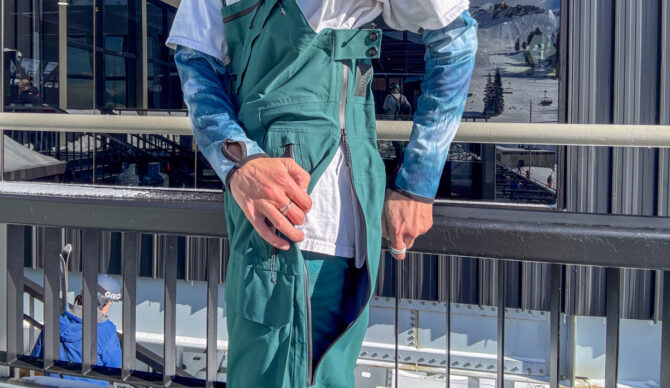
Large side zips provide extra venting. Photo: Will Sileo//The Inertia
Downsides
Pocket Layout: Trew is a company that prides itself on putting lots of big pockets on their equipment. However, I personally am not the biggest fan of Trew’s pocket layout. It’s certainly better than the prior iteration of the Trewth Bib, but I find all the overlapping pockets on the chest area can get confusing, and add weight in an area that often doesn’t see much use when worn under a jacket. To be fair, this is a very minor gripe, however.
Weight and Breathability: Trew’s fabric prioritizes durability. In doing so, it ends up being heavier and less breathable than average. This is less of a downside and more of a trade-off that one should knowingly make when choosing this bib. If you mostly hit the resort, this shouldn’t be an issue. If you’re looking for a bib to mostly use while touring, there are better options out there. However, the plentiful ventilation makes the breathability a non-issue for touring, meaning the only real downside for the skintrack is the weight. Among crossover bib designs, this is hard to beat.
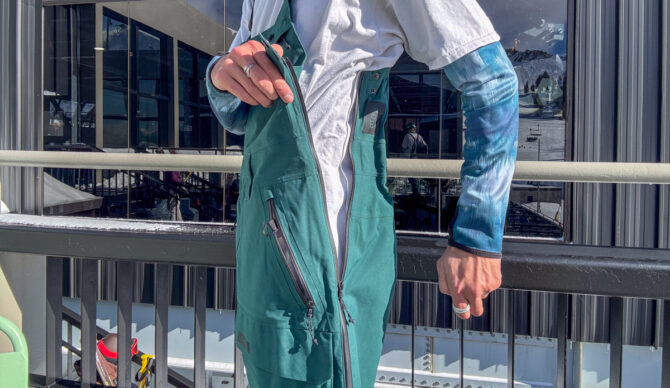
Opened from the top, the side zips make a swing-hatch for easy bathroom breaks. Photo: Will Sileo//The Inertia
The Competition
The competition in the world of ski and snowboard bibs is TOUGH these days, especially the competition for the title of Best Overall Ski Bib, which the Trewth Bib is definitely in the running for. We’re still mulling things over and splitting hairs on who deserves the title after all, but for now, here are a couple of other bibs that go toe-to-toe with the Trewth Bib.
Flylow Baker Bib ($440). Ahhhh, the long-standing king-of-bibs. It used to be that the Flylow Baker was the best ski bib, no questions asked. Now, it’s not such an open and shut case. The Baker certainly provides the best value among ski bibs with its list price of $440, but the upgrades you get with the Trewth Bib in terms of style and functionality are notable. In comparison to the Trew Bib, the Bakers have a slightly trimmer fit (very, very slightly). They both have the same number of pockets, but different pocket layouts, and I’ve found the Trewth Bib to have larger pockets and more pocket space overall. Both have inner and outer thigh vents, but the Trewth Bib has those inner thigh vents mesh-lined. The overall fabric of the Trewth Bib feels slightly more robust than the material of the Baker Bib, but the Baker Bib does have the 1,000-Denier reinforced knee patches, which add a ton of abrasion-resistance in a very high-wear area. If you wanna save $160, you won’t be disappointed with the Baker Bib. If you want a bib that feels a bit higher-quality and has some noteworthy upgrades, the Trewth Bib is where it’s at. All that said, if you find yourself in the backcountry more than on the resort, or truly split your time evenly between the two, it’s probably worth considering the Flylow Baker Gore-Tex Bib ($620), the same design as the OG Flylow Baker, but made with a more lightweight and breathable Gore-Tex fabric.
If you’re a fan of the inner-and-outer thigh vents here on the Trewth Bib, but spend more of your time in the backcountry than on the resort, definitely consider the Salomon Scrambler Bib ($700). A fully backcountry-oriented bib, it’s made of a lightweight, breathable GORE-TEX material, with four pockets, long outer thigh vents, and unlined inner-thigh vents. For the best of the best in lightweight breathable protection for the skin track, slimmed down to reduce weight and bulk, I have yet to find an equal.
Another top-tier crossover option is The North Face Summit Tsirku Bib ($700). Made with a similarly durable but more lightweight and breathable Gore-Tex Pro material, the Tsirku bib has a bit more of a luxury/high-quality feel for an extra $100. Great pockets, and inner and outer thigh vents make this a versatile resort/backcountry option, but at $700, we think most skiers will prefer the Trewth Bib or Flylow Baker.
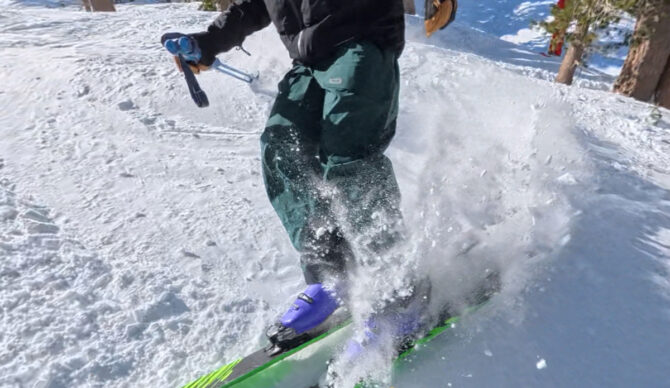
From pockets to fit and features, there’s a lot to love in the 2026 Trewth Bib Primo. Photo: Will Sileo//The Inertia
Final Thoughts
With a full feature set, including the mesh-lined inner-thigh vents and plentiful pockets, the robust and versatile material, and style for days, there’s a lot to love with the Trewth Bib Primo. The price isn’t quite as good as it used to be, jumping $100 with the recent improvements, but the bib is a lot better than it used to be as well, with the thoughtful updates. It can do some time outside of the resort boundaries, especially for shorter, stormier tours, but where it shines is on the resort and in the side country. Overall, the Trewth Bib is one of the best and most versatile bibs on the market. If you’re considering taking the plunge, I gotta say, go for it.
Check Price on Trew GearRelated: Best Ski Bibs | Best Ski Jackets | More Snow Gear Reviews

