
Photo: Sciencedaily.com

This week, scientists announced that Greenland’s melting ice sheet could be releasing 400,000 metric tons of phosphorous into the ocean every year—perhaps a silver lining in the mayhem of global warming.
That’s as much phosphorous as the Mississippi releases into the Gulf of Mexico. Phosphorus is an important nutrient that sparks the growth the ocean’s plant and animal life which could “stimulate growth in the food chain,” at large.
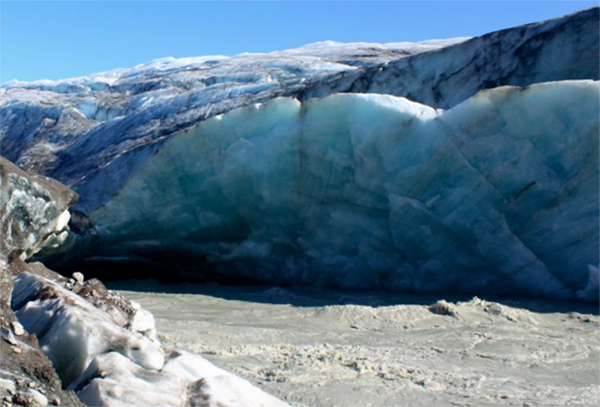
Jon Hawkings, a Cabot Institute researcher at the Bristol Glaciology Centre at the University of Bristol in the United Kingdom and his squad studied outflow off the Leverett Glacier, a 600-square-kilometer ice block, and the smaller Kiattuut Sermiat Glacier.
At the bottom of the ocean food chain sits plankton, which is fed by phosphorous and forms the food for fish, which is then eaten by larger fish, birds and mammals, eventually having a larger, positive affect on humans as the food chain is revitalized. The study also finds that the phosphorous could eventually find its way to the Pacific and Atlantic oceans.
The meltwater off glaciers becomes phosphorous-rich as it seeps through moulins or “pipes” then meets with rocks that are rich in phosphorous being crushed by the moving ice. The phosphorous then enters the water, and eventually, the ocean.

