
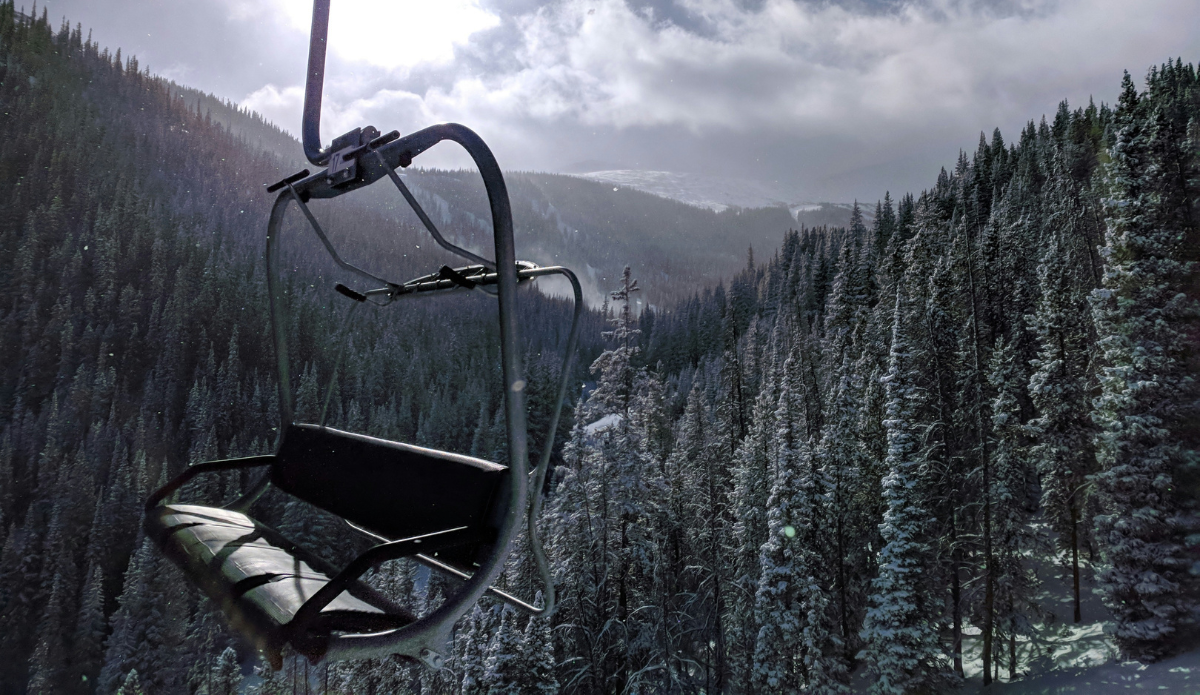
Chairlifts – they bucked a lot of good skiers and riders this season. Photo: Unsplash //Mark Bosky

Colorado ski resorts matched a dubious record this past winter. The state’s Passenger Tramway Safety recorded 18 serious chairlift falls in the 2024-2025 ski season. A little less than 14-million people visited the state’s 28 resorts in that span, making the number seem small, but it represents a notable spike in the year-to-year average reported to Colorado PTS in the past 12 years (averaging 12.4 chairlift falls per year). Eight of those falls involved children, which also tops the seasonal average in the 12-year period since 2014 in which approximately 36 percent of falls involved children.
Tragically, one of those falls resulted in a death — Donovan Romero, who fell 47 feet from a lift when investigators believe he leaned over to adjust his snowboard bindings. Romero’s death was the fourth fatal chairlift fall in the past decade, which the Colorado Sun reports as the deadliest decade for chair lift falls in Colorado.
Zooming out from a national perspective, the National Ski Areas Association says “since 1973, there have been a total of 14 fatal falls from aerial ropeways (lifts), six of which were the result of medical incidents that occurred on the chairlift. The majority of falls from lifts occur in the load and unload areas, and do not result in serious injury.”
So what’s going on in Colorado.
The Sun looked at data made available by the National Ski Areas Association and found that the greatest safety measure to reverse this past winter’s trend requires a simple but significant culture shift: lowering those safety bars on chair lifts.
A quantitative study published in 2023 found a significant gap between regions within the U.S. where skiers and snowboarders are likely to lower the safety bar and places where they are not. The data came from observing 6,343 chairs with 16,286 passengers and an average of 41.6 percent chance of safety bars being used overall. In the Northeast, safety bars are in use by skiers and snowboarders 80 percent of the time. That number plummets to just 39.2 percent in the heart of the Rockies, however.
“In places like Canada, Europe and much of the Northeast, using a restraint bar is just part of the experience — and it’s time we normalize that across the rest of the U.S.,” Mike Reitzell, the head of the National Ski Areas Association told The Colorado Sun. “We recognize that to increase the use of restraint bars — which exist for a reason — we need a cultural shift, much like the one we saw with helmets 20 years ago. That shift happened not through regulation, but through guest education and strong industry support. With restraint bars, we believe that shift is beginning.”

