
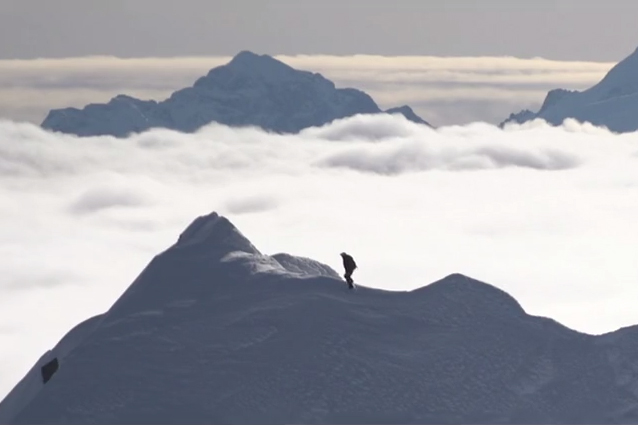
Being “off the grid” no matter how long is often romanticized in this digital age, where people are more connected than ever. Photo: Zeal Optics

I’m watching Myth Busters. By all accounts, having DirecTV in your room is not what most would consider an “off the grid” experience. Still, there’s no wireless Internet here at a small ski resort in Southern Utah, where I currently find myself, and cell service is scarce. (How am I posting this you might ask? By holing up in the resort’s office, borrowing an ethernet cord normally attached to their office computer.)
It’s rare to find places like this anymore, at least in the United States. Modern custom often dictates that if you’re in the business of tourism and exist in a cell service dead zone, Wifi is a necessary convenience. Employees of the resort explain they’re working on it.
I mention all of this because it’s both refreshing and anxiety-inducing to be disconnected in this way, and I believe that says something about our society these days.
Given the overwhelming nature of our addiction to tech (at least in the U.S. and other industrialized nations) we often romanticize about going off the grid. Some take it to the extreme – quit their jobs, live in a van or a tiny home pulled on a trailer, and get lost somewhere. Others find themselves unable to commit to that lifestyle, myself included, and plan vacations around the idea of unplugging. No texting, no email, nada.
This was different. I didn’t know from the beginning that this little snowboard trip would be an “off the grid” experience from the start. When I got to my room I held my phone in the air walking every corner of the space looking for a signal, like a rat sniffing for cheese.
I wanted to text my wife to let her know I got here safely. I wanted to check Instagram, Facebook. I couldn’t. I started to get anxious. Heart rate increased. All I could think about was how I might get cell service or Internet somehow.
Then, a moment of introspection. Why was I feeling this way? I didn’t like that being unplugged, if only slightly, felt so difficult. That it was causing me so much grief.
This experience has been instructive, to say the least. It’s produced in me a feeling that many continue to argue: being constantly connected can’t be good for our society. And I say that fully recognizing the irony that you’re likely reading this on a computer screen or smart phone.
It was only when I fully embraced the trouble I would have communicating here that a sense of relief washed over me. A realization that the distractions of the digital world were tearing me away from the beauty of this place.
As I said, employees mentioned they’re working to bring Wifi here. Pretty soon this little resort will welcome visitors with an opportunity to remain on a device, should one choose, for as long as one would like. Meaning one less place where unplugging is compulsory. Being “off the grid”, I discovered, may not be the romantic experience it’s made out to be. It’s rough. But in this ever-connected world, places that eschew such conveniences are becoming more rare, making escape all the more difficult.

