
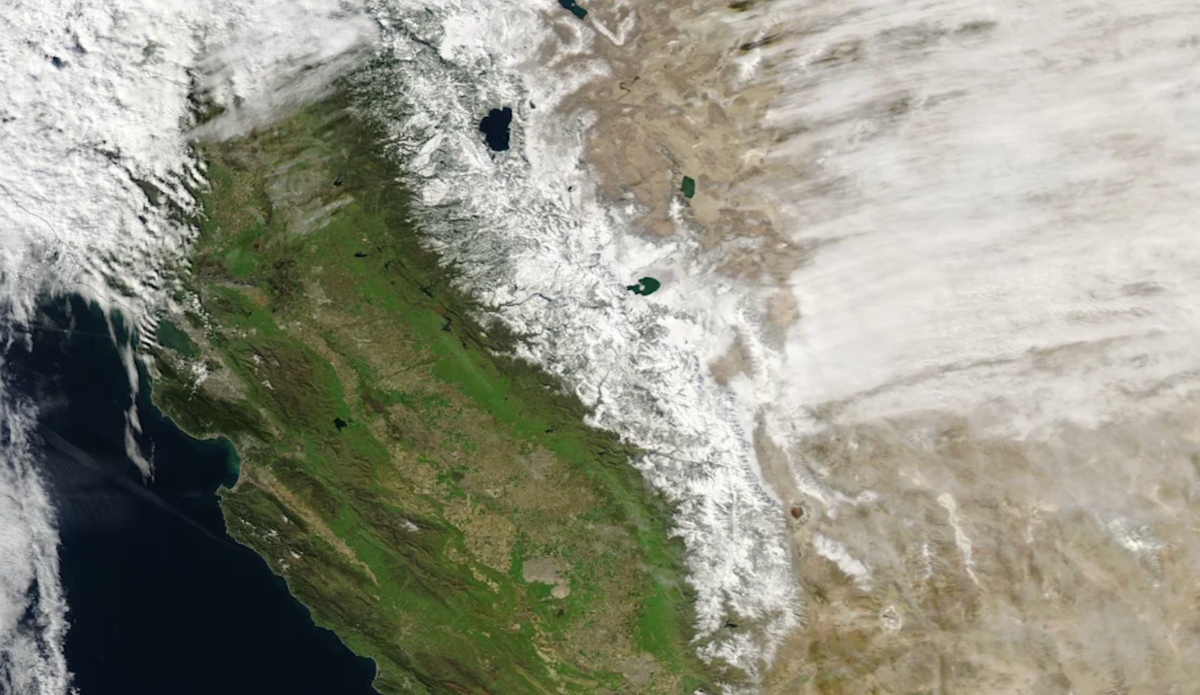
February 22, 2026. Photo: NASA Worldview

April 1 is a critical date for water management in the West. It’s the date which typically marks the maximum of snow accumulation and snow-water equivalent before spring takes hold and everything that fell over ranges like the Sierra Nevada begins to melt. It’s a date that dictates how much water will be available as far as resource management goes, which may not be of all that much interest to skiers and snowboarders. But it does give a snapshot of how the previous winter season played out.
The upcoming April 1 snowpack survey is going to reveal something we already know across the West: this winter was a dry one. But new satellite images from NASA’s Worldview illustrate just how drastically things changed in the final month of winter. One image taken on February 22, right after a historic storm had dropped more than 100 inches of snow across the region, shows a Sierra Nevada Range blanketed in snow. For perspective, that storm had only brought the statewide snowpack to 66 percent of its average by the end of the cycle.
“The snowpack is in better shape than it was one month ago, but we only have a month left of our snow-accumulation season and time is rapidly running out to catch up. Statewide, we are only about 57 percent of where we hope to be by April 1,” the California Department of Water Resources said just before March 1.
As well all know by now, March didn’t deliver anything but record high temps and a lot of melting snow. Temperatures across several states were as much as 30 degrees above average and the picture for California’s snowpack only got worse. Between March 1 and March 24, the Golden State’s snowpack dropped from an already-abysmal 52 percent of its average to just 21 percent, according to CNN.
The March 22 satellite image from NASA’s Worldview (below) shows how drastically that month long snowmelt transformed the Sierra. The upcoming April 1 snowpack total is likely to be one of the lowest on record.
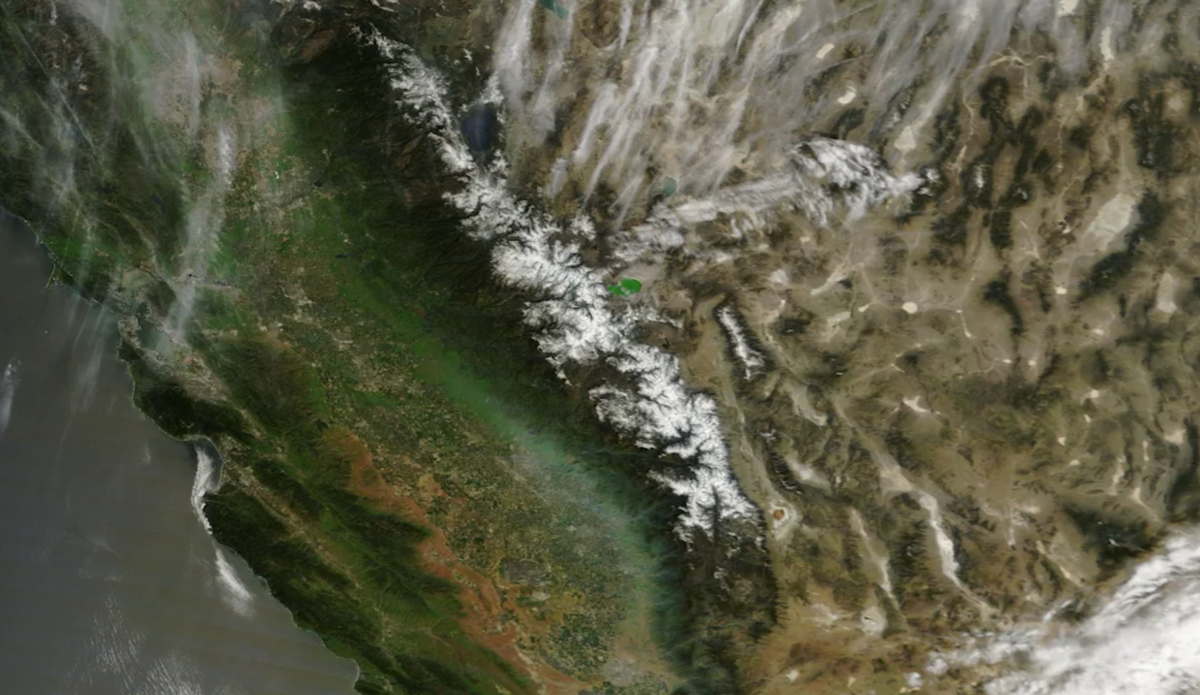
March 22, 2026. Photo: NASA Worldview

