
National Integrated Drought Information System / Drought.gov

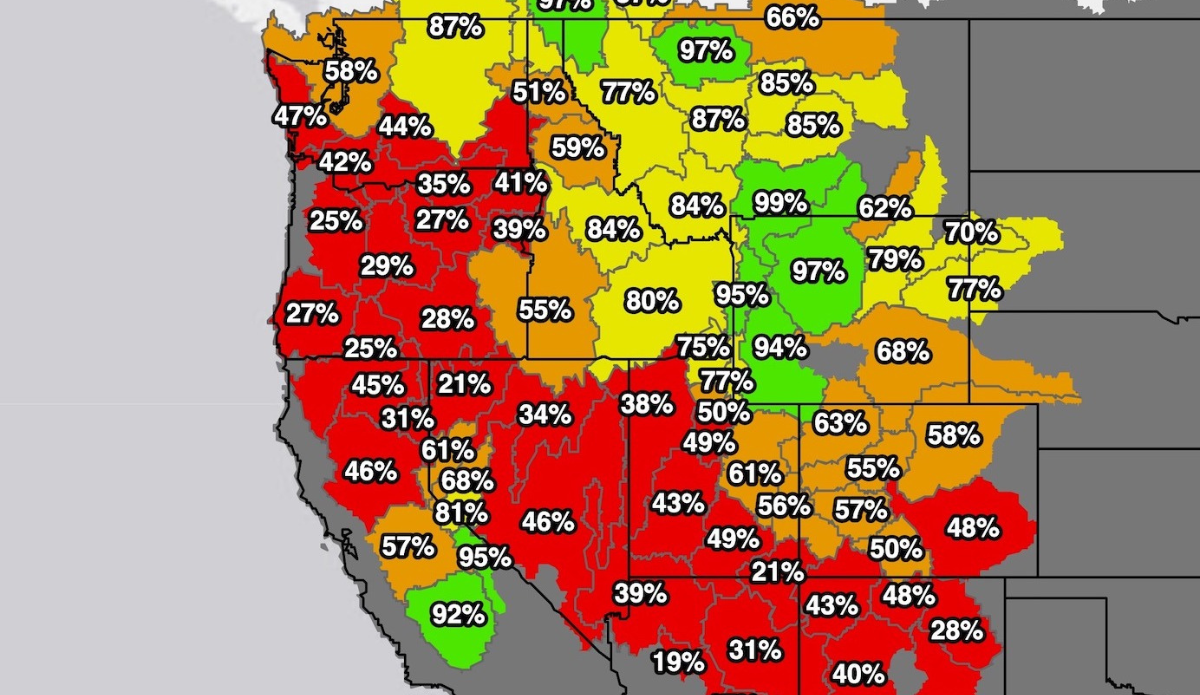
Every week brings a new illustration or a new summary of how un-wintery this winter has been through much of the left side of North America. The latest snapshot comes from a report published by the National Integrated Drought Information System (NIDIS) on February 5, 2026. Four states, in particular, are sitting on their lowest snowpack on record: Idaho, Utah, Colorado, and Oregon.
With a warm late fall and next to no snowfall in most places by the holidays, winter was already off to a slow start by late December. But as the NIDIS points out, January is where things grew far worse. The first month of the new year provided very little snow, which didn’t allow for gaining any ground on that slow start. But the exceptionally warm temperatures and sunny days doubled down by melting whatever snow could have accumulated across the West. As of February 1, 91 percent of Western stations had below-median snow water equivalents, and 68 percent of Western stations had snow water equivalents below the 20th percentile.
“Historically, January is a significant snow accumulation month for much of the Pacific Northwest and Northern Rockies, wrote the NIDIS. “Warm temperatures have resulted in an elevational gradient to the snowpack. Snow is present at higher elevations but has melted or is not present at lower elevations.”
View this post on Instagram
Overall, the Rockies are in bad shape this winter. Idaho holds the largest snow drought of the Northern Rockies (Idaho, Montana, and Wyoming) — the lowest for the state since current records began in 1980. The Central Rockies are much drier now, with Utah and Colorado reporting 80 percent and 95 percent of their stations respectively in a snow drought. Meanwhile, 86 percent of Oregon’s stations are in a snow drought.
The immediate outlook, of course, offers just the slightest glimmer of light. Snow is expected — a lot of it — over the back end of February. But that positive news might not offer much relief for drought conditions or offer much hope for a Miracle March and ski or snowboard seasons lasting deep into spring.
According to the NIDIS, “Warmer-than-normal temperatures are favored, except along the West Coast. Time is running short on reaching average peak median SWE, which occurs in March and April in most western basins. Temperatures will play a major role in what impact, if any, this pattern shift will have on the current snow drought across the West.”

