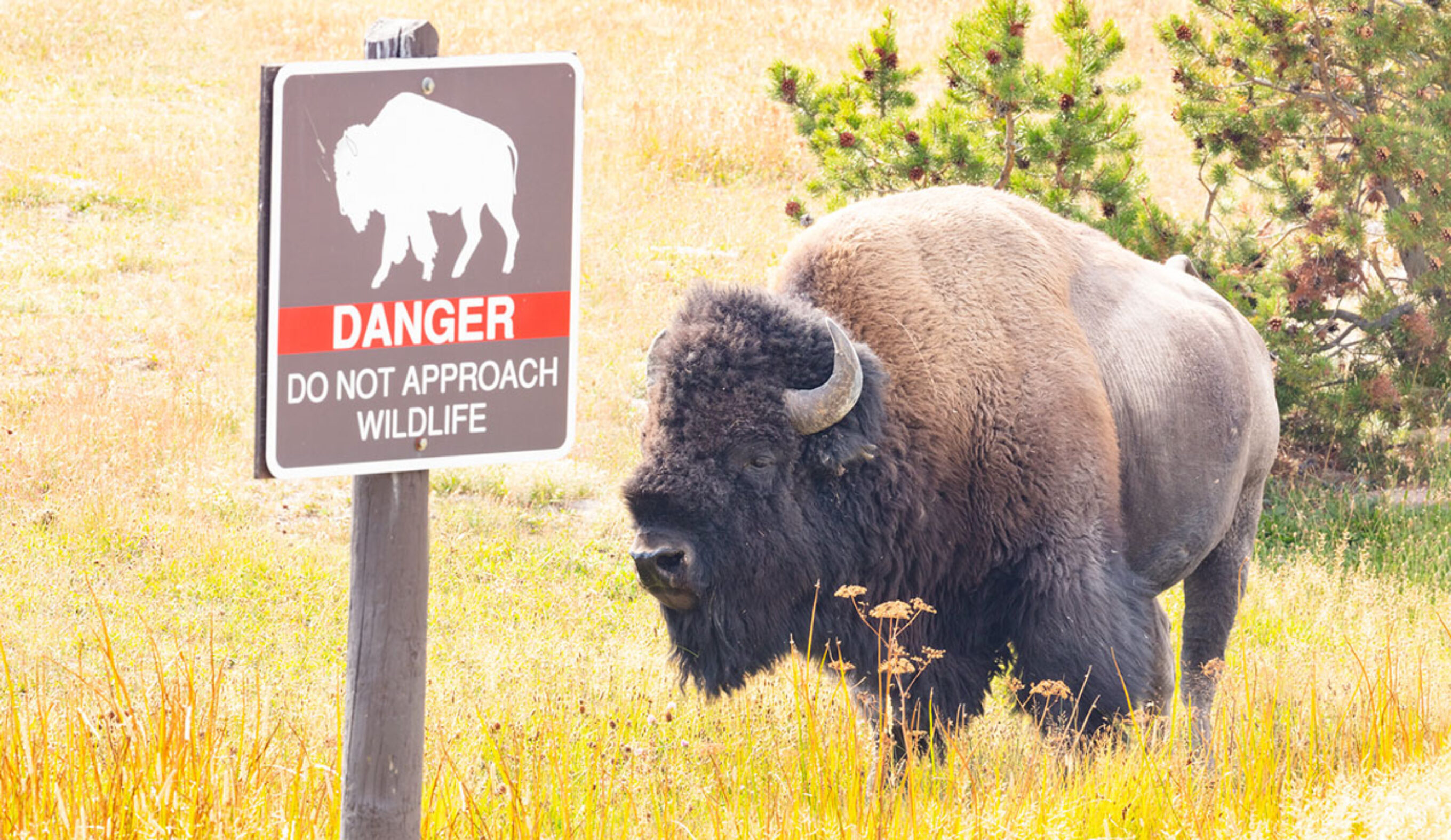
Yellowstone National Park sees an average of just one to two bison attacks on tourists per year, with incidents largely drawing attention when tourists tread dangerously close to the large animals that seem docile at first glance. National Park Service officials regularly issue standard warnings about appropriate distances to maintain as a result, but rarely does the government institution have to share news of a child being the victim of an incident.
“A 12-year-old visitor was injured by a bison in Yellowstone National Park on June 26 at approximately 9:15 a.m.,” reads a short NPS press release issued on Friday, June 26. “The incident occurred near Mud Volcano, just north of Fishing Bridge. The visitor sustained injuries, and emergency medical personnel transported them to a nearby hospital. The incident remains under investigation.”
NPS didn’t share any further details of the child’s injuries or details of their condition, and an update from Yellowstone National Park on Monday, June 29, stated that details of their condition remained undisclosed. The news did prompt NPS to extend its standard warnings about wildlife incidents at the park.
“Wild animals can be aggressive when people do not respect their space. Visitors are responsible for staying at least 25 yards away from all large animals, including bison, elk, bighorn sheep, deer, moose and coyotes, and at least 100 yards away from bears, wolves and cougars,” the NPS said, adding that bison have injured more people at Yellowstone than any other animal.
Bison often appear to be calm, but they are unpredictable, can be very territorial, and are incredibly fast — running as much as three-times the speed of an average human. Yellowstone National Park states that it’s home to the largest bison population on public lands, outnumbering all the apex predators in the park combined. The bison herd at Yellowstone was more than five times the size of the grizzly population (5,300 bison to 1,030 grizzlies) in 2025, for example, so it’s logically the animal that tourists are most likely to encounter there.
The park says bison attacks are likely to consist of three characteristics: toss, headbutt, and gore, with goring resulting in the most serious injuries.
“Park officials insist there hasn’t been a significant increase in bison-related incidents with humans,” park officials said. “If anything, they’re going down. From 1978 through 1992, a 14-year period that included two fatalities, the park averaged 4.1 bison-related incidents per year. No one has died from a bison attack in Yellowstone since 1983.”