
Photo: Flinders University

Shark bites are in reality quite rare, but Australians can certainly be forgiven for having sharks on the mind. Stories of Australian surfers encountering the deadly creatures have been constantly splashed across the news recently (just a few weeks ago, surfer Mercury Psillakis was killed near Sydney). However, a measure of relief may be in sight for our brethren down under, as Australian researchers have just published a study investigating the efficacy of shark-resistant wetsuit materials.
The study was carried out by researchers from Flinders University and the New South Wales primary industries department, with the results published in the journal Wildlife Research. In it, they tested how four “bite-resistant” wetsuit materials stood up against the powerful jaws of white and tiger sharks.
Four materials were tested: Aqua Armour, Shark Stop, ActionTX-S and Brewster. Those proprietary brands often incorporated strong, lightweight materials such as Kevlar, ultra-high molecular weight polyethylene, or a type of fiber used in sailing rope.
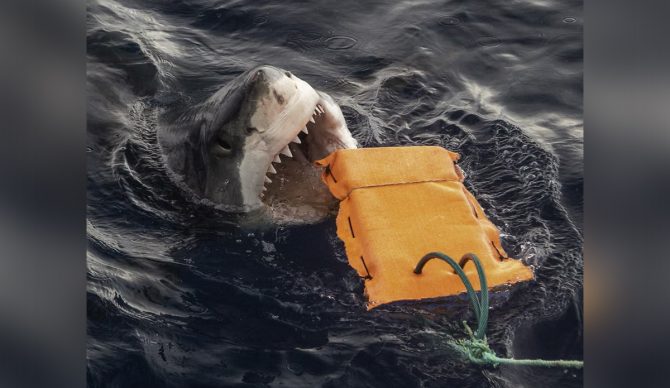
The materials were tested against the bites of wild white sharks in South Australia’s Spencer Gulf and tiger sharks off Norfolk Island, Queensland, where the animals were lured with fish, which were then quickly swapped out for a foam-wrapped board, covered in the wetsuit material. The bite damage was then measured and sorted into one of four categories, depending on severity.
They turned out to work quite well, at least at preventing certain types of damage from a shark bite. “A lot of the teeth on white sharks and tiger sharks … have these really sharp, pointed edges and serrated edges, and that’s where a lot of the damage from bites occurs,” explained co-author Dr Tom Clarke. “The material itself stops the tooth from puncturing through the material.”
However, this still would not render the wearer impervious to all harm. “There’s still likely to be some crushing injuries and internal injuries that may occur if a bite does happen,” added Clarke.
“While these suits don’t eliminate all the risk (e.g. internal injuries may still occur), our results indicate that they can reduce blood loss and trauma from major lacerations and punctures, potentially saving lives,” explained study co-author and shark ecologist Charlie Huveneers in a statement. “Our findings will allow for informed decisions to be made about the use of bite-resistant wetsuit materials for occupational activities, as well as enabling the public to make appropriate decisions about the suitability of using these products.”

