
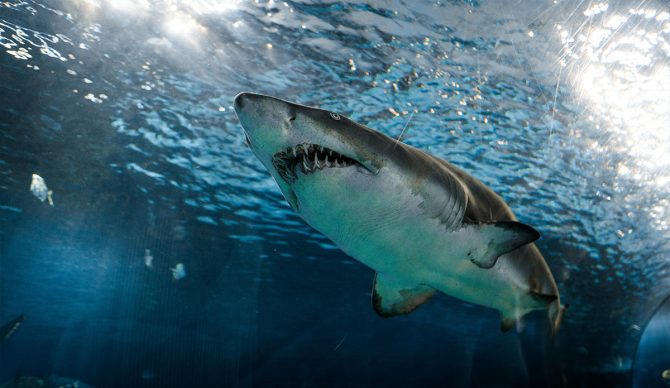
Photo: Marcelo Cidrack // Unsplash
Fifty years ago, Stephen Spielberg’s Jaws hit theaters. Often called the first-ever Hollywood blockbuster, the film spawned an entire sub-genre of shark-inspired creature features and kicked shark fear into high gear. A 2021 Jaws retrospective by Psychiatric Times described the film’s psychological impact, and the episodes of shark-related neurosis it caused in individuals nowhere near the ocean. For generations, the fear of sharks has kept cautious beachgoers on their toes and out of the water.
Despite sharks’ vice-like grip on pop culture, unprovoked shark attacks (meaning instances when sharks bit humans without being fed, taunted, or touched) are actually quite rare, and shark-induced fatalities are even rarer. Per the most recent annual report from the Florida Museum of Natural History’s International Shark Attack File (which credits itself as “the world’s only scientifically documented, comprehensive database of all known shark attacks”), there were 47 reported unprovoked attacks in 2024 – a sharp decrease from the previous year. Only 34 percent of those attacks were related to surfing or boardsports, and less than 10 percent of the total attacks were fatal.
Even still, a shark encounter is never out of the question, and there are some beaches that have managed to earn a reputation for being particularly shark-ridden. Here’s a roundup of the top 10 most active regions for unprovoked shark attacks in the world.
Note: The ISAF provides comprehensive data on shark attacks in the U.S., listing the total number of shark attacks that have occurred to date in counties in Florida, Texas, North Carolina, South Carolina, California, and Hawaii. The ISAF’s international data is broader, and only organized by state. Therefore, the below list compares shark attack data pertaining to large international states, to data pertaining to smaller US counties. Please keep the size discrepancies between these regions in mind when reading. The numerical attack data listed here does not include 2025 attacks.
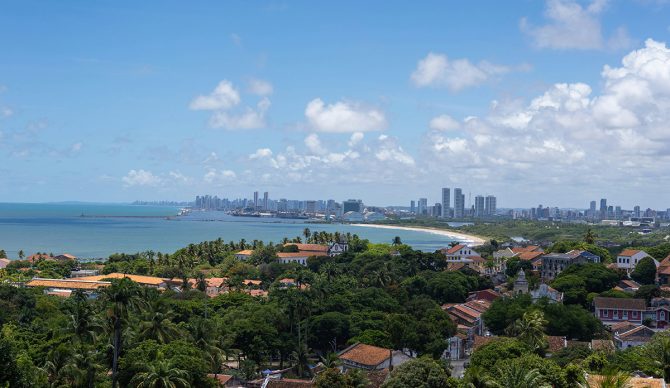
Recife, located in Pernambuco. Photo: Rafael Rodrigues // Unsplash
10). Pernambuco, Brazil – 65 Attacks
When it comes to shark activity, Pernambuco dwarfs every other state in Brazil. While Rio de Janeiro has reported seven attacks since 1931, and São Paulo has reported 11, Pernambuco has played host to a whopping 65 attacks to date. A handful of attacks have occurred near Piedade Beach within the past decade, at least one of which was fatal. In 2018, a teen died after being bit by a tiger shark. More recently, two teens lost limbs near Piedade Beach after separate attacks that occurred within a day of each other. These successive 2023 attacks occurred approximately 546 yards apart from each other.
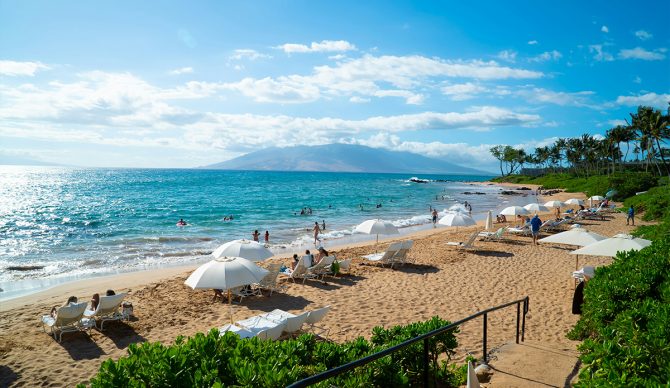
Kai Lenny isn’t the only thing to watch out for in the Maui waters. Photo: Kenneth Oh // Unsplash
9). Maui County, Hawaii – 76 Attacks
Maui County may be the birthplace of legendary surfers like Eddie Aikau, Ian Walsh, and Kai Lenny, but the region is also famous for its long history with seasonal shark sightings. Maui magazine points to an ancient Hawaiian proverb associated with the wiliwili tree, which blooms in autumn: “pua ka wiliwili, nanahu ka manō” or, “when the wiliwili tree blooms, the shark bites.” One of Maui’s most recent shark attacks occurred in November 2024. A 61-year old surfer was bitten near Waiehu Beach Park, ultimately swimming back toward the shore for help. Prior to that, 39 year old Jason Carter was bitten while surfing near Maui’s north shore. The shark that bit him was reportedly the size of a pickup truck, and pulled Jason underwater. He was rushed out of the ocean by Jet Ski and later succumbed to his wounds in the hospital. Shark activity in the region seemingly spikes during the month of October, which is peak tiger shark pupping season.
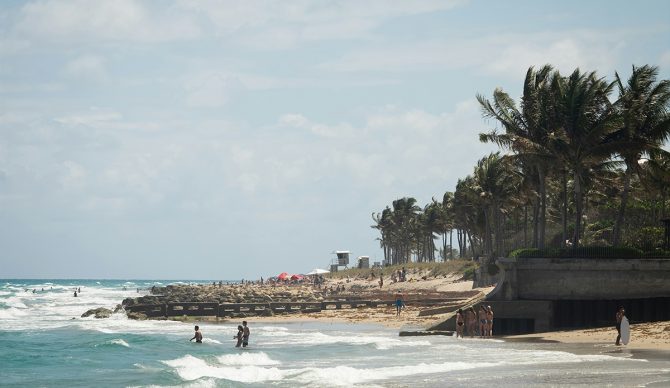
Palm beach is one of several Floridian entries in the list. Photo: Ryan Arnst // Unsplash
8). Palm Beach County, Florida – 83 Attacks
Palm Beach County currently ranks third in Florida (and the United States) for total number of reported shark attacks to date. Recently, the county played host to a summit for first responders and shark attack survivors, where caretakers and victims shared stories and support. Jasmine Carney spoke at the event, recounting the attack she endured at Hobe Sound Beach in Florida’s neighboring Martin County when she was only 10 years old. During that 2022 incident, she was bitten and kicked the attacking shark away.
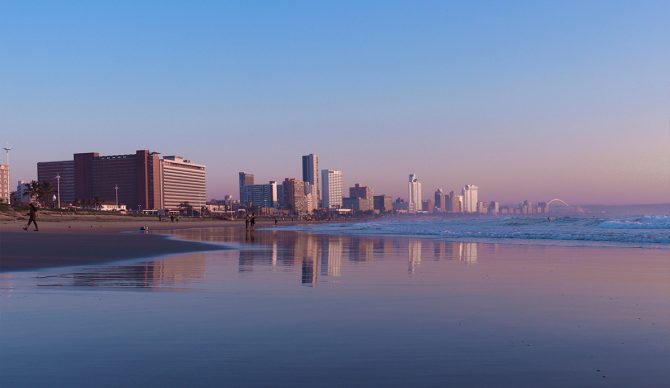
Durban, KwaZulu-Natal’s largest city. Photo: Olivia Pedler // Unsplash
7). KwaZulu-Natal, South Africa – 90 Attacks
KwaZulu-Natal is infamous for a series of shark attacks that occurred between December 18th, 1957 and April 5th, 1958: a time period unofficially dubbed Black December. An increased amount of blood in the water left behind by whaling ships stationed in the area led to nine shark attacks in that five-month span, six of which were fatal. At least one of the attacks was from a great white. The phenomenon led to the formation of what is now known as the KwaZulu-Natal Sharks Board, an initiative that attempts to control the local shark population. KwaZulu-Natal’s coast has 37 beaches equipped with a variety of aquatic traps maintained by the organization, many of which are drumlines. Empty drums are baited and tethered to the sea floor, in hopes of capturing predators that swim too close to the beach. Drumlines are often used in tandem with shark nets, and both can lead to the death of sharks and bycatch. They can be hazardous to surfers, too. There is ample debate about the efficacy and environmental impact of such devices.

Chintsa, in the Wild Coast region of the Eastern Cape. Photo: Håkon Thingstad // Wikimedia Commons
6). Eastern Cape, South Africa – 111 Attacks
With 111 reported attacks, the province of Eastern Cape, South Africa holds the country’s record for most shark attacks to date. Robert Frauenstein is among the region’s most recent shark attack victims, as the bodyboarder went missing in April of 2021. Only Frauenstein’s board was recovered, and it was found with teeth marks in it. Frauenstein’s family members reportedly described the marks on Facebook as those belonging to a large white shark. Frauenstein was surfing near Chintsa, in the Wild Coast region of Eastern Cape. There’s been an uptick in great white sightings in the area, too. In 2024, members of the wildlife marine expedition outfit Animal Ocean spotted 46 great white sharks in a single flight over the ocean.
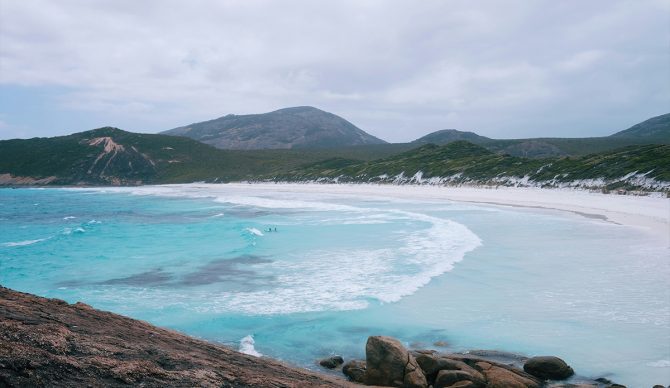
Esperance, located on Western Australia’s coast. Photo: Gu Reiso // Unsplash
5). Western Australia, Australia – 123 Attacks
In recent years, the Esperance coastline has become Western Australia’s most lethal hotspot for shark attacks. Esperance’s suburb of West Beach is a coveted surf spot among locals, due to its consistent surf and beginner-friendly breaks. Unfortunately, four of the five fatal great white attacks that occurred in WA this past decade happened near the waters of Esperance. That fact left local surfer Manue Daniels pondering the psychological impact and fear brought about by even entering the water. After Esperance’s most recent shark-induced fatality (surfer Steven Payne’s March 2025 death near Wharton Beach), the use of personal shark deterrent devices was highlighted by media outlets, as Payne did not wear the device he owned during his final, fatal surf. Nevertheless, coroner Sarah Linton cast doubt on such devices’ efficacy.
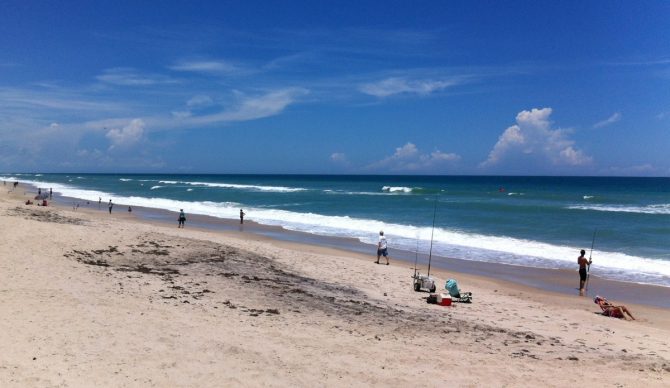
Melbourne Beach, Florida. Photo: Leonard J. DeFrancisci // Wikimedia Commons
4). Brevard County, Florida – 159 Attacks
Behind only Volusia County, Florida’s Brevard County currently holds the record for the second-most unprovoked attacks in the United States. In October of 2024, aspiring pro Teddy Wittemann was bitten by a bull shark while surfing with a friend. The region’s most famous attack occurred 90 years prior, when an eight-year-old boy was bitten by an unidentified predator in 1934, succumbing to his injuries shortly after the attack.
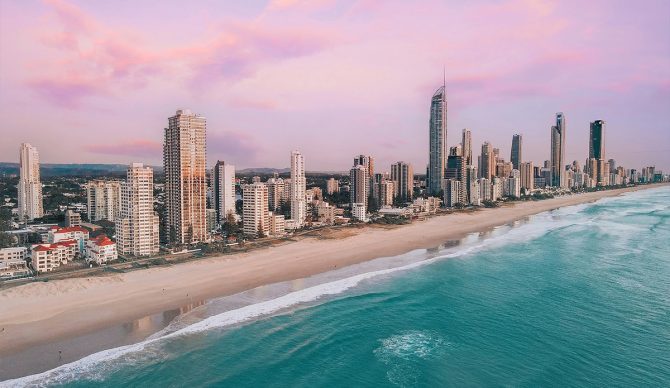
Surfer’s Paradise on the Queensland’s Gold Coast. Photo: Kathleen Banks // Unsplash
3). Queensland, Australia – 201 Attacks
Queensland’s history is tethered to shark attacks and attack prevention, as the state was the first to develop and deploy drumlines in 1962, the same style of aquatic trap used by the KwaZulu-Natal Sharks Board. In recent years, conservation groups have cast doubt on the efficacy of these kinds of traps. The Australian Marine Conservation Society reportedly called such shark-cull tactics dated and unscientific, stressing that they do not improve beach safety. Recently, the Queensland government announced its intention to expand lethal shark control measures, perhaps due to a recent uptick in attacks. Between January and February of 2025, a teen girl was killed after an attack near Brisbane, and a man was bitten near Queensland’s Moreton Island.
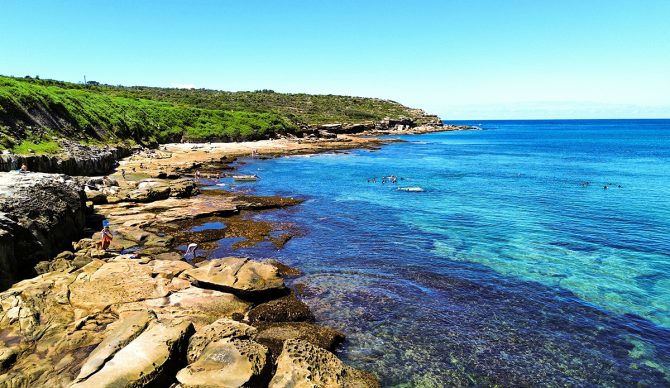
Malabar. Photo: Laura Bass // Unsplash
2). New South Wales, Australia – 274 Attacks
According to the Australian Shark-Incident Database, of the 274 shark attacks that have occurred in New South Wales to date, approximately 148 of them occurred near Sydney: the state’s capital. The area is home to a wealth of popular beaches, including Manly Beach, Bondi Beach, and Coogee Beach. Among Australia’s most common shark species is the great white shark, the largest predatory fish on the planet. In 2022, a man was killed by a great white in what NPR called the region’s first fatal shark attack in nearly 60 years. Prior to that 2022 attack, the most famous shark-related fatality in the area occurred in 1963. That year, Australian actress Marcia Hathaway succumbed to wounds inflicted by a bull shark. The actress was wading in 30-inch deep water, when she was bitten and dragged into Sugarloaf Bay. She was pulled from the jaws of the shark by her fiancée, and was ultimately loaded into an ambulance. In a terrible twist of fate, the vehicle broke down, and Marcia died by the time a second ambulance arrived.
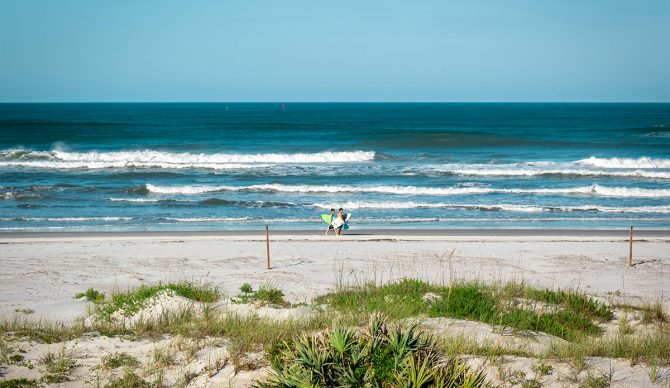
New Smyrna Beach. Photo: Unseen Beaches // Unsplash
1). Volusia County, Florida – 359 Attacks
Florida is, hands-down, the most likely place for a human being to experience an unprovoked shark attack. The state leads not only the U.S., but the world, in sheer number of attacks. With 359 attacks reported to date, the ISAF calls Florida’s Volusia County the unofficial shark bite capital of the world. The county encompasses the infamous New Smyrna Beach (NSB), where just this summer an 18-year-old surf instructor was bitten on the foot.
In a 2024 interview with the Daytona Beach News-Journal, ISAF director Gavin Naylor explained the perfect storm of conditions that make NSB such a hotspot for shark bites. Naylor described the nutrient-rich water of the Ponce Inlet, and how it mixes with surrounding currents to create a prime surf break. The break attracts fish and surfers alike, and the waters’ low visibility causes hungry fish-feeding sharks to mistake human appendages for their prey. Despite their frequency, most bites in Volusia County aren’t fatal, which is likely due to the breed of the sharks performing the attacks. The ISAF speculates that many of Florida’s shark bites come from blacktip sharks, as their breeding grounds run along Florida’s northeast coast. Naylor elaborated on this speculation in that same 2024 interview, explaining that unlike marine-mammal hunting white, bull, and tiger sharks, fish-feeding blackfins are typically scared off by humans’ reaction to their bites.
Editor’s note: This story was updated on September 29, 2025 by Nikolai Barkats. Previous versions were published on August 10, 2018, by The Inertia, as well as on September 22, 2013. The updated version includes the most recent data available from the International Shark Attack File.

