
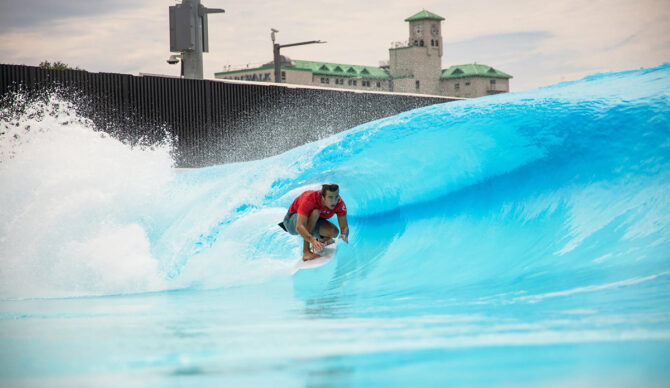
Atlantic Surf Park: good in so many ways. Photo: ASP
Wave pools are here to stay. And they seem to be popping up all over the world on the daily. Having surfed quite a few of the pools in the United States (four, to be exact), this shaper knows a thing or two about things like how freshwater should impact your board selection (more on that later), and which shapes work best in many pools. I recently revisited one while with family on the East Coast, Atlantic Park Surf, and came away with this: it’s the most underrated wave pool in the United States. Here’s why:
Wave Cost
Sessions at this particular pool average between $100-$155 for one hour. You can catch upwards of 20 waves in that hour. That makes APS one of the most affordable tubs in existence. By comparison, your average cost of booking a session at the Surf Ranch is mostly unaffordable (it’s not available to the general public). The new-ish Palm Springs Surf Club costs over $200 per session, and the wave itself is very short. Waco Surf sessions start at $130 for beginner waves and move up to $190 for more advanced waves. Both of those waves top out at rides of about 12 seconds.
Wave Pool Magazine estimates the average cost per wave can range from $12 to $30 in U.S. wave pools. If you can log a solid wave count at Atlantic Park Surf, your cost for every rep can drop into single digits, and the average ride can last up to about 16 seconds. That’s real value in the artificial-wave market.
Location
The pool is conveniently located a few blocks from the oceanfront in Virginia Beach, arguably the biggest surfing hub on the East Coast. There’s plenty of parking, so access is easy. There are loads of new restaurants and shops surrounding the pool, as well as the newly reimagined Dome (a revamped Virginia Beach music venue). All of this makes the park a reliably rad option for local surfers during flat spells. Meanwhile, out-of-towners have plenty to do when not getting pitted.
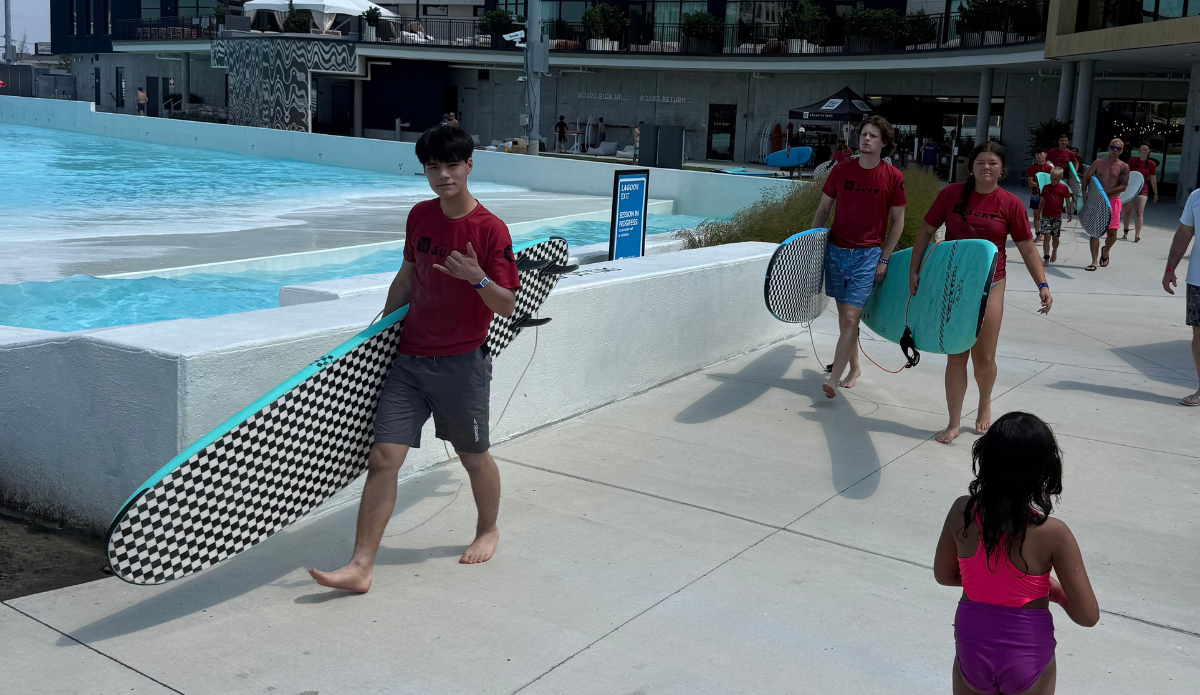
Photo: Ry Harris
Variety
Even if you’ve never surfed before, you can book a lesson with board rental included on a soft-top, a knowledgeable instructor, and be up and riding in 20 minutes. For intermediate to advanced surfers, there are quality waves for turns, and of course barrels for the more advanced set.
I’ve been here four times and it has yet to disappoint. I took my niece and nephews out for a lesson recently, and they had a blast. There’s plenty to do even if you’re just spectating. This was the first time I didn’t actually surf. I just watched my niece and nephews learn. Spectators have a poolside lagoon where you can relax and watch the waves, as well as lounge chairs and cabanas to kick back.
The Waves
The wave itself is definitely the star here. Starting with the expert-only barrels, you’re actually required to wear a helmet for this super hollow, two-to-three second wave. The end section coming out of the tube is next level, positioning a surfer perfectly for a massive turn or an air. It’s a great option for actually upping your tube-riding skills as well as maintaining your flow and composure coming out of one.
My personal favorite though, is actually the advanced turns setting. It’s a fun, punchy right or left that you can absolutely tee off on. You can get three or four quality turns on one wave, as many as five if you’re capable.
As a shaper, the first time I surfed this wave, I tried a new shape and I loved the way it felt. It’s really easy to switch up your equipment during a session and give yourself the best chance to focus on whatever aspect of your turns you’re trying to improve. The intermediate turns setting, meanwhile, is just a touch smaller and still really fun. I surfed one of my short, stubby edge boards on this wave and had a blast. It was one of the experiences that really made me fall in love with the place.
And that brings me to…
Equipment
As mentioned, switching out equipment here is easy and they have you covered. There are more than 100 demo boards on offer as well as the helmets for barrel and expert sessions.
A lot of surfers second-guess their board selection at wave pools, and as more and more pools pop up everywhere, I think it’s important to quickly break down which shapes work best in freshwater waves (one thing all wave pools in the U.S. have in common). The salinity of the ocean makes our boards (and us) more buoyant, meaning you want a bit more flotation when you ride surf lagoons. Something like an EPS/epoxy groveler tends to work better. These waves tend to break pretty fast. You need that get-up-and-go, quick, down-the-line speed, which means you need a shape that maximizes your paddling power so you can get to your feet quicker (see earlier) and get moving. Add that to the list of why grovelers with lower rocker work best for most surfers in wave pools. Another factor to consider is that shorter boards will fit into the pocket better as well.
Just a few things to think about when you ride the fresh. But back to my main point: Atlantic Park Surf is the business. Try to find a way to get out there and experience it yourself. It’s worth it.

