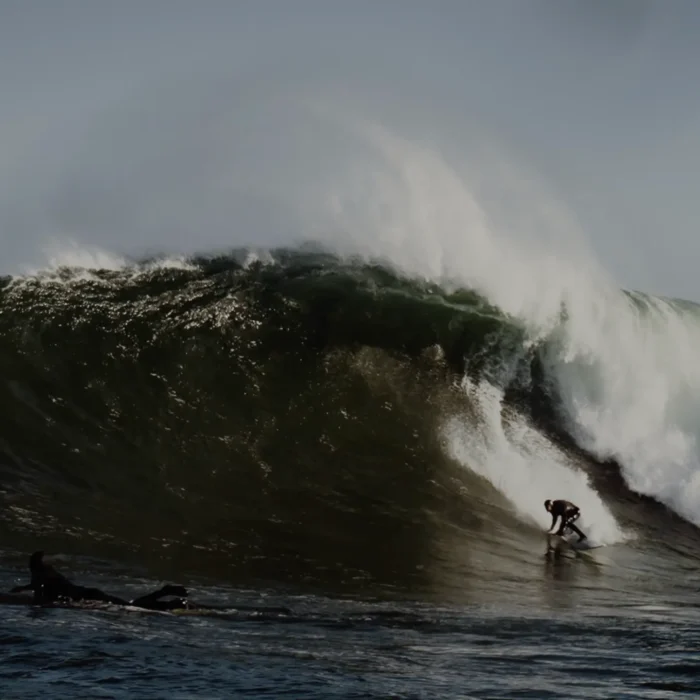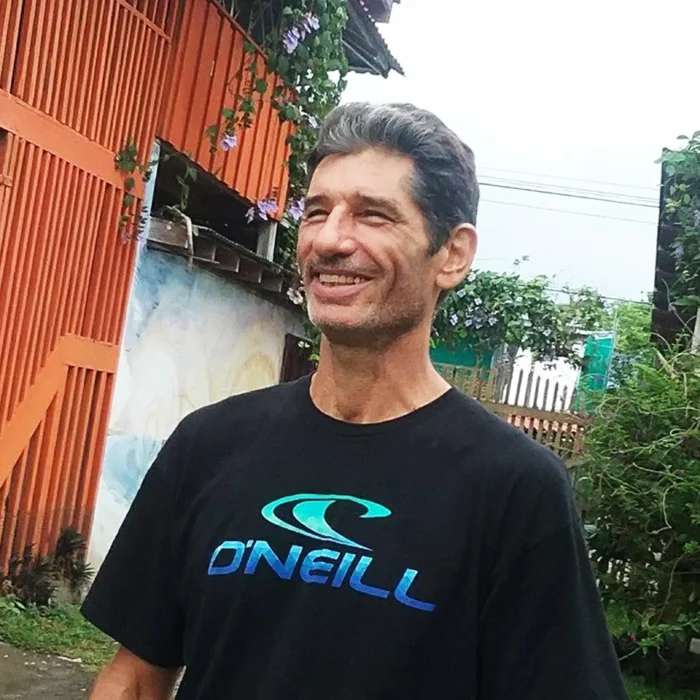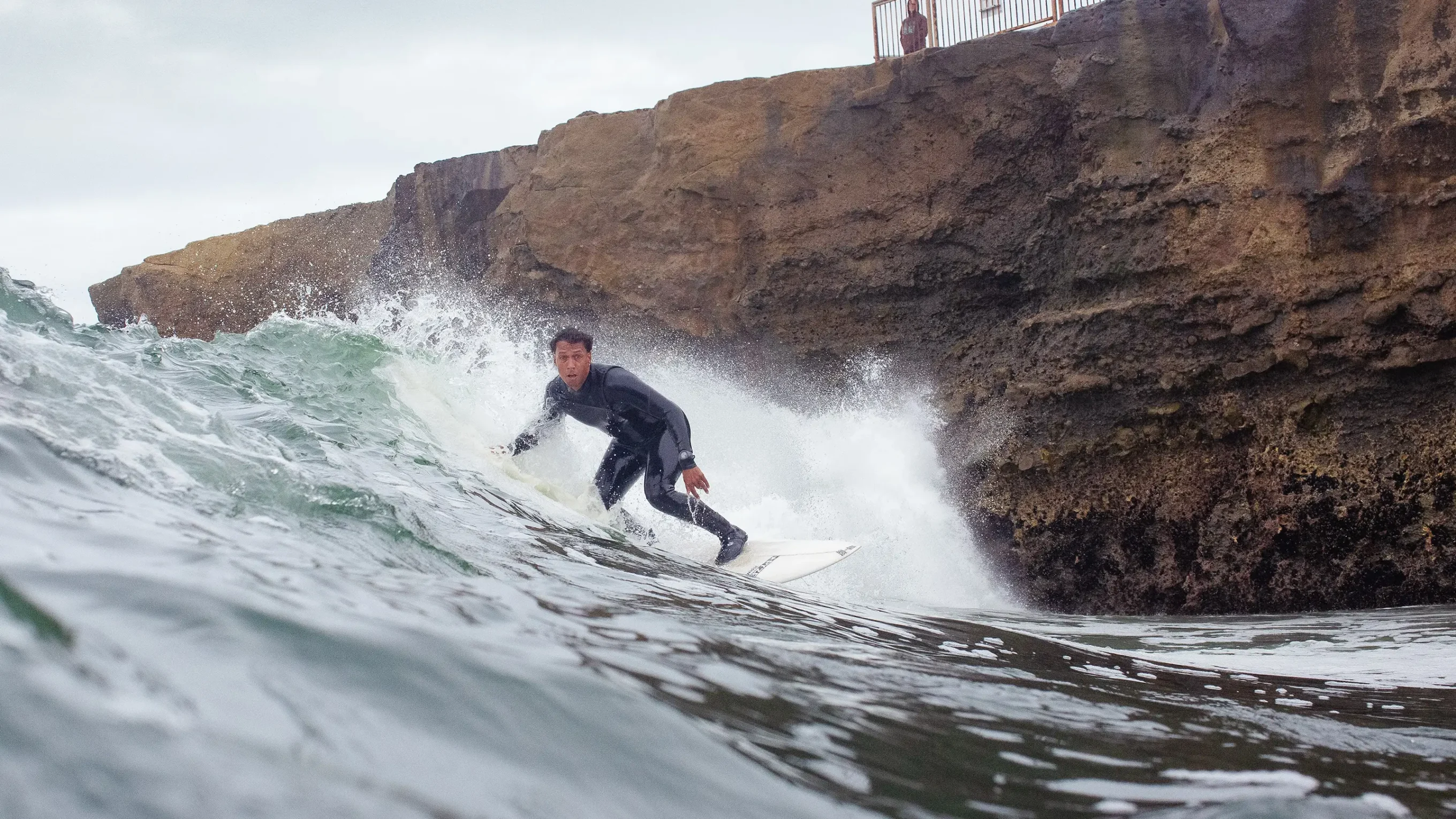
For Kayiita Johansson, perhaps the most memorable surf session during his 10-year stint in Northern California took place at the Hook — a Santa Cruz reef break with a reputation for unwelcoming surfers. It’s where he’d had previous bad experiences with aggressive locals, where he’d been called a “monkey,” and where, last year, a surfer was arrested for assault with a deadly weapon.
Johansson was hosting a surf trip for Black Surfers, an organization he founded in 2018 to create community. Despite his previous bad experiences, the group paddled out at the Hook. The waves were good that day, which tends to make for aggressive vibes. But stoke became contagious as they traded off waves, drowning out any semblance of negative energy. Most of all, he was amazed that Olga, a woman on the trip, was catching waves from the main peak.
“There was literally a black woman sitting at the top of the Hook, and we were all smiling, laughing,” Johansson recalled. “That was such a stark contrast (from my sessions there in) 2016, 2017. That is one of the moments that’s going to stick in my brain for a while.”
The session epitomized the change that Johansson had been striving to catalyze through Black Surfers. While he acknowledges there’s still plenty of work to do, he’s noticed lineups becoming kinder and more diverse during his decade surfing around Santa Cruz and the Bay Area.
“I think we’ve created an environment now where it is very hard for people to say (hostile) things out loud,” he said.
In 2016, Johansson moved from New York City to the Bay Area to attend business school. He was struck by how much less diverse the lineups were compared to those he was used to on the East Coast. While he launched Black Surfers in 2018 to build community, in 2020, amid the social justice movement sparked by the murder of George Floyd, he leveraged the platform to confront the uncomfortable link between racism and the lack of black surfers. He highlighted practices like redlining, which historically kept people of color out of coastal communities.
Now, Johansson has left California, where Black Surfers was born and grew. He’s moved back to New York City with his wife. He says leaving the community he fostered has been sad. He’s still involved, but removing himself from the California lineups he called home for so long has given him a new perspective on what he accomplished.
“I would like to think that I gave some people more confidence to speak up and to have conversations with people,” Johansson said. “For every one of me, there’s 50 other surfers. And if those other 50 surfers stay quiet, one of them gets yelled at in the water, or doesn’t feel comfortable paddling up to a certain area, things stay the same. It doesn’t matter what I do on social media or say to one person in the water. But I think because people leaned into this idea, as well as bringing more people into the water, that’s changed it”.
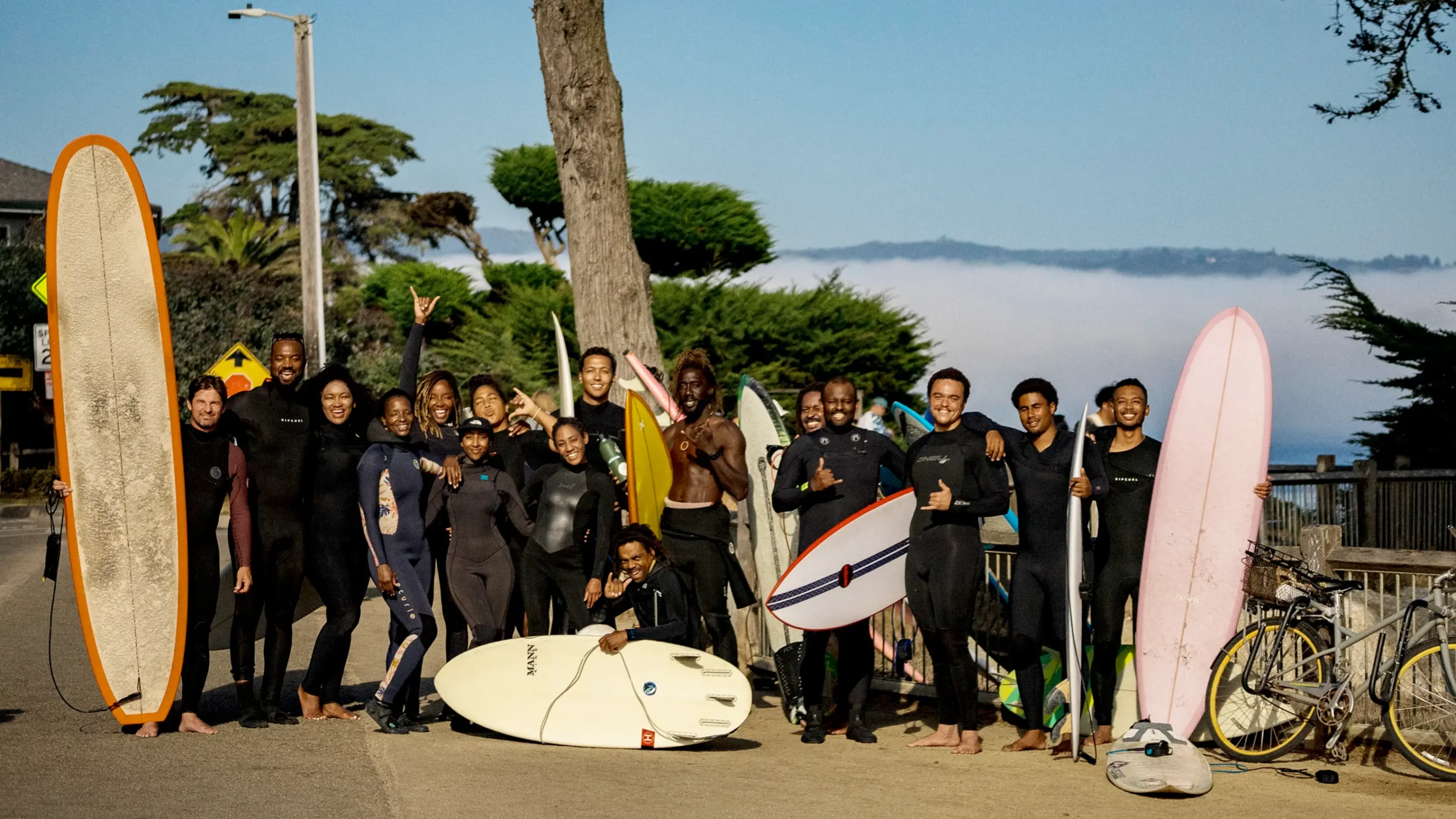
Johansson has built Black Surfers into a community of more than 23,000 on Instagram featuring regular meet-ups, trips, a WhatsApp group, and a mailing list. Their following includes 11-time world champ Kelly Slater, action sports personality Selema Masekela, weird waves vlogger Dylan Graves, and former Golden State Warriors star Klay Thompson.
Influential voices have given Black Surfers their stamp of approval, but it was a long journey to earn it. Johansson says in the beginning, the Instagram account didn’t get much traction, and his posts polarized the surf community. He received nasty messages, some from the parents of professional surfers, he says.
He didn’t let it deter him.
“If I was afraid in those moments and didn’t go past that fear, I think we wouldn’t have been able to have as much impact as we have today,” Johansson said. “I think it’s the same thing when you’re an individual surfer in your lineup of choice, and something happens, you’re like, ‘I should probably say something. This doesn’t feel right in my bones.’ But there’s fear. ‘What if I now have a target on my back at this break?’ I think fear sometimes can prevent us from making a lot of good change in the world.”
According to Johansson, most lineups are disproportionately white for a multitude of reasons. But coastal housing is the biggest challenge. One of the places he surfed the most, Santa Cruz, he says, is a poster child of the problem: a surf town where NIMBY policies that discourage housing development and point breaks that create a feeling of scarcity exacerbate a history of racist housing restrictions.
“I’ve spent a lot of time thinking about this,” Johansson explained. “Obviously, we can talk about swim lessons. We can talk about transportation. But at the end of the day, I think over 50 percent of surfers live within two miles of the beach. So if you don’t live there, you ain’t surfing.”
Now based 3,000 miles away on the Atlantic coast, Johansson is still active as Black Surfers’ founder. But he’s empowered other co-leads, like Santa Cruz-based surfer Hans Langhoff, to assume bigger roles. He says they have some “top secret” plans in the works that they’ll be able to share in the coming months.
Calling from a co-working space in New York City, Johansson says reminiscing about the past 10 years brings a swell of nostalgic emotions that could make him emotional.
“It’s definitely something I have to remind myself of,” Johansson concluded. “Us, with a bunch of other organizations and the community — we made a difference.”