
Training
Applying a tourniquet is one of several life-saving interventions everyone can learn how to do. It’s part of a training curriculum often referred to as basic life support (BLS), whose core is a mix of basic first aid and effective patient handling skills. BLS training saves lives, and is the training foundation upon which all of our EMS systems are based. It can be taught inexpensively, regardless of literacy, and you don’t need fancy medical equipment or supplies to do it effectively. Wilderness EMS training shows how most of the supplies and materials you might need for BLS are pretty much already available, anywhere. It shouldn’t be a zero-sum game.
Transportation
Like BLS supplies, the vehicles needed to safely and effectively transport patients are already on the roads – pickup trucks are great, and if you throw in some dirt bikes with a gurney for a sidecar you’re in even better shape. A simple taxi or donkey will do, of course. No matter how you look at it, conventional ambulances are typically out of the question, so that can save a lot of headaches. Putting ambulances on the road in much of the developing world is similar to asking tanks to navigate the streets of Venice, Italy. And no matter how skinny they get, ambulances still aren’t climbing the hillside shantytowns of Rio de Janeiro. Ambulances need roads, fuel, spare parts, mechanics, street names, house numbers and maps that are not readily available across much of the developing world.
Communications
As for communication, there’s about an 80 percent chance the population has access to mobile phones, so the only thing really left to do coordinate responders is to get them where they’re needed, and when they’re needed there. A range of iPhone apps, including Twitter have already demonstrated the potential application for such technology: crowd-source the Good Samaritans. Train the fishermen, their sons, daughters, and whoever else can help through a basic one day BLS training course, and then blast them a text whenever someone triggers an SOS from their own cell phone.
If this all sounds outlandish, think about your alternatives: no ambulances are coming, and even if they had them, no dispatching system is going to be implemented anytime soon to contact them the moment they’re needed. The locals are going to transport you and your buddies one way or another – it won’t hurt to help them do it a little more effectively.
Global Cause, Global Reach
This would be truly epic: the surf community – tourists and corporations alike – take a proactive stance in reducing preventable death and disability in coastal communities, cheaply and effectively, by actively participating in local capacity building. A big, juicy party wave. Everybody wins: quality of life for local communities improves; tourists feel safer; and most of all, corporations can impact their triple bottom line through:
People: keeping things from getting worse undoubtedly reduces healthcare costs and can likewise save countless families (and tourists) from long-term financial losses that they may never otherwise recover from.
Environment: Injuries are a disease process, and in the epidemiological triangle used to study disease, “environment” is the “factors that cause or allow disease transmission.” Reliable access to basic emergency care is an integral part to any functioning society, and by engaging communities to take responsibility of these functions, it inevitably improves the environment by raising awareness, improving health literacy, and by creating a shared responsibility for the well-being of that community.
Profit: Improved access to basic emergency care mitigates productivity losses and enhances corporate standing in the community: every time someone needs help, trained responders with decals on their dirt bikes are going to help someone in need. That creates brand loyalty that marketing and PR campaigns can’t buy.
Branding With Substance
If the International Surfing Association and Association of Surfing Professionals are going to make good on their pledge to expand the sport’s global reach, including a bid to the Olympics, then simply signing up countries as member states because they have a coast is not going to fool anyone – not even the most feral surfers out there, let alone the IOC.
Countries like these could – and would – benefit from surf tourism, and there’s no one better to spearhead such an initiative than the companies that are collectively pushing it. Tourism is very dependent on security and safety, just as local economies are, and to sign impoverished nations up and do little to add substance to that label is flaky.
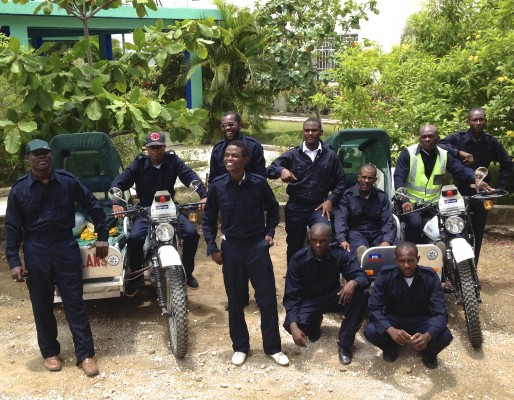
Instead of putting logos on surfboards and t-shirts, let’s put them on uniforms, lifeguard stands, and ambulances.” Photo:TrekMedics.org
Right now, millions of able-bodied, unemployed, and potentially at-risk youth are collected on street corners and under coconut trees across the globe, looking for something to do. When the surfers come, they sell them coconuts, and when they hear of a car wreck, they almost always go and watch. Pluck out the ones who actually have the courage – or the bravado – to get in and help, and you have the first round of candidates for leadership positions in a low-cost/high-impact community emergency response corps that includes lifeguards, community first aid instructors and accountable drivers. The community will respond to these efforts in far more meaningful ways than they will to giveaways, one day concerts, and gimmicky events.
Instead of focusing the energy on finding new ways to put logos on surfboards and t-shirts, let’s put those logos on uniforms, lifeguard stands and, when appropriate, ambulances – the greatest billboard never used.
Create stoke in more meaningful ways.

