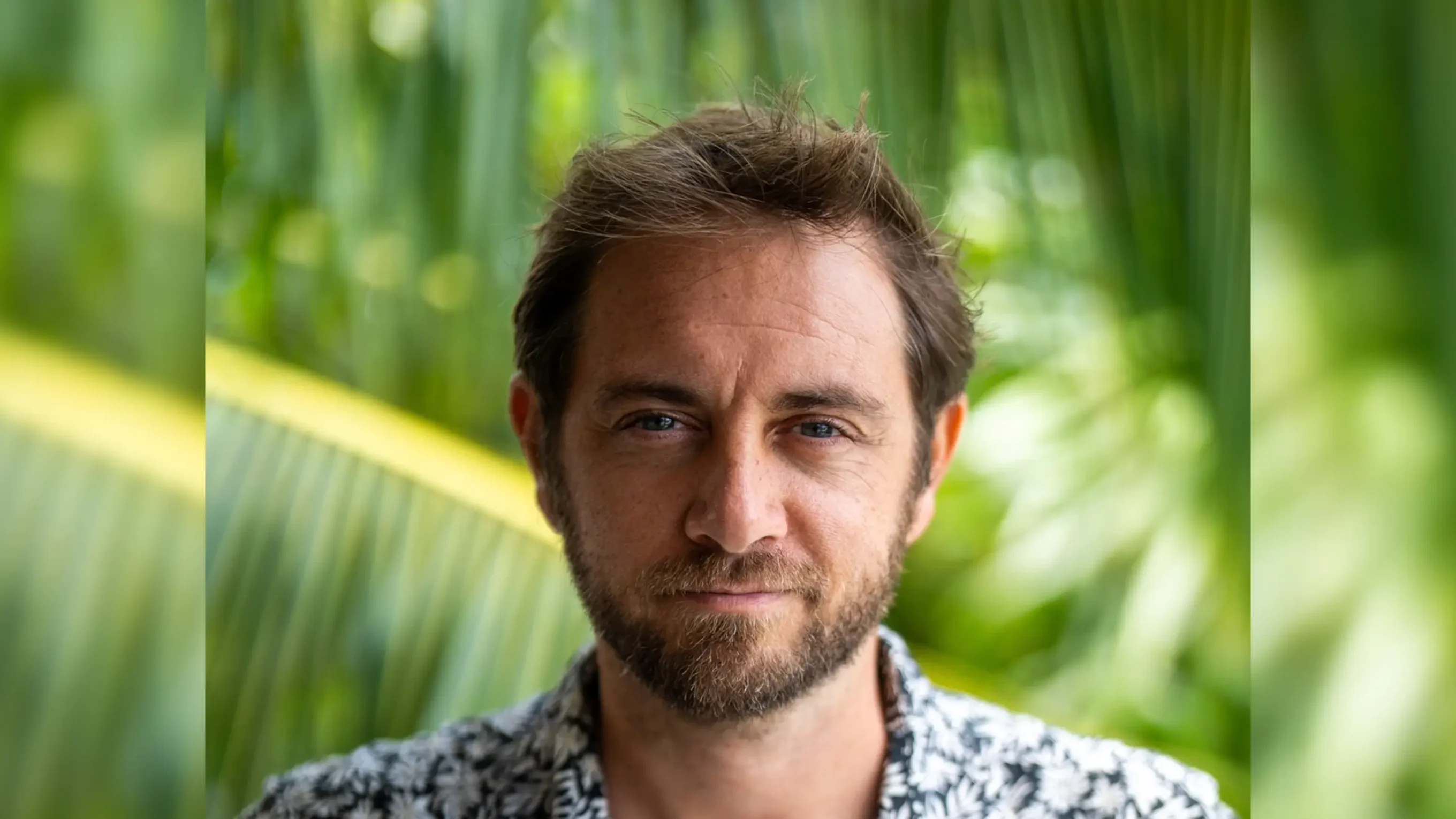
Jerome Brouillet snapped an image that penetrated screens worldwide like no surf photo ever had. After taking the famous “flyaway” shot of Gabriel Medina at the 2024 Olympics at Teahupo’o, he went from an underground surf photographer in Tahiti to a social media sensation overnight. His name appeared in the world’s most-read publications, sports personalities like Selema Masekela made dedicated posts praising him, and his Instagram following exploded from 2,000 to 200,000.
The flurry of social media shares arguably made it the most-seen surf shot ever.
The attention could have carried Brouillet to new levels of fame and fortune, a la Jimmy Chin or Chris Burkard, but he hasn’t let it. Brouillet says he’s turned down numerous commercial inquiries to use the photo, still works a job outside of photography, and carefully navigated his time in the spotlight so it didn’t kill his passion for taking photos.
He’s grateful for the Olympic shot he took while working for AFP. It opened new doors: a partnership with Nikon, brands that wouldn’t respond to his emails were suddenly interested, and he’s received countless invitations to shoot heavy waves around the world. But the photo’s fame has also brought headaches: he and his lawyer chasing down people using it without authorization.
Brouillet called the entire experience “a rollercoaster.”
“Sometimes I was like, ‘Wow, that photo is the best thing that has ever happened in my life,'” Brouillet told The Inertia. “Other times I’m like, ‘I would love for this photo to never have existed.’”
Brouillet moved from France to Tahiti 12 years ago and now lives in a village on the island’s north coast. Six years after arriving, he began pursuing his passion for surf photography, carefully working his way into the hierarchical lineup of photographers at Teahupo’o — which, he says, can sometimes outnumber surfers.
The excitement and passion emanating from competition excites Brouillet. It’s what has made him fall in love with Teahupo’o. He says, as a photographer, few feelings match the excitement of being close to the action and watching a surfer enter a Teahupo’o cavern — just like the famous Medina photo.
He says many of his friends have pointed to his new, formidable social media following and insist that he can turn that into a money-making machine. But he prefers to choose projects that excite him rather than pleasing the algorithms. His biggest fear is “becoming bored of photography.”
“I don’t want to have to make content just because I have some followers,” Brouillet said. “I think it’s weird because if tomorrow, Instagram just disappeared, then I’d lose everything. I prefer to not really count on it and just continue as I used to.”
Brouillet estimates he’s rejected tens of thousands of dollars of brand inquiries to buy rights to the Medina photo. He says making a living in the photography business can be pretty “disappointing,” so it’s best to hedge your bets. In fact, he still works a day job as a product manager for an apparel company. His photo assignments are supplemental income.
“Maybe I’m stupid because I could have made a lot of money,” he said. “But I don’t want it. I love photography for what it is, and I don’t want to put my photo on different cheap products and see it everywhere. I want to keep this as an art piece.”
Instead of plastering the photo on mass-produced plastic, Brouillet says he’s focusing more on putting the photo, and his other works, into galleries where they are appreciated as art.
Brouillet doesn’t want to come off as unappreciative. He acknowledges that the Medina photo has given him accolades, experiences, and friends, but he still sees himself as an underdog photographer on a small island in the middle of the Pacific Ocean. He could probably grow his profile and career if he left, but he loves life in Tahiti and chasing swells at Teahupo’o.
“If I were living somewhere else, maybe I would have (leaned) a little bit more into it,” Brouillet said. “But I don’t want to move from Tahiti just because I took a famous picture. I want to continue my quiet life and my surf photography opportunities.”
“When the surfer disappears behind the boat, and you don’t know if he made it or not, and then you see him coming out the wave, magic happens,” he added. “This is an amazing thing, a feeling I want to keep.”