

Some sixty or so people gathered on the bluff today in Lunada Bay in an effort to change the place for the better.
The event, self-described as a “re-dedication of Aloha Point,” aka Lunada Bay, was organized by Chris Taloa, an L.A. transplant by way of Hawaii and former amateur bodyboard champion.
Back in 2014, Taloa organized a similar event. A recently filed deposition reveals that a local surfer proceeded to, “[paddle] out painted in ‘Blackface’ makeup and wearing an afro wig and told [him], ‘You don’t pay enough taxes to be here.'”
This year was different. Local police were present – about eight officers on the bluff and a handful of squad cars spread up and down the street.
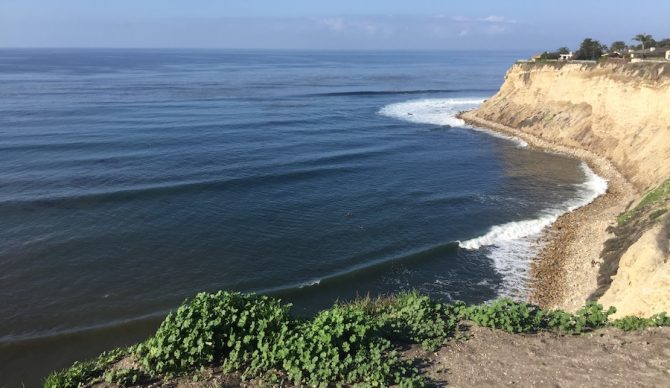
Despite the bad rap, Lunada Bay is a stunning place. Photo: Heyden
“They’ve been so supportive. We couldn’t have done it without them,” said Alicia Apostol of Coastal Protection Rangers, a non-profit out of Hermosa Beach dedicated to protecting, preserving and enhancing the coast of California for access and use by the public that worked with Chris to organize the event. CPR is also one of the plaintiffs in the class action lawsuit against the Lunada Bay Boys.
Local myth holds that the localism that has defined Lunada Bay for so long was one that the local police also implicitly endorsed. Reports of officers not doing their part to protect visitors from harassment, or taking their accounts seriously after the fact, are numerous. And yet, at the scene of today’s protest things appeared differently. No funny business.
“We don’t want to take anything away from anybody,” said Apostol. “We just want to make it better and safer. We want a family to be able to set up chairs here on the bluff, for example, and enjoy the beauty of the place without worrying about getting rocks thrown at them.”
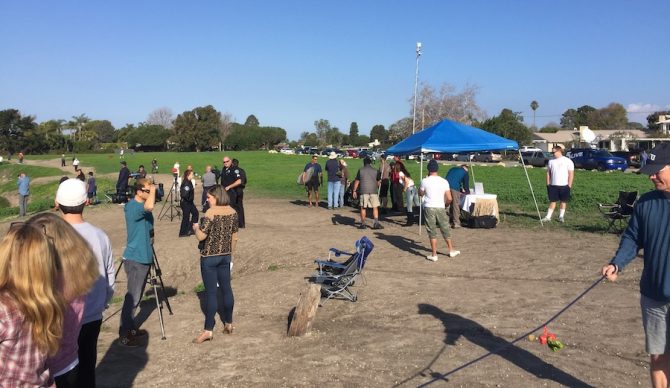
Despite the turnout, the “protest” was pretty quiet. Local news outlets were interviewing would-be surfers. And folks discussed among themselves in whispers. Photo: Heyden
In the wake of the lawsuit and the destruction of the infamous Bay Boys fort, and now the success of a peaceful protest to promote public access to the wave, Lunada Bay’s long dance with localism appears to be in serious decline.
The event flyer goes so far as to claim that today’s event marks the “end of localism and bullying” at Lunada and the opening of a place “that has been off limits for 40+ years.”
And yet, the feeling on the bluff was tenuous. Visitors spoke in hushed tones, whispering among themselves about the childish nature of localism in Los Angeles, adjacent multi-million dollar stucco homes punctuated by sports cars and fountains in the drive. The feeling was as if few knew who was in on the protest, and who was a local quietly observing and taking names.
A handful of surfers felt empowered enough to get in the water.
“I heard about the protest in the Daily Breeze,” said one surfer, named Grant, who had just gotten out of the water. It was his first time surfing Lunada Bay.
“I grew up in PV, but I live in San Pedro now,” he said. The reputation of the wave as a place that you’d definitively encounter some form of harassment was enough to dissuade him from surfing Lunada until today. Still, he worries what will happen to visitors once the event is over and the police presence is gone.
Local news outlets were present in full force, cameras prone, the giant satellites atop their vans extending upward into the sky. Whether an end to localism or not, what’s clear about the unfolding controversy at Lunada Bay is it’s now catapulted into the mainstream.
Just south of the CPR tent and a group of officers, an elderly couple, and their middle-aged kids, unloaded from their SUV to check out the scene. “It was all over the front page of the Times,” the older woman was telling the rest of the group as they got closer to the scene. “There used to be a fort where they would have parties with alcohol, but it’s gone now.”

