
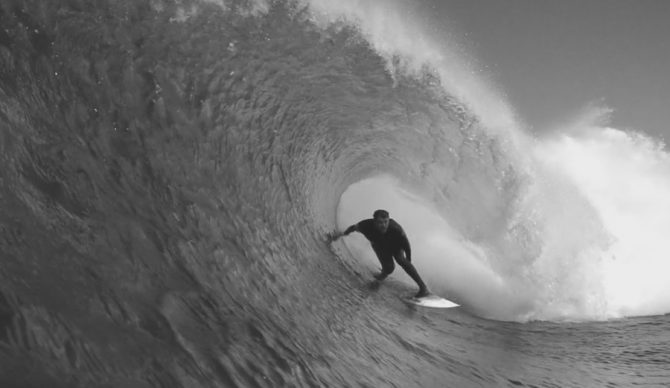
Dane’s opus, Chapter 11, examines his split with Quiksilver, and the panic attack-inducing reality of allowing self-worth to be determined by corporate sponsors.

In case you missed it, Dane Reynolds released his 30-something-minute opus, Chapter 11, just a few days ago (check it out below). More than a surf flick, surfing scenes are split by candid autobiographical interviews with Dane. To use his own words, they seek to trace his transition from, “a shy kid from Bakersfield to a hardened, cynical, aging pro surfer.”
The surfing is good (whaddya expect?). But the interviews are something different. They’re candid, vulnerable, raw. Dane discloses in detail, for instance, the agony of going through a panic attack mid-heat at Lowers, then struggling with them over the course of five months.
But that seems ancillary to the main part of the discussion, his rise to surf stardom, his relationship with corporate sponsorship, and the fractured reality of coming to terms with the fact the pro surfer dream wasn’t as advertised.
Dane directs his anger squarely at Quiksilver. “I feel like at some point I need to thank Quiksilver. I mean, Young Guns, First Chapter, they put me on the map,” says Dane. “But who is Quiksilver? Who do I thank? Shareholders? Bob McKnight? Guys that worked there when I first signed up or guys that work there now? OakTree Financial? I really do appreciate my time there, and the projects we worked on, and the money they gave me, but everyone I feel is responsible has either been fired or laid off. So let’s ban together and rage against the machine.”
And while his honesty is appreciated, it feels misguided, or at least not directed as broadly as it could be. Dane’s jaded, cynical. There’s an obvious discontent for the corporate suits pulling the strings at Quik. But the rest of the industry is no different. Vans is owned by VF Corporation, Burton owns Channel Islands, and those are just Dane’s other sponsors. Investors with a profit motive and general lack of interest in prolonging the legacy of surf culture are behind the majority of brands these days.
Being sold on the idea that the life of a pro surfer is the best life ever and then realizing it was more or less a sham propped up by corporations trying to pad their bottom line is enough to make anyone feel disillusioned. Chapter 11 may only allude to all of this, but it represents the first honest effort to do so, and that’s a start.
On the other hand, the inauthenticity of the pro surfing life, and how much that takes the fun out of getting paid to surf seems like a nice problem to have when put in context. Having lived in New York for a time, commuting into the city five days a week, I’ll never forget the sullen faces of many of the middle-aged folks that I joined on the train that had probably done the same thing day in and day out for decades. A few times I had to be at the airport around 5 or 6am, I’d see construction workers heading in early to do hours of physical labor for minimal dividends. And those are just personal observations. What about sweatshops in third world countries, or those living on the street? Surfing as a job, by comparison, seems like a privilege to be able to complain about.
Chapter 11 is a great surf film. It manages to touch on some of the major struggles that I’m sure most pro surfers struggle with. It also shows how one’s self worth, even when your job seems like the coolest one in the world, can be wrapped up in what other people think about you. It can be panic attack inducing. To that extent, its universal. It also goes to show that even your childhood dreams might not be what they seem, and experiencing that might turn you into a cynic. But just as the film transitions from candid commentary to surfing without skipping a beat, so too in life is doing things for the love paramount.

