

Owen Wright, a few years after his head injury, surfing at Teahupoo in 2019. Photo: Cestari//WSL

Interested in a surf helmet? Congratulations, you’ve got more common sense than most. Despite the well-known risk factor for those participating in the Sport of Kings, helmets are still an unpopular choice, even at heavy, pro-level waves like Pipeline and Teahupo’o.
However, that could be changing as high-profile athletes such as Owen Wright, Koa Smith, and others have donned head gear in the water at waves of consequence, and crowded lineups are giving all of us more and more reason to follow their lead, powerful waves or not. And if you’re looking to get in the water to do some photography instead of surfing, a helmet is a must, especially when paddling close to the action with surfboard fins slicing through the water inches from your head.
We’ve gotten in the water with the best surf helmets on the market, and have some thoughts on the subject. Here they are.
Navigate To: Comparison Table | Buyer’s Guide
Related: Best Wetsuits | Best Boardshorts | Surf Gear Reviews
The Best Surf Helmets
Best Overall Surf Helmet:
Runner Up Best Surf Helmet: Gath Hat EVA/Neo
Best Soft Helmet: Manera S-Foam Helmet
Best Value Surf Helmet: Gamebreaker Pro
Best Multisport Helmet: Gath Gedi
Lightest Surf Helmet: DMC Soft Surf Helmet
Best Overall Surf Helmet
Oakley WTR ICON ($175)
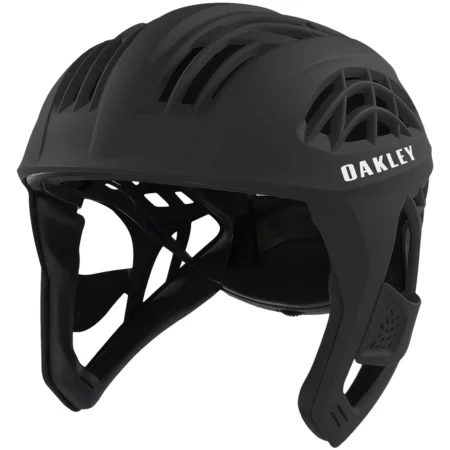
Weight: 365 g
Adjustable: Yes
Pros: Super lightweight and drains instantly
Cons: Not our first pick for foil sports, as the tip of a foil could sneak through the helmet’s lattice structure
Oakley’s first foray into the surf helmet industry hits with a bang. The WTR ICON helmet brings a fresh take on head protection for surfing, addressing one of the biggest downsides to surf helmets with an open construction that vastly reduces the so-called “bucket effect” (how a helmet makes more resistance against the water), and draining instantly after duck diving. It’s also very lightweight, adjustable with a dial-fit on the back of the helmet, and leaves your hearing completely unobstructed with an open ear design.
The only downside of the helmet, is that it could, in theory, let in the tip of a foil if it were to strike in just the wrong way. But since this review covers surf helmets, not foil helmets, it gets the top spot here for the innovative design.
Check Price on Cleanline SurfRunner-Up Best Surf Helmet
Gath Hat NEO/EVA ($130/170)
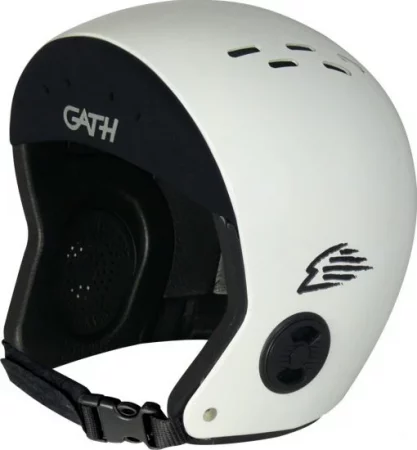
Weight: 390 g (XL)
Adjustable: Neo: No, EVA: Yes
Pros: The industry standard since 1989, Neo headband allows for some adjustability
Cons: Less protective than some other hard-shell options
Gath has an undeniable hold on the surf-helmet market. It was one of the first and is a leader in the category for good reason – Gath has perfected its designs over time. The Gath Hat (above) is the original Gath surf helmet first introduced in 1989. Time tested, it’s sported by current pro surfers at various breaks (especially heavy ones) around the world.
Preferred for its comfort and wraparound fit, the Gath Hat offers a bit thinner protection than other Gath models, but a more streamlined fit for less water resistance, and to reduce the “bucket effect” that plagues hard surf helmets.
The Surf Hat comes in two versions. the Gath Hat NEO comes with a neoprene headband at the front of the helmet which provides a bit of extra flexibility on sizing, being better able to form to the wearers head. The Gath Hat EVA replaces the neoprene headband for an EVA one, providing better impact protection at the forehead, though less flexibility. The EVA version, however, is compatible with Gath’s comfort strips, thin strips of foam of varying thicknesses that stick on to grooves inside the helmet to help dial in the perfect fit.
The Gath Hat has been the industry standard for decades, but in the past few years, strong contenders for the title of “best overall surf helmet” have begun to crop up, such as the Simba Sentinel 1, below. It was a neck-and-neck race for the top this year, and we had a tough time giving the “best overall” nod to one or the other. In the end, we went with the Gath Hat Neo due to the adjustability. For cold-water surfers, having the ability to wear your helmet both with and without a hood on underneath is a pretty crucial aspect. We found the adjustability of the Gath Hat Neo to be far more user-friendly than the “comfort strip” adjustment that designs like the Simba, Gath Hat EVA, and many other surf helmets use.
That said, we do have to give a nod to the Simba Sentinel 1 here as well, as that helmet has a more rigid outer shell, a bit better protection at the forehead compared to the flexible neoprene headband of the Gath Hat Neo, and the “hydrodynamic” design that reduces water resistance when duck-diving or hitting the water in a fall.
CHECK PRICE ON Cleanline Surf CHECK PRICE ON AMAZON
Best Soft Surf Helmet
Manera S-Foam Helmet ($90)
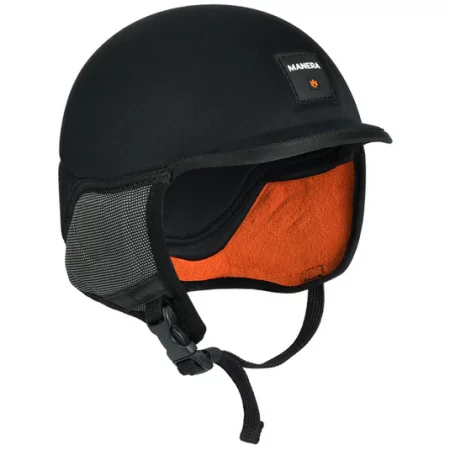
Weight: 264 g (size L)
Adjustable: Yes
Pros: Lightweight, comfortable surf helmet with plenty of protection
Cons: Back of head adjustment piece can make its presence known if overtightened
Soft surf helmets are having a moment, as material innovations make it possible to combine lightweight and flexible materials with serious confidence-inspiring protection. These factors come together in the Manera S-Foam Helmet. Constructed with what Manera calls “Smart Foam,” the helmet is designed to stay soft and flexible in general use, but the material stiffens under impact, providing much more protection for the noggin than the thin and lightweight construction might imply. While there’s no doubt that a hard helmet with a stiff outer shell will provide more protection than a soft helmet, the S-Foam Helmet defies the “soft helmet” category by bringing the level of protection provided here much closer to that of a hard helmet.
The helmet is slightly adjustable with a velcro strap at the back of the head, helping you to dial in that perfect fit. Our tester did note that if you tighten things a bit too much back there, a fairly stiff connection strap might make its presence known, but a pair of scissors can quickly remedy that issue if it arises.
It was a close race between this helmet and the Decathlon Olaian Water Sports Helmet for the title of Best Soft Surf Helmet, but due to higher-quality construction (and a much lower weight) the Manera S-Foam Helmet rose to the top. However, if you’re looking to save $40 bucks on your surf helmet purchase, the Decathlon helmet is an awesome and oh-so-close second best option.
CHECK PRICE ON REAL Watersports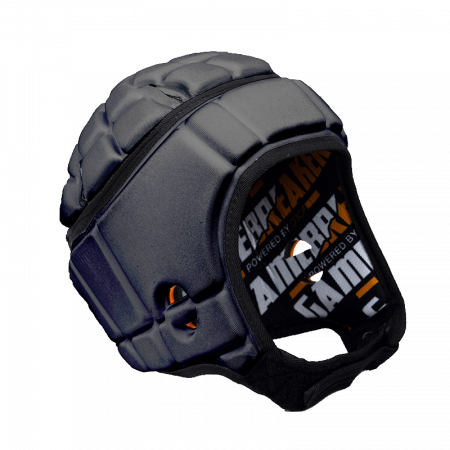
Best Value Surf Helmet
Gamebreaker Pro ($79)
Weight: 200 g
Adjustable: No
Pros: Highly protective for a soft helmet, comfortable, good price
Cons: Still a soft helmet
A multi-sports helmet that has gained traction in flag football, water polo, and other contact-ish sports, the GameBreaker Pro has been seeing more and more use in the surf with surprisingly good results. Adding to its reputation, the GameBreaker recently became the helmet of choice for Justine Dupont, the best female big wave surfer of our time. Its soft shell means there’s little chance for whiplash which can happen when a surf helmet collects water and gets whipped back while duck-diving, hits the surface of the water, or similar actions. That, along with savings in weight, comfort, and a more adjustable fit are why one might choose a soft-shell helmet over a hard-shell, and the Gamebreaker Pro checks all of those categories.
Powered by smart molecule technology, don’t let the soft shell fool you. The foam padding is made with D30 Impact Protection Technology, which works to absorb shock and hardens upon impact, similar to the materials used in the Manera S-Foam Helmet. Having received a five-star rating in the Virginia Tech Impact Labs’ Helmet Ratings, you can be sure that this is no snake oil. This is one of the most protective soft helmets that we’ve seen out there, and have heard nothing but positive feedback from those hitting the water in it, including an ER room doctor at the notoriously heavy wave of Ocean Beach in San Francisco. That’s gotta count for something.
CHECK PRICE ON AMAZON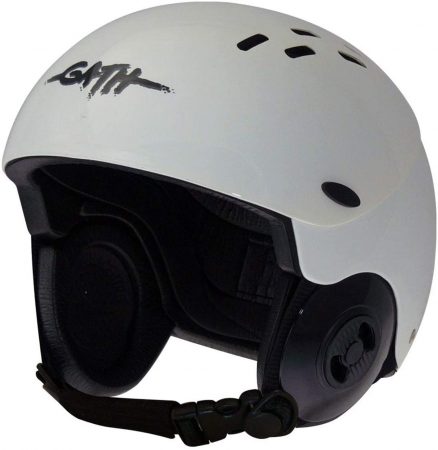
Best Multisport Surf Helmet
Gath Gedi ($189)
Weight: 420 g (size XL)
Adjustable: No
Pros: An extra layer of protection over the Gath Hat, add-on accessories available
Cons: A bit bulkier and heavier than the Gath Hat
Gath makes a few different styles so we’re going to pay them respect here with a second model writeup. The Gedi is another great Gath helmet, but trends toward the multi-sport user. With higher impact protection than the Gath Hat but a bit more bulk, the Gedi is a great helmet for those interested in wind sports, like kiting and foiling, as well as surfing. It also comes with an EN1385 approval (the only helmet in this review to do so), an accreditation for watersports helmets intended for use in whitewater scenarios that covers impact protection, floatation, and other elements of helmet design.
The Gedi includes removable earpieces. With a full range of customizable options such as a visor, headlamp mount, or GoPro-ready brim, the Gedi is a solid choice for just about anything in the water. For an in-between option between the Gath Gedi and the Gath Hat that gives a bit more protection than the Gath Hat, but is better for duckdiving than the Gedi, check out the Gath SFC Helmet, which forgoes the extra layer of impact protection on the forehead that the Gedi provides, but has a similar multisport design with removable earpieces.
CHECK PRICE ON Cleanline Surf CHECK PRICE ON AMAZON
Lightest Surf Helmet
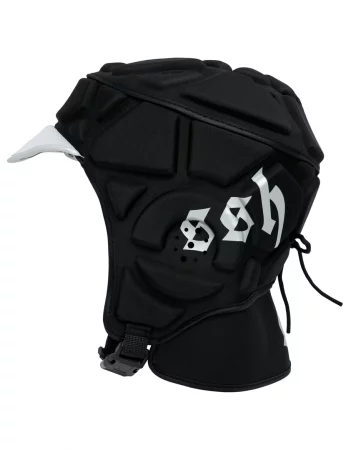
DMC Soft Surf Helmet V2 ($99)
Weight: 100 g
Adjustable: Yes
Pros: Soft and comfortable, very lightweight
Cons: Not a ton of protection, visor doesn’t do much.
DMC swim fins have been a top pick for bodysurfers and swimmers alike for years, and recently, they expanded their offerings with the DMC Soft Surf Helmet, a lightweight soft-shell watersports helmet. The helmet is the lightest on this list with a weight of only 100 grams, is comfortable and easy to forget about, with features like a padded chin-strap, neck-flap for sun and wind protection, and a small visor peak in the front of the helmet that can be flipped up when not in use. The back of the helmet also features a lace-up system so you can adjust the fit as needed. DMC just released the V2 version of the helmet, which adds a buckle to the chin strap, and a redesigned neck protector.
While the helmet’s comfort is certainly noteworthy, the cost it comes at is a lack of solid protection. The helmet has nicely shaped impact pads across the entire helmet, but if we were going to land on a shallow reef headfirst, we’d rather have something stiffer covering our heads. That said, for more casual surf activities, like learning to surf, foiling, etc., where the risk is less catastrophic impact and more likely a surfboard or foil-board to the head, we can see the Soft Surf Helmet having a great application.
CHECK PRICE ON AmazonHonorable Mentions
Surf helmets are picking up steam. For most of their history, there were very few options, and if you wanted reliable head protection in the surf, you went with Gath. With Simba landing on the scene in the late 2010’s, and the entire category of soft helmets emerging in the past few years, things started to heat up, and this year we’ve seen a few notable releases that we have yet to get our hands on.
Windsports-brand Mystic has also been making gains in the surf helmet world. The brand, a subsidiary of North Kiteboarding, has been making a push to become more of an overall watersports brand rather than just wind sports, and as such has made a few exciting new multisport helmet designs like the Impact 2024, a softshell wrap-around design that we’re stoked to get our hands on.
As well as these more innovative and exciting designs, there’s been an explosion of “bump cap” options in the past year like the Dakine Bump Cap. A bump cap is a lower-protection style of helmet, really meant to provide a bit of extra protection to the top and sometimes sides of the head. They’re often “camouflaged” as a regular surf cap or bucket hat, and while they wouldn’t be our first choice for heavy waves, for beginners or those in need of some extra protection for lower-octane surf activities (think longboarding, small waves, etc.) these are a great low-profile choice. A surf helmet only works if you wear it, so if you’re too embarrassed to do so, and are more likely to wear a bump cap, it might not be the worst choice – some protection is better than nothing.
Best Surf Helmets Comparison Table
| Helmet | Price | Weight | Category | Best For |
| Oakley WTR ICON | $175 | 365 g | Hard Shell | Best Overall |
| Gath Hat EVA/Neo | $130 | 355-390 g | Hard Shell | Runner-Up Best Overall |
| Manera S-Foam Helmet | $90 | 264 g (size L) | Soft Shell | Best Soft Helmet |
| Gamebreaker Pro | $79 | 200 g | Soft Shell | Best Value |
| Gath Gedi | $169 | 360-420 g | Hard Shell | Best Multi-Sport |
| DMC Soft Surf Helmet | $99 | 100 g | Soft Shell | Lightest Surf Helmet |

Some of the best surf helmets we’ve tested this year. Photo: Will Sileo//The Inertia
How We Tested The Best Surf Helmets
We surfed in them, of course. Senior Gear Editor and lead tester for this guide, Will Sileo, did his due diligence, taking these helmets out in the water at the heavy and often sketchy waves of San Francisco, California. He also tested their use in various other watersports such as Wing Foiling, a sport where a helmet is considered a near-necessity. He’s been testing these helmets for the past four years, and continues to do so as more great options hit the market.
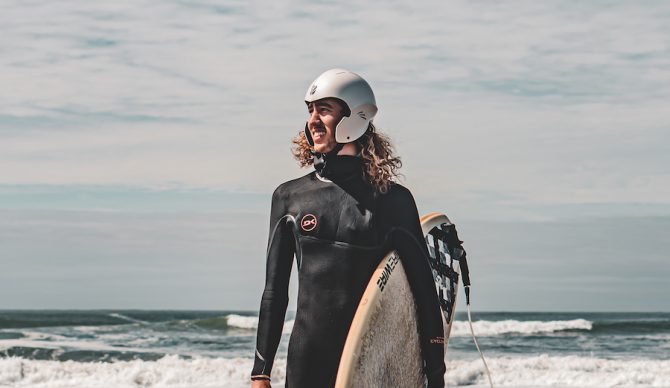
The Simba Sentinel 1 Surf Helmet (discontinued), being put to good use at Ocean Beach, San Francisco. Photo: Skyler Fitzmaurice//The Inertia
Best Surf Helmets Buyer’s Guide
What Features Matter in a Surf Helmet?
Protecting your noggin is no joke, especially when it comes to sports as unpredictable and potentially dangerous as surfing. Similar to a surf hat, the main criteria for a surf helmet is that it’s gotta stay where it is, especially when duck diving. And unless you’re donning a helmet for a chaotic lineup, chances are you’re putting one on to surf a more powerful wave, and will be doing plenty of duck diving.
Duck diving puts an inordinate amount of backward pull on the head area as the wave washes over you toward shore (excuse my layman’s terms, I’m no physicist), and if your helmet doesn’t fit properly, or worse, isn’t made for surfing, it’s going to be swinging around your neck, full of water and choking you with the chinstrap. Not exactly the picture of safety.
Tightening the chin strap is easy, but it won’t fix a bad fit. Many of these helmets are available in different sizes, some with limited adjustability or precise sizing. Luckily, the head is (usually) not the most complicated part of the body to measure, and all of the helmets here have a decent sizing chart. When searching out the perfect surf helmet, measure twice, purchase once. And if you can make it to your local surf shop to try on some different sizes, even better.
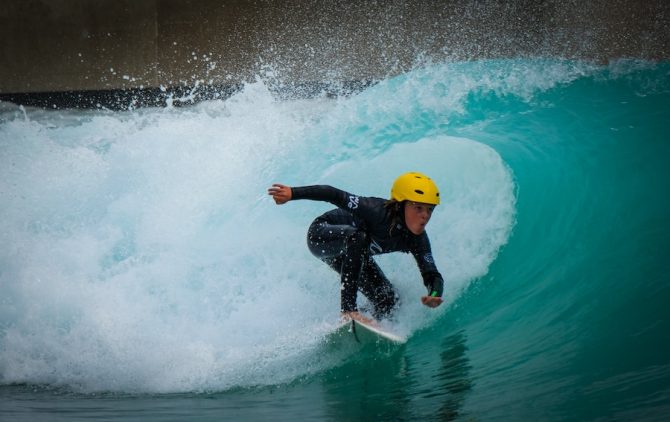
When your kid is doing things like this, sticking a helmet on them is a no-brainer. Photo: Croyde Bay//Unsplash
The amount of protection a helmet provides is also worth considering. A hard helmet will provide more protection than a soft helmet, although the Gamebreaker Pro and Manera S-Foam helmets get pretty close to the level of protection we see in thinner surf helmets like the Gath Hat EVA/Neo.
Editor’s Note: For more gear reviews and features on The Inertia, click here.

The Best Hot, Portable Surf Showers for Any Budget


